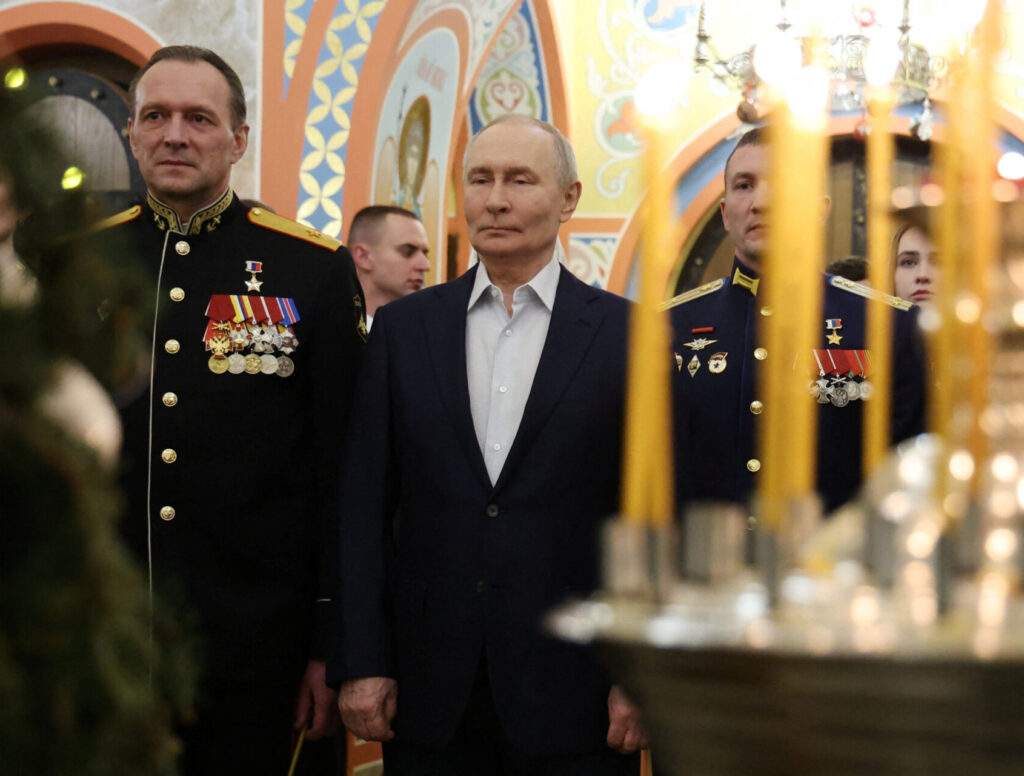
The new year has begun much as 2025 ended, with Russia rejecting key elements of peace proposals aimed at ending the war in Ukraine. In early January, Russian Foreign Ministry officials confirmed they would not accept the presence of European troops in Ukraine as part of proposed postwar security guarantees for Kyiv.
This followed a series of similar recent statements from Kremlin officials reiterating Moscow’s uncompromising position and dismissing a 20-point peace plan prepared by Ukraine, Europe, and the United States. Meanwhile, Russian President Vladimir Putin declared in December that Russia’s war aims in Ukraine will be met “unconditionally” and vowed to “liberate” what he termed as Russia’s “historical lands.”
Moscow’s approach toward peace talks has remained consistently uncooperative ever since US President Donald Trump returned to the White House one year ago. While Putin has been careful not to directly rebuff Trump in order to avoid provoking fresh sanctions, there have been ample indications that the Kremlin is not ready to engage seriously in US-led diplomatic efforts. Instead, Russia seems intent on stalling for time while escalating its invasion.
There are no signs that this trend will change anytime soon. Despite mounting economic challenges on the home front amid falling energy export revenues, Russia’s defense budget for 2026 remains close to record highs. Moscow will continue to prioritize domestic drone production this year, while also allocating large sums to finance the system of generous bonus payments and salaries for army recruits who volunteer to serve in Ukraine.
Stay updated
As the world watches the Russian invasion of Ukraine unfold, UkraineAlert delivers the best Atlantic Council expert insight and analysis on Ukraine twice a week directly to your inbox.
Russia’s refusal to embrace the idea of a compromise peace should come as no surprise. After all, Putin has built his entire reign around the promise of restoring Russian greatness and reversing the perceived humiliations of the Soviet collapse. After nearly four years of full-scale war, a negotiated settlement that secured Ukraine’s status as an independent country would represent a major political failure.
Since 2022, Kremlin officials and Russian state media have consistently portrayed the invasion of Ukraine as an existential struggle against Western aggression with the aim of establishing a new world order and returning Russia to its rightful place as a great power. However, a peace deal based on the current line of contact would leave approximately 80 percent of Ukraine beyond Kremlin control and firmly anchored in the West. Such an outcome would be viewed in Moscow as an historic Russian defeat.
This framing creates a political trap of Moscow’s own making. Putin knows he would face a potentially disastrous domestic backlash if he accepted anything less than a clear Russian victory in Ukraine. Peace terms that failed to force Ukraine back into the Kremlin orbit would raise difficult questions about the enormous costs of the invasion. Russians would want to know why the country had spent vast sums of money and sacrificed so many men in order to achieve so little. Putin would risk entering Russian history as the man who lost Ukraine.
Eurasia Center events

Putin has begun 2026 in a challenging position. He remains reluctant to upset Trump, but he dare not accept the compromise peace the US leader is proposing. Instead, Putin needs either total victory in Ukraine or indefinite conflict. Any attempt to end the war without establishing complete political control over Ukraine would threaten the stability of Putin’s own regime. His interests are therefore best served by seeking to prolong negotiations while working toward a military solution.
If Western leaders wish to change the current political calculus in Moscow, they must first acknowledge that there is no alternative to increasing the pressure on Putin. At present, the Kremlin dictator views escalation as necessary for regime survival and has no plans to end the war.
Two scenarios could disrupt this trajectory. A collapse in global oil prices combined with successful secondary sanctions enforcement could create an economic crisis that would force Putin to revise his priorities. Alternatively, mass casualties during a failed spring 2026 Russian offensive could trigger domestic instability, while also highlighting the fading prospects of a military breakthrough.
Both these outcomes are realistic but would require significant additional action from Ukraine’s partners. If the West is unable to muster the requisite political will, escalation remains Moscow’s most rational path in 2026. Putin has little choice but to continue his invasion. Even if Russian victory remains out of reach in the coming year, he knows he cannot accept any peace deal that secures Ukrainian statehood.
William Dixon is a senior associate fellow at the Royal United Service Institute specialising in cyber and international security issues. Maksym Beznosiuk is a strategy and security analyst whose work focuses on Russia, Ukraine, and international security.
Further reading
The views expressed in UkraineAlert are solely those of the authors and do not necessarily reflect the views of the Atlantic Council, its staff, or its supporters.

The Eurasia Center’s mission is to enhance transatlantic cooperation in promoting stability, democratic values, and prosperity in Eurasia, from Eastern Europe and Turkey in the West to the Caucasus, Russia, and Central Asia in the East.
Follow us on social media
and support our work
Image: Russia's President Vladimir Putin, accompanied by military personnel and their family members, attends the Orthodox Christmas liturgy at a church in the Moscow region, Russia, January 7, 2026. (Sputnik/Vyacheslav Prokofyev/Pool via REUTERS)