
Featured analysis

Latest analysis

EconoGraphics

Oct 6, 2015

How Can We Bridge Automaking Standards for Growth?

By Global Business and Economics

The recent Volkswagen scandal has refocused consumers on automaking standards and CO2 emissions. These differences have also been one of the sticking points in TTIP negotiations. Both the American and European automaking sectors have rigorous standards, and as might be expected hold similar regulations.

Economy & Business
European Union

EconoGraphics

Sep 29, 2015

How Does The Most Recent Greek Bailout Deal Compare With The Past Two Agreements?

By Global Business and Economics

The latest Memorandum of Understanding between the EU Institutions and the Greek Government passed in August, leaves Tsipras only one additional month to implement eighty-five initiatives. These reforms cover a diverse range of topics, from consolidating taxation policies to health and education reform.

Economy & Business
European Union

EconoGraphics

Sep 22, 2015

Migrant Flows and the Future of Europe

By Global Business and Economics

As Europe confronts the migrant crisis, much of the current coverage remains fixed on short run trends, but in order to have a comprehensive perspective it is necessary to project these trends into the future. In spite of commonly held concerns of migrants’ effect on European identity, many of these nations’ birthrates and outflows of migrants will actually be higher than their intake of migrants. Negative flows of migrants could further weaken pension plans, as aging European populations struggle to balance social welfare models with demographic realities.

Afghanistan
Economy & Business

EconoGraphics

Sep 15, 2015

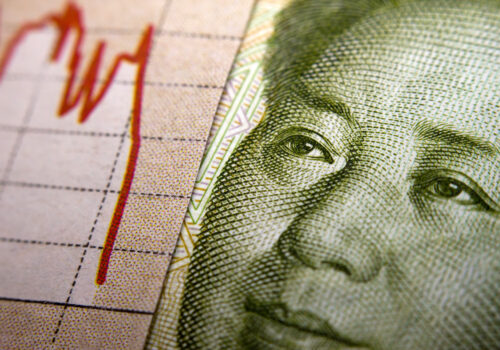
Has the Renminbi Arrived as an International Currency?

By Global Business and Economics

As China slowly transitions from an investment and export based economy to a consumer based economy, the Chinese must also liberalize both their monetary affairs and the management of their currency. By increasing the wealth of Chinese consumers via their currency’s value, domestic demand will supplant the role of exports. For this process to be completed, the Chinese currency, the Renminbi, must assume its place in the package of globally dominant currencies.

China
Economy & Business

EconoGraphics

Jul 28, 2015

Where Are US Sanctions Imposed?

By Global Business and Economics

On July 14, the United States, along with the P5+1, struck a deal with Iran to ease the heavy financial and banking sanctions that starved the country’s economy. Over the next decade, financial and trade sanctions will gradually be lifted, giving Iran the ability to export its plentiful oil and gas reserves and to purchase goods from abroad.

Economy & Business
Financial Sanctions and Economic Coercion

EconoGraphics

Jul 22, 2015

Has Greece Been Effective at Downsizing Its Public Sector?

By Global Business and Economics

Greece and its EU counterparts made progress last week on negotiations, but some policy makers question whether Greece will truly adopt the measures necessary to recover economic stability.

Economy & Business
Fiscal and Structural Reform

EconoGraphics

Jul 14, 2015

Should Greece’s Request for Additional Debt Relief Be Dismissed?

By Global Business and Economics

Unsatisfied with the proposed austerity measures, Greece has been pushing for a comprehensive debt relief package from its creditors. In public, Greece has appealed to the 1953 London Conference when Western Germany was forgiven over half of its debt. One of Germany’s creditors then: Greece.

Economy & Business
Eurozone

EconoGraphics

Jul 7, 2015

How Does Greece’s Public Debt Compare to Puerto Rico’s?

By Global Business and Economics

As Greece reaches crisis over its debts to Europe, Puerto Rico’s public debt has reached an impressive $72 billion, nearly 70% of its economic output. Meanwhile, Greece has slashed the growth of its debt since 2012.

Economy & Business
Greece

EconoGraphics

Jun 30, 2015

Is There a Precedent for Greece’s Bank Holiday?

By Global Business and Economics

The Greek Government officials called for a bank holiday on Sunday which went into full effect Monday, June 29th. Although the country plans to open its banks’ doors next Monday, its financial duress is far from over.

Economy & Business
Greece

EconoGraphics

Jun 23, 2015

How Does Greece’s Recovery Compare to Other IMF Bailouts?

By Global Business and Economics

As showdown talks over Greece take place in Europe this week, a quick examination of the recent history of bailouts is valuable.

Economy & Business
Eurozone

Content

EconoGraphics

Feb 6, 2018

Secondary Sanctions: A First Glance

By Ole Moehr

This edition of our EconoGraphic blog explains the difference between primary and secondary sanctions, outlines how secondary sanctions work, and uses a case study to demonstrate how the United States employs secondary sanctions in the real economy.

China
Economy & Business

EconoGraphics

Jan 22, 2018

The Irish Border Question

By Ole Moehr

The future of the Irish border is one of the key sticking points in the ongoing Brexit negotiations between the European Union (EU) and the United Kingdom (UK).

Economy & Business
European Union

EconoGraphics

Dec 22, 2017

Parties Supporting Independence Win Slim Majority, But Catalonia’s Complex Stalemate Continues

By Michael Farquharson & Alvaro Morales Salto-Weis

The outcome of yesterday’s regional elections in Catalonia reflects the electorate’s deep polarization on the issue of regional independence.

Economy & Business
Southern & Southeastern Europe

EconoGraphics

Dec 12, 2017

Catalonia: Secession Recession?

By Michael Farquharson & Alvaro Morales Salto-Weis

The region of Catalonia will hold critical elections on December 21. The stakes are high: the region unilaterally declared its independence on October 1 and subsequently saw the rule of its regional government suspended by Madrid’s central government pursuant to Article 155 of the Spanish constitution.

Economy & Business
Southern & Southeastern Europe

EconoGraphics

Nov 27, 2017

Tariff on the Rising Sun

By Michael Farquharson & Ole Moehr

In April of this year, Suniva, a Chinese-owned, US-based solar manufacturer filed a rarely-used Section 201 petition with the US International Trade Commission (ITC), requesting the imposition of minimum prices for solar module imports into the United States. In May, German-based SolarWorld joined Suniva’s petition, and in September, the ITC ruled in favor of the plaintiffs, ultimately recommending up to a 35 percent tariff on imported solar modules.

Economy & Business
Renewables & Advanced Energy

EconoGraphics

Nov 7, 2017

Multilateral Sanctions: Brexit Wrecks-it?

By Michael Farquharson & Ole Moehr

On October 3, 2017, the Atlantic Council hosted a conference with experts from the public and private sector to discuss the impact of Brexit on economic sanctions policymaking. The United Kingdom (UK) currently plays a considerable role crafting and implementing sanctions policy in the European Union (EU). Transatlantic cooperation and sanctions alignment are vital to ensure the effectiveness of this essential foreign policy tool.

Economy & Business
European Union

EconoGraphics

Oct 20, 2017

The US Infrastruct-cure

By Michael Farquharson & Ole Moehr

Infrastructure investment stimulates economic growth. According to McKinsey & Company, an increase in infrastructure investment equal to 1 percent of gross domestic product (GDP) would convert into an additional 1.5 million direct and indirect jobs in the United States. America’s infrastructure is in a state of disrepair.

Economy & Business
Europe & Eurasia

EconoGraphics

Sep 25, 2017

Crude Awakening

By Ole Moehr

On August 2, 2017, US President Donald J. Trump signed into law H.R.3364, a new set of economic sanctions aimed primarily on Russia (with additional measures adopted against Iran and North Korea). Essential to the success of any sanctions regime is its alignment.

Economy & Business
European Union

EconoGraphics

Jul 25, 2017

The Apprentice

By Samuel Weitzman

On June 15, 2017, US President Donald J. Trump issued Executive Order 13801, which sought “to promote affordable education and rewarding jobs for American workers” by increasing the number of apprenticeship opportunities. Trump’s stated goals are ambitious. With a proposed ApprenticeshipUSA budget of $200 million (roughly double the previous amount), the president wants to increase the number of US apprenticeships from 505,000 in 2016 to 5 million by 2022.

Economy & Business
United States and Canada

EconoGraphics

Jul 6, 2017

The Big Chill(ing effect)

By Samuel Weitzman

In March 2014, the United States and the European Union (EU) issued the first in a series of sanctions against the Russian Federation for its destabilization of Ukraine and annexation of Crimea. These restrictions, which initially focused on senior Russian government officials and private individuals, have expanded to include large corporations, financial institutions, and even entire economic sectors. In retaliation, Russia has adopted counter-sanctions of its own.

Economy & Business
European Union