Featured analysis

Latest analysis

Econographics

Nov 11, 2022

The target of limiting global warming to less than 1.5 degrees is practically dead. Why do emissions per capita matter?

By Amin Mohseni-Cheraghlou

Achieving the target to limit global warming to below 2, preferably 1.5 degrees Celsius, by the end of the century seems more unfeasible than ever. The reason is simple. The most critical of greenhouse gases have continuously risen in the past decade and CO2 emissions are only expected to grow more in 2022 and for the foreseeable future. COP27 needs to pave the path for a renewed international cooperative and enforceable framework to reduce global greenhouse gas emissions by the world’s top emitters both in absolute terms and in per capita terms.

Climate Change & Climate Action
Economy & Business

Econographics

Nov 8, 2022

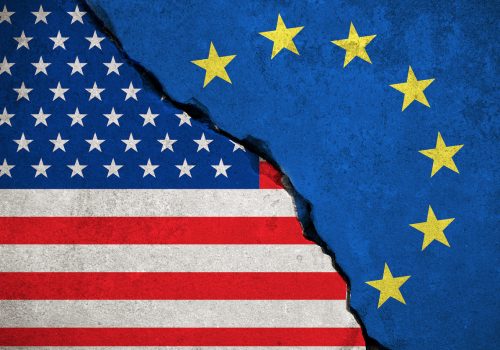
What US outbound investment screening means for Transatlantic relations

By Elmar Hellendoorn

Whether the EU follows through with new outbound investment controls and what those might look like will also depend on the evolution of American national security policy and transatlantic diplomacy.

China
Economy & Business

Econographics

Oct 31, 2022

The global infrastructure financing gap: Where sovereign wealth funds and pension funds can play a role

By Amin Mohseni-Cheraghlou and Naomi Aladekoba

Having more than $65 trillion in assets, institutional investors such as SWFs and pension funds are uniquely positioned to bridge low-income economies’ infrastructure financing gap in the coming decades. The Bretton Woods Institutions (BWI) can encourage investment in developing countries’ infrastructure through providing various guarantee and insurance mechanisms, thereby reducing risk for private investors.

Economy & Business
Inclusive Growth

EconoGraphics

Oct 28, 2022

How the US compares to the world on unionization

By Jeff Goldstein

Explore how US unionization rates compare to other economies and what that means for US labor markets going forward.

Economy & Business
Inclusive Growth

EconoGraphics

Oct 24, 2022

Dual circulation in China: A progress report

By Hung Tran

Faced with a challenging international environment and hostile efforts by the United States to restrict China’s access to high technology and its products, China has adopted a dual circulation strategy to make its economy more balanced and resilient. Dual circulation means reducing the role of foreign trade in driving the Chinese economy while improving the quality of trade.

China
Economy & Business

Econographics

Oct 12, 2022

Companies on the front line: Trends in overseas Chinese listings

By Maia Nikoladze

Delisting more than 150 Chinese companies is a bigger hit than Chinese private sector can take at this time. However, we don’t yet know whether Beijing will follow through on its side of the audit-sharing deal. 

China
Economy & Business

Econographics

Sep 8, 2022

Global Sanctions Dashboard: Sanctioning soars across the board

By Charles Lichfield, Maia Nikoladze, and Castellum.AI

Iran nuclear deal negotiations; Russia’s domestic sanctions against terrorism and extremism; Latin America drug trafficking sanctions.

Europe & Eurasia
European Union

Econographics

Sep 8, 2022

Zambia: A template for debt restructuring?

By Hung Tran

Zambia shows that progress can be made to render the Common Framework more workable. However, more needs to be done to refine a comprehensive, efficient, and effective sovereign debt restructuring procedure.

Africa
China
Dollar Currency Exchange rate

Econographics

Sep 7, 2022

Don’t expect a Plaza Accord 2.0 to reverse the dollar’s surge

By Mrugank Bhusari

Neither China, nor the original participants of the Plaza Accord, are willing to engage in such market intervention to return a soaring dollar to normal levels.

China
Economy & Business

Econographics

Aug 25, 2022

Delisting Chinese companies from the New York Stock Exchange: Signs of decoupling

By Hung Tran

China’s decision to delist five companies from the NYSE is motivated by its unwillingness to comply with US regulations.

China
Economy & Business

Content

EconoGraphics

Feb 26, 2018

Are Italians giving the establishment the boot?

By Alexatrini Tsiknia and Ole Moehr

Italians go to the polls on March 4th to elect a new government. Under a new electoral system, the outcome is uncertain. The Global Business and Economics program looks at some key economic indicators that could influence the election.

Economy & Business
European Union

EconoGraphics

Feb 6, 2018

Secondary Sanctions: A First Glance

By Ole Moehr

This edition of our EconoGraphic blog explains the difference between primary and secondary sanctions, outlines how secondary sanctions work, and uses a case study to demonstrate how the United States employs secondary sanctions in the real economy.

China
Economy & Business

EconoGraphics

Jan 22, 2018

The Irish Border Question

By Ole Moehr

The future of the Irish border is one of the key sticking points in the ongoing Brexit negotiations between the European Union (EU) and the United Kingdom (UK).

Economy & Business
European Union

EconoGraphics

Dec 22, 2017

Parties Supporting Independence Win Slim Majority, But Catalonia’s Complex Stalemate Continues

By Michael Farquharson & Alvaro Morales Salto-Weis

The outcome of yesterday’s regional elections in Catalonia reflects the electorate’s deep polarization on the issue of regional independence.

Economy & Business
Southern & Southeastern Europe

EconoGraphics

Dec 12, 2017

Catalonia: Secession Recession?

By Michael Farquharson & Alvaro Morales Salto-Weis

The region of Catalonia will hold critical elections on December 21. The stakes are high: the region unilaterally declared its independence on October 1 and subsequently saw the rule of its regional government suspended by Madrid’s central government pursuant to Article 155 of the Spanish constitution.

Economy & Business
Southern & Southeastern Europe

EconoGraphics

Nov 27, 2017

Tariff on the Rising Sun

By Michael Farquharson & Ole Moehr

In April of this year, Suniva, a Chinese-owned, US-based solar manufacturer filed a rarely-used Section 201 petition with the US International Trade Commission (ITC), requesting the imposition of minimum prices for solar module imports into the United States. In May, German-based SolarWorld joined Suniva’s petition, and in September, the ITC ruled in favor of the plaintiffs, ultimately recommending up to a 35 percent tariff on imported solar modules.

Economy & Business
Renewables & Advanced Energy

EconoGraphics

Nov 7, 2017

Multilateral Sanctions: Brexit Wrecks-it?

By Michael Farquharson & Ole Moehr

On October 3, 2017, the Atlantic Council hosted a conference with experts from the public and private sector to discuss the impact of Brexit on economic sanctions policymaking. The United Kingdom (UK) currently plays a considerable role crafting and implementing sanctions policy in the European Union (EU). Transatlantic cooperation and sanctions alignment are vital to ensure the effectiveness of this essential foreign policy tool.

Economy & Business
European Union

EconoGraphics

Oct 20, 2017

The US Infrastruct-cure

By Michael Farquharson & Ole Moehr

Infrastructure investment stimulates economic growth. According to McKinsey & Company, an increase in infrastructure investment equal to 1 percent of gross domestic product (GDP) would convert into an additional 1.5 million direct and indirect jobs in the United States. America’s infrastructure is in a state of disrepair.

Economy & Business
Europe & Eurasia

EconoGraphics

Sep 25, 2017

Crude Awakening

By Ole Moehr

On August 2, 2017, US President Donald J. Trump signed into law H.R.3364, a new set of economic sanctions aimed primarily on Russia (with additional measures adopted against Iran and North Korea). Essential to the success of any sanctions regime is its alignment.

Economy & Business
European Union

EconoGraphics

Jul 25, 2017

The Apprentice

By Samuel Weitzman

On June 15, 2017, US President Donald J. Trump issued Executive Order 13801, which sought “to promote affordable education and rewarding jobs for American workers” by increasing the number of apprenticeship opportunities. Trump’s stated goals are ambitious. With a proposed ApprenticeshipUSA budget of $200 million (roughly double the previous amount), the president wants to increase the number of US apprenticeships from 505,000 in 2016 to 5 million by 2022.

Economy & Business
United States and Canada