Featured analysis

Latest analysis

EconoGraphics

Dec 5, 2018

Trade Disrupted: US and China Need More Than a Truce

By Ole Moehr

At this year’s G20 summit in Buenos Aires, the trade dispute between China and the United States took center stage. Chinese President Xi and his US counterpart President Donald Trump agreed to avoid further escalations of the ongoing bilateral trade war for the next 90 days. The temporary deal does not assuage the escalatory measures already taken, leaving the existing tariffs in place. This edition of the EconoGraphic explores how the brewing trade conflict is impacting manufacturing supply chains, soybean cargo routes, and trade flows of liquefied petroleum gas (LPG) among the United States, China, and the rest of the world.

China
Economy & Business

EconoGraphics

Oct 30, 2018

SWIFTly Disconnecting Iran

By Ole Moehr

With the snapback of significant US sanctions against Iran fast approaching on November 5th, speculation is mounting over how the Trump Administration will enforce the sanctions, and how its European allies might attempt to bypass them. The previous EconoGraphic outlined how a Special Purpose Vehicle (SPV) may facilitate trade between European small and medium-sized enterprises (SMEs) and Iran after US sanctions go back into effect. This edition of the EconoGraphic provides a primer on the Society for Worldwide Interbank Financial Telecommunication (SWIFT) and explains why sanctioning the financial messaging service would likely cause more harm than good.

Economy & Business
Financial Sanctions and Economic Coercion

EconoGraphics

Oct 9, 2018

JCPOA in Peril – EU SPV to the Rescue?

By Ole Moehr

The European Union’s (EU) foreign policy chief, Federica Mogherini, recently announced that the EU will set-up a special purpose vehicle (SPV) “to facilitate legitimate financial transactions with Iran and allow European companies to continue to trade with Iran.” In response, our visiting senior fellow, Samantha Sultoon, argued that this SPV will not provide a reliable path around US sanctions, and may undermine the effectiveness of US and EU sanctions in the long-run. This edition of the EconoGraphic explains how the SPV would work in practice and outlines why this mechanism is unlikely to offer Iran enough economic upside to keep the Joint Comprehensive Plan of Action (JCPOA) alive.

Economy & Business
European Union

EconoGraphics

Sep 17, 2018

Turkish Outbreak: Risk of Emerging Market Contagion?

By Christina Gay and Ole Moehr

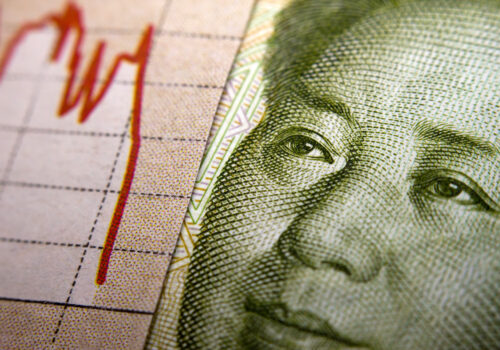
With the strengthening of the US dollar in the wake of continued interest rate increases by the US Federal Reserve and brewing pressures in a number of emerging market (EM), portfolio flows into EM countries slowed from $13.7 billion in July to just $2.2 billion in August. Companies and banks in both Argentina and Turkey borrowed heavily in dollar denominated debt while interest rates were low and are now faced with mounting debt burdens, which, if not backed by sufficient reserves puts them at risk for default if investors lose confidence. The Turkish lira has fallen over 40 percent in 2018. Its sharp decline in August raised concern of contagion to other markets, as the Indonesian rupiah, the South African rand, and the Indian rupee have also come under pressure. This edition of the Econographic compares situation in Turkey with the Asian financial crisis in 1997, analyzes root causes of the current pressures in Turkey, and assesses the broader implications for EM economies.
Economy & Business
European Union

EconoGraphics

Aug 8, 2018

JEEPA – Japan-EU Free Trade Agreement Leaves the US Out in the Cold

By Cecilia Pan and Ole Moehr

While President Trump is pursuing a protectionist trade agenda – halting negotiations for the Transatlantic Trade and Investment Partnership (TTIP), pulling out of the Trans-Pacific Partnership (TPP), and threatening trade wars against adversaries and allies – Japanese Prime Minister Shinzo Abe has been doing just the opposite. As part of Abenomics’ third arrow, the Prime Minister is forging global partnerships between Japan and other leading economies to foster economic growth. Case in point, the Japan-EU Economic Partnership Agreement (JEEPA) signed on July 17, 2018. This edition of the EconoGraphic will review this ambitious bilateral free trade agreement, assess its impact on the US economy, and explore the consequences of the United States’ retreat from its role as the global leader for free trade.

Economy & Business
European Union

EconoGraphics

Jul 19, 2018

US Iran Sanctions Could SpOIL the Global Economy

By Ole Moehr

The Trump Administration’s “maximum pressure” approach against Iran to reduce Iranian crude oil exports to zero as soon as possible is expected to rattle markets and could undermine the credibility and effectiveness of US sanctions. This edition of the EconoGraphic outlines how re-imposed US sanctions against Iran will affect the global oil market, the price of oil, US consumers, and the American economy.

China
Economy & Business

EconoGraphics

Jun 22, 2018

There’s a New Tariff in Town: Implications of Trump’s Steel Tariffs

By Ole Moehr

Economists consider tariffs a tax on consumers. Case in point, President Trump’s former chief economic advisor Gary Cohn. He recently warned that the administration’s twenty-five percent tariff on steel and ten percent tariff on aluminum combined with threatened duties on Chinese goods could cancel out the 2017 tax cut. This edition of the EconoGraphic provides an overview of how the Trump Administration’s steel tariffs might impact the US economy.

Economy & Business
Trade and tariffs

EconoGraphics

Jun 4, 2018

GDPR’s Quest for World Domination

By Ole Moehr

On May 25, the European Union’s (EU) sweeping new data privacy regulation came into force. The General Data Protection Regulation (GDPR) provides EU residents with more control and protection of their data.

Brazil
Economy & Business

EconoGraphics

May 18, 2018

US Sanctions’ Global Impact – A Case Study of RUSAL’s Supply Chain

By Ole Moehr

On April 6, 2018, the Trump Administration imposed stiff economic sanctions on 37 Russian oligarchs, oligarch-owned companies, Russian government officials, and state-owned companies.

Economy & Business
Financial Sanctions and Economic Coercion

EconoGraphics

Apr 12, 2018

Africa Embraces the Promise of Free Trade

By Ole Moehr, Zachary Coles, and Alexatrini Tsiknia

Africa Embraces the Promise of Free Trade

Africa
Economy & Business

Content

EconoGraphics

Oct 25, 2016

CETA: Why “Comprehensive” Matters

By Filippos Letsas

On October 14th, the regional parliament of Wallonia, a French-speaking region of 3.6 million people in Belgium, voted to block the Comprehensive Economic and Trade Agreement (CETA), a proposed trade agreement between the European Union (EU) and Canada, which has been negotiated for over 7 years.

Economy & Business
European Union

EconoGraphics

Oct 7, 2016

Europe′s Fiscal Burden in Focus

By Filippos Letsas

The European Union’s (EU) Stability and Growth Pact requires Eurozone countries to annually lay out their fiscal plans for the following three years. The European Commission (EC) then compares the member states’ reports with its own projections and those produced by independent bodies, such as the International Monetary Fund (IMF), to evaluate whether the member states are on track to reach their Medium-Term Budgetary Objectives (MTOs).

Economy & Business
European Union

EconoGraphics

Sep 30, 2016

Myanmar: Post-Sanctions Landscape

By Filippos Letsas

On the occasion of Myanmar’s State Counselor Aung San Suu Kyi’s recent visit to the United States (U.S.), President Obama announced that executive sanctions on Myanmar would soon be lifted. This will grant Myanmar greater access to the U.S. market and encourage U.S. companies to invest in the country. Trade between the two countries remains at relatively low levels (i.e. $225 million in 2015), with U.S. investment to Myanmar accounting for only 0.2% of the country’s Foreign Direct Investment (FDI).

Economy & Business
Financial Sanctions and Economic Coercion

EconoGraphics

Sep 13, 2016

TTIP = So (Ger)Many Benefits

By Filippos Letsas

As the most export-driven major economy in the European Union (EU), Germany stands to benefit greatly from a robust Transatlantic Trade and Investment Partnership (TTIP) agreement.

Economy & Business
European Union

EconoGraphics

Jul 12, 2016

Taking Stock of European Banks: Improvements Amid Challenges

By Nathaniel Rome

Since the British referendum, Europe’s banking sector has come under renewed scrutiny from financial markets as well as European Union officials and finance ministers. A primary focus is on Italy - which has accumulated $400 billion in gross bad loans - and the EU-Italy talks about how to recapitalize the weak Italian banks.

Economy & Business
European Union

EconoGraphics

Jun 29, 2016

Econographics – TTIP

By Nathaniel Rome

The United Kingdom’s (UK) vote last week to leave the European Union (EU) has raised questions about the future of the Transatlantic Trade and Investment Partnership (TTIP). TTIP is a trade agreement currently being negotiated by the United States (US) and the EU that will eliminate tariffs, reduce red tape, and set a new standard for international trade agreements. Following the Brexit vote, US Trade Representative Michael Froman and European Commissioner for Trade Cecilia Malmström released statements reaffirming their commitment to TTIP.

Economy & Business
European Union

Bremain vs Brexit

Jun 21, 2016

London Riches Falling Down

By Nathaniel Rome

London is the undisputed financial capital of Europe, and is rivaled only by New York City for the top spot worldwide (Global Financial Centers Index). When competing on a level playing field, London outperforms other major European financial centers because of the superior human capital, infrastructure, and regulatory environment of the city. London dominates 78 percent of European FOREX trading and generates a trade surplus worth tens of billions of pounds (UK Office of National Statistics).

Economy & Business
European Union

Bremain vs Brexit

Jun 9, 2016

Britannia, Rule the Trade!

By Nathaniel Rome & TK Spandhla

The decades following World War II experienced an explosion of global trade. The annual growth rate of global exports averaged 8 percent in the 1950s, 9 percent in the 1960s, and 20 percent in the 1970s (World Trade Organization). During this boom of global trade, the volume of UK exports grew in absolute terms. However, up until the mid-1970s, the UK trade growth lagged behind the global average.

Economy & Business
European Union

EconoGraphics

Jun 1, 2016

Not The Time to Falter: Economic Sanctions Against Russia

By Alvaro Morales Salto Weis

As the European Union (EU) prepares to unanimously extend its economic sanctions on Russia when they expire on July, it is a good opportunity to take a closer look. After Russia´s illegal annexation of Crimea and interference in Eastern Ukraine, the U.S. and the EU enacted economic sanctions in a coordinated manner, which were followed by other Allies and partners like Canada and Australia.

Economy & Business
Europe & Eurasia

EconoGraphics

Apr 13, 2016

Europe’s Path to Budget Equilibrium

By Alvaro Morales Salto Weis & TK Spandhla

The European Union’s 28 member nations are required by Stability and Growth Pact to keep their budget deficits to within 3 percent of GDP. According to the European Commission forecast (as of winter 2016) six countries will exceed this level in 2016: the U.K., France, Spain, Greece, Croatia and Portugal. Romania will post a deficit at the threshold. This is an improvement from 2009 and 2010, when no fewer than 22 EU countries overstepped the deficit limit.

Economy & Business
European Union