Our programs and centers deliver in-depth, highly relevant issue briefs and reports that break new ground, shift opinions, and set agendas on public policy, with a focus on advancing debates by integrating foundational research and analysis with concrete policy solutions.
When major global news breaks, the Atlantic Council’s experts have you covered—delivering their sharpest rapid insight and forward-looking analysis direct to your inbox.
Reports from the front lines of global policy—by the experts shaping it.
A weekly column by Atlantic Council President and CEO Frederick Kempe, Inflection Points focuses on the global challenges facing the United States and how to best address them.
UkraineAlert is a comprehensive online publication that provides regular news and analysis on developments in Ukraine’s politics, economy, civil society, and culture. UkraineAlert sources analysis and commentary from a wide-array of thought-leaders, politicians, experts, and activists from Ukraine and the global community.
MENASource offers the latest news from across the Middle East, combined with commentary by contributors, interviews with emerging players, multi-media content, and independent analysis from fellows and staff.
Econographics provides an in-depth look at trends in the global economy utilizing state-of-the-art data visualization tools.
Article
By Michael Sheldon
Russian escalation at the Kerch Strait ended in cannon fire and the capture of three Ukrainian vessels, with at least six Ukrainian sailors wounded.
By Aric Toler
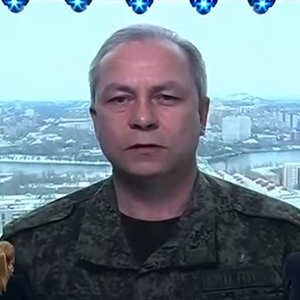
Officials of the so-called Donetsk People’s Republic (DNR) claimed that “a group of military specialists from Great Britain” arrived in Bakhmut.
2018 Elections in Latin America
By Luiza Bandeira
On October 7, a few hours after a runoff between the far-right candidate Jair Bolsonaro and leftist Fernando Haddad was announced, capoeira master Moa do Katende was stabbed to death in a bar.
Ahead of Brazil’s presidential election on October 7 vote, false narratives about electronic voting fraud have spiked and deepened mistrust.
By Atlantic Council
Uma análise das 20 notícias sobre corrupção que geraram mais engajamento nas redes sociais este ano mostra que fontes de baixa credibilidade conseguiram atrair mais engajamento do que veículos tradicionais. Dentre as 20 notícias que atraíram mais interações no Facebook e no Twitter entre fevereiro e agosto deste ano, cinco não eram confiáveis: quatro eram […]
By Vladimir Petreski and Kanishk Karan
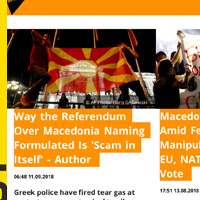
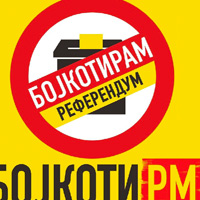
Ahead of the September 30 nationwide referendum to determine the country’s name, Macedonia remains on high alert for disinformation from at home and abroad.
By Vladimir Petreski
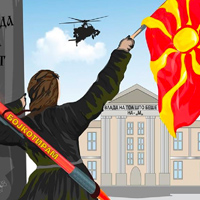
Ahead of Macedonia’s naming referendum on September 30, Nazi imagery and accusations have been inserted into the political dialogue online.
A significant number of Brazilians joined the social network Gab.ai after Twitter suspended accounts associated with the far-right in the country.
By Kanishk Karan
Macedonia’s information environment is becoming clouded with distorted and polarizing narratives by some Russian media outlets, especially from Sputnik .
Ahead of Macedonia’s naming referendum on September 30, the boycott proponents attempted to disparage similar nationalist sentiment in the United States.
If refreshing the page doesn't resolve the issue you could try clearing the sites browser cache.
LIVE: The 2026 Distinguished Leadership Awards