Our programs and centers deliver in-depth, highly relevant issue briefs and reports that break new ground, shift opinions, and set agendas on public policy, with a focus on advancing debates by integrating foundational research and analysis with concrete policy solutions.
When major global news breaks, the Atlantic Council’s experts have you covered—delivering their sharpest rapid insight and forward-looking analysis direct to your inbox.
Reports from the front lines of global policy—by the experts shaping it.
A weekly column by Atlantic Council President and CEO Frederick Kempe, Inflection Points focuses on the global challenges facing the United States and how to best address them.
UkraineAlert is a comprehensive online publication that provides regular news and analysis on developments in Ukraine’s politics, economy, civil society, and culture. UkraineAlert sources analysis and commentary from a wide-array of thought-leaders, politicians, experts, and activists from Ukraine and the global community.
MENASource offers the latest news from across the Middle East, combined with commentary by contributors, interviews with emerging players, multi-media content, and independent analysis from fellows and staff.
Econographics provides an in-depth look at trends in the global economy utilizing state-of-the-art data visualization tools.
Translate this site
Translate the page or open accessibility tools from the same menu.
Choose a language for this page.
No matching languages found.
Current language: English
Adjust text size, contrast, link visibility, and motion from the same menu.
Accessibility tools are set to default.
Report
By Brian Whitmore
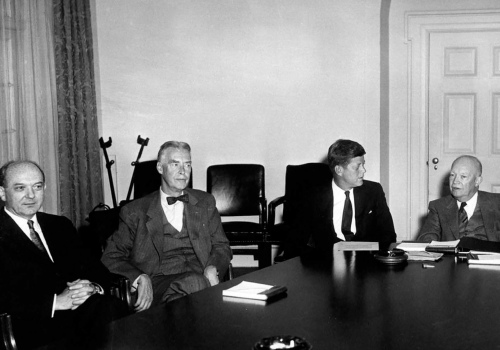
The latest Atlantic Council Eurasia Center report examines the lessons from the post-Cold War period and what the United States and its allies can do to counter Russian revanchism today.
By Dominika Kunertova
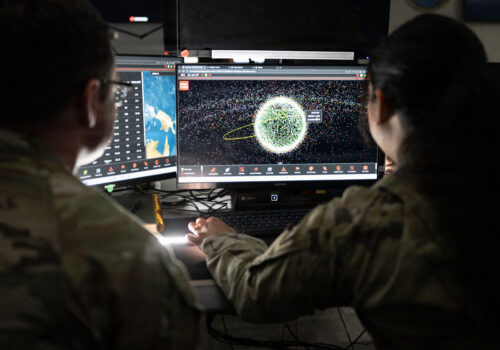
NATO’s competitive edge in the era of emerging and disruptive technologies will come from treating AI as a general-purpose enabler embedded across the Alliance’s digital backbone. Military AI does not generate new risks but creates more room for human error and miscalculation. Accidents and inadvertent escalation thus become more likely as military systems bring in more AI components.
By Richard D. Hooker, Jr.
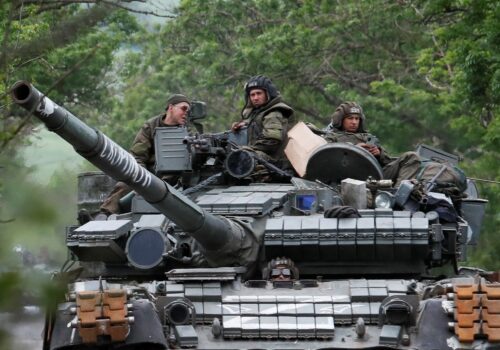
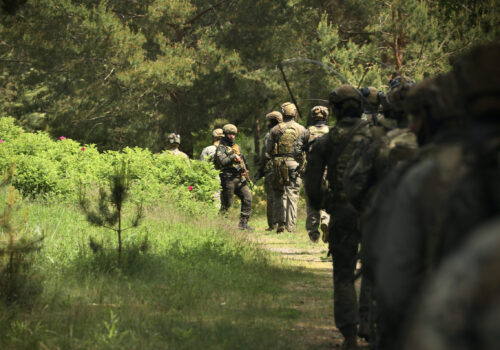
Five key places in the Nordic and Baltic region are in the Kremlin's crosshairs. How should NATO prepare?
By Massimo Morelli
Giorgia Meloni’s three-year tenure as prime minister is unusually long by recent Italian standards. As her government faces its biggest test yet with a referendum on judicial reforms, what explains Meloni’s relative stability—and the frequent turnover that preceded it? A deep dive into economic and political indicators sheds light on Italy’s path forward.
Freedom and Prosperity Around the World
By Gilles Olakounlé Yabi
Benin’s democratic gains since 1990 have eroded over the past decade amid growing executive centralization, shrinking political competition, and rising insecurity. Renewing strong institutions and political openness is key to shared prosperity.
By Asaad Sam Hanna
In the year since the ouster of the Assad regime in December 2024, Syria has undergone a massive transformation. How has this played out so far?
By Can Kasapoğlu
As Russia’s invasion of Ukraine proved the importance of air and missile defense, Ankara's Steel Dome initiative can demonstrate a critical solution.
By Murat Yeşiltaş
The US-Turkey relationship can progress not only through crisis-producing issues but also through crisis-preventing areas of agreement.
By Rich Outzen
If Turkey and the US pursue compatible goals and interests, room remains to balance internal political benefits with geopolitical cooperation.
By Atlantic Council Turkey Program
A Q&A with Congressman James Walkinshaw on US-Turkey relations, the Caucus on US-Turkish Relations and Turkish Americans, and Congress’s role in foreign policymaking.
If refreshing the page doesn't resolve the issue you could try clearing the sites browser cache.