
GALLE—For the past two years, I have been based largely out of Sri Lanka, closer to Asian clients, while still working regularly from Washington and London. The experience has been an education in emerging market resilience. This is a society in recovery from conflict and natural disaster that remains exposed to external shocks, challenged by entrenched interests, and subject to the influence of larger neighbors. Forged in this crucible, Sri Lanka’s tightly knit communities are highly adept at managing uncertainty. But over the past two weeks, that resilience has been tested in ways that are both familiar and deeply alarming.
Since the US and Israeli strikes on Iran, Sri Lanka has been an unlikely subject of headlines. It provided emergency rescue to Iranian sailors after the US torpedoed their ship off the coast near the city of Galle, where I live. It also gave refuge to a second crew and impounded their vessel in a remote port to keep it away from sensitive commercial traffic around Colombo. A relatively new popular government is desperate to remain neutral and focus on the reforms it was elected for. Yet painstaking economic recovery is now colliding with a massive energy crisis and its immediate effects.
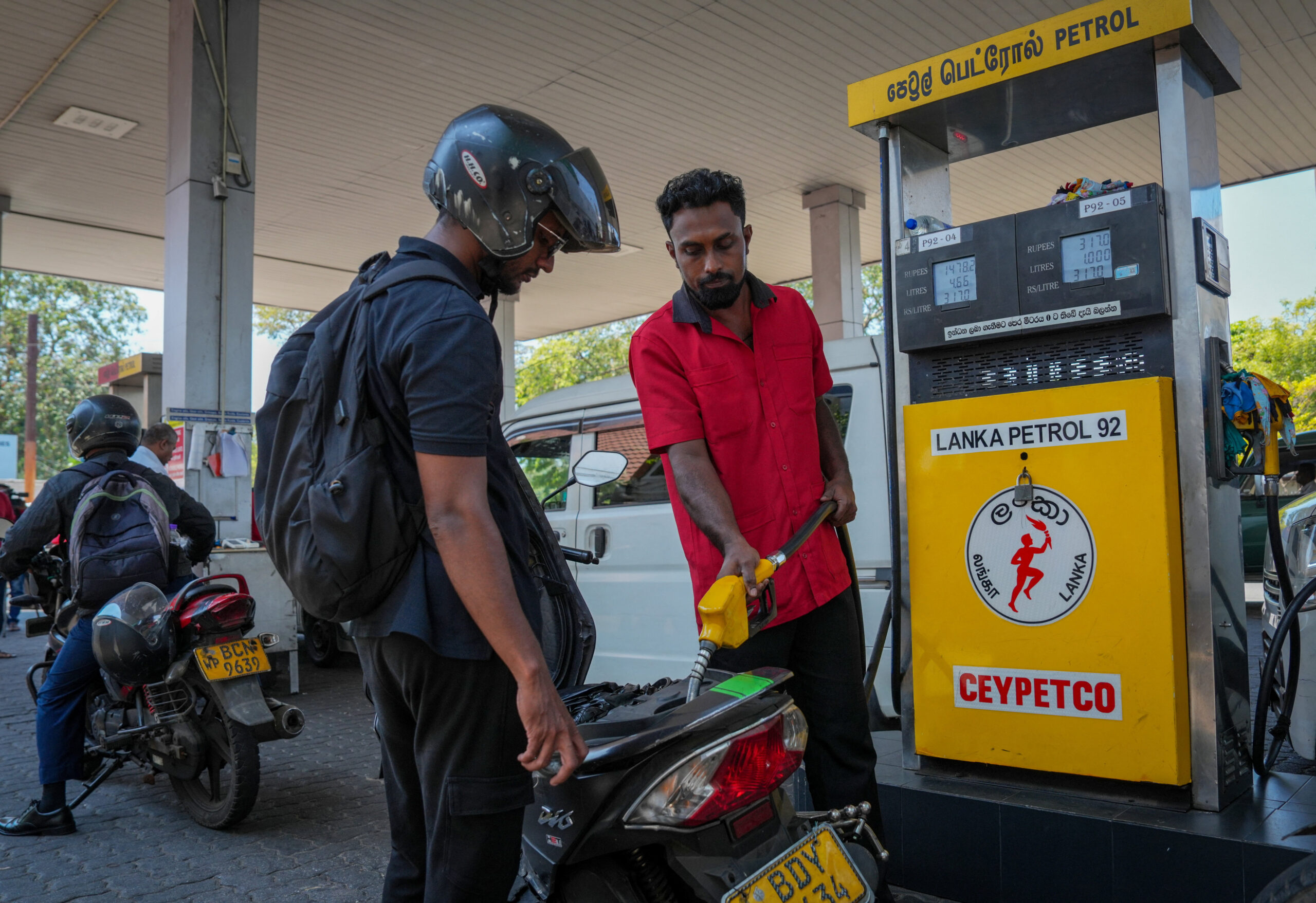
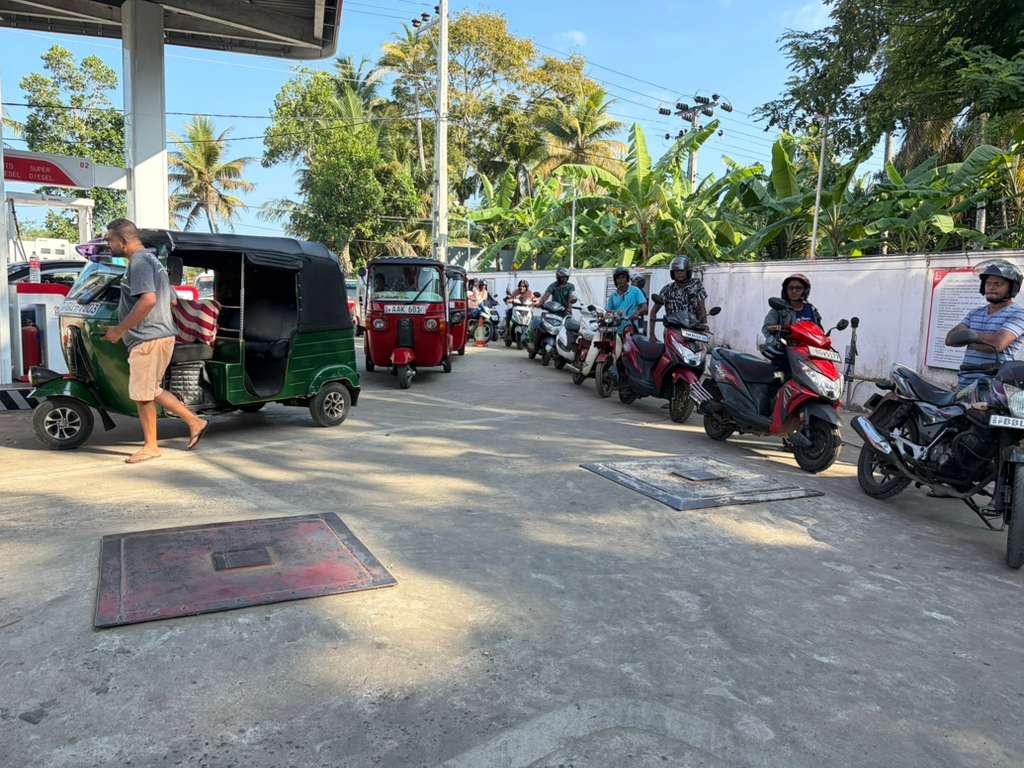
The disruption to flows through the Strait of Hormuz, through which roughly one fifth of global oil and shipped gas transits, has triggered a rapid and systemic shock to energy markets. Prices have surged and availability has tightened severely. A crippling shortage of liquefied petroleum gas (LPG) means there is little fuel for cooking. Restaurants and small businesses are shuttering. The lack of fertilizer shipments is thwarting the critical March planting season in this heavily agricultural country. Petrol stations faced strain initially from panicked hoarding behavior (memories of the 2022 crisis are still fresh), and, more recently, from restricted distribution.
Sri Lanka is just a small example of the energy havoc spreading around the world. Within days of the conflict’s outbreak and the disruption in the Strait of Hormuz, much of South and Southeast Asia have moved from price pressure to physical constraint. Asia is particularly reliant on oil and gas from the Gulf, with around 60 percent of its crude oil imports and nearly a third of its liquefied natural gas (LNG) moving through the strait. Almost all countries in the region import most of their fuel and gas, and some only have enough supplies to last a few more weeks. Several Southeast Asia–based refineries, including facilities in Singapore and Malaysia, have cut back output due to constrained crude availability. Panic fuel-buying has spread to the Philippines, Indonesia, Thailand, Vietnam, and Myanmar. Household reliance on imported LPG is on another scale altogether in India, where hundreds of millions of customers wait for days to replace canisters.
This is what a real energy shock looks like on the ground.
Governments are now scrambling to secure supply, drawing on limited reserves, issuing emergency tenders, and in many cases trying to reduce demand.
In recent days, the Sri Lankan government has taken extraordinary steps. It introduced a four-day workweek, and it began moving schools to remote learning on Wednesdays. Transport and public services are being curtailed. On March 15, the government reintroduced a mandatory petrol rationing program that saw millions of subscribers crash the registration website. These are emergency responses to address a fuel-import dependent system under stress.
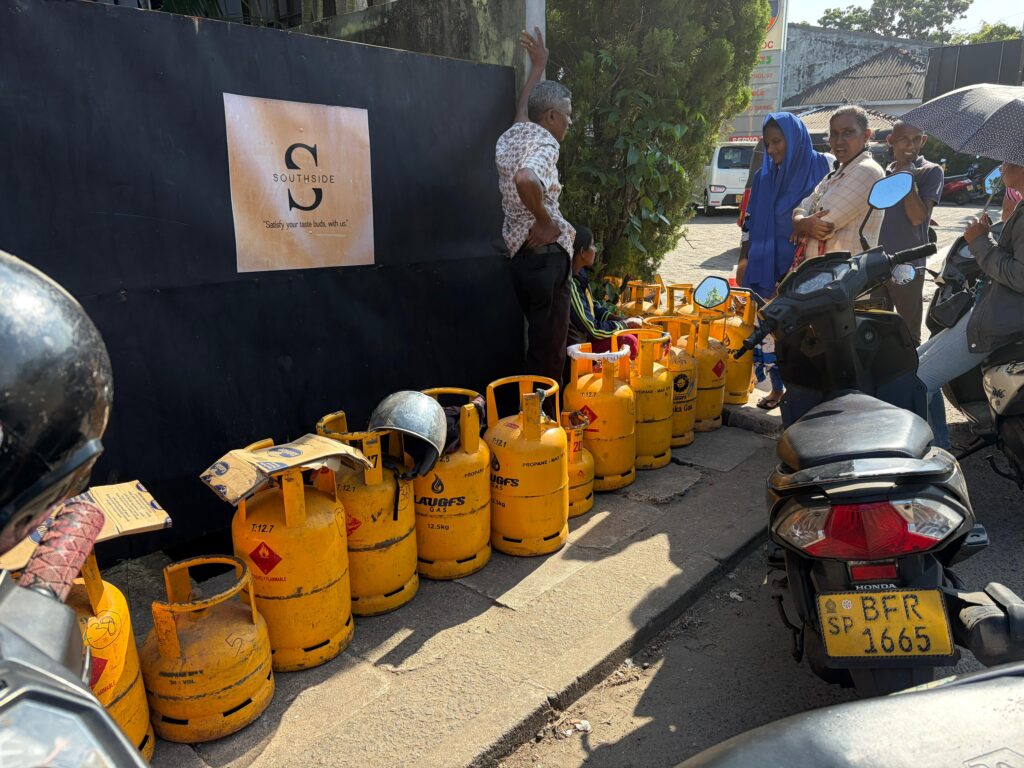
Lines form to purchase gas near Galle, Sri Lanka, on March 17, 2026. (Phillip Cornell)
Sri Lanka is not alone. Across Asia, governments are implementing emergency measures. Countries are prioritizing household LPG over commercial use. Industrial activity in sectors such as petrochemicals is being curtailed. The Philippines has shortened the workweek. Pakistan has closed schools. Myanmar introduced mobility restrictions.
Air travel is highly sensitive to fuel prices, and airlines are now cutting routes as jet fuel prices rise sharply. This is compounding the air travel chaos caused by closed airspace over the major Gulf “superconnector” airline hubs, with direct impacts on Asian tourist destinations. Across southern Sri Lanka, hotel bookings have dried up.
The latest pressures have been on the power system in Sri Lanka. The Ceylon Electricity Board is a traditional integrated utility; less than 10 percent of its generation is from liquid fuel. But fuel still provides key flexibility, and local diesel generators are common. After a dry season that reduced hydroelectric capacity, and labor disputes in the face of critical power sector reforms, the fuel shortage is adding to existing system stress. Rolling curtailments and power outages began in earnest this week, forcing hotels and critical services like hospitals to draw further on diesel stocks to feed emergency generation.
The economic effects of these various price and supply shocks are quick to materialize. Higher fuel costs are feeding through into transport and food systems, contributing to inflation and growth pressures. Prices for daily goods at our local markets have already gone up as shopkeepers anticipate supply chain disruptions. Economies like Sri Lanka are particularly exposed due to weaker currencies, limited fiscal space, and dependence on imports. The International Monetary Fund has warned that sustained increases in energy prices could raise inflation and reduce growth globally, with emerging markets especially exposed.
Perhaps the most important development is that demand destruction is already underway. The Financial Times, citing JPMorgan analysis, shows that refined fuel shipments in Asia have fallen by 30 to 35 percent, while global oil demand could drop by around one million barrels per day as a result of both price increases and policy measures. The speed of adjustment makes the current crisis unique. During the 2022 energy shock following Russia’s invasion of Ukraine, for example, the effects unfolded over months as supply chains reoriented. In this case, disruption to a central maritime artery has compressed the timeline. Physical shortages, policy responses, and economic contraction are occurring in rapid succession.
Rationing and demand suppression can provide temporary relief, but perceptions and expectations of duration are already causing changes in behavior. Business owners are contemplating risk-mitigation investments such as solar panels and batteries. A neighbor has become the local agent for Sri Lankan–built electric three-wheelers to replace the classic tuk-tuk. There is a real sense of preparing for a structural change.
Motorists line up to purchase gas near Galle, Sri Lanka, on March 17, 2026. (Phillip Cornell)
Resilience is a word often used to describe technical systems, but it is ultimately about people. Sri Lanka has endured considerable hardship in recent decades, but a very real sense of community and shared responsibility provide informal social safety nets that kick into action during tough times. Even as only a guest of the country, I have felt embraced by the community. Invitations to communal iftar dinners, shared use of barbecues or microgrids, and conviviality during hour-long waits for petrol are just small examples of a community solidarity that feels different.
In developed economies, economic disruption is often framed in terms of price increases and inflation. In markets where the impact on daily activities such as cooking, transport, and work is immediate and tangible, disruption becomes a test of crisis behavior.