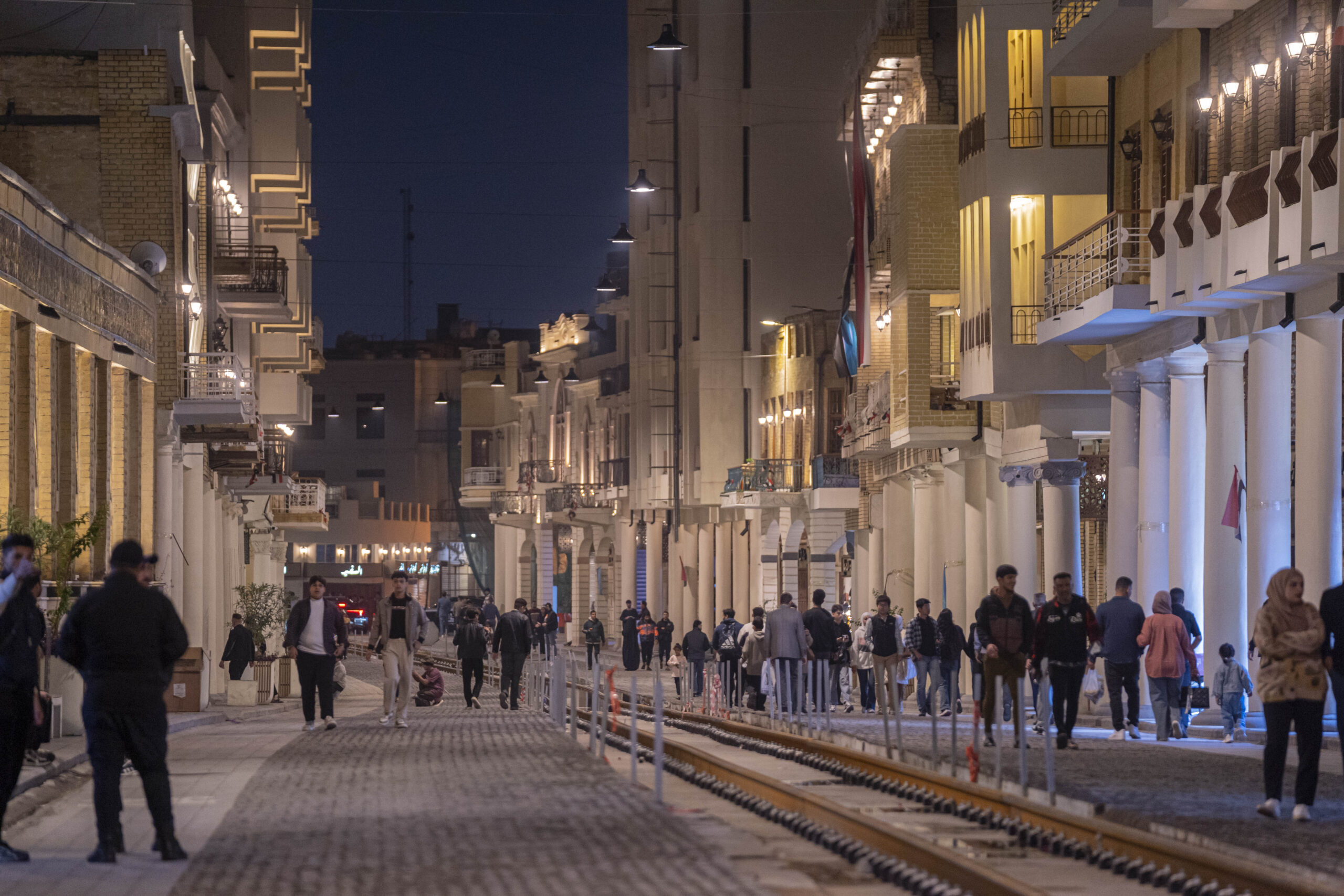
BAGHDAD—A few months ago, the Economist proclaimed Baghdad the world’s “surprise boomtown.” And indeed, signs of construction are evident throughout the city. So potent is the image of the construction crane that Prime Minister Mohammed Shia’ al-Sudani used a crane as a symbol for his Reconstruction and Development bloc during the country’s November 11 parliamentary elections, with campaign billboards featuring a photo of Sudani in a hard hat.
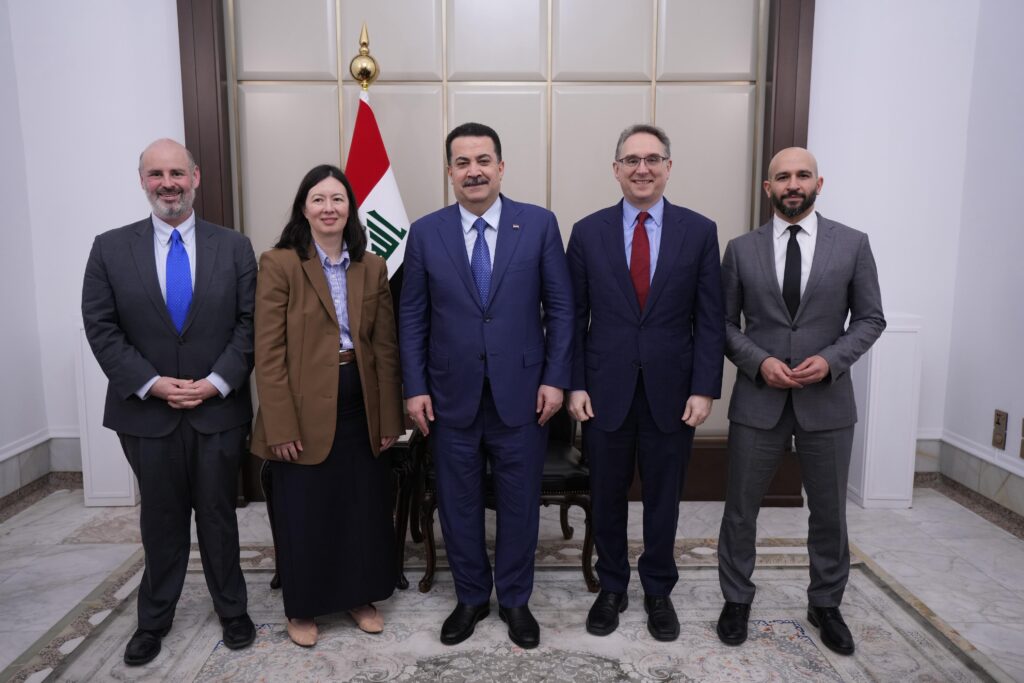
Now one of the most pressing questions for the trajectory of Iraqi democracy and society is whether the country’s political system can keep pace with the change on display in the streets. As our Atlantic Council delegation met with Iraqi politicians, analysts, journalists, and youth in Baghdad, Erbil, and Dohuk, I heard messages of optimism about Iraq finally heading in the right direction. But I also heard deep skepticism that the Iraqi political system will be able to effectively confront the many challenges ahead.
The “Shia house”: The winner does not take all
Following Iraq’s election, the country’s political elite launched internal discussions—largely along sectarian lines—to form the next government. The prime minister’s Reconstruction and Development bloc won the most votes (1.3 million) and the most seats (forty-six) in last month’s elections. Sudani’s electoral success reflects his high approval ratings, with pollster Munqith Dagher pointing to surveys showing Sudani as the most popular politician in Iraq in the period since 2003. The fact that Sudani’s Furatayn Movement only won one seat—his own—in the 2021 election is a testament to both his political success in this election and the limited connection between the number of seats won and the selection of the prime minister.
Although the Shia political parties that make up the governing Coordination Framework ran on separate lists, the Framework quickly coalesced in the days following the election. Shia political leaders told us there was a firm consensus—with the notable exception of Sudani—that no prime minister should receive a second term and that the next prime minister would not be permitted to form his own political party.
Even as the Framework leaders continued to debate the merits of various prime ministerial candidates, the decision was already clear: Iraq’s next prime minister will, in effect, serve as a “general manager”—implementing the Framework’s policies, but not developing them.
Sunnis and Kurds are divided
If Sudani had any hope of forming a cross-sectarian alliance built on support from Kurdish and Sunni parties, the possibility appeared remote in the first days after the election. Sunni and Kurdish leaders largely shared the Shia position that Iraqi prime ministers should be limited to one term, with political leaders from across the spectrum pointing to former Prime Minister Nouri al-Maliki’s semi-authoritarian second term as a cautionary tale.
In the first days after the election, little appeared to unite the Sunnis, save for a general agreement among them that Mohamed Halbousi, the leader of the Taqadum party, should not be speaker of parliament again. On November 23, the Sunnis announced their own alliance, the National Political Council, designed to act as a quasi-Framework for the Sunnis and intended to demonstrate unity against the Shia bloc. But so far, this union remains untested.
Our meetings in Kurdistan served as a reminder that the region’s two main parties, the Kurdistan Democratic Party (KDP) and the Patriotic Union of Kurdistan (PUK), have yet to finalize key elements of the Kurdistan Regional Government (KRG) more than a year after the October 2024 elections. Some politicians speculated that the Kurds could delay Baghdad’s government-formation process given the divisions between the two sides over which party would control key KRG ministries and whether the KDP would insist on holding the Iraqi presidency following a pattern of PUK control.
Militias remain a powerful force
Politicians and parties aligned with militia groups gained ground in last month’s elections. Sadiqoun, the political wing of the US-designated Foreign Terrorist Organization Asa’ib Ahl al-Haq, won twenty-seven seats, up from seven in the prior election. The militia-affiliated (but still undesignated) Badr Organization won eighteen seats, and a number of militia-affiliated candidates appeared on lists for mainstream political parties. By some counts, militia candidates now represent more than fifty seats in the parliament, demonstrating that these groups remain influential political actors.
In my discussions with many Iraqi politicos, I heard a clear acknowledgement that Iraq’s next prime minister would have to bring the militias under state control. At the same time, the militias’ growing political and economic power will pose a significant domestic political challenge to any effort to do so. It’s likely that US officials have quietly drawn a red line insisting that militia groups that Washington has designated as Foreign Terrorist Organizations be excluded from the next government. If that’s the case, it will pose a political challenge for the Framework given the strong showing of militia-affiliated parties.
The United States still matters
Even if Iraq has largely fallen off Washington’s radar, Iraqis were eager to discuss the US-Iraq partnership. Kurds, Sunnis, and even Iraq’s Shia leaders, emphasized the importance of the US relationship and their desire to strengthen it.
While Iran’s influence in the country remains ever-present, the behind-the-scenes political maneuvering I witnessed was largely Iraqi-driven, apparently motivated more by domestic political considerations than by any external pressure. Shia political leaders reflected a consensus behind an Iraqi foreign policy that balanced a strong partnership with the United States with a longstanding historical relationship with Iran. Multiple Iraqi political leaders and analysts emphasized to me that the next prime minister would pursue continuity in Iraqi policy, including toward the United States.
A growing gap between the public and elites
While Iraqi politicians may be deeply invested in the election results and government-formation process, that doesn’t mean the Iraqi public as a whole is. Many Iraqis I spoke with had already concluded that elections don’t matter all that much. Seasoned political analysts, civil-society activists, and young Iraqis expressed their disaffection with the political process, with some even admitting that they did not vote in last month’s elections and did not wish to legitimate Iraq’s political system.
A group of young Iraqis pointed to disappointment following the government’s repression of the 2019 Tishreen movement, when Iraqi youth went to the streets to demand fundamental political change, and the failure of independent candidates and political activists to effect any changes after they entered parliament in 2021. Instead, they asserted, some of these activists had been co-opted by the political system, joining the mainstream parties against which they had originally campaigned. In this year’s elections, the independent and civil-society candidates were largely wiped out.
Iraqi politicians of all stripes noted higher-than-anticipated voter turnout, but naysayers countered that this was the “billionaires’ election”—one where that turnout was more the result of unprecedented political spending than a surge in voter enthusiasm.
For many Iraqis, the fact that electoral outcomes have so little bearing on the process for forming governments is yet another reminder that the political system has few mechanisms for the average citizen to hold its leadership accountable.
The promise of a changed Iraq
Even so, I experienced the promise of a different Iraq. As I drove down so-called Route Irish, the road from Baghdad Airport to the Green Zone, it was easy to forget that this path was once infamous for being the site of frequent attacks on US convoys. Until just this year, the US State Department was still using Black Hawks to transport staff from the airport to the US Embassy. My delegation drove along the road peacefully in a normal car.
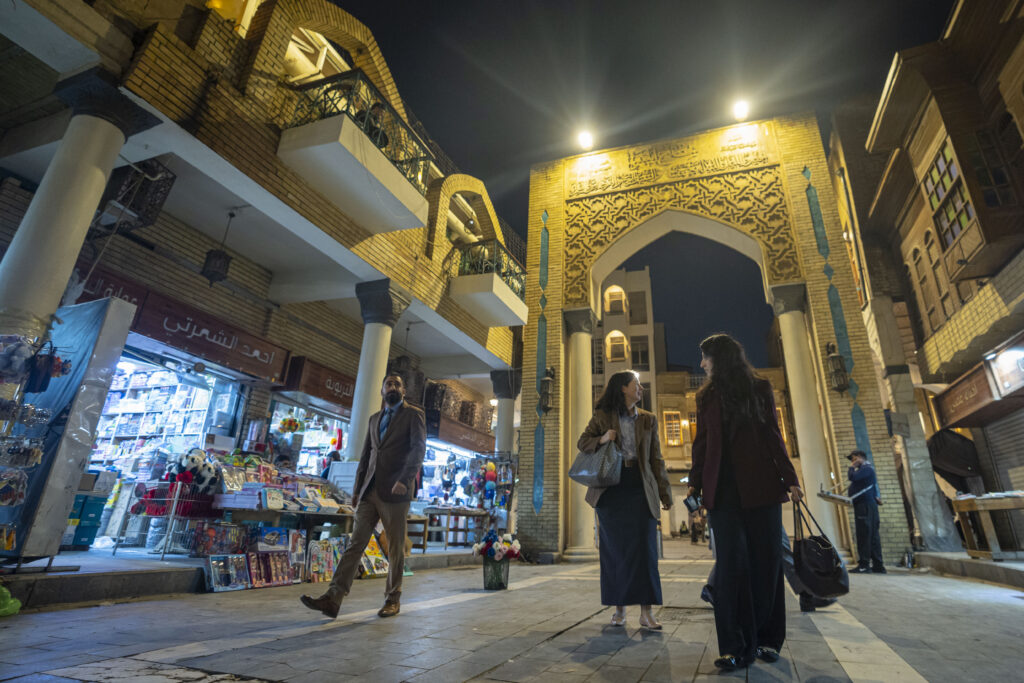
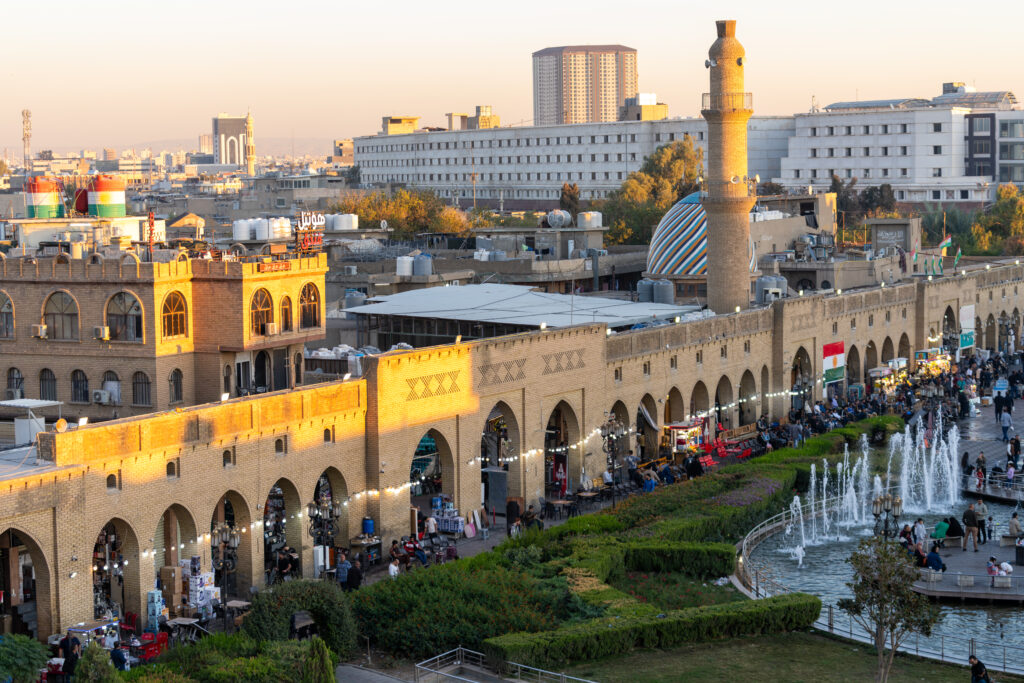
While in Baghdad, I walked down al-Mutanabbi street, the historic corridor filled with booksellers and cafés, rebuilt in recent years after a devastating car bomb in 2007 killed more than thirty people and destroyed this hub for Iraqi intellectuals. I roamed freely in Dohuk and Erbil, shopping in bazaars, walking around the Erbil Citadel, and sampling the local cuisine at restaurants.
Despite the many challenges ahead, I left Iraq asking myself, after two decades of conflict, whether the country has turned the corner. Often during my visit, I sensed an eagerness for change among Iraqis. Soon, the next government will have an opportunity to meet this moment. There is no shortage of pressing issues for it to address, from the militias and economic reforms to the ongoing water crisis. But perhaps the most important step of all will be for the government to begin narrowing the divide between the political elite and the people.