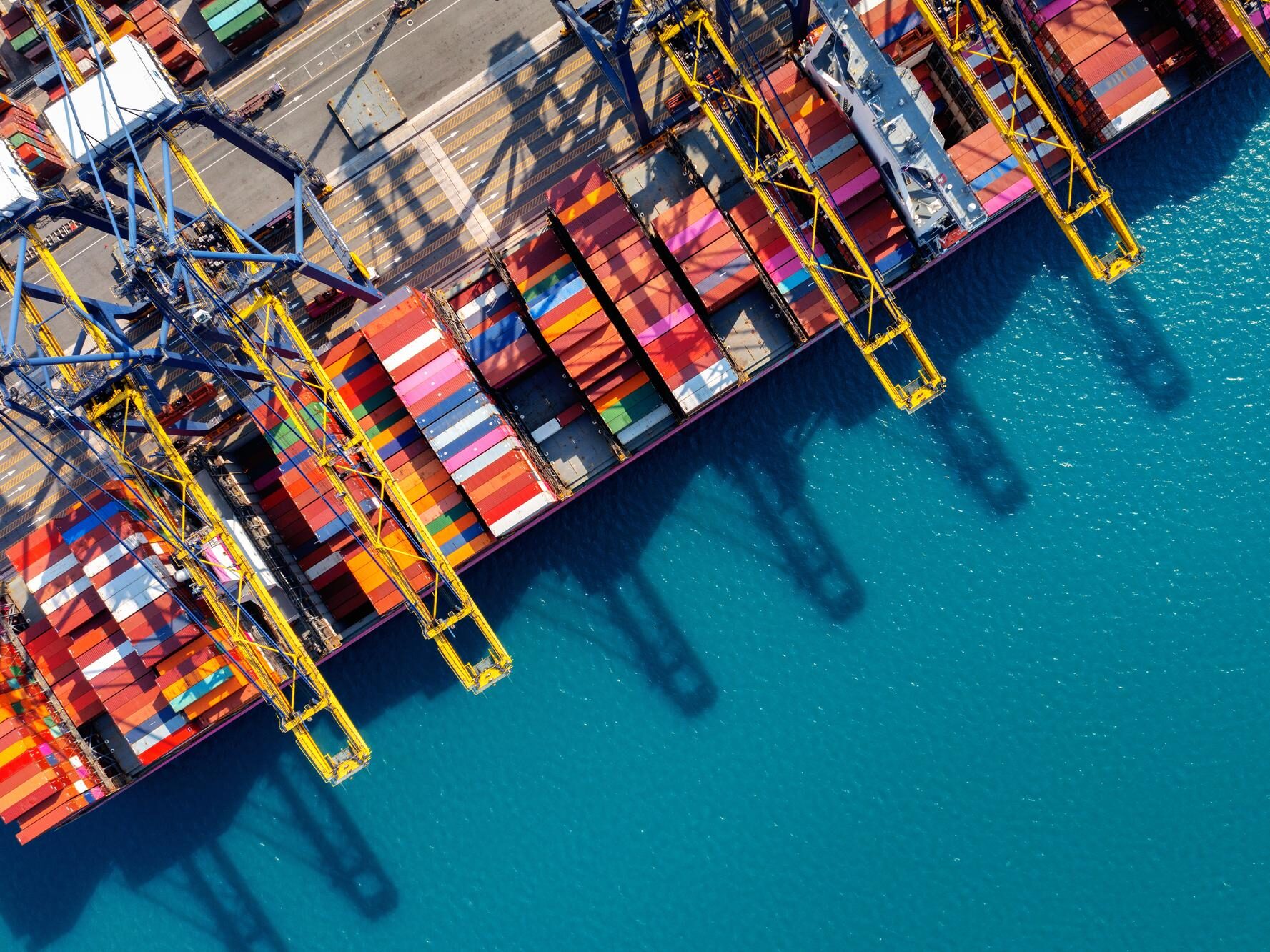
The foresight brief: Chokepoints past, present, and future
Bottom lines up front
- The Strait of Hormuz is just one example of a chokepoint: a strategically important connector through which goods, information, and more flows, with limited backup options.
- Chokepoints concentrate influence and vulnerability, and disruption at one cascades across global systems.
- Leaders should identify the chokepoints on which their organizations’ objectives depend and assess where disruption could constrain options.
The Atlantic Council and World Economic Forum collaborated to produce this edition of the Foresight Brief, a forward-looking content series that scans the horizon for the most consequential risks, opportunities, and areas for global cooperation.
Chokepoints are one such. A chokepoint is a strategically important connector to which there are few or no alternatives, and through which goods, resources, services, or information flow. The significance depends not only on the volume each connector carries, but also on the consequences of disruption and the availability of substitutes. The closure of the Strait of Hormuz in 2026 illustrates this significance.
Chokepoints remain central to the global economy despite the growth of the information economy. Maritime straits, canals, ports, rivers, subsea cables, data centers, and cloud infrastructure all demonstrate the importance of physical systems and concentrated points of connection—the chokepoints upon which the global economy rests.
Their significance is changing as supply chains evolve, geopolitical competition intensifies, and climate change reshapes the physical world. New vulnerabilities may also emerge in digital infrastructure and, potentially, even in space.
For business leaders, chokepoints reveal strategic dependencies. Understanding where critical systems are concentrated, and how they may interact under stress, can help organizations assess exposure, identify alternatives, and strengthen their capacity to act before disruption occurs. Chokepoints are therefore not only vulnerabilities; they can also create opportunities for investment, cooperation, and competitive advantage.
read the full foresight brief
about the author

stay connected
Sign up for the latest research and events from the GeoStrategy Initiative
related reading

explore the program
The GeoStrategy Initiative, housed within the Scowcroft Center for Strategy and Security, leverages strategy development and long-range foresight to serve as the preeminent thought-leader and convener for policy-relevant analysis and solutions to understand a complex and unpredictable world. Through its work, the initiative strives to revitalize, adapt, and defend a rules-based international system in order to foster peace, prosperity, and freedom for decades to come.
Image: Designed by Freepik