
Recent analysis

Programs

The Global Energy Center develops and promotes pragmatic and nonpartisan policy solutions designed to advance global energy security, enhance economic opportunity, and accelerate pathways to net-zero emissions.

Events

Issue Brief

Jan 9, 2020

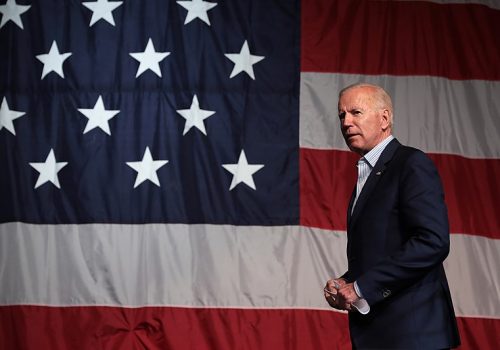
Election 2020: What’s at stake for energy policy?

By David L. Goldwyn, Andrea Clabough

As the US presidential election in November 2020 draws nearer, the energy policy platforms—including domestic energy, climate change, foreign, and trade policies—from the Democratic candidates, as well as the energy policies of a potential second Trump Administration, have become increasingly clear.

Energy Markets & Governance
Energy Transitions

Global Energy Forum

Jan 9, 2020

European energy diversification: How alternative sources, routes, and clean technologies can bolster energy security and decarbonization

By Richard L. Morningstar, András Simonyi, Olga Khakova, Irina Markina

The European Union’s efforts to achieve a carbon-neutral economy present a unique and timely opportunity to strengthen European energy security. What is the EU currently doing to meet its decarbonization goals, address the role of natural gas in Europe’s low-carbon future, and explain the potential for new gas sources, alternative gas routes, and clean energy technologies to reduce carbon emissions? And how can this be done while simultaneously increasing European energy security and opportunities for transatlantic cooperation?

Energy Markets & Governance
Energy Transitions
Manufacturing facility

Global Energy Forum

Jan 9, 2020

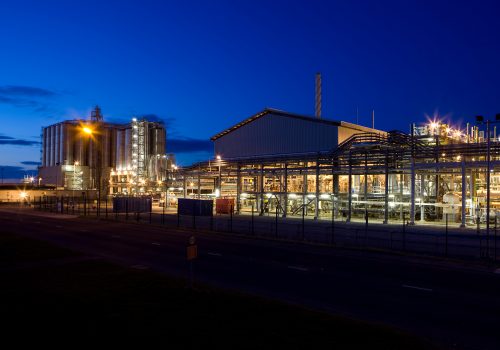
The Saudi Aramco-SABIC merger: How acquiring SABIC fits into Aramco’s long-term diversification strategy

By Private: Jean-François Seznec

Throughout 2019, financial markets have watched the planned Saudi Aramco initial public offering (IPO), which was finally launched in December. A quieter, but no less significant, story was the Saudi oil company’s acquisition of SABIC. Saudi Aramco strove to have a successful IPO, especially through increased transparency and diversification, and the SABIC acquisition was a key element of Saudi oil company’s diversification strategy. Going forward, what does the merger mean for both companies, what is the new relationship between Saudi Aramco and SABIC, and what are the merger’s implications for the intricate relationship between the various bureaucracies and leadership in Saudi Arabia?

Energy Markets & Governance
Energy Transitions

Content

Global Energy Forum

Jan 20, 2021

Transcript: Fatih Birol on what’s next for the energy system post-pandemic

By Atlantic Council

Fatih Birol tells the Atlantic Council's Global Energy Forum about how the energy sector will fare post-pandemic and the opportunities that lie ahead.

Energy & Environment
Energy Markets & Governance

New Atlanticist

Jan 20, 2021

What China’s march to net-zero emissions means for the world

By Larry Luxner

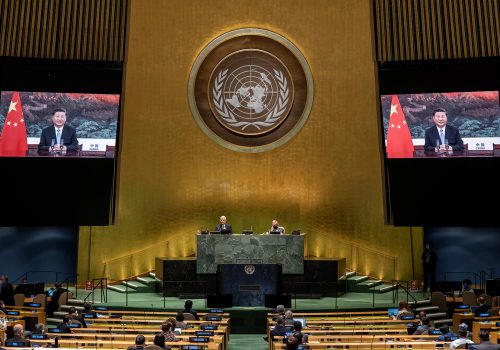
Chinese President Xi Jinping made a pledge to reach peak carbon dioxide emissions by 2030 and achieve carbon neutrality before 2060. Can China live up to the promises?

China
Energy & Environment

New Atlanticist

Jan 19, 2021

The world is about to embark on a big energy transition. Here’s what it could look like.

By Katherine Golden

“Real friends say the bitter truth,” said Fatih Birol, the executive director of the International Energy Agency, at the Atlantic Council's Global Energy Forum. And “the bitter truth is that real energy transitions are coming, and they are coming fast.”

Climate Change & Climate Action
Energy & Environment

New Atlanticist

Jan 19, 2021

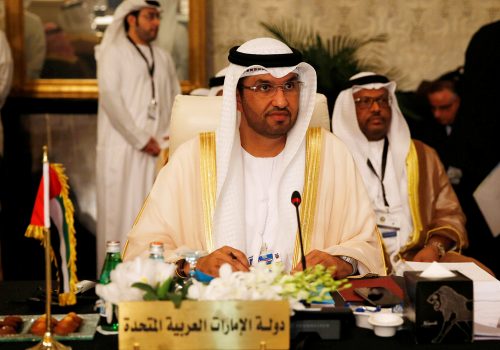
Top UAE officials assess renewables, peak oil, and the post-COVID energy market

By Larry Luxner

Dr. Sultan Al Jaber, UAE’s minister of industry and advanced technology, joined Suhail Al Mazrouei, the UAE minister of energy and infrastructure, and Musabbeh Al Kaabi, the CEO of UAE investments at the Mubadala Investment Company.

Energy & Environment
Energy Markets & Governance

Global Energy Forum

Jan 19, 2021

Transcript: Global Energy Forum conversations with Sultan Al Jaber, Suhail Al Mazrouei, and Musabbeh Al Kaabi

By Atlantic Council

The 2021 Global Energy Forum kicked off with conversations with top thought leaders on the future of energy.

Energy & Environment
Energy Markets & Governance

UkraineAlert

Jan 7, 2021

How to improve EU-Ukraine energy cooperation in 2021

By Olga Bielkova

Ukraine's GTSOU gas transportation system operator is hoping to expand cooperation with European partners in 2021 as part of efforts to diversify beyond the prior focus on Russian gas transit to EU markets.

Eastern Europe
Energy Transitions

In the News

Dec 13, 2020

Bell and Yellen quoted in ABC News on green hydrogen

Energy Transitions
Renewables & Advanced Energy

EnergySource

Nov 22, 2020

In states with key clean energy wins, utilities have a strong hand in driving or stalling progress

By Emily Burlinghaus

The 2020 US elections delivered some notable state and city-level wins for clean energy across the United States, notably in Nevada, Colorado, and Ohio. However, even in states that delivered victories for clean energy, utilities will still play a key role in driving—or stalling—the clean energy transition. The complex history of clean energy policy in each of these states points to the divergent paths both cities and states can take to decarbonize and the importance of striking a delicate balance between government, utilities, and public interests.

Climate Change & Climate Action
Elections

EnergySource

Nov 13, 2020

Trade is the key to US energy security, which trumps US energy independence

By Emily Burlinghaus, Jennifer T. Gordon

The incoming Biden Administration offers an opportunity for the United States to shift from its pursuit of energy independence and the fiction of a US energy market insulated from the vagaries of global market shocks and geopolitics. Instead, the new administration should strengthen US relationships with partners and allies to ensure import security for energy products and materials and guarantee export markets for US energy.

Energy & Environment
Energy Markets & Governance

EnergySource

Nov 7, 2020

Nuclear energy policy represents a bipartisan path forward on climate for the Biden Administration

By Jennifer T. Gordon

With former Vice President Joe Biden now the President-elect of the United States, enthusiasm on the left is tempered by the likelihood that Republicans will keep the Senate. However, while the full scope of Democratic policies may not be realized by the next Congress, legislation that encourages the rapid deployment of nuclear energy technology represents an area where Democrats and Republicans can continue to work together—as they have over the last four years—on advancing technologies with the potential to decarbonize power systems at home and abroad.

Energy & Environment
Energy Transitions

Experts