
Recent analysis

Programs

The Global Energy Center develops and promotes pragmatic and nonpartisan policy solutions designed to advance global energy security, enhance economic opportunity, and accelerate pathways to net-zero emissions.

Events

Global Energy Forum

Jan 9, 2020

The role of oil and gas companies in the energy transition

By Robert (“RJ”) Johnston, Reed Blakemore, and Randolph Bell

Many oil and gas companies have recognized the need to decarbonize the energy system to avoid the impacts of climate change. Initial industry efforts to play a role in the energy transition show sincerity and promise. Yet the urgent need for more oil and gas production for the foreseeable future suggests that a comprehensive framework for the oil and gas industry to support a low-carbon future while simultaneously ensuring the world has enough energy to meet development and economic growth goals has yet to be fully developed. What role can the oil and gas industry play lead the way to an energy-rich, globally prosperous, low-carbon future?

Energy Transitions
Oil and Gas

Issue Brief

Jan 9, 2020

Election 2020: What’s at stake for energy policy?

By David L. Goldwyn, Andrea Clabough

As the US presidential election in November 2020 draws nearer, the energy policy platforms—including domestic energy, climate change, foreign, and trade policies—from the Democratic candidates, as well as the energy policies of a potential second Trump Administration, have become increasingly clear.

Energy Markets & Governance
Energy Transitions

Global Energy Forum

Jan 9, 2020

European energy diversification: How alternative sources, routes, and clean technologies can bolster energy security and decarbonization

By Richard L. Morningstar, András Simonyi, Olga Khakova, Irina Markina

The European Union’s efforts to achieve a carbon-neutral economy present a unique and timely opportunity to strengthen European energy security. What is the EU currently doing to meet its decarbonization goals, address the role of natural gas in Europe’s low-carbon future, and explain the potential for new gas sources, alternative gas routes, and clean energy technologies to reduce carbon emissions? And how can this be done while simultaneously increasing European energy security and opportunities for transatlantic cooperation?

Energy Markets & Governance
Energy Transitions

Content

China in Europe

Oct 4, 2024

Five questions (and expert answers) about the EU’s divided support for tariffs on Chinese EVs

By Atlantic Council experts

The European Union adopted tariffs on Chinese electric vehicles, but the vote revealed divisions among member states on the bloc’s approach to Beijing.

China
Economy & Business

EnergySource

Sep 27, 2024

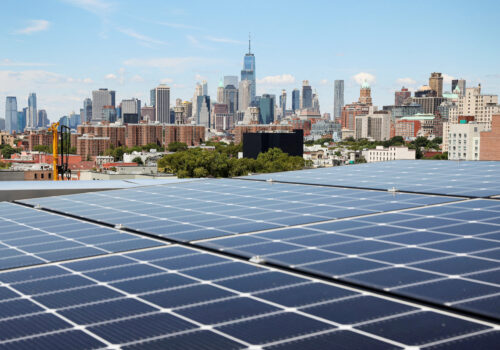
Renewables offer opportunity in the Western Balkans. But challenges remain.

By Michael Hochberg

The Western Balkans rely heavily on aging coal plants for electricity production, with five of its nations generating about 40 to 95 percent of their electricity from lignite, leading to significant pollution and related health issues. Tens of thousands of megawatts of solar and wind projects have been proposed, but despite policy incentives and investor appetite, five key challenges remain.

Energy & Environment
Energy Transitions

New Atlanticist

Sep 24, 2024

The private sector is stepping up on climate resilience. Now governments need to be willing partners.

By Jorge Gastelumendi

To increase financing for climate adaptation, governments must ease the regulatory burden on private sector climate initiatives.

Central Asia
Climate Change & Climate Action

Report

Sep 23, 2024

Lessons for African mineral producers from the Indonesian experience

By Julien Marcilly and Bradford Simmons

Indonesia and its success with resource nationalism can serve as an example for many mineral-rich African countries.

Africa
Energy & Environment

In the News

Sep 17, 2024

Derentz quoted in Gzero on AI’s role in increasing grid reliability and resilience

By Landon Derentz

Artificial Intelligence
Energy & Environment

Report

Sep 13, 2024

Part 4. Turkey’s geopolitical role in the Black Sea and European energy security: From pipelines to liquefied natural gas

By Eser Özdil

Turkey’s strategic position in the region provides cooperation opportunities for European energy security and economic interdependence.

Eastern Europe
Energy & Environment

AfricaSource

Sep 9, 2024

The strategies driving the players in competition for Africa’s critical minerals

By Sarah Way

As the race for Africa’s critical minerals continues, the United States should rally its allies and partners around a common vision backed by democratic values.

Africa
Critical Minerals

Report

Sep 9, 2024

Sharing the post carbon economy means building a resilient EV supply chain

By Sarah Bauerle Danzman

In this report Sarah Bauerle Danzman advances the policy discussion by compiling trade, investment, and EV industrial policy data across the G20, and offers six recommendations to the G20 to build a resilient EV supply chain.

Brazil
China

AfricaSource

Aug 14, 2024

Critical minerals investment must avoid the mistakes of the past in African mining

By Rama Yade, Sibi Nyaoga

By getting mining investment right, the United States can set a new precedent for its collaboration with African countries in other areas, such as health, security, and technology.

Africa
Critical Minerals

New Atlanticist

Jul 30, 2024

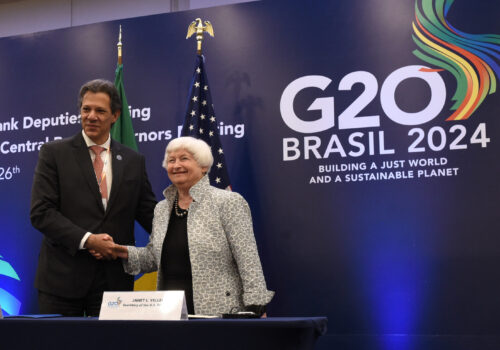
Dispatch from Rio: Can Brazil set up the G20 leaders’ summit for success?

By Ananya Kumar, Mrugank Bhusari

Brasília has sought to acknowledge fundamental disagreements on geopolitics between some members, and then to sidestep them entirely at the ministerial level. How long can this approach last?

Brazil
Economy & Business

Experts