Turkey’s gas diversification strategy and rising share of LNG
Executive summary
Since the adoption of the National Energy and Mining Policy in 2017, Turkey has executed a paradigm shift in its natural gas supply architecture, transitioning from a rigid, pipeline-dependent importer to a flexible, diversified regional energy actor. This transformation has been underpinned by a strategic diversification of import infrastructure from exclusive reliance on pipelines to an aggressive expansion of liquefied natural gas (LNG) regasification capacity.
A central pillar of this strategy has been the deployment of floating storage and regasification units (FSRUs), which have allowed Turkey to rapidly scale its daily entry capacity beyond peak winter demand levels. By 2025, the country’s regasification capacity had increased approximately fivefold to 150 million cubic meters (mcm), compared to pre-2016 levels of 37 mcm. This infrastructure redundancy is not merely a security buffer; it is a calculated commercial instrument designed to foster competition between incumbent pipeline suppliers—primarily Russia and Iran—and the global LNG market.
This enhanced flexibility has fundamentally altered Turkey’s negotiating position. State-owned operator BOTAŞ has successfully created a position to substitute Russian or Iranian molecules with flexible LNG sources based on more market-based pricing mechanisms instead of long-term oil-indexed prices. The historical reliance on oil-indexed pricing is being systematically dismantled in favor of hybrid formulas (blending Dutch TTF, oil indexation, and, more recently, Henry Hub-indexed contracts with US majors).
Furthermore, this diversification strategy and the rationale for it have transcended domestic security of supply, evolving into a commercial offensive aimed at Southeastern Europe. Through the commissioning of the Saros FSRU and the expansion of the Silivri underground storage facility, Turkey has physically integrated its national gas grid with the Balkan markets, enabling gas exports to Bulgaria, Hungary, Romania, and Moldova. Combined with the phased development of the Sakarya gas field in the Black Sea, which creates a domestic production field projected to meet significant domestic demand by 2028, Turkey is effectively repositioning itself from a transit corridor to a pivotal gas trading hub at the intersection of European and Asian markets.
This report provides an exhaustive analysis of the execution of this strategy from 2016 to 2025. It examines the granular details of infrastructure investments, the commercial restructuring of the contract portfolio, the technical and economic development of the Sakarya gas field, and the geopolitical implications of Turkey’s emergence as a gas exporter to Europe.
1. Introduction: The strategic imperative for diversification
The structural transformation of the Turkish natural gas market over the last decade is rooted in a response to the geopolitical and commercial vulnerabilities that characterized the country’s energy landscape in the early twenty-first century. Historically, Turkey imported nearly 99 percent of its natural gas, with the vast majority being delivered via long-distance pipelines from Russia (Blue Stream, Trans-Balkan, and, later, TurkStream), Iran (Tabriz-Ankara), and Azerbaijan (Baku-Tbilisi-Erzurum).
These supplies were governed by rigid long-term “take-or-pay” contracts, typically spanning twenty to twenty-five years. Pricing was predominantly indexed to high-sulfur fuel oil and gas oil prices, with a lag of six to nine months. This structure exposed the Turkish economy to two distinct risks.
- Commercial exposure: During periods of elevated oil prices, gas import costs surged irrespective of underlying gas market fundamentals, placing pressure on the current account balance and BOTAŞ’s balance sheet.
- Supply security: Reliance on technically volatile flows from Iran, which frequently suffered pressure drops during peak winter demand, and politically sensitive flows from Russia left the Turkish grid susceptible to supply shocks. Disputes between Russia and Ukraine (in 2006 and 2009) and recurring technical failures in the Iranian system almost every winter underscored the fragility of a pipeline-centric model.
Turkey’s strategic inflection point emerged in the 2016–2017 period. Facing expiring legacy contracts and a volatile geopolitical environment, the Ministry of Energy and Natural Resources initiated a doctrine of “localization and diversification.” The objective was threefold: to maximize the use of domestic resources (renewables and, later, Black Sea gas), diversify import sources to reduce dependence on any single supplier to below 50 percent, and invest in infrastructure that provides optionality (i.e. the physical ability to switch suppliers based on price and availability).
2. Infrastructure Investment: The expansion of regasification capacity (2016–2025)
The cornerstone of Turkey’s diversification strategy has been the rapid development of LNG entry capacity. Unlike pipelines, which take year to construct, are capital intensive and geopolitically complex, LNG terminals—particularly FSRUs—offer speed and flexibility. Between 2016 and 2025, Turkey transformed its coastal infrastructure to ensure that daily gasification capacity exceeds peak winter consumption, theoretically allowing the country to meet its entire annual gas demand via LNG if necessary. However, practically speaking, because peak demand is exceeding 300 mcm/day in the coldest days of the winter, LNG terminals can roughly cover half of the country’s total demand or act as last resort supplier for entire household demand in case of serious flows via pipelines.
2.1 Onshore terminal modernization
Marmara Ereğlisi LNG terminal (BOTAŞ)
Commissioned in 1994, the Marmara Ereğlisi terminal is the backbone of LNG supply for the high-consumption industrial zones of Thrace and Istanbul. Operational for decades, the terminal has seen continuous investment since 2016 to upgrade its send-out capacity and storage.
- Operational capacity: in 2024, the terminal’s daily send-out capacity reached approximately 37 mcm.
- Storage capacity: 255,000 cubic meters across three tanks.
- Strategic role: located on the northern coast of the Sea of Marmara, it provides baseload stability to the region that accounts for the country’s highest industrial electricity and gas consumption.
Aliağa LNG terminal (private)
Located in Izmir, and operated by a private company.
- Operational capacity: recent investments have pushed its daily send-out capacity to 40 mcm.
- Storage capacity: high-capacity storage tanks totaling 280,000 cubic meters.
- Strategic role: supplying the Aegean region’s gas-fired power plants and industrial zones.
2.2 The strategic pivot to FSRUs
The most distinct shift in post-2016 policy was the adoption of FSRUs. These vessels provided a solution to land constraints and permitting delays, allowing Turkey to bring new capacity online in record time.
Etki Liman FSRU (private)
Commissioned in December 2016 in Aliağa, Izmir, Etki Liman was Turkey’s first FSRU project, and which demonstrated the viability of the technology.
- Capacity: daily send-out capacity of 28 mcm.
- Significance: its rapid deployment immediately following the 2015–2016 geopolitical tensions with Russia was a signal of Turkey’s intent to diversify rapidly.
Ertuğrul Gazi FSRU (BOTAŞ)
In a move toward asset ownership rather than leasing, BOTAŞ commissioned the Ertuğrul Gazi in 2021. Stationed at the Dörtyol terminal in Hatay, near the Syrian border, this vessel is critical for the energy security of southern and southeastern Anatolia.
- Investment: constructed by Hyundai Heavy Industries in South Korea for an estimated cost of $225 million.
- Storage capacity: 170,000 cubic meters and a daily regasification capacity of 28 mcm.
- Strategic role: by injecting gas into the southern transmission lines, the Ertuğrul Gazi mitigates the risks associated with the erratic flow of the Iran-Turkey pipeline, which historically suffers from pressure drops during winter. It also supplies heavy industry in the Iskenderun Bay area.
Saros FSRU (BOTAŞ)
Operational since early 2023, the Saros FSRU located in the Gulf of Saros (in the northwest Aegean Sea) is the most geostrategically significant addition to the fleet.
- Location: its position allows gas to be injected into the Thrace region without the navigational constraints of the Dardanelles and Bosphorus Straits or the need to traverse the entire Turkish grid from east to west.
- Capacity: daily send-out capacity of 28 mcm.
- Export enabler: Crucially, the Saros terminal is located near the interconnection points with the Greek and Bulgarian grids. This proximity makes it the physical cornerstone of Turkey’s gas export deals to the Balkans. It allows LNG cargoes arriving from the United States or other exporters to be regasified and piped directly into the Trans-Balkan Pipeline (in reverse flow) or the interconnector with Bulgaria.
Future fleet expansion
Looking toward 2035, the Ministry of Energy has articulated plans to expand the FSRU fleet to five active units. This expansion strategy includes a novel operational concept: deploying FSRUs abroad. Negotiations have been reported regarding the deployment of a Turkish FSRU to Egypt or Morocco to manage seasonal demand imbalances, effectively positioning BOTAŞ as a regional infrastructure service provider.
2.3 Underground storage as a balancing mechanism
Complementing the LNG intake is the expansion of underground storage (UGS), which is essential for managing the seasonality of supply and demand balances and storing gas during periods of low spot prices (summer) for use during peak demand (winter).
- Silivri UGS: expanded to a capacity of 4.6 billion cubic meters (bcm) with a daily withdrawal capacity of 75 mcm.
- Tuz Gölü (Salt Lake) UGS: currently undergoing expansion to reach 5.4 bcm by 2028, with a withdrawal capacity of 40 mcm per day.
Combined impact: by 2028, Turkey aims to have storage capacity equivalent to 20 percent of its annual consumption, aligning with European Union benchmarks for supply security.
3. Domestic production: The Sakarya gas field investment
While LNG provided import flexibility, the discovery of the Sakarya gas field in the western Black Sea in 2020 fundamentally altered Turkey’s long-term energy balance. With reserves initially estimated at 540 bcm and revised upward to 710 bcm following further appraisals (including the Çaycuma-1 discovery), this field represents the largest industrial project in the country’s history.
3.1 Technical development and phases
The development of the Sakarya field is an ultra-deepwater project (at a depth of more than 2,000 meters), requiring cutting-edge engineering and massive capital investment.
- Phase 1 (operational)
- Status: the first gas was delivered to the Filyos Natural Gas Processing Facility in April 2023.Investment: phase 1 involved the drilling of ten wells and the construction of subsea production systems and a 170-kilometer (km) pipeline to shore. The initial production plateau was set at 10 mcm per day (approximately 3.5 bcm per year (bcm/y)).
- Current output: as of 2024–2025, daily production has ramped up to approximately 7–9.5 mcm per day.
- Phase 2 (under construction)
- Scope: this phase targets the drilling of approximately 26–30 additional wells.Contracting: A consortium including Saipem, SLB (Schlumberger), and Subsea7 was awarded the Engineering, Procurement, Construction and Installment (EPCI) contract for the second phase. Saipem’s share of the contract alone is valued at approximately $1.5 billion, covering the installation of 170 km of pipelines and subsurface systems.
- Target: the objective is to raise production to 40 mcm per day (approximately 15 bcm/y) by 2028.
- Floating production unit (FPU)
- To process the increased volumes from the wider basin, Turkey has purchased an FPU from China. This vessel, expected to be operational by 2027–2028, will process raw gas offshore before transmission, functioning similarly to the Osman Gazi platform but on a larger scale.
3.2 Economic and strategic impact
- Import substitution: At its plateau production of 15 bcm/y, the Sakarya field will cover approximately 25–30 percent of Turkey’s current domestic consumption. This will directly reduce the annual gas import bill by billions of dollars, improving the chronic current account deficit.
- Contractual leverage: The certainty of 15 bcm of domestic gas, which is expected to reach plateau levels in 2028 from the Sakarya field, and with high probability, increase as exploration continues in other parts of the Black Sea, provides BOTAŞ with a “walk-away” option in negotiations. It forces suppliers such as Gazprom and NIOC to offer competitive pricing or risk losing market share permanently.
The development of the Sakarya field is an ultra-deepwater project (at a depth of more than 2,000 meters), requiring cutting-edge engineering and massive capital investment.
- Phase 1 (operational)
- Status: the first gas was delivered to the Filyos Natural Gas Processing Facility in April 2023.Investment: phase 1 involved the drilling of ten wells and the construction of subsea production systems and a 170-kilometer (km) pipeline to shore. The initial production plateau was set at 10 mcm per day (approximately 3.5 bcm per year (bcm/y)).
- Current output: as of 2024–2025, daily production has ramped up to approximately 7–9.5 mcm per day.
- Phase 2 (under construction)
- Scope: this phase targets the drilling of approximately 26–30 additional wells. Contracting: A consortium including Saipem, SLB (Schlumberger), and Subsea7 was awarded the Engineering, Procurement, Construction and Installation (EPCI) contract for the second phase. Saipem’s share of the contract alone is valued at approximately $1.5 billion, covering the installation of 170 km of pipelines and subsurface systems.
- Target: the objective is to raise production to 40 mcm per day (approximately 15 bcm/y) by 2028.
- Floating production unit (FPU)
- To process the increased volumes from the wider basin, Turkey has purchased an FPU from China. This vessel, expected to be operational by 2027–2028, will process raw gas offshore before transmission, functioning similarly to the Osman Gazi platform but on a larger scale.
4. Import dynamics: LNG vs. pipeline gas competition
The interplay between pipeline gas and LNG in the Turkish market is driven by contract expirations, relative price dynamics, and the strategic objective to minimize geopolitical risk.
4.1 Evolution of the import mix
Historically, pipeline gas accounted for 85–90 percent of Turkish imports. Since 2016, however, investments in LNG infrastructure have allowed LNG to capture significant market share. In 2024 and 2025, LNG imports periodically accounted for 25 percent of total demand, with spot LNG playing a crucial balancing role. The share of Russian gas in Turkey’s total supply has declined structurally, dropping from more than 50 percent in 2018 to less than 40 percent in 2025. This reduction is not accidental; it is the result of BOTAŞ declining to renew expiring pipeline contracts at full volumes, choosing instead to fill the gap with spot LNG and medium-term contracts.
4.2 The expiry wall and contract strategy
The period between 2021 and 2026 constitutes a “contract expiry wall” during which the majority of Turkey’s legacy long-term contracts (totaling more than 40 bcm) come up for renewal.
- Russia (Gazprom): Contracts for the Blue Stream and the western route (transferred to TurkStream) faced expiration. In late 2024 and early 2025, BOTAŞ extended these contracts—but, crucially, only for one year. This broke the tradition of twenty-year lock-in contract structures, allowing Turkey to reassess market conditions annually.
- Iran (NIOC): The long-term contract for 9.6 bcm/y expires in 2026. Negotiations are ongoing, but Turkey’s increased LNG capacity significantly weakens Iran’s bargaining power, which was previously bolstered by the lack of alternative supply routes to eastern Anatolia.
Thanks to LNG infrastructure, BOTAŞ has an upper hand in negotiations vis-à-vis Russia and Iran.
4.3 US LNG and the hedging strategy
The United States has emerged as a critical partner in Turkey’s diversification of gas supplies. In 2025, the United States became Turkey’s fourth-largest gas supplier, providing 5.5 bcm. Upstream investment: To manage the price volatility of US LNG (indexed to the Henry Hub benchmark), Turkey has announced plans to invest directly in US upstream assets. Turkish Petroleum (TPAO) is in talks with ExxonMobil and Chevron to acquire stakes in production fields. This acts as a physical hedge. If Henry Hub prices rise, the cost of LNG imports for BOTAŞ increases, but the revenue from TPAO’s US production assets also rises, neutralizing the fiscal impact on the Turkish state. This vertical integration strategy mimics the portfolio approach of global supermajors.
5. Commercial strategy: The new LNG portfolio and pricing
In 2024 and 2025, BOTAŞ executed an unprecedented wave of contracting, signing agreements totaling nearly 20 bcm/y of LNG supply. This portfolio is designed to be geographically diverse and commercially flexible.
5.1 Key LNG agreements (2024–2025)
The table below summarizes the major agreements signed or operationalized in this period, based on data from industry sources.
| Supplier company | Origin/portfolio | Annual quantity (bcm/y) | Duration | Start date | Strategic note |
| Oman LNG | Oman | 1.4 | Ten years | 2025 | Diversification away from the Atlantic basin |
| Sonatrach | Algeria | 4.4 | Three years (renewed) | 2024 | Extension of a decades-long partnership |
| ExxonMobil | United States/ portfolio | 3.8 | Ten years | 2027 | Henry Hub indexed and a foundational US deal |
| Shell | United States/ portfolio | 4.0 | Ten years | 2027 | High volume and destination flexibility |
| TotalEnergies | Portfolio | 1.6 | Ten years | 2027 | Strengthens European commercial ties |
| SEFE–I | Germany/portfolio | 0.6 | Three years | 2026 | Winter-weighted supply profile |
| SEFE–II | Portfolio | 0.6 | Ten years | 2028 | Winter-weighted supply profile |
| ENI–I | Portfolio | 0.5 | Ten years | 2026 | Winter-weighted supply profile |
| ENI–II | Portfolio | 0.5 | Ten years | 2028 | Winter-weighted supply profile |
| Woodside | Portfolio | 0.65 | Nine years | 2030 | US deal, Winter-weighted supply profile |
| Cheniere | Portfolio | 1.2 | One year | 2026 | Winter-weighted supply profile |
| Petrochina | Portfolio | Cooperation agreement | N/A | N/A | N/A |
| Hartree | Portfolio | 0.3 | Two years | 2026 | Winter-weighted supply profile |
| BP | Portfolio | 1.6 | Three years | 2026 | Winter-weighted supply profile |
| JERA | Portfolio | 0.6 | One year | 2026 | Winter-weighted supply profile |
| Equinor | Portfolio | 0.50 | Three years | 2026 | Winter-weighted supply profile |
| Mercuria | Portfolio | 4 (up to 70 bcm) | Twenty years | 2026 | US deal, Winter-weighted supply profile |
5.2 Evolution of pricing formulas
A critical element of these new contracts is a shift in pricing mechanisms.
- Legacy model (oil Indexation): Historically, contracts with Gazprom and Iran were 100-percent indexed to Brent crude and oil products (often with the price movements averaged over the past 3-6-9 months. This meant gas prices remained high even when global gas hub prices crashed, penalizing the Turkish economy.
- The hybrid transition: In contract renewals post-2021, particularly with Russia, Turkey successfully negotiated a shift to hybrid formulas. Current pipeline contracts often feature a split, such as 70 percent TTF (Dutch Title Transfer Facility) and 30-percent oil and linked. This links import costs more closely to the European spot market reality.
- The Henry Hub advantage: The deal with ExxonMobil and other US suppliers introduces Henry Hub indexation. Historically, Henry Hub prices (US domestic gas) have been significantly lower and less volatile than European (TTF) or Asian (JKM) benchmarks. By securing volumes linked to Henry Hub, BOTAŞ gained exposure to the structurally lower cost of US gas production, creating a potential for price arbitrage relative to European market prices.
6. From importer to regional hub: The export strategy
Turkey’s infrastructure buildout has created a capacity surplus. With more than 50 bcm of LNG entry capacity, 15 bcm of domestic production, and existing pipeline capacity, the total supply potential exceeds domestic demand (approximately 50–55 bcm). BOTAŞ is capitalizing on this surplus by positioning Turkey as a gas trading hub for Eastern Europe.
6.1 The “Turkish blend” concept
Actively seeking to decouple from Russian energy—Turkey has advanced a concept it describes as a “Turkish blend.” Gas entering the national grid from Azerbaijan and the United States, along with other LNG suppliers such as Oman, Qatar, Nigeria, Algeria, Australia, and Egypt etc., is comingled with gas from the Sakarya field. When BOTAŞ exports gas to Bulgaria or Hungary, the molecules are legally and chemically indistinguishable. This allows BOTAŞ to supply certain European markets that do not want to buy Russian molecules either direct or indirectly. This role as an aggregator and blender is central to the hub strategy.
6.2 Key export agreements
Since 2023, BOTAŞ has signed a series of historic export deals, leveraging the Saros FSRU by regasifying LNG volumes coming from multiple sources and the Trans-Balkan Pipeline (now operating in reverse flow, from Turkey to Europe).
- Bulgaria (Bulgargaz): A landmark thirteen-year agreement, signed in early 2023, grants Bulgargaz access to Turkish LNG terminals and the transmission grid, with a transfer volume of up to 1.5 bcm/y. This effectively breaks Gazprom’s monopoly on Bulgarian supply.
- Hungary (MVM): A groundbreaking deal made Hungary the first non-bordering country for Turkish exports. The initial volume was 275 mcm, with plans for significant expansion.
- Romania (OMV Petrom): An agreement to supply up to 4 mcm (approximately 1.5 bcm/y) via the Trans-Balkan Pipeline.
- Moldova: A contract to supply 2 mcm per day to help the country reduce its critical dependence on Russian gas supplied via Ukraine.
6.3 Political and commercial motivations
- Commercial: BOTAŞ is increasingly transforming from a national utility into a regional trader, capturing margins between its diversified import portfolio and European hub prices.
- Political: By becoming one of the energy security enablers for southeastern NATO allies (Bulgaria, Romania, and Hungary), Ankara significantly enhances its diplomatic leverage within the Alliance. It creates a mutual dependency that acts as a buffer against political friction in other areas. The United States actively supports this role, viewing Turkish FSRUs as a vector to displace Russian dominance in the Balkans.
7. Conclusion: Commercial and political implications
The period from 2016 to 2025 marks a phase of consolidation and maturation in Turkey’s gas market. The country has successfully mitigated its primary strategic weakness—energy dependence—through a capital-intensive but high-yield strategy of infrastructure expansion and resource diversification.
Commercial benefits
- Price arbitrage: access to gas indexed to multiple benchmarks including Henry Hub, TTF, and oil-indexed formulas allows BOTAŞ to manage its weighted average cost of gas (WACOG) more flexibly, shielding the domestic economy from single-market shocks.
- Trading revenue: the utilization of surplus capacity for exports creates a new revenue stream in hard currency, which is essential for BOTAŞ’s financial sustainability.
Political benefits
- Strategic autonomy: the ability to meet domestic demand without Russian pipelines (in a crisis scenario) removes the “energy weapon” from Russia’s diplomatic arsenal. Therefore LNG infrastructure and domestic gas production create important leverage.
- Regional influence: Turkey has embedded itself as an indispensable node in the European energy security architecture. The Turkish hub is no longer an aspiration but a physical reality defined by steel pipes, floating terminals, and binding contracts.
By 2028, with the Sakarya field likely at full production and five FSRUs in operation, Turkey could cease to be merely a bridge for energy and become a center of price formation—a true hub where the dynamics of Asian, European, and Middle Eastern gas markets intersect.
About the author
Eser Özdil is an energy fellow at the Atlantic Council Turkey Program & founder of Glocal Group Consulting, Investment & Trade. You can follow him on X at @eserozdil.
Related reading

Explore the program
Within the Atlantic Council’s longstanding commitment to strengthening the transatlantic relationship, the Atlantic Council Turkey Program conducts research, provides thought leadership, and offers a platform for strategic dialogue between the US, Turkey, and NATO allies to address the region’s toughest challenges and explore opportunities, including in the fields of energy, business & trade, technology, defense, and security.
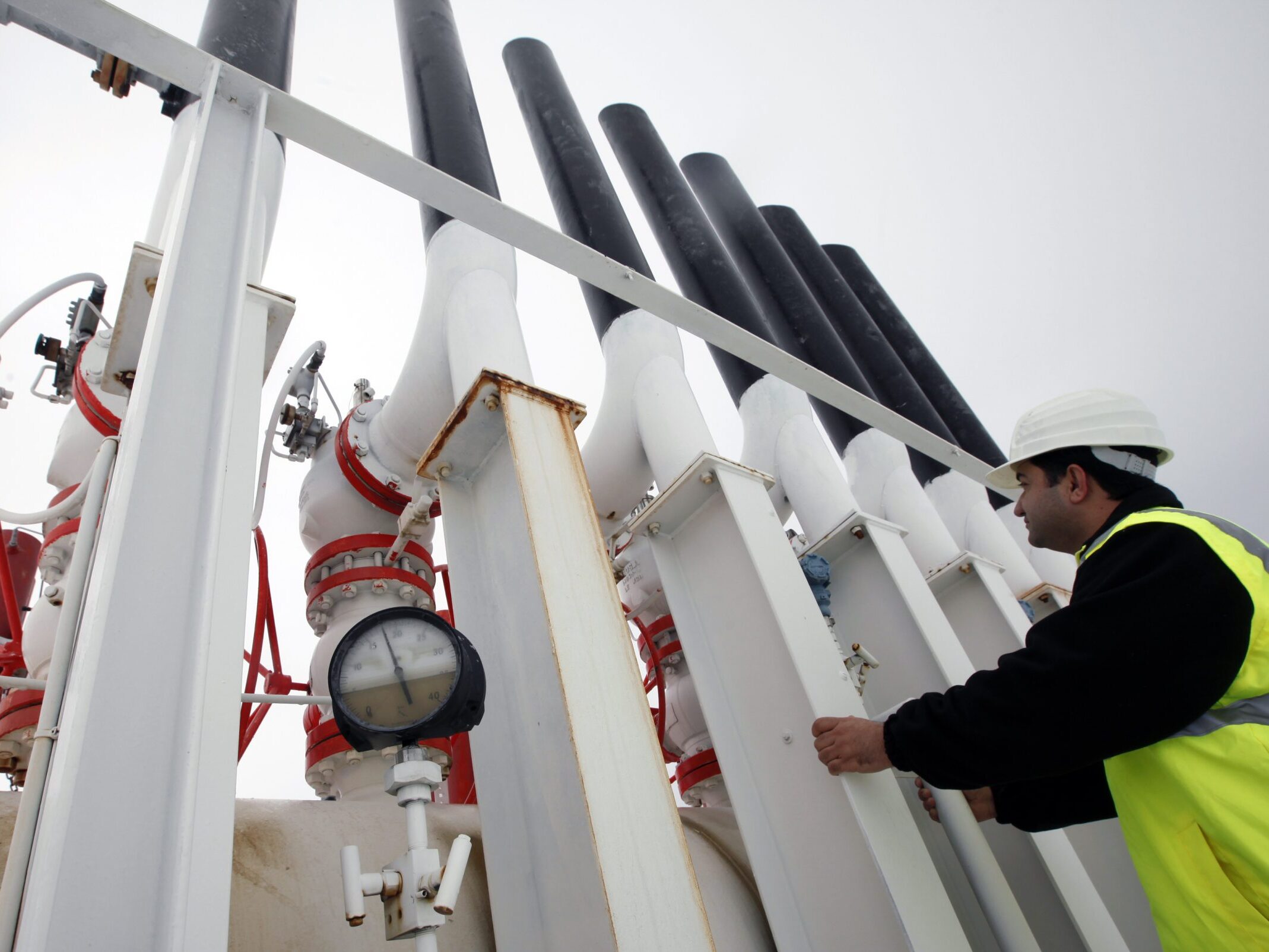
Image: A worker checks the valve gears in a natural gas control centre of Turkey's Petroleum and Pipeline Corporation, 35 km (22 miles) west of Ankara, February 14, 2012. REUTERS/Umit Bektas (TURKEY - Tags: BUSINESS ENERGY)