In early 2022, most international observers expected the Russian army to overrun Ukraine in a matter of days. Instead, Putin’s blitzkrieg was defeated and he found himself drawn into the biggest European bloodbath since World War II. Four years on, Ukraine has stemmed the tide of the invasion and is now eliminating tens of thousands of Russian soldiers every month, while swarms of Ukrainian drones routinely strike targets deep inside Russia itself. This reversal of fortunes must rank as the most remarkable military upset since David killed Goliath.
The reasons for Ukraine’s success will be debated for decades to come. It is already abundantly clear that Russia’s military strength on the eve of the invasion was greatly exaggerated. Likewise, Ukraine’s ability to defend itself was underestimated, as was the readiness of Western leaders to arm Kyiv. The Ukrainian war effort has also benefited from the extreme moral clarity of a population defending their homes. From day one of Russia’s invasion, Ukrainians have known with terrible certainty that they are engaged in a fight for national survival.
One factor shaping the Russia-Ukraine War that has not received much attention is age. And yet this is among the most striking differences between the two opposing sides. Indeed, it is no exaggeration to state that the current war is a clash of generations pitting Russia’s staunchly Soviet leadership against the radically different post-Soviet mindset of the Ukrainian authorities.
Stay updated
As the world watches the Russian invasion of Ukraine unfold, UkraineAlert delivers the best Atlantic Council expert insight and analysis on Ukraine twice a week directly to your inbox.
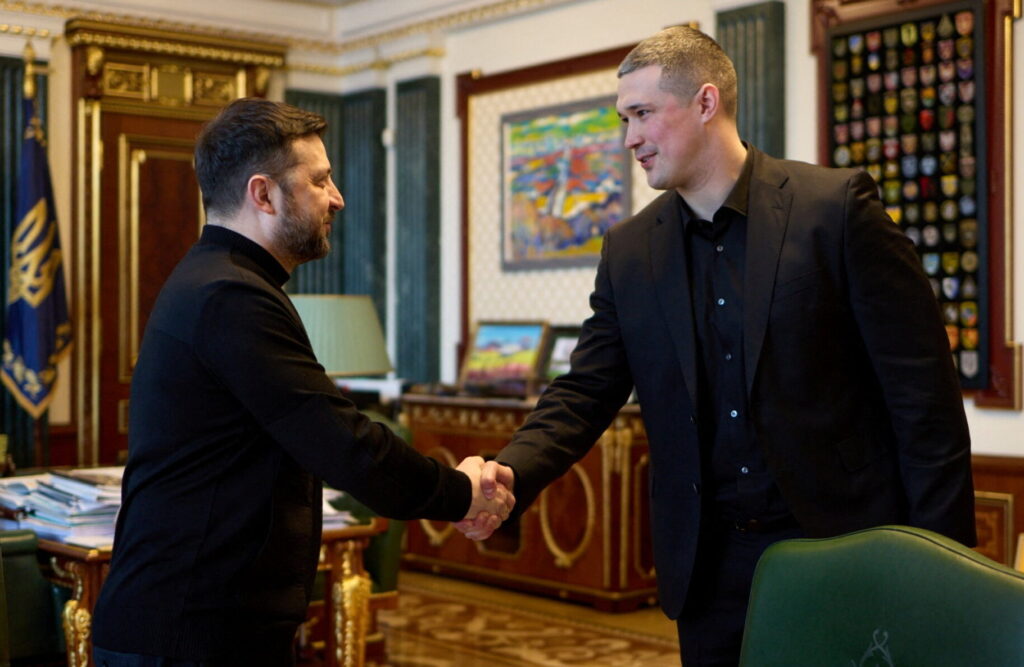
Today’s Ukrainian government is one of the youngest administrations in recent European history. At 48 years old, Ukrainian President Volodymyr Zelenskyy is among the elder statesmen in Kyiv. His hugely influential chief of staff Kyrylo Budanov is just forty, as is Ukrainian Prime Minister Yulia Svyrydenko. Meanwhile, Ukraine’s highly rated Minister of Defense, Mykhailo Fedorov, is a mere lad of 35. To put this into historical context, Zelenskyy was a newly minted teenager when the Soviet Union collapsed. Fedorov had just been born.
The demographic outlook in the Kremlin could hardly be more different. Russian President Vladimir Putin is 73. His long-serving foreign minister Sergei Lavrov is three years older. Security service head Alexander Bortnikov is 74, as is top Putin advisor Nikolai Patrushev, while army chief Valery Gerasimov is something of a young gun at seventy. All these men spent their formative years in the USSR and were already well on the way into middle age by the time of the Soviet breakup.
The generational divide separating Moscow and Kyiv is even more profound than the numbers themselves may initially suggest. Putin and his Kremlin colleagues are relics of a bygone era who still view current affairs through a Cold War prism. They instinctively regard the West as adversaries and unashamedly embrace the politics of imperialism. This fossilized perspective has permeated and poisoned every aspect of public life in modern Russia.
In contrast, the far younger leaders of wartime Ukraine were shaped by the endless political possibilities and harsh economic realities of the early post-Soviet period. They grew up regarding the West in mostly aspirational terms, and have always approached geopolitics as a lifestyle choice rather than an ideological crusade. For them and most other Ukrainians who came of age during the post-Soviet years, choosing democratic Europe over authoritarian Russia was a complete no-brainer.
Eurasia Center events

The comparative youth of the current Ukrainian leadership has informed their handling of the war with Russia and proven to be a significant asset. Crucially, it has fueled a culture of flexibility and experimentation that has helped make the country’s military strikingly open to technological innovation. This has had a major impact on the battlefield and paved the way for Ukraine’s dramatic rise as a world leader in drone warfare.
In the diplomatic area, Kyiv has demonstrated a distinctly youthful readiness to exploit geopolitical openings when more seasoned politicians might have been tempted to wait and see. This was recently evident in Zelenskyy’s deft handling of the sudden surge in demand for Ukrainian anti-drone expertise following the outbreak of the Iran War. He responded almost immediately by dispatching teams of Ukrainian specialists to protect the Gulf states. Less than a month later, Ukraine had signed a series of strategically important security partnerships.
Zelenskyy’s young age and his familiarity with the modern media landscape have also undoubtedly aided the Ukrainian war effort on the global stage and helped cement his status as one of the great political communicators of the twenty-first century. Beginning with his legendary “we are here” selfie video in the very first days of the invasion, the Ukrainian leader has pioneered the use of social media as a tool for wartime public diplomacy.
Putin and his fellow pensioner politicians appear to share little of the innovative spirit or adaptability on display in Kyiv. The Kremlin dictator famously distrusts modern technology and refuses to have a smartphone. This technophobia was inadvertently highlighted recently by the Kafkaesque spectacle of Putin reading from a pile of handwritten notes as he explained to the Russian public why he was blocking their access to the internet.
With the invasion of Ukraine now in its fifth year, many of Russia’s most prominent war bloggers seem to have reached the conclusion that the advanced age of their national leaders is indeed a problem. They frequently make unflattering references to Kremlin “grandfathers,” who are typically blamed for mismanaging the war and accused of being hopelessly out of touch with reality. At the same time, however, even these dissenting Russian voices recognize that unlike their Ukrainian counterparts, they have no real way of initiating change.
Ukraine’s Zelennial generation of politicians did not come to power by accident. On the contrary, the Ukrainian electorate consciously chose the political novice Volodymyr Zelenskyy as president in spring 2019 because they sought a clean break from the past.
Zelenskyy’s age has not always been an advantage, of course. Indeed, his critics in Kyiv have often claimed his inexperience is a liability. Nevertheless, in a war defined by rapid technological advances, shifting geopolitical realities, and a fiercely competitive information environment, the youthfulness of Zelenskyy’s team has made them particularly well suited to the challenges they face.
Peter Dickinson is editor of the Atlantic Council’s UkraineAlert service.
Further reading
The views expressed in UkraineAlert are solely those of the authors and do not necessarily reflect the views of the Atlantic Council, its staff, or its supporters.

The Eurasia Center’s mission is to enhance transatlantic cooperation in promoting stability, democratic values, and prosperity in Eurasia, from Eastern Europe and Turkey in the West to the Caucasus, Russia, and Central Asia in the East.
Follow us on social media
and support our work
Image: Ukraine's President Volodymyr Zelenskyy and newly appointed Defence Minister Mykhailo Fedorov shake hands before their meeting, amid Russia's attack on Ukraine, in Kyiv, Ukraine January 14, 2026. (Ukrainian Presidential Press Service/Handout via REUTERS)