Bottom lines up front
- The Ankara summit will test whether NATO can convert three years of pledges into reportable delivery amid strained transatlantic trust.
- Turkey remains the only major European NATO ally with an advanced defense industry still excluded from key EU funding and procurement mechanisms.
- Instability on NATO’s southern flank, exposed by the Iran war, demands the Alliance treat the region as a strategic priority, not an afterthought.
As the Ankara summit approaches, the transatlantic Alliance faces one of its most difficult tests. Donald Trump’s threats to withdraw the United States from NATO, demands over Greenland, unmet requests for support related to the war in Iran, and a wildcard approach to the Ukrainian peace process have all deeply damaged transatlantic trust. Against this backdrop, the summit’s single greatest deliverable would be simply for it to take place with Trump’s participation and a strong reaffirmation of commitment to Article 5 of the Washington Treaty.
The summit is not expected to produce major innovations or sharp policy shifts. NATO and allied officials have framed it primarily as an implementation summit following up on the summit in The Hague, although stronger political consultation on the southern flank—particularly after the Iran war—could emerge as a notable development.
This issue brief focuses on five topics expected to dominate the summit agenda: defense spending, defense industrial production, support for Ukraine, NATO 3.0, and the southern flank.
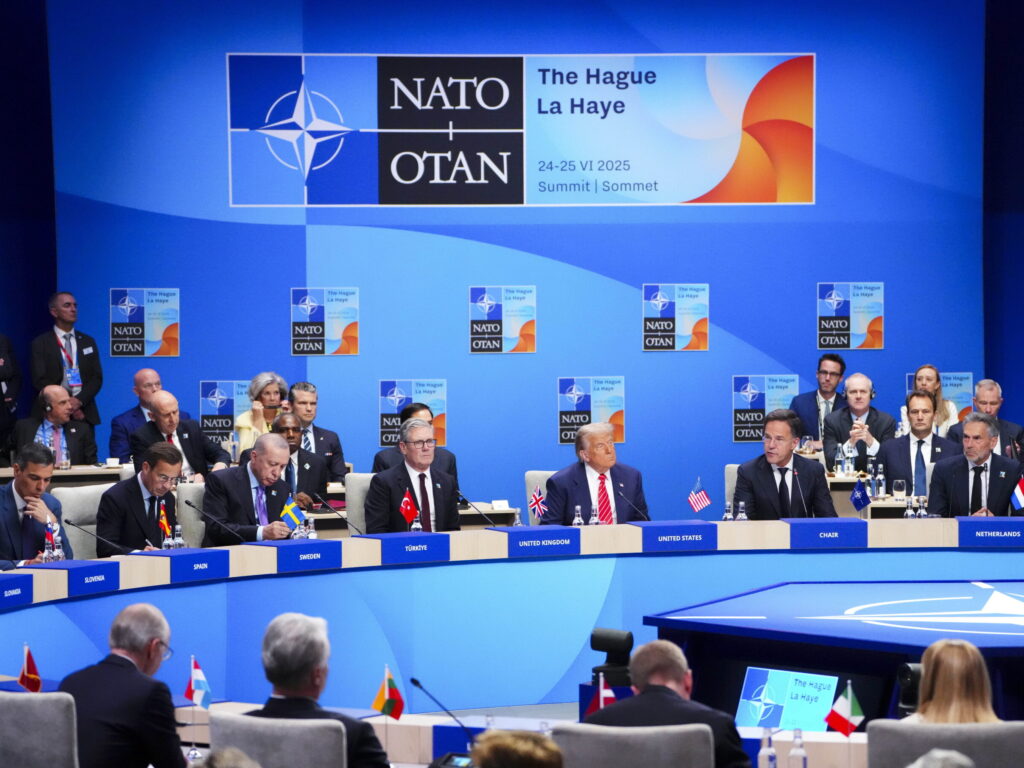
Since the 2014 annexation of Crimea, NATO allies have gradually increased defense spending, further driven by US demands for fairer burden sharing. At The Hague, they agreed to reach 5 percent of their gross domestic product (GDP) by 2035 (3.5 percent for core defense and 1.5 percent for resilience, cybersecurity, and related areas). The Ankara summit will assess progress toward these commitments. It is expected to define eligible categories under the new defense and security-related expenditure framework and determine how they will be reported.
The war in Ukraine has exposed the limitations of Europe’s defense industrial capacity, highlighting the need to increase production and stockpiles and to build a more resilient industrial base. While European Union (EU) defense initiatives contribute meaningfully, the exclusion of non-EU allies such as Turkey undermines transatlantic solidarity and restricts access to critical industrial capacity. To promote more inclusive procurement and financing mechanisms, the summit should prioritize the development of NATO High Visibility Projects (HVPs), concrete multinational production and joint procurement projects, and the creation of a new EU–NATO initiative similar to the Prioritized Ukraine Requirements List (PURL) to overcome the exclusion of non-EU allies.
The end of US military assistance to Ukraine has both reduced support below previous levels and widened disparities among allies. Although PURL and EU financing packages have partially filled the gap left by the United States, the potential depletion of US stockpiles due to the Iran war has raised concerns about the future of assistance to Ukraine. If allies in Ankara focus on expanding participation in PURL, establishing a robust multiyear funding mechanism with a clearly defined distribution framework, and strengthening coordination between military aid and industrial capacity, they would make progress toward ensuring longer-term support for Ukraine based on a more balanced burden-sharing approach.
The NATO 3.0 debate reflects growing expectations for Europe and Canada to assume greater responsibility for European security and defense as the United States deprioritizes it. At the Ankara summit, where a new cycle of NATO Defense Planning Process (NDPP) is also expected to be launched, the focus should be on developing a coordinated transition plan in light of the expected reduction in US forces and commitments, and on establishing a European (not EU) pillar that strengthens rather than weakens transatlantic security.
The Iran war and conflict in the Levant have exposed the fragility of NATO’s southern flank and of its southern neighborhood. Terrorism, maritime security challenges, missile and drone threats, the growing influence of China, and a potential return of Russia to the region require greater NATO engagement. Priorities such as maintaining NATO Mission Iraq (NMI), strengthening air defense on the southern flank, ensuring the security of the Strait of Hormuz, and deepening engagement with Istanbul Cooperation Initiative (ICI) partners should be key focuses of the summit.
Turkey’s strategic importance within NATO is growing steadily as the country shifts its role within the Alliance from that of a passive participant to an active architect. The country’s position and leverage have been bolstered by its strategic geography, “defense industrial revolution,” diplomatic efforts across the region, and the important responsibilities it is likely to assume in the coming years, including command of NATO’s Allied Reaction Force starting in 2028.
From commitment to delivery: Defense spending after The Hague
Allies have long recognized the need to increase defense spending in response to Russia’s growing threat. After Russia’s annexation of Crimea in 2014, they pledged at the Wales summit to spend 2 percent of GDP on defense by 2024. Following Russia’s full-scale invasion of Ukraine in 2022, the Madrid summit identified Russia as “the most significant and direct threat” to allied security, prompting further increases in defense expenditures. At the 2023 Vilnius summit, allies acknowledged that even 2 percent might be insufficient to meet NATO capability targets.
Trump’s election in November 2024 fundamentally reshaped NATO’s approach to defense spending. Repeating long-standing burden-sharing criticisms, the Trump administration accused European allies and Canada of free riding” and demanded higher defense spending. President Trump’s threats to withdraw the United States from NATO pushed allies to increase their commitments dramatically. By 2025, all allies had reached the 2-percent spending target. At the summit in The Hague, they committed to investing 5 percent of GDP by 2035, including 3.5 percent for core defense and 1.5 percent for resilience, cybersecurity, and infrastructure.
Increasing spending levels equivalent to 2 percent of average GDP from an average of 1.4 percent took ten years. Moving from 2 to 3.5 percent will require even greater sacrifices, with some countries such as Spain already decrying the target.
Countries will need to make cuts to welfare, healthcare spending, or foreign aid, take on more debt, or reclassify existing expenditures as defense spending. The greatest challenge will be implementing this much larger increase far more rapidly than in the past and despite existing debt burdens and limited budgets.
In 2024, although the US spending represented 52 percent of NATO’s GDP, it covered 64 percent of the Alliance’s expenditures: approximately $1.45 trillion. In 2025, it still covered about 62 percent. In the coming years, the gap is expected to narrow as Europe and Canada continue to pledge more spending.
These figures, however, overlook other contributions like support for Ukraine. At the summit in The Hague, allies agreed to count contributions to Ukraine’s defense and defense industry as part of defense spending. By the end of 2025, European countries, the EU, and Canada together provided 65 percent of total bilateral allocations compared to the United States’ 33 percent. With US military assistance to Ukraine having declined significantly since 2025, the gap between American and European contributions is likely to narrow considerably.
The Hague summit recognized that collective security depends not only on military spending but also on investments in civil preparedness, resilience, cybersecurity, critical infrastructure, protection against hybrid threats, promotion of innovation, and strengthening of the defense industrial base. Given the broad scope of these categories, many allies might already be spending close to the 1.5-percent-of-GDP target in these areas. The Ankara summit will serve as a delivery summit at which allies assess progress toward The Hague commitments, submit annual implementation plans, and, crucially, define what qualifies as defense and security-related expenditure under the 1.5 percent target and how it will be measured. Reaching agreement on eligible spending categories, along with establishing a transparent and publicly accessible reporting system, would mark a major success for the summit and help prevent unrelated expenditures from being counted toward Alliance commitments.
Transforming means into ways: Defense industrial production and capability development
The war in Ukraine has exposed Europe’s industrial capacity as insufficient to sustain long-term, high-intensity warfare, and has highlighted the critical importance of a resilient defense industrial and technological base. Although allies committed at The Hague to increase defense spending to 5 percent of their GDP, pledges must translate into tangible military capabilities. This requires concrete investment in defense industrial infrastructure, particularly as Europe and Canada will assume greater responsibilities.
Recent EU initiatives such as Security Action for Europe (SAFE), the European Defence Industry Program (EDIP), and the broader ReArm Europe Plan / Readiness 2030 aim to pool funding, coordinate joint procurement, and strengthen Europe’s defense industrial capacity and innovation. These initiatives play an important role in encouraging closer cooperation among European allies. A major challenge for the transatlantic defense industry is that these initiatives—designed to strengthen the EU’s strategic autonomy and reduce dependence on US systems—largely exclude non-EU NATO members and countries that do not have a security and defense partnership with the EU. In addition, they impose several restrictions, including a requirement that no more than 35 percent of component costs originate from outside the EU, Ukraine, and EEA/EFTA countries.
This exclusionary approach not only limits Ukraine’s access to urgently needed equipment but also undermines transatlantic solidarity and collective defense. For example, the EU’s recently approved €90-billion support loan for Ukraine largely excludes defense industries from countries that are not members of the European Economic Area (EEA). Because recent defense pacts with the United Kingdom and Canada grant access to EU defense initiatives, the only NATO countries with advanced defense industries left excluded are the United States and Turkey. Considering that the objective is diversification from the United States, Turkey truly becomes the only excluded European ally.
Turkey’s defense industry has a strong manufacturing base, addressing critical European defense gaps in drones, munitions, armored vehicles, and naval systems. Several allies—including Italy, Spain, and Poland—are engaged in close defense industrial cooperation with Turkey.
Despite this, Turkey was excluded from past EU drone procurements for Ukraine, even though its drone industry is globally preferred, including by many EU member states. NATO Secretary-General Mark Rutte has repeatedly warned that excluding non-EU allies from EU defense initiatives “increases costs, complicates production, and hampers innovation.”
NATO-supported HVPs help overcome these limits. An HVP launched in February 2026 on ballistic missile defense involving Belgium, Denmark, France, the Netherlands, Norway, Turkey, and the United Kingdom illustrates what inclusive cooperation can achieve. Expanding HVPs and enabling non-EU NATO members to access EU funding for collective security projects could further strengthen defense cooperation. The Ankara summit could address EU barriers to non-EU NATO member participation and, similar to the PURL initiative, establish a NATO-EU mechanism to facilitate arms procurement and EU financing for non-EU allies.
To effectively counter growing threats, there is a need for NATO to enhance cooperation on interoperable systems by modernizing and integrating its defense industrial base. In line with the Defense Production Action Plan adopted at the 2023 Vilnius summit and updated at The Hague, the Ankara summit could focus on transforming joint procurement and defense production commitments into concrete joint projects. There is also a need to ensure that stockpile depletion concerns, particularly regarding air defense assets potentially drawn down during the Iran conflict, do not prevent allies from continuing to prioritize Ukraine’s immediate defense needs. Scaling up investment in and procurement from Ukraine’s defense sector, through SAFE funding or the “Danish model,” which uses allied funding to procure military equipment directly from Ukraine’s domestic defense industry, rather than through imported or donated Western systems, remains a complementary priority.
Hosting the most comprehensive NATO Defense Industry Forum alongside the Ankara Summit would also allow Turkey to showcase what Rutte has called its “defense industrial revolution.” Rutte’s recent statements outline how defense industrial output and maintaining NATO’s technological edge have become strategic priorities. The Ankara Summit is expected to place significant emphasis on industrial production and defense innovation, with new defense contracts worth tens of billions of dollars expected to be announced.
Closing the gap: Allied support for Ukraine and the challenge of uneven burden sharing
The Ankara summit takes place against a crowded agenda dominated by Middle East tensions and the Iran conflict, stalled Russia–Ukraine peace talks, and US officials openly celebrating the end of US support for Ukraine. As of 2025, the United States has significantly reduced its military assistance to Ukraine and has tied any security guarantees in the peace process to Ukraine ceding the entire Donbas region, including areas not occupied by Russia.
At The Hague, due to US opposition, no concrete decisions were taken on support for Ukraine and no progress was made on a revised strategic approach to Russia. Russia was described solely as a long-term threat, its invasion of Ukraine was not explicitly addressed, no new support measures were announced, and Ukraine’s NATO membership was omitted from the declaration. Similar dynamics are likely at Ankara.
To offset the end of US support, allies increased bilateral assistance in 2025: European military aid rose by 67 percent and financial and humanitarian aid by 59 percent compared with the 2022–2024 average. However, the decrease in US assistance still left total military aid 13 percent below previous annual averages, and the burden is increasingly concentrated among a smaller group of allies, widening disparities in contributions.
EU institutions now channel most financial assistance, with the 2026–2027 €90-billion package covering two-thirds of Ukraine’s total budgetary needs.
Following the decision at The Hague to share responsibility more evenly, allies launched PURL to fund the purchase of vital US equipment for Ukraine. Under this voluntary mechanism, participating allies pledged more than $4 billion in military equipment and munitions for Ukraine by December 2025, followed by a further $1.5 billion in 2026, including contributions from a total of twenty five NATO member states and three partner countries. Beyond PURL, strong examples of bilateral support include the €4-billion German–Ukrainian package—covering Patriot missiles, IRIS-T (infrared imaging system tail) systems, joint drone production, and battlefield data sharing—and the Czech ammunition initiative, which delivered 4.4 million rounds funded by foreign donors.
PURL expansion and measures to reduce disparities in allied contributions are expected to be addressed at Ankara. The summit should establish a robust multiyear funding mechanism with a clearly defined distribution framework to sustain long-term support for Ukraine. The Ankara summit is also expected to address NATO’s potential role in the event of a Ukraine–Russia ceasefire and the mechanisms for sustaining it. Turkey has established a Maritime Component Command in Istanbul, under Turkish leadership and in line with the Montreux Convention, to oversee the naval dimension of prospective security guarantees for Ukraine in the Black Sea as part of the Multinational Force Ukraine (MNF-U) and within the framework of a coalition of the willing. Given the stalled peace talks and the US posture of conditioning security guarantees on significant territorial concessions from Ukraine, European allies will need to demonstrate both the political will and the practical capacity to underwrite any durable security arrangement.
NATO 3.0 and the transatlantic shift: Preparing for a new burden-sharing reality
Elbridge Colby, US under secretary of defense for policy, used much of his speech during the NATO defense ministers’ meeting in February to outline NATO 3.0, a framework in which Europe assumes responsibility for its own defense while the United States focuses on the Western Hemisphere and Indo-Pacific. The concept reflects growing concerns about the transatlantic Alliance amid a possible decline in US commitment to European security since Trump’s first term. NATO 3.0 is essentially a new label for a long-standing concern.
Strategically, this reflects Washington’s desire to counter China while urging Europe to adapt to a multipolar world. The clearest expression of this shift was the US decision to halt all military assistance to Ukraine and to pressure it into accepting an unfavorable peace agreement.
Recognizing this reality, the allies’ first step was to pledge 5-percent defense spending. But turning spending into capability requires more. Beyond the major US troop presence in Europe, the allies remain reliant on US command and control, integrated air and missile defense, air-to-air refueling and strategic airlift, and space-based ISR (intelligence, surveillance, and reconnaissance), which require costly long-term investments. Rather than addressing the operational impact of reduced US support and how allies could function without it, the summit in The Hague focused mainly on spending targets. The Ankara summit must go further by developing a clear transition plan with specific timelines for allies to assume or better contribute to these responsibilities. In the near term, Europe must act to strengthen forces along its borders with Russia, capacity for sea control, resilience of critical infrastructure, and defense industrial capabilities.
The congressionally approved 2026 National Defense Authorization Act (NDAA) shows that Europe remains important to Congress. Still, concerns remain, especially as the Pentagon declined to release its Global Posture Review, which was expected in April 2026. The reduction of brigade combat teams (BCTs) in Europe from four to three, the cancellation of a long-range fires battalion deployment to Germany, the decision not to replace a rotational Army brigade in Romania, reported future cuts to aircraft and warships provided for NATO operations in Europe, and the withdrawal of approximately five thousand US troops from Germany in response to limited allied support in Iran all underscore the trend. Although Trump’s subsequent announcement of five thousand additional troops to Poland came as some relief, the overall trajectory is clear. With the launch in Ankara of a new cycle of NDPP, beginning with the development of the Political Guidance 2027, the focus should be on developing a coordinated transition plan in light of the expected reduction in US forces and commitments, since the current NDPP is not designed to handle a sudden US withdrawal.
Another key debate within NATO 3.0 concerns the idea of a European pillar amid growing EU strategic autonomy and a disengaging United States. In January, EU Defense Commissioner Andrius Kubilius proposed a standing one-hundred-thousand-strong European force to replace US troops in Europe, while the EU increasingly explores initiatives such as the European Air Shield and European Drone Wall, despite speaking to core NATO tasks. Furthermore, there is a tendency within the EU to activate the mutual defense clause of the European Union treaty. While similar to NATO’s Article 5, Article 42(7) of the Treaty on European Union grants member states greater discretion regarding the form of assistance they provide, which may include military, humanitarian, financial, or diplomatic support. Rutte has repeatedly warned that a more “European-led,” not EU-led, NATO should mean greater European responsibility within the Alliance, with the EU complementing NATO rather than creating parallel structures.
For Turkey, this distinction is fundamental: the European pillar should not become an EU pillar and must reinforce, not weaken, transatlantic ties. The EU can play an important enabling role through financing and regulating the defense industry and facilitating fiscal measures, helping European allies meet NATO capability targets and investment pledges. But EU security and defense efforts must complement, not duplicate, NATO. At the Ankara summit, European allies and Canada will need to show concretely how they will assume greater responsibility, particularly in defense capability development.
Securing the southern flank: Strategic challenges and policy options
The conflict with Iran has damaged shipping and energy flows via the Strait of Hormuz, which carries one-fifth of global oil supplies, placing pressure on Gulf economies and global energy markets while demonstrating how instability outside NATO’s borders can have global implications. This has made the security of NATO’s southern flank and southern neighborhood an urgent priority for the Ankara summit. Turkey, which is highly exposed to threats from the south, has argued that NATO cannot focus solely on Ukraine or the eastern flank.
The southern neighborhood presents multiple overlapping threats. Terrorism remains a major concern: al-Qaeda and the Islamic State of Iraq and al-Sham (ISIS) are still active across the Levant, West Africa, and the Horn of Africa, while the Gaza conflict and Iran tensions risk further destabilizing Iraq and Syria. Russia’s potential return to Libya, China’s expanding influence in Africa, and maritime security in the Red Sea and Gulf of Aden require closer allied consultation. The wars in Ukraine and between Iran, Israel, and the United States have also demonstrated the vulnerability of cities and critical infrastructure to missile and drone attacks: four missiles aimed at Turkey were intercepted by NATO air defenses, underscoring growing pressure on the Alliance’s southern flank.
NATO subsequently deployed an additional Patriot system to Adana, and NATO’s radar facility at Kürecik provides early warning against Iranian threats while supporting the defense of Southeastern Europe.
NATO has viewed its southern neighborhood as strategically important since the 1990s, and the 2024 Washington summit adopted a Southern Neighborhood Action Plan to strengthen engagement in the region. However, the ICI, launched in 2004 to promote cooperation with Gulf states, has struggled to produce concrete outcomes because of uneven regional engagement and intra-GCC (Gulf Cooperation Council) divisions.
Bahrain, Kuwait, Qatar, and the United Arab Emirates (UAE), which are ICI partners, suffered considerable losses from Iranian attacks. Turkey is seeking allied consent to invite ICI leaders to the Ankara summit to engage with partners at a high political level and to revitalize this framework. Expanding outreach to Saudi Arabia (which is not an official partner but has close ties with NATO and participates in joint exercises) could further strengthen NATO’s southern neighborhood strategy.
NMI temporarily withdrew following the Iranian attacks, and allies remain divided on its future. With the United States already reducing its regional presence, maintaining NMI and training Iraqi forces are critical for the security of the southern flank. Another step would be establishing a multinational division on NATO’s southern flank to respond rapidly to regional crises. Turkey has also proposed a multinational corps in Adana under Turkish command to respond to crises from the south; Ankara would be the appropriate venue to announce its launch.
The most significant question is whether allies will commit at Ankara to secure the Strait of Hormuz. During the war, most allies declined to contribute assets to protect the strait. However, several later indicated they could play a role following a ceasefire, and more than forty countries have since met under UK and French leadership to discuss postwar cooperation. A coalition of the willing mission launched after the war could eventually be supported by a NATO mission. NATO’s Operation Sea Guardian in the Mediterranean—which monitors sea lanes, counters terrorism and illicit trafficking, and supports partner maritime capacity building—could serve as a model for a similar mission in the strait. Such a mission would demonstrate NATO’s relevance to one of the world’s most pressing security challenges and help repair strained transatlantic relations.
Given this background, there are several key recommendations that should be considered ahead of the NATO summit.
Recomendations
- Adopt a transparent framework defining eligible defense- and security-related spending under the 1.5-percent target, with a common reporting mechanism to ensure credibility and accountability.
- Expand multinational procurement and defense industrial cooperation to reduce duplication, lower costs, and accelerate capability delivery.
- Launch an inclusive NATO–EU defense industrial cooperation mechanism to include non-EU NATO members.
- Translate defense spending commitments into concrete multinational production and joint procurement projects.
- Expand PURL participation and support to Ukraine through 2027 and establish a robust multiyear funding mechanism with a clearly defined burden-sharing framework.
- In response to possible depletion of US air defense stockpiles due to the Iran war and potential shortages of missiles and interceptors for Ukraine, assess the extent to which allies can contribute from their own stockpiles.
- Develop a NATO-wide transition plan to address reduced US commitments in Europe.
- Strengthen a European-led, not EU-led, pillar within NATO.
- Take a comprehensive assessment of the security situation on NATO’s southern flank and in the southern neighborhood.
- Agree on additional measures in counterterrorism, maritime security, and air and missile defense on the southern flank.
- Engage ICI partners at the highest political level and deepen cooperation on capability development in key threat areas.
- Develop concrete options for supporting the security of the Strait of Hormuz.
- Maintain and reinforce NMI.
About the author
Pinar Dost, Ph.D, is a nonresident fellow and former deputy director at the Atlantic Council’s Turkey Program. She is a columnist for Türkiye Today, and researcher at the French Institute for Anatolian Studies.
Related content


Explore the program
Within the Atlantic Council’s longstanding commitment to strengthening the transatlantic relationship, the Atlantic Council Turkey Program conducts research, provides thought leadership, and offers a platform for strategic dialogue between the US, Turkey, and NATO allies to address the region’s toughest challenges and explore opportunities, including in the fields of energy, business & trade, technology, defense, and security.
Image: June 25, 2025, The Hague, Netherlands: NATO Secretary General Mark Rutte, middle right, delivers opening remarks as he sits beside US President Donald Trump during a meeting of the North Atlantic Council at the NATO Summit in The Hauge, Netherlands on Wednesday, June 25, 2025. (Credit Image: © Sean Kilpatrick/The Canadian Press via ZUMA Press) REUTERS