
Preparing for and countering limited nuclear attacks in East Asia: Guardian Tiger III
Bottom lines up front
- The US and its allies should improve their preparations for a limited nuclear attack in East Asia—particularly from North Korea.
- Unless deterred, a nuclear-armed adversary losing a conflict with the United States is more likely to launch a limited nuclear attack than accept defeat.
- Preparing to persevere despite a limited nuclear attack helps to deter one, while also improving resilience and conventional-nuclear response options if nuclear deterrence fails.

Click on the banner above to explore the Tiger Project.
Until we’re better prepared, it’s irrational to expect rational reactions to a limited nuclear attack.
—Markus Garlauskas, Guardian Tiger principal investigator
The risk of nuclear attacks being launched in East Asia by adversaries of the United States is likely to increase over the coming decade, yet the United States and its allies have not yet prepared sufficiently to deter and prevail in the face of such nuclear strikes. Though few doubt that the risk of a major military conflict in the region itself is growing, insufficient attention is being paid to the risk that such a conflict would escalate into nuclear attacks by an adversary. This insufficiency is rooted, in part, in cognitive and organizational biases against considering such possibilities. For most people and organizations, preparing for nuclear war requires “thinking about the unthinkable.” For more details on biases, see Appendix A.
A rational nuclear-armed adversary that fears losing a conflict with the United States is likely to employ nuclear weapons for a limited nuclear attack (LNA) rather than accept defeat. This LNA would be designed to force the conflict to a conclusion on acceptable terms, backed by the threat of greater nuclear escalation inflicting unacceptable costs. The incentive for the adversary to launch such an LNA is all the greater if the United States and its allies appear militarily, politically, and psychologically brittle and unprepared for nuclear attacks.
The United States and its allies are not completely blind to rising nuclear threats. They are waking to the challenge posed by the two-peer nuclear problem emerging over the next decade, with China’s strategic nuclear arsenal expected to grow to near parity with those of the United States and Russia. However, they are paying far less attention to the relative shortfall of the United States’ theater-level nuclear capabilities in comparison to those of its nuclear-armed adversaries. China, Russia, and North Korea all have increasingly advanced and diverse capabilities for theater-level nuclear employment, which are on track to continue growing over the coming decade while US capabilities to respond in kind are well behind and not even keeping pace.
This report is designed to help US military and government officials come to a better understanding of the nature of the risks that LNA poses to US national security, as well as the measures that should be taken to improve US preparations for LNA with allies and partners, particularly in East Asia.
The research and tabletop exercise (TTX) that informed this report focused on North Korea as a case study for the LNA challenge to the United States and its allies, as North Korea is particularly likely to employ an LNA in the event of a conflict. Vastly outclassed by the United States and South Korea in non-nuclear military capability and economic power, North Korea relies heavily on the threat of nuclear escalation as part of its coercive diplomacy. In the event of a military conflict, it is even more likely to rely on the threat of nuclear strikes to cause South Korea and the United States to hesitate. North Korea’s September 2022 law on nuclear forces includes a series of justifications for nuclear employment well-suited to LNA. Meanwhile, its leader, Kim Jong-Un, has driven the development of capabilities well-suited to LNA—such as a new tactical nuclear warhead and a nuclear-capable underwater drone.
According to decades of conventional wisdom, “A nuclear war cannot be won and must never be fought.”1“Joint Statement on the Soviet–United States Summit Meeting,” Ronald Reagan Presidential Library, December 10, 1987, https://www.reaganlibrary.gov/archives/speech/joint-statement-soviet-united-states-summit-meeting. When US President Ronald Reagan and his Soviet counterpart Mikhail Gorbachev agreed on that premise, it was a different era. The world has changed, particularly in East Asia, and the surest path to a nuclear war—and to defeat in the face of a nuclear attack—is to fail to adapt to this new threat. This study argues that conventional wisdom must be turned on its head. When an adversary employs nuclear weapons, the United States and its allies must still be prepared to continue fighting and win by achieving their objectives via effective conventional-nuclear integration (CNI). Ideally, such preparedness will deter adversaries from escalating to nuclear attack or even initiating aggression. If deterrence fails and an LNA is launched, the United States and its allies must be prepared and resilient in order to defeat it.
Findings summary
The table below captures the study’s top five key findings, with each finding summarized in the leftmost column. After vetting all actionable recommendations developed during the study, we determined the two most urgent priority actions that have the greatest impact in addressing the related key finding. The remainder of the recommendations are captured in Appendix B as supplementary recommendations.
Table 1. Key findings summary
| Key findings | Priority actions (top two recommendations) |
|---|---|
| 1. Develop a deeper and broader understanding of the risks of LNA among the United States and its allies in order to ensure effective preparations for and responses to an LNA. | 1A. Develop and disseminate tailored products for US and allied decision-makers to enhance their understanding of LNA-related risks. |
| 1B. Leverage existing training, education, and exercises to incorporate LNA-related topics that include exemplars of LNA-related scenarios for training or exercises. | |
| 2. Increase resilience to psychological and alliance management effects of LNA or the threat of LNA, as such effects can far exceed the attack’s damage and the radiological contamination afterward. | 2A. Establish and employ new and restored unclassified education and training curricula on LNA effects for the United States and allies. |
| 2B. Develop unclassified booklets on LNA effects and mitigation measures, and disseminate them to the public. | |
| 3. Develop US and allied leaders’ common conceptualization and understanding of LNA and its place in the larger context of CNI. | 3A. Convene and sponsor workshops with US military, government, and outside experts, along with Track 1.5 dialogues with allies and partners, to foster shared conceptualization of LNA. |
| 3B. Produce a primer on LNA and CNI to inform broader audiences about nuclear effects (leveraging the activities above) to support preparation, analysis, and decision-making. | |
| 4. Preparing for LNA and CNI is vital, not a trade-off. Such activities and capabilities should contribute directly to overall resilience, readiness, and deterrence. | 4A. Plan and lead a global influence campaign to provide new options and mechanisms to deter LNA, to include influencing audiences below the North Korean regime leadership. |
| 4B. Issue unclassified guidance that LNA scenarios and CNI are now baseline for training, force development, and planning. Encourage allies to adopt a similar approach. | |
| 5. Mitigate constraints that the United States and allies face, which complicate options to deter, prepare for, and respond to an LNA. These include declaratory policy and capabilities limitations. | 5A. Engage LNA target countries in East Asia (e.g., South Korea) to enable institutional capacity building to assess and manage LNA and CNI. |
| 5B. Assess and execute US posture and capability adjustments (missile defense and nuclear and non-nuclear strike options) to ensure resilience and more flexible military response options. |
Methodology
This twelve-month project addressed the question, “How should the United States—in concert with key US allies—prepare for and respond to the risk of a limited nuclear attack in East Asia over the coming decade?” The primary objective of the project was to develop insights and actionable recommendations for the Defense Threat Reduction Agency (DTRA), the Pentagon, Joint Staff (JS) and joint warfighting commands. These recommendations are intended to aid the United States and its allies in preparing for and responding to a limited nuclear attack in the next 5–10 years, particularly in East Asia.
Named Guardian Tiger III for continuity with previous work on this topic, this project built and expanded upon the outcomes of previous research projects conducted by the Atlantic Council and sponsored by DTRA through the Strategic Trends Research Initiative (STRI), including the “Guardian Tiger Tabletop Exercises: Integrated Deterrence of Limited Nuclear Use in East Asia” report and the “Integrated Deterrence of Limited Nuclear Attack in Simultaneous East Asian Conflicts” report, which focused on the risks of simultaneous conflicts and limited nuclear attacks in the Indo-Pacific.2These reports were adapted for public release as: Markus Garlauskas, Lauren D. Gilbert, and Kyoko Imai, “A Rising Nuclear Double-Threat in East Asia: Insights from Our Guardian Tiger I and II Tabletop Exercises,” Atlantic Council, May 12, 2025, https://www.atlanticcouncil.org/in-depth-research-reports/report/a-rising-nuclear-double-threat-in-east-asia-insights-from-our-guardian-tiger-i-and-ii-tabletop-exercises/; Markus Garlauskas, “The United States and Its Allies Must Be Ready to Deter a Two-Front War and Nuclear Attacks in East Asia,” Atlantic Council, August 16, 2023, https://www.atlanticcouncil.org/in-depth-research-reports/report/the-united-states-and-its-allies-must-be-ready-to-deter-a-two-front-war-and-nuclear-attacks-in-east-asia/.This iteration of the Guardian Tiger series used North Korea as a case study to assess the implications of limited nuclear attack in a conflict for the United States and its allies. This included considerations for conflict termination and identification of planning considerations for joint operations in a post-nuclear detonation environment.
The study’s methodology utilized a hybrid of US intelligence community analytic tradecraft, techniques employed in US government and military organizations, and academic best practices. To address the following supporting research questions, the study utilized qualitative research including interviews and research travel, analytic workshops, and a multinational TTX.
- What are the key operational and strategic implications of a limited nuclear attack for the targeted country and its allies and partners?
- What response options and capabilities can the United States and its allies and partners best leverage to restore nuclear deterrence and prevail in a conflict following an adversary LNA?
- What does existing literature say about these implications and response options, and what gaps still exist in US and allied understanding? (References consulted are listed in Appendix C.)
The study was informed by formal and informal virtual and in-person engagements with more than 150 US and allied government and military stakeholders and outside experts, including four US-only virtual workshops, five Track 1.5-format virtual workshops, a research trip to the United States Strategic Command (USSTRATCOM) headquarters, an Indo-Pacific research trip including visits to Japan, South Korea, and Hawaii, and a three-day, in-person multinational tabletop exercise.
The TTX was based on a scenario set in the year 2032 in the context of an ongoing conflict, with four half-day turns that simulated multiple escalating limited nuclear attacks by North Korea. The exercise ended with a North Korean nuclear response beyond an LNA as defined by the scope of this study (outlined in further detail in the next section). Though not truly free play with unlimited scope for changes, the exercise was designed to allow for a considerable degree of latitude for participants—within the bounds of plausibility and some general guidance from simulated national leaders. More than one hundred personnel from seven countries participated. For more details on the TTX structure, scenario, and findings, see Appendix D.
Analysis
This section provides an overview of how to consider the various aspects of the LNA challenge, an assessment of the specific LNA risk in the case of North Korea, and a summary of considerations for the United States and its allies as they prepare for and respond to a North Korean limited nuclear attack.
Conceptualizing limited nuclear attack
In previous studies, dialogues, and TTXs—reinforced by research—we identified LNA as a uniquely plausible and complex threat to deter and counter. However, limited nuclear attack itself is still an emerging term and concept, often incorrectly conflated with the oft-published term “limited nuclear use.” While framing this study, we determined that limited nuclear use is a broad concept that encompasses a whole set of issues beyond the scope of what we could address in the study and with its core objectives. We contend that nuclear weapons have been “used”—brandished, deployed, postured, and even detonated through tests and demonstrations—many times in the eighty years since the last nuclear attacks were launched, for deterrent, coercive, and political signaling purposes. With this in mind, we refined a working definition for LNA to help us scope the study appropriately and engage with stakeholder organizations.
Defining limited nuclear attack
LNA, for the purposes of this study, is an adversary’s employment of nuclear weapons for lethal, destructive, or electromagnetic effects on US or allied personnel and assets, which remains limited in effect due to some combination of scope, scale, damage, and targets. We did not consider tests, demonstrations, or threats to qualify as LNA, but deemed them part of a much broader category of limited nuclear use. Particular types of nuclear weapons—those categorized as nonstrategic in the context of arms control treaties, those considered to be low-yield, and those employed by theater or tactical delivery systems—might be most naturally suited to LNA. However, other nuclear weapons and delivery systems could also be used for such an attack, possibly in ways that minimize collateral damage and radioactive fallout.
In the TTX, North Korea employed four different nuclear weapon types and delivery systems for LNA, a different one each turn tailored to the desired political and military effects. The TTX illustrated how a very low-yield warhead option (a notional 1.5-kiloton warhead) could be optimal for LNA, allowing a low burst height to achieve severe effects against a military target, with minimal fallout and minimal collateral damage against a nearby civilian community. It became clear through research and the TTX, however, that relatively higher-yield warheads employed for airbursts in low-population areas or underwater could also be an effective means to conduct a limited nuclear attack. Conversely, one attack with low-yield warheads actually generated the most fallout and collateral damage in the TTX, as they were employed for ground bursts.
The attacker can also conduct an LNA for many reasons. The intentions behind the adversary’s decision to limit the scope of the attack (and even whether the adversary’s top leader made the attack decision) might not be clear, might be purposefully ambiguous, or might be explicitly explained in ways to influence or complicate the response.
Whether or not specific nuclear detonations officially constitute an attack, whether or not all effects of a detonation are definitionally nuclear, and whether or not the attack would be considered limited will likely be based on what national authorities decide upon at the time. This premise was supported by both research interviews and observing player discussions in our TTX.
Exemplar types of limited nuclear attack
To help frame the risks posed and explore specific operational and strategic effects, we defined some exemplar cases of a North Korean limited nuclear attack to help drive our analysis, including
- strike against a US or allied military base in the region (e.g., allied territory, Aleutians, Guam) or US or allied forces in allied territory;
- employment on North Korean territory directly against or to block ground forces;
- high-altitude or atmospheric detonation (e.g., for electromagnetic pulse (EMP) effects);
- strike against targets at sea or underwater; and
- strike against targets in space. (Note: We determined that this is such a different case from other forms of LNA that we removed this from the study scope and recommend it be addressed separately.)
For this study, based on input from those we interviewed, we explicitly excluded cases of counter-value strikes against a populated area, or strikes against Hawaii or the continental United States, as these would drive dynamics markedly differently than what we were considering as limited cases. These are certainly valid potential targets in plausible circumstances, but we chose to consider them out of scope for the study.
Why limited nuclear attack is a challenge
The unique challenge posed by limited nuclear attack is that it could achieve much greater political and military effects than a non-nuclear attack. It poses different dilemmas regarding how to deter and decisively respond to such an attack than those posed by a large-scale nuclear attack, due to its implicit signal that an actual nuclear war is imminent but avoidable. A strong response to the LNA might lead to further nuclear escalation—even a nuclear exchange that could kill millions—indicating the prudence of a more modest response. As noted below in one of the study’s key findings, the psychological and political effects of an adversary crossing the nuclear threshold, regardless of how slight, can be extremely disruptive to the targeted country and its friends and allies.
The North Korea LNA risk: Intent and capability
This study focused on preparation for and response to LNA in the 2030–2035 timeframe, using North Korea as a case study rather than building an LNA threat analysis on North Korea itself. Therefore, the analytic baseline of a North Korean LNA used for the study and its TTX was largely based on an existing body of literature—much of it led by the same principal investigator—with updates and refinements, rather than a bottom-up re-examination of the North Korean LNA threat. Overall, the study characterized the North Korean LNA risk through a three-part analytic model examining potential intent, likely capability, and potential plausible LNA options based on this intent and capability against US and allied strengths, weaknesses, and vulnerabilities to determine the potential impact.
North Korean intentions for limited nuclear attack
Though Pyongyang’s military plans and doctrine for employing nuclear weapons are state secrets and its leadership decision-making is a “hard target,” two approaches could be most helpful for determining its intentions for LNA.3Markus Garlauskas, et al., “How to Avoid a Bad Take on a Hard Target: Analyzing North Korea the Right Way,” War on the Rocks, May 11, 2023, https://warontherocks.com/2023/05/how-to-avoid-a-bad-take-on-a-hard-target-analyzing-north-korea-the-right-way. First, Pyongyang has published official documentation on its overall nuclear doctrine that can provide a foundation for understanding when and why North Korea might use an LNA as a tactic. Second, with a Red Cell simulating North Korean leaders informed by such documents—combined with a history of North Korean behavior and modeling of North Korean decision-making—wargames and tabletop exercises can enable exploration of various plausible situations in which North Korea would consider conducting LNAs.
North Korea’s September 2022 law and policy on nuclear weapons
On September 8, 2022, North Korea’s official media published the Law of the Supreme People’s Assembly of the DPRK on the State Policy on the Nuclear Forces.4“Law on DPRK’s Policy on Nuclear Forces Promulgated,” KCNA Watch, September 9, 2022, https://kcnawatch.org/newstream/1662687258-950776986/law-on-dprks-policy-on-nuclear-forces-promulgated/. After emphasizing the “monolithic command of the president of the State Affairs” (one of Kim’s many titles), it explains that the employment of nuclear weapons has been pre-delegated by North Korea’s president:
“In case the command and control system over the state nuclear forces is placed in danger owing to an attack by hostile forces, a nuclear strike shall be launched automatically and immediately to destroy the hostile forces including the starting point of provocation and the command according to the operation plan decided in advance.”5Ibid.
Though this framing makes it seem unlikely that a North Korean operation plan decided in advance would be small enough to be an LNA itself, the threat of such automatic responses to attacks on North Korean nuclear command and control offers a potential backstop that allows for the conduct of an LNA while deterring retaliation against North Korea’s nuclear command and control system.
The law also cites five other conditions that justify the employment of nuclear weapons, including
- an imminent or actual weapon of mass destruction (WMD) attack;
- an imminent or actual attack on leadership or nuclear command;
- strategic targets under fatal military attack;
- a need to prevent expansion or protraction, or to seize the initiative in war; and
- an existential threat to the state or population
In each of these cases, the risk of retaliation and uncontrolled regime-ending escalation could be managed by conducting a limited nuclear attack rather than a large-scale one. In particular, conducting an LNA during an ongoing conflict to preempt or prevent one of these dire situations could be a logical move. Similarly, LNA appears to be a tactic well-suited to seizing the initiative in war, based on the results of workshop discussions and tabletop exercises in which a single North Korean nuclear detonation, regardless of location and yield, quickly proves to be a major disruption and distraction that could allow North Korea to take the initiative.
North Korean capability for limited nuclear attack
As noted above, North Korea already has a range of warheads and delivery means that could be used for limited nuclear attacks, and these will likely increase in quality, quantity, and diversity in the next 5–10 years.
Warhead types
North Korea has publicly displayed three types of nuclear warheads.

The “peanut”: This apparent two-stage thermonuclear device is nicknamed the “peanut” due to its two-bulb shape. North Korea displayed this design next to an intercontinental ballistic missile (ICBM) re-entry vehicle and claimed to have tested it in a September 2017 underground nuclear test, with a yield of more than 100 kilotons.6“Sixth Nuclear Test Detected at Punggye-Ri, Declared to be a Hydrogen Bomb,” 38 North, Henry L. Stimson Center, September 3, 2017, https://www.38north.org/2017/09/nuke090317/. This would be suitable for airbursts achieving effects over a larger area with minimal fallout, and would also be suited to achieving EMP effects with a high-altitude detonation—as Kim claimed the warhead could be used.7“Kim Jong Un Gives Guidance to Nuclear Weaponization,” KCNA Watch, September 3, 2017, https://kcnawatch.co/newstream/1504389746-780050885/kim-jong-un-gives-guidance-to-nuclear-weaponization/. Further, detonating a large device with a high yield, presumably on an ICBM or intermediate-range ballistic missile (IRBM) that is capable of carrying it to US territory, would be a particularly powerful way to signal and implicitly threaten the capability to destroy US cities.

The “disco ball”: This apparent single-stage implosion device is nicknamed the “disco ball” for its silver spherical shape. In 2016, Kim posed with the device before a nuclear test and claimed to have tested a standardized ballistic missile warhead. Open-source estimates suggest this warhead could fit on North Korean ballistic missiles and has a 20-kiloton yield.8Max Fisher and Jugal K. Patel, “What One Photo Tells Us about North Korea’s Nuclear Program,” New York Times, February 24, 2017, https://www.nytimes.com/interactive/2017/02/24/world/asia/north-korea-propaganda-photo.html.

The “olive”: This apparent smaller, lower-yield fission device is nicknamed the “olive” due to its olive-green paint with a red tip suggesting a pimento. Open-source analysis suggests the warhead is less than 20 inches in diameter, and North Korea refers to it as the Hwasan-31 (Volcano-31) while claiming it is a tactical warhead that can be employed on at least eight different smaller delivery systems.9Tong-Hyung Kim, “Kim Wants N. Korea to Make More Nuclear Material for Bombs,” Associated Press, March 28, 2023, https://apnews.com/article/north-korea-nuclear-warhead-kim-jong-un-7d3ce8065b8d30c4d70938d600977216; Hyonhee Shin and Daewoung Kim, “North Korea Unveils New Nuclear Warheads as US Air Carrier Arrives in South,” Reuters, March 28, 2023, https://www.reuters.com/world/asia-pacific/north-koreas-kim-calls-scaling-up-weapons-grade-nuclear-materials-kcna-2023-03- 27/. North Korea does not claim to have conducted a full test of this warhead, and there is not a clear consensus among open-source analysts on its precise yield, other than categorization as low.
In addition, North Korea could plausibly develop and field one or more additional warhead types within the next 5–10 years to meet other needs. For example, the Red Cell in the TTX preferred to have a very small 1.5-kiloton warhead option, which was assumed to have been available in prototype form and suitable for employment on a submarine-launched cruise missile by the time the scenario started in 2032.
In addition, North Korea could plausibly develop and field one or more additional warhead types within the next 5–10 years to meet other needs. For example, the Red Cell in the TTX preferred to have a very small 1.5-kiloton warhead option, which was assumed to have been available in prototype form and suitable for employment on a submarine-launched cruise missile by the time the scenario started in 2032.
Delivery systems
North Korea has a wide range of delivery systems that would be suitable for various forms of LNA.
The most traditional options available—those most often discussed in public—include rockets and ballistic missiles. Among the variety of ballistic missiles, those most likely to be used for an LNA are newer systems that North Korea has been developing with solid propellant engines to reduce launch preparation time and maneuvering capability to better evade missile defenses—given that if North Korea were willing to risk a nuclear warhead, it would not want it destroyed before launch or shot down.10Joyce Lee and Josh Smith, “North Korea Aims to Adopt Solid-Fuel Missiles for Faster Launches,” Reuters, April 3, 2024, https://www.reuters.com/world/asia-pacific/north-korea-says-it-test-fired-new-solid-fuel-hypersonic-missile-2024-04-02/. Notably, these are dual-capable missiles, meaning that it would be hard to discern if the launch platform (typically a wheeled transporter erector launcher (TEL)) or the missile itself were nuclear armed until after a detonation. This also means that US or allied forces might, in a conflict, unintentionally attack North Korean missile forces with a nuclear mission, strike nuclear-armed platforms, or even destroy nuclear warheads.
An unusual delivery system particularly well-suited to LNA purposes is the Haeil (Tsunami) underwater drone, which North Korea describes as an “underwater nuclear weapons system.11”Ellie Cook, “What is HAEIL-5-23? North Korea’s Underwater Nuke System Test Raises Alarm,” Newsweek, January 19, 2024, https://www.newsweek.com/north-korea-nuclear-drone-test-haeil-1862120. An underwater nuclear detonation could achieve military effects against a shore or ship target, but with minimal radiological effects and perhaps only technically crossing the line of a nuclear attack. During the TTX, such an attack sank a South Korean ship in international waters, fostering ambiguity about whether a nuclear attack was actually conducted, and therefore creating a dilemma as to how to respond.
In the 5–10-year time frame, particularly given the small size of the Hwasan-31 or other potential tactical warheads, other delivery means could provide additional LNA options. North Korea has already signaled that it has been testing strategic submarine-launched cruise missiles, which would provide the option of attacking along an unexpected threat axis, literally below the radar and from a location where it would be difficult to quickly find and attack the launch point.12Colin Clark, “North Korea Welcomes Trump Back with ‘Strategic’ Cruise Missile Test: What’s Next?” Breaking Defense, February 4, 2025, https://breakingdefense.com/2025/02/north-korea-welcomes-trump-back-with-strategic-cruise-missile-test-whats-next/. Given Kim’s emphasis on producing artificial intelligence (AI)-controlled aerial attack drones, another LNA delivery means could be an aerial suicide drone, which offers advantages such as a low-signature launch and precision in the location and altitude of detonation.13Jake Lapham, “N Korea’s Kim Inspects Test of ‘AI Suicide Attack Drones,’” BBC, March 27, 2025, https://www.bbc.com/news/articles/c4gmny262vzo. Such a drone could be mixed into a swarm of similar drones to offset the potential for interception and to stoke fear that any drone could be nuclear armed, and could even be used against airborne targets.
Preparing for limited nuclear attacks by North Korea
Given the clear capability of North Korea to conduct an LNA, combined with the likelihood of North Korea threatening or executing LNAs in the event of conflict, the United States and its allies—particularly South Korea—should be fully prepared for deterrence of LNAs to fail at some point if there is a major conflict with North Korea. The more prepared and resilient the United States and its allies are in the face of an LNA, and the better able they are to conduct bilateral or multilateral CNI operations, the more likely it is that North Korea will ultimately be deterred from conducting an LNA or from continuing to escalate nuclear attacks after a first LNA attempt.
Escalation dynamics: Escalation “chutes and ladders”
Our research and the TTX found that the United States, its allies, and its adversaries do not share a common, fixed escalation ladder or calculus. For example, as TTX participants found, some non-nuclear military actions (e.g., striking regime leadership facilities) can be far more escalatory to Kim regime members than using nuclear weapons against tactical targets, whereas any non-nuclear actions by the United States—no matter how strong—could be perceived as insufficient by South Koreans if their territory is hit by a nuclear attack of any size.
This calculus difference also means the United States and its allies must not over-rely on deterrence and must be fully prepared for North Korea to decide to conduct LNAs long before regime survival is imminently threatened. The United States should ensure threat estimates and theater plans account for the possibility of early nuclear employment, even before full wartime conditions. This means that overall planning, training, and exercises require the framework and mindset of LNA preparation and CNI even before war begins.
Resilience and conventional-nuclear integration, not just nuclear retaliation
Given that South Korea possesses the majority of the non-nuclear military capability suitable for rapid use against North Korea, and that the United States has all of the alliance’s nuclear capability, alliance CNI is central to leveraging military capabilities to prepare for and respond to an LNA. However, the study’s research engagements in Korea suggested that most South Korean officials, expert advisers, and civilians are far less interested in CNI than specifically in US nuclear counterstrikes against an LNA, as they consider rapid US nuclear retaliation to North Korean nuclear attacks to be essential to deterring future nuclear strikes.
Applying the framework and mindset of CNI to the entire theater’s operations, rather than just to the specific response to a given LNA, should consider the synergies of applying all capabilities coordinated to achieve effects. For example, hard and deeply buried targets—such as underground facilities protecting key headquarters, nuclear warheads, and missile launchers—might be better to strike with South Korean non-nuclear earth penetrators because using a nuclear ground burst could create a tremendous amount of fallout. In particular, by 2035, continued development and deployment of large South Korean ballistic missiles with penetrators could provide the Republic of Korea Strategic Command (ROKSTRATCOM) with a more practical capability to destroy at least some categories of targets than that offered by USSTRATCOM’s nuclear arsenal.
Applying and adjusting declaratory policy
The previously stated US–South Korean declaratory policy to end the regime if North Korea launches any nuclear attack is problematic. While it is perhaps necessary to reassure the South Korean population in the absence of a US commitment to respond nuke for nuke, such reassurance might lack credibility against an LNA, impose restraints, or be counterproductive to splitting the regime elite. With this in mind, refining declaratory policy or adding messaging to focus on holding specific perpetrators responsible could: preserve flexibility; disincentivize LNA as a way to “burn the ships” to unite the elite with a shared fate; and achieve sub-regime deterrent effects on personnel who could have orders for pre-authorized nuclear attacks if they lose contact with higher echelons.
Key findings summary
Finding: Develop a deeper and broader understanding of the risks of LNA—and effectively communicate those risks to key US and allied personnel. The study identified and examined multiple underappreciated LNA-related risks to US and allied interests, which are based on both impacts and probabilities. The risks included: vertical and horizontal escalation; disruption of combat operations and the functioning of civilian society; and risks to US regional and global credibility and extended deterrence based on perceptions of the United States being unable or unwilling to meet its commitments to its allies when faced with an LNA.
- An important facet of deepening the understanding of LNA-related risks involves recognizing biases and working to overcome them. For example, given that the world has not experienced a nuclear attack since 1945, the normalcy bias can lead to inaccurately assessing the probability of an LNA, while the mirroring bias can lead to inaccurately assessing the probability of an LNA if launching one is not viewed as a rational option. For more details on these biases, see Appendix A. These risks will also be perceived differently by various countries and by military and civilian populations. Further, the entertainment industry’s long-standing propensity to equate nuclear attack with the end of human civilization can lead to inaccurately assessing the impacts of an LNA despite scientifically based information regarding nuclear weapons effects.
- Understanding and communicating the risks of LNA is a dynamic and complex undertaking, as each adversary’s suite of LNA-related options, as well as understanding of those options, will evolve. With a different strategic, operational, and moral framework for considering nuclear weapons than that of the United States and its allies, North Korea and other adversaries might employ nuclear weapons as part of an integrated campaign rather than viewing them as a truly distinct weapon only to be used in extremis. With this in mind, it is important to include nuclear capability options together with non-nuclear capability options when considering an adversary’s courses of action at every stage of a campaign, from crisis to conflict termination.
Recommendation: DTRA—supported by the Pentagon and USSTRATCOM—should develop and disseminate tailored products for US and allied decision-makers to enhance their understanding of LNA-related risks. While these products should include threat-related information, including the LNA-related capabilities of specific adversaries, they should also include information about the ability of the United States and its allies to manage these threats. The products should be tailored to specific audiences—including the military, the executive branch, and the legislative branch—given their different authorities and responsibilities. Further, DTRA should develop frameworks to help decision-makers understand LNA-related risks to inform their decision-making processes and assessments of available options.
Recommendation: DTRA—supported by the services, the Defense Intelligence Agency (DIA), USSTRATCOM, United States Pacific Command (USPACOM), United States Forces Korea (USFK), and the National Defense University (NDU)—should leverage existing training, education, and exercises conducted by US and allied governments and militaries to deepen and broaden the understanding of LNA-related risks. This includes disseminating information about such risks, while also learning from those stakeholders to inform future training, education, and exercises. Rather than establishing new LNA-specific programs, DTRA should leverage existing training, education, and exercises to incorporate LNA-related topics that include exemplars of LNA scenarios. DTRA should supplement training, education, and exercises with LNA topics across the Pentagon, from service-level field training and in-service training (IST) modules to the curriculum of professional military education (PME) courses, to joint and combined exercises, including TTXs to test LNA-related assumptions.
Finding: Increase resilience to psychological and alliance politics effects of LNA or the threat of LNA, as such effects can far exceed the actual damage at the time of the attack and the radiological contamination in the aftermath. Widespread misconceptions about nuclear effects and difficulty with quickly characterizing effects, as well as US and South Korean declaratory policy focused on ending the North Korean regime, complicate efforts to boost resilience. A broad range of audiences should be familiarized with and educated about LNA, starting now, with the goal of gradually increasing resilience to psychological and other non-kinetic effects over time, through future crisis and conflict situations, during a nuclear attack, and beyond nuclear employment into recovery phases.
- Widespread public misconceptions regarding nuclear weapons—particularly exaggerated fatalism about nuclear escalation and nuclear effects, coupled with difficulty in rapidly characterizing the effects of a given LNA post-strike—complicate efforts to foster resilience. Our analysis across a broad range of nuclear experts, as well as military and government practitioners, suggests that the psychological and alliance effects of an LNA would far eclipse direct kinetic and radiological damage. This disproportionality underscores the need to proactively cultivate and bolster national resilience against these often underestimated, yet potentially catastrophic, non-kinetic consequences. This requires social science research to identify pervasive myths, anxieties, and informational voids across diverse demographics.
- In the case of Korea, misconceptions about nuclear effects and difficulty in quickly characterizing effects are also complicated by the heavy focus on past statements of declaratory policy that there is no scenario in which the North Korean regime can use nuclear weapons and survive. While threats to end the regime have been intended as a robust deterrent to reassure the South Korean population, this can inadvertently foster public confusion, cynicism, and anger if North Korea employs a nuclear weapon. Such rhetoric might inadvertently undermine efforts and reduce decision space to prepare the populace for responding to and recovering from LNAs and any other nuclear scenario falling short of total war, thereby eroding resilience and constraining options.
- Armed with an understanding of these perception gaps, robust and sustained education and communications campaigns are indispensable. These campaigns must be designed and conducted across a broad spectrum of audiences, utilizing diverse media platforms and trusted messengers. Populations possessing accurate information and understanding of nuclear effects are more capable of resisting panic, mitigating societal fragmentation, and maintaining cohesion, and are less likely to pressure their leaders’ decision processes in unhelpful ways.
Recommendation: Joint Staff J7, Directorate for Joint Force Development, should lead an effort to establish and employ new and restored unclassified education and training curricula for US and allied military and government personnel on LNA effects. DTRA should be the primary supporting organization to standardize and develop this effort, and to integrate it into the Joint Force.
Recommendation: The Department of Homeland Security (DHS), informed by the above efforts, should develop an unclassified booklet (in various languages) and disseminate it to the public. The Pentagon’s under secretary of personnel and readiness (P&R), with the support of service components, should directly inform servicemember families about LNA effects and mitigation. Priority should be for servicemember families stationed overseas, followed by civilian leaders and then the public.
Finding: Effectively conceptualize LNA, place it into a larger context of CNI, and then ensure that US and allied senior leaders come to a shared awareness and understanding. While this study used a working definition of LNA to effectively scope the issue, developing a strict definition of LNA for use in doctrine could be counterproductive, as this could limit the decision space for policymakers during a crisis or conflict. Ultimately, senior-level policymakers would determine at the time whether an event should be considered an LNA, meaning that it is vital for them to have already considered the implications beforehand.
- Research suggests that most US and allied senior leaders who would play key roles in LNA use and response have had insufficient opportunities for education and exercises to inform such scenarios. Nuclear weapons effects expert Colonel James H. Gifford wrote, “Those in senior leadership roles likely have no experience thinking through a limited nuclear battlefield. It is important that the response policy is clearly thought through and rehearsed . . . so they understand the potential tactical, operational, and strategic consequences on adversary nuclear use.”14James H. Gifford, “Preparing for Adversary Employment of Nonstrategic Nuclear Weapons: Tactical Effects, Operational Impacts, Strategic Implications,” Joint Force Quarterly 116 (2025), https://digitalcommons.ndu.edu/joint-force-quarterly/vol116/iss4/4.
- While a strict definition of LNA is potentially problematic, the results of the study suggest a common conceptualization of LNA is critical, yet challenging, given inherent uncertainty regarding adversary intent, as well as the unique and evolving LNA-related capabilities of different adversaries. In placing LNA into the appropriate context, it is important for the Pentagon and other US government organizations beyond those that specialize in nuclear-related matters, such as USSTRATCOM and DTRA, to effectively conceptualize LNA. CNI is an issue with reach far beyond the nuclear community and—given its relevance to LNA—it can be used as the vehicle for the topic of LNA to reach a broader audience.
- Once an LNA has taken place, prior understandings of proportionality can evaporate, resulting in a different escalatory calculus in an effort to establish a new exchange rate. Actors’ different perceptions of what combination of conventional and nuclear action constitutes a proportionate response exacerbate the deteriorating situation. For example, North Korea might increase the risk of miscalculation as it seeks proportionality through what it might intend as a balanced and limited CNI employment, which the United States perceives as a dangerous escalation.
Recommendation: DTRA—supported by the State Department, the US Intelligence Community, USSTRATCOM, and USPACOM—should sponsor convenings, both with and without allies, to further build a shared conceptualization of LNA. Broadening the participants of these convenings beyond the Pentagon and military commands would serve to both enrich analysis with different perspectives and gain buy-in from those included in the process. Convenings with allies should include both Track 1- and Track 1.5-type events, given that different participant compositions can yield different useful results. The convenings should take place within the context of CNI to include participants from key organizations, such as geographic combatant commands (GCC), which do not specialize in nuclear matters.
Recommendation: DTRA—supported by USSTRATCOM, the Pentagon, the State Department, and DIA—should produce a one-page primer that leverages the results of the aforementioned convenings. Its intent would be to reach a broad audience and raise awareness regarding a shared conceptualization of LNA and its importance, while placing LNA into a broader context that includes CNI. The primer should include information about adversary capabilities with sample scenarios, as well as a brief overview of nuclear effects. It should be translated into the languages of key allies, including Korean and Japanese, and disseminated to those audiences.
Finding: Preparing for an LNA and for CNI is vital, not a trade-off. There is a widespread and persistent false perception that preparing for an LNA would come at an unacceptable trade-off, harming more important priorities for posture and readiness. Such activities and capabilities should contribute directly to overall resilience, readiness, and deterrence, as well as to CNI, both before and after an LNA. As project participants Major General (USA, retired) Brad Gericke and Donna Wilt wrote, “The lack of focus on nuclear battlefield operations is a serious shortfall in how the United States and its allies have approached deterrence and war preparation.”15Brad T. Gericke and Donna Wilt, “Nuclear Weapons on the Battlefield Are a Growing Risk. US and Allied Militaries Should Prepare Now,” Atlantic Council, November 5, 2024, https://www.atlanticcouncil.org/blogs/new-atlanticist/nuclear-weapons-on-the-battlefield-are-a-growing-risk-us-and-allied-militaries-should-prepare-now/. Biases play a strong role in promoting this shortfall, as explained in Appendix A.
- Analysts and officials tend to focus on alliance politics and strategic threats, believing (without evidence) that an LNA is improbable or a lesser included case unworthy of deliberate attention and preparation. Many consider LNA preparation to be subordinate to or even a distraction from other types of strategic preparedness. In an interview, one anonymous Pentagon official said, “We have a lot of catching up to do, and it’s going to take a significant shift in mindset from leaders and service members to recognize the nuclear threat as real, accept that reality, and begin to do something about it through realistic and holistic planning, posture, and training/exercises.” But it is difficult to disaggregate LNA from other threats, and there is no zero-sum competition between these preparations, which are better viewed as layers around the same core rather than as separate problem sets.
- Considering preparation for LNA as an unacceptable trade-off is doubly damaging because it inhibits both deterrence and response options. Failing to prepare for an LNA widens the range of options for adversaries, who might utilize an LNA in order to exploit strategic dilemmas and exacerbate entrapment and abandonment concerns. Kim could gamble that Washington’s leadership would be unwilling to trade Los Angeles for Seoul and would therefore refrain from a regime-ending response to an LNA. Variations on this logic could motivate other adversaries in different regions to make the same gamble. Unpreparedness for an LNA means unpreparedness for a realistic wartime scenario.
- Meanwhile, the activities and capabilities necessary for preparing and responding to an LNA contribute directly to overall resilience, readiness, and deterrence. These preparations—including civilian support, medical assistance, consequence management, emergency response, and hardening of forward-deployed assets—overlap and reinforce preparations and responses to other contingencies, as well as deterrence.
Recommendation: USSTRATCOM should lead a global influence campaign now to deter LNA, aimed at authorized military target audiences within pre-approved military information support operations (MISO) plans to influence audiences below the regime leadership and provide new options and mechanisms to deter LNA with a sub-regime deterrence approach.16Fredrick Vincenzo, “Subnational Deterrence: What It Is and Why It Matters” in Markus Garlauskas and Lauren D. Gilbert, “Deterrence Is Crumbling in Korea: How We Can Fix It,” Atlantic Council, November 9, 2023, https://www.atlanticcouncil.org/in-depth-research-reports/report/deterrence-is-crumbling-in-korea-how-we-can-fix-it/. The Pentagon, the State Department, the interagency, USPACOM, and other GCCs have critical supporting and coordination roles to ensure execution and integration with proactive communication and influence efforts across the US government, allies, and partners.
Recommendation: OSD should issue broad and unclassified guidance, with the Joint Chiefs of Staff (JCS) and services issuing supporting guidance, that LNA scenarios and CNI should be a baseline part of US training, force development, engagement with allies, and planning going forward.
Finding: To counter the operational and strategic risks of an LNA, it is important to understand and mitigate the constraints on the United States and its allies that complicate options for deterring, preparing for, and responding to an LNA. US and South Korean declaratory policy and domestic political considerations generate expectations and potential intra-alliance tensions that push responses to North Korean LNA toward extreme options that are either very cautious (de-escalation) or extremely risk acceptant (regime change). Limitations in various key capabilities—including whether capabilities suited for defense against and response to LNA are postured at the right locations and are ready for employment—also constrain the options available.
- South Korea and other targeted allies might expect a nuclear counterstrike for political symbolism for some LNA, whereas some allies and US political leaders might want to avoid using nuclear weapons at all. Similarly, the importance of following through on declaratory policy threats to end the North Korean regime might carry far greater weight for some allies and some political leaders than others. Close US coordination with South Korea, other allies, and key partners regarding LNA threats is required to maximize contributions, overcome challenges, and provide reassurance. Also considering and addressing perceptions, reactions, and precedents for other adversaries—particularly China and Russia in the case of North Korea—is required, particularly given that China and Russia will likely weigh their own LNA options in the event of future conflict with the United States.
- Advance preparation is vital because response considerations for deterrence by punishment might leave little bandwidth for preparing to mitigate consequences of future attacks—there might be an expectation that such preparation can happen automatically. Further complications that arise from CNI add considerable friction and constraints to US response options, as different combinations of conventional and nuclear attacks contribute to increased escalation rather than de-escalation.
- Challenges are likely to arise from differences between the perceptions of civilian and military leaders in the country targeted by an LNA and those of its friends and allies’ leaders. As an initial LNA threat transitions to a conventional nuclear conflict dynamic, these complications will become more acute. Varying combinations of conventional and nuclear attacks will increase confusion and escalation fears among civilian populations and political leaders who might have little understanding and either demand actions that are militarily imprudent or oppose militarily appropriate courses of action.
Recommendation: Engage LNA target countries in East Asia (e.g., South Korea) to enable institutional capacity building to assess and manage both LNA and CNI. Engage in South Korea and other potential LNA target countries, including through the forward presence of relevant experts, to enable allies and partners to build upon and further plan their own institutional capacity for assessing nuclear effects and nuclear consequence management in the event of an LNA. DTRA should be the lead for this, with USPACOM and USSTRATCOM supporting.
Recommendation: Assess and execute posture and capability adjustments to better prepare a resilient and flexible range of military response options to LNA in coordination with allies, such as: dual-capable aircraft (DCA) in South Korea or elsewhere in the region, with or without co-located nuclear warheads; nuclear-armed sea-launched cruise missiles (SLCM-N); and various new US and allied non-nuclear counterstrike options such as hypersonic missiles, drones, new munition options (e.g., South Korea’s heavyweight penetrating ballistic missiles) to defeat hardened targets, and improved theater and national missile defenses. Conduct analysis and implement results, thereby ensuring more options for military responses between seeming to accept LNA and pursuing all-out North Korean regime change or strategic nuclear strikes despite nuclear escalation risks—and also thereby reassuring allies. The Pentagon should be the lead, with USSTRATCOM, USPACOM, USFK, and United States Forces Japan (USFJ) supporting.
View the full report
About the authors
Principal investigator biography
Markus Garlauskas is the director of the Indo-Pacific Security Initiative of the Scowcroft Center for Strategy and Security. He leads this initiative’s efforts focused on conflict and deterrence, US strategy, and building cooperation with allies and partners in the region. He led projects focused on deterrence and defense issues in East Asia as a nonresident senior fellow from August 2020 until assuming duties as director in January 2023.
Garlauskas served in the US government for nearly twenty years. He was appointed to the Senior National Intelligence Service as the national intelligence officer (NIO) for North Korea on the National Intelligence Council from July 2014 to June 2020. As NIO, he led the US Intelligence Community’s strategic analysis on North Korea issues. He also provided direct analytic support to top-level deliberations, including the presidential transition, as well as the Singapore and Hanoi summits with North Korea.
Garlauskas served for nearly twelve years overseas at the headquarters of UN Command, Combined Forces Command, and US Forces Korea in Seoul. His staff assignments there included chief of the Intelligence Estimates Branch and director of the Strategy Division. For his service in Korea, he received the Joint Civilian Distinguished Service Award, the highest civilian award from the chairman of the Joint Chiefs of Staff.
Garlauskas holds a BA in history from Kent State University. He earned a master’s degree from Georgetown University’s security studies graduate program, where he is now an adjunct professor.
Senior adviser biography
John Park is a nonresident senior fellow with the Atlantic Council’s Indo-Pacific Security Initiative and Economic Statecraft Initiative. Park serves as a senior fellow at the Department of the Treasury. Previously, he was a senior Asia analyst at the Harvard Kennedy School’s Belfer Center for Science and International Affairs, where he served as director of the Korea Project. His core research projects focused on economic statecraft, deterrence, nuclear proliferation, North Korean cyber operations, and Asian alliances.
Park was the 2012–2013 Stanton nuclear security junior faculty fellow at the Massachusetts Institute of Technology (MIT) Security Studies Program. He previously directed Northeast Asia Track 1.5 projects at the US Institute of Peace in Washington, DC. He currently advises Northeast Asia policy-focused officials in the US government. He has testified before the Senate Banking Committee, House Financial Services Committee, and House Foreign Affairs Committee. He earlier worked in Goldman Sachs’s headquarters in New York. Prior to that, he worked in Goldman Sachs’s Mergers and Acquisitions Advisory Group in Hong Kong and the Boston Consulting Group’s Financial Services Practice in Seoul.
Park’s key publications include “The North Korea-Russia relationship is blossoming into a common market of autocracies,” the New Atlanticist (October 2024); “Where Do Divergent US and Chinese Approaches to Dealing with North Korea Lead?” in The China Questions II: Critical Insights into US-China Relations (Harvard University Press, August 2022); “Micro Deterrence Signaling: Policy Innovation During the 2017 Korean Missile Crisis,” (Korea Project Report, Harvard Kennedy School, April 2022, coauthored with General Vincent K. Brooks); “Stopping North Korea, Inc.: Sanctions Effectiveness and Unintended Consequences,” (MIT Security Studies Program, 2016, coauthored with Jim Walsh); “The Key to the North Korean Targeted Sanctions Puzzle,” the Washington Quarterly (Fall 2014); “Assessing the Role of Security Assurances in Dealing with North Korea” in Security Assurances and Nuclear Nonproliferation (Stanford University Press, 2012); “North Korea, Inc.: Gaining Insights into North Korean Regime Stability from Recent Commercial Activities” (United States Institute of Peace Working Paper, May 2009); and “North Korea’s Nuclear Policy Behavior: Deterrence and Leverage,” in The Long Shadow: Nuclear Weapons and Security in 21st Century Asia (Stanford University Press, 2008).
Park received his PhD from the University of Cambridge, where he was a Social Sciences and Humanities Research Council doctoral fellow. He completed his predoctoral and postdoctoral training at Harvard Kennedy School’s Belfer Center.
Project coordinator biography
Kyoko Imai is the associate director for the Indo-Pacific Security Initiative (IPSI) of the Atlantic Council’s Scowcroft Center for Strategy and Security. In this capacity, she implements a wide portfolio of projects to inform and shape the strategies, plans, and policies of the United States and its Indo-Pacific allies and partners to address the most important rising regional security challenges, including China’s growing threat to the international order and North Korea’s destabilizing nuclear weapons advancements.
Imai has been the primary coordinator for IPSI’s Tiger Project on war and deterrence in the Indo-Pacific, which includes a study and tabletop exercise series to prepare and respond with allies and partners to limited nuclear attacks in East Asia and Track 1.5 strategic dialogues bridging US, Indo-Pacific, and European allies on deterring and defending against WMD threats. She also spearheads the Japan, Australia, and Pacific Islands portfolios, through which she provides rapid analysis on current events, supports tabletop exercises, hosts public and private convenings, and engages with government and military officials, private-sector leaders, and nongovernment experts.
She manages projects focused on strengthening minilateral and multilateral frameworks in the Indo-Pacific region. Most recently, she oversaw senior-level private and public convenings on AUKUS Pillar I and II, Production Diplomacy for Indo-Pacific Deterrence, Readiness, and Resilience, and Bolstering Cooperation among Quad and Pacific Island Countries.
Her writing and commentary have appeared in the BBC, CNBC, Politico, the Diplomat, the Washington Examiner, Air & Space Forces Magazine, and AirPress.
Prior to joining the Atlantic Council, Imai worked as a program associate for the Asia and Pacific region for the Center for International Private Enterprise, a young professional for the East-West Center, and a research assistant to the former senior director for Asia at the National Security Council, Evan Medeiros, at Georgetown University’s Asian Studies Program. She graduated from Georgetown University with a master of science in foreign service, with a concentration in global politics and security, as well as certificates in Asian studies and refugees and humanitarian emergencies. She received her bachelor of arts in international relations with a minor in French from the University of Rochester. Imai is from Japan but grew up in Myanmar, Tunisia, and the United Arab Emirates.



Acknowledgements
The principal investigator thanks the Defense Threat Reduction Agency, particularly the Strategic Trends (now Combat Support Directorate) team, for sponsorship, guidance, support, and resources for this study. Thanks also go to all the experts and stakeholders, inside and outside of government, who participated in the TTX and contributed their perspectives. Special appreciation goes to members of the staffs of the Department of State, the Office of the Secretary of Defense, the Defense Intelligence Agency, Air Force Futures, US Strategic Command, US Forces Korea, UN Command, Combined Forces Command, and 7th Air Force for their willingness to repeatedly donate their time to inform this project with their invaluable personal perspectives throughout the process.
The principal investigator would also like to give special thanks to the current Indo-Pacific Security Initiative team members—Lauren Gilbert, Kyoko Imai, Audrey Roh, and Emily Kim, along with former member Katherine Yusko—for their supporting roles in this project. Special thanks also go to project consultants and Indo-Pacific Security Initiative fellows John Park and Andy Brown from the beginning of the project, as well as Jonathan Corrado and Eddie Paruchabutr, who provided additional support as the project developed. Additional thanks go to Sophia Chang, Aaron Damesek, Julia Dowling, Alyssa Hirai, Evan Kim, John Kurth, Megan Meyer, Kayla Orta, and Andrew Park, for their support with the tabletop exercise, and particularly to Wesley Cline for many of the graphics used in the exercise and this report.
Thanks also go to Frederick Kempe, the Atlantic Council’s president and chief executive officer, as well as Rachel Klemmer, Gretchen Ehle, Nicholas O’Connell, and Caroline Simpson, without whose support the resources for this project would not have been possible. Lastly, the principal investigator would like to acknowledge Matthew Kroenig, former vice president and Scowcroft Center senior director, whose leadership, encouragement, and support were invaluable. This report is intended to live up to General Brent Scowcroft’s standard for rigorous, relevant, and nonpartisan analysis on national security issues.
Appendix A
By Jonathan Corrado
Biases related to limited nuclear attacks
Considering biases in cases of limited nuclear attack
Limited nuclear attack is a topic uniquely vulnerable to bias. Project research trips and the tabletop exercise both revealed deep-seated organizational and cognitive biases that obstruct or distort preparation for an LNA, particularly in the North Korea case. There isn’t even an agreed-upon definition of an LNA, and there is a lack of consensus on the appropriate response to one. Biases thrive in this type of probabilistic, low-information environment where it is necessary to rely on inference and heuristics to make time-sensitive judgments under pressure. The resulting biases lead to preparations, policies, and postures that might be reassuring to the United States and its allies but are suboptimal operationally, generate risk, and could constrain options. Bias might therefore be the biggest obstacle to preparing for and responding to an LNA effectively. The following are three key effects.
-
- Participants in the TTX generally neglected the potential advantages and viability of damage mitigation and consequence management in preparing for an LNA. This might be due, in part, to the effects of biases such as hyperbolic discounting (the tendency to prefer immediate payoffs relative to later payoffs) and availability heuristic (the tendency to overestimate the likelihood of events that are more accessible in memory).
- Participants in the TTX misinterpreted adversary beliefs, perceptions, and risk-reward assessments and their change over time. This might be due, in part, to biases such as mirror imaging (projecting one’s own values when striving to understand another’s behavior), confirmation bias (the tendency to focus on information in a way that confirms one’s preconceptions), and a failure to understand loss aversion (people are more motivated to avoid losses than to acquire gains).
- Cultural and organizational biases such as plan continuation bias (failure to recognize that the original plan of action is no longer appropriate for a changing situation) and anchoring bias (the tendency to rely too heavily on one trait or piece of information when making decisions) undermine analysis and exacerbate preexisting cognitive bias. For example, even when briefed with authoritative assessments of nuclear effects or adversary nuclear policy that contradict assumptions, leaders might not change their beliefs, plans, or intentions.
Another major finding from the TTX was that it was uncommon for one bias to operate in isolation. Instead, the effects of individual biases were often lumped together. This had the effect of compounding, and sometimes even disguising, their unwelcome influence on analytic and decision processes.
Recognizing that cognitive and organizational biases exist, and accounting for them when developing and executing actions, can be key for enabling preparation for an LNA. Mitigating the effects of said biases related to LNA can help analysts and leaders: better identify advantages of mitigation and consequence management; improve understanding of adversary risk and reward calculus; and devise better countermeasures to an LNA.
Many key findings from this report react to and compensate for biases discussed in this appendix. For example, overcoming normalcy bias is essential for developing a deeper and broader understanding of the risks of LNA (see Key Finding 1). Additionally, overcoming confirmation bias is a necessary precursor for increasing resilience to the psychological and political effects of an LNA (see Key Finding 2). Finally, overcoming hyperbolic discounting and zero-risk biases is needed to prioritize damage mitigation and disaster response (see Key Finding 4). This is not a comprehensive list; a more detailed discussion follows below.
The remainder of this appendix contains background on how bias affects national security considerations and proceeds to spotlight three key areas that emerged as bias vulnerabilities for LNAs, including: neglect of risk management, misinterpretation of adversary assessment of risk and reward, and organizational and cultural bias.
Background on bias
Cognitive bias is caused by heuristics, which are mental shortcuts that help us make sense of a messy and complicated world. These mental shortcuts are usually helpful and almost always invisible. They are most frequently associated with subconscious cognitions and snap judgments, but they can also affect slow, deliberate, and effortful cognition.1Tess M. S. Neal, Pascal Lienert, and Emily Denne, “A General Model of Cognitive Bias in Human Judgment and Systematic Review Specific to Forensic Mental Health,” Law and Human Behavior 46, 2 (2022), 99–120, https://psycnet.apa.org/doiLanding?doi=10.1037%2Flhb0000482. Awareness of the bias does not necessarily help with mitigating the effects. Even top specialists, including medical and forensic experts, are subject to the effects of bias. However, empirical studies have proven that a few tradecraft techniques make a meaningful difference.
Biases are relevant for national security because no matter what the strategic objective is—from a de-escalation approach to an overwhelming kinetic response—success ultimately boils down to the adversary’s interpretation. For example, if the goal is to restore deterrence, it is worth emphasizing that deterrence is essentially a psychological state within the adversary’s mind: a belief that the cost of a given action outweighs its benefits. Similarly, restraint and proportionality will only succeed if the enemy agrees that the given response is indeed proportional and restrained. Last, an overwhelming and decisive response will only send the appropriate signal if the adversary’s perception aligns with the intention.
Critically, the adversary might view threat, risk, and reward differently than the observer. And biases do not discriminate. They impact perceptions, judgments, and decisions for all players throughout the decision space, including analysts, officials, political leaders, and the general public in all the relevant countries, including one’s own country, allies, and adversaries.
The mental models of many, if not most, practitioners of deterrence rely on states acting rationally under conditions of immense pressure and stress.2Bradley A. Thayer, “Thinking about Nuclear Deterrence Theory: Why Evolutionary Psychology Undermines Its Rational Actor Assumptions,” Comparative Strategy 26, 4 (2007), 311–323, https://www.tandfonline.com/doi/full/10.1080/01495930701598573?needAccess=true. This conception is increasingly at odds with the evidence. The important insights that come out of social psychology are that humans are not always rational actors and rationality cannot be understood apart from the quirks of human psychology.3Robert Jervis, Perception and Misperception in International Politics: New Edition (Princeton, NJ: Princeton University Press, 2017), https://press.princeton.edu/books/hardcover/9780691177434/perception-and-misperception-in-international-politics?srsltid=AfmBOoojQ3CdKvK__nmgcnlL3bOdJ85ejcNFRBrD8cbfE0tBAq9aqf_Q. And while there are scholars and practitioners seeking to use these insights to retool the conceptual foundations of deterrence dynamics, there are no agreed-upon systemic solutions to integrate a more nuanced understanding of human psychology.4Beyza Unal, Yasmin Afina, and Patricia Lewis, “Perspectives on Nuclear Deterrence in the 21st Century,” Chatham House, April 20, 2020, https://www.chathamhouse.org/2020/04/perspectives-nuclear-deterrence-21st-century-0/human-rationality-and-nuclear-deterrence. The fallout is that careful, systematic, and anticipatory review is needed to shine a light on the areas most affected. This appendix is one such effort.
A prior Defense Threat Reduction Agency-sponsored study in this series found a variety of cognitive and organizational biases that inhibit US and allied assessment of Chinese intervention in Korean Peninsula contingencies.5Jonathan Corrado, “Biases Blind Us to the Risk of Chinese Military Intervention in Korea,” Atlantic Council, August 12, 2023, https://www.atlanticcouncil.org/in-depth-research-reports/issue-brief/biases-blind-us-to-the-risk-of-chinese-military-intervention-in-korea/. Findings from that study include the following.
- Mirror imaging prevents US analysts from understanding Beijing’s beliefs, threat perception, and risk tolerance when it comes to Korea. The United States and China both find the status quo in Korea to be an uncomfortable yet ultimately tolerable compromise, but any tip in the balance could prompt Chinese policymakers to take a risk by interceding (loss aversion and prospect theory).
- Some analysts suspect that conflict with China over Korea is unlikely because it has not happened since the Korean War (availability heuristic and oversensitivity to consistency).
- Organizational barriers between the conventional and strategic domains, and between regional combatant commands, lead analysts to overlook vertical and horizontal escalation risks (law of the instrument bias: using readily available tools rather than designing a solution based on the specifics of the situation). Finally, some biases work at cross purposes but are nonetheless simultaneously held by different parts of the US government. For example, while some believe that China can or will intervene and solve the problem on terms acceptable to the United States (optimism bias), others believe that no Chinese role can be acceptable (hostile attribution bias).
Biases contributing to the neglect of risk management
One major finding of the TTX is that participants generally neglected the importance of damage mitigation and disaster response in responding to and preparing for LNAs. Discussions about retaliatory strikes and alliance politics overshadowed efforts to prepare and modify military installations and posture to add resilience against further attacks and improve the ability to protect and assist the civilian population dealing with a nuclear threat. A few cognitive biases created misconceptions that pushed the conversation in this direction.
- Hyperbolic discounting is the tendency to prefer immediate payoffs relative to later payoffs. In the TTX, participants seemed to derive greater psychological satisfaction from extracting a pound of flesh via retaliatory strikes compared to the relatively unsatisfying process of damage mitigation and disaster response. These less flashy and more internal-facing measures are not immediately gratifying because the urgency of their need is not immediately apparent. There is also a political cost associated because these measures could look like a policy failure and it takes time to recognize success.
- Availability heuristic is the tendency to overestimate the likelihood of events with greater availability in memory. Because an LNA has never happened before, participants underplayed the likelihood of an additional LNA after the first one. They therefore focused more on restoring deterrence rather than preparing for a protracted conflict (this also displayed normalcy bias, optimism bias, and plan continuation bias).
- Zero-risk bias is the preference for reducing a small risk to zero over a greater reduction in a larger risk. Participants framed the discussion in such a way as to avoid confronting the larger risk of escalation via additional nuclear attacks. Instead of prioritizing the escalation potential and taking appropriate immediate actions to mitigate and reduce harm and damage, participants reframed the problem to reduce risk potential by projecting confidence in the success of their countermeasures to achieve the restoration of deterrence. This naturally led them to de-emphasize the importance of more immediate measures in their considerations.
- Scope insensitivity is the tendency to misinterpret the size of the problem. As mentioned in Key Finding 2, even national security experts and officials are subjected to exaggerated fatalism about nuclear escalation and nuclear effects. In the aftermath of an LNA, confirmation bias and scope insensitivity could undercut efforts to analyze the effects, and framing effect and plan continuation bias could undermine the response.
Misinterpreting adversary assessment of risk and reward
Participants in the TTX demonstrated a misunderstanding about how the situation and adversaries’ risk profiles were actively developing over time.
People perceive risk differently depending upon the situation. Any sports fan or gambler will tell you that people tend to take more risks when they are suffering losses. This flows from a bias called loss aversion. The pain of a loss is felt more acutely than the thrill of a gain. In matters of war and peace, this means that states facing losses—be they political, territorial, economic, or personal—could be more willing to embrace risky solutions. This might not be intuitively obvious to partners and adversaries, who might even assume the opposite: that a loss-fraught environment will induce more cautious decision-making.
- US participants split into three Blue Cells: interagency, national military and defense, and theater military. Allied participants split into three Green Cells: South Korea, Japan, and United Nations Command (UNC) key sending states. A Red Cell represented North Korea, and two Orange Cells represented China and Russia.
- There was disagreement within and among the Blue and Green Cells about how facing losses would affect Kim’s calculus. Loss aversion bias and prospect theory suggest that individuals facing losses become more risk acceptant. Perhaps due to this, some Blue and Green Cells’ recommendations that were designed to escalate to de-escalate, such as a strike on Kim’s Wonsan Villa, ended up exacerbating the problem. This was a particularly stubborn bias. Early in the TTX, members of the control team alerted the participants to the effect of loss aversion bias; nonetheless, this did not seem to affect the discussion.
- As the TTX continued, Blue Cell participants struggled with Red and Orange Cell intentions. Blue Cell recommendations were designed to entice Pyongyang and Beijing with a return to the status quo. A Red Cell participant noted the United States was mistaken because establishing a new normal had become more attractive and attainable. Blue Cell participants therefore demonstrated mirror imaging bias, illusion of asymmetric insight, illusion of transparency, and optimism bias.
- At times, Blue, Green, Red and Orange Cells interpreted the same events very differently, leading to more divergent perceptions that exacerbated the challenge of understanding adversary intentions, signals, and behaviors. The Blue Cell based some of its proposed countermeasures on faulty projections of Red Cell perceptions and beliefs. For example, the strike on Kim’s villa and other threats to induce capitulation showed evidence of mirror imaging, confirmation bias, and hot-cold empathy gap.
Institutional and cultural biases
In the TTX, the Blue Cells all identified the restoration of deterrence as a key objective. However, they struggled to break out of a reactive, tit-for-tat posture that prioritized retaliation over consequence management, risk reduction, and assurance. There is a uniquely US version of action bias discussed by Richard Neustadt and Ernest May in their seminal work Thinking in Time: “Americans in public life have been habituated by national history . . . to ‘can do’ beliefs. Anything we seek we can accomplish; implementation follows automatically from decision, assuming enough will.”6Richard E. Neustadt and Ernest R. May, Thinking in Time: The Uses of History for Decision-makers (New York: First Free Press, 1988). In the TTX, this bias inspired confidence in a can-do attitude and prioritized solutions that came from US initiative rather than that of adversaries. In the TTX, it contributed to a retaliation-centric strategy that sought the restoration of deterrence but ended up degrading it. Hyperbolic discounting (valuing short-term gains over longer-term ones) might have also played a role. The Blue Cell participants’ unwillingness to communicate and compromise with Red and Orange Cell participants might have stemmed from hostile attribution bias. Red and Orange Cell participants said the Blue Cell rejected their proposals out of hand and refused to negotiate in good faith even when presented with solutions that reduced risk. Zero-risk bias might have also played a role.
- Multiple participants attested to the fact that the declaratory policy shrunk the analysis within constraints that obscured ideal solutions. This is an example of framing bias and anchoring bias. Similarly, one Blue Cell participant said the tendency to fall back on a framework of high-, medium-, and low-risk damage assessment options obscured a more assessment-grounded analytic process.
- Last, one Blue Cell participant said that the TTX revealed how the United States is struggling to cope with the fact that the US–South Korea alliance might no longer have escalation dominance in Korea. This is perhaps a form of plan continuation bias (continuing to apply an old framework after it loses its relevance).
Appendix B
By Andrew Brown, senior adviser
Supplemental operational recommendations
In addition to the top priority recommendations identified above, the following are additional actions we recommend to address the key findings.
- Additional hardened in-theater aircraft shelters: The DTRA—supported by USSTRATCOM and in concert with USPACOM, USFK and USFJ—should identify viable options for adding additional hardened in-theater aircraft shelters that can accommodate dual-capable fighter aircraft to enhance resilience during a conflict. Distributing the additional hardened aircraft shelters across multiple in-theater air bases would add greater agility and complicate adversary planning and targeting, while also enhancing deterrence.
- Such shelters would provide additional options to policymakers and military commanders for either rotational deployments during peacetime or contingencies during a crisis or conflict. The various options—such as hardened aircraft shelters for F-35A aircraft carrying B61-12 bombs—would depend on threat perceptions and political considerations, but the political considerations for hardened aircraft shelters in allied countries would likely be less significant than for dual-capable aircraft themselves—and likely less than for actual nuclear weapons.
- In-depth study of implications of modified or newly fielded weapons systems: US Pacific Command—supported by DTRA—should lead an in-depth study regarding the potential implications of modified or newly fielded weapons systems in the Indo-Pacific, such as an SLCM-N or a modified version of the F-35B aircraft to internally carry B61-12 bombs. This would include assessing how such systems could provide additional options to policymakers and military commanders during an LNA-related crisis or conflict.
- For SLCM-N, this would involve how it could provide in-theater LNA-related options, given the stealth of its launch platform, without the political considerations of positioning more visible nuclear attack platforms such as in-theater dual-capable aircraft. It would also provide messaging options regarding what (and how much) information to publicly reveal regarding such capabilities being positioned in theater.
- For the “B” variant of the F-35 aircraft, its short take-off and vertical landing (STOVL) capability would provide additional positioning options for dual-capable aircraft in theater beyond the limitations of air bases with traditional-length runways, which would complicate adversary targeting of US DCA and reduce their perceived vulnerability to LNA.
- Improve US and allied interoperable missile and anti-drone defenses: The United States should work with allies to develop and field improved capabilities to defend against missile and drone attacks, to include new technologies, expanded force structure, improved posture, interoperability of systems, and magazine depth of interceptors.
- Partner with allies regarding declaratory policy: The United States should work with allies to develop frameworks and terminology for assessing LNA and considering parameters of response and how these relate to declaratory policy, to include potentially adjusting declaratory policy to focus on holding individuals accountable rather than the whole regime.
- Model nuclear effects: DTRA should lead an effort to ensure releasable capability to rapidly characterize and model nuclear effects in the immediate aftermath of an LNA sufficient to inform US and allied political leaders and publics.
- Understand effects perceptions: Designated US government-supported or contracted organizations should conduct surveys to better measure shortfalls and misperceptions in US and allied civilian and military personnel’s understanding of nuclear weapons effects and their fears, to better focus psychological preparation and resilience measures.
- Encourage allied activities: US government and military organizations conducting activities to prepare and train for LNA should include allied participants or observers as much as possible, and should enable and encourage allies to repeatedly include nuclear attack scenarios (or at least radiological threats) and civilian consequence management in their own tabletop exercises, civil defense drills, and military and civil exercises.
- Build allied capacity: The State Department should lead an effort to encourage and enable allied capacity building and international cooperative measures that would be applicable in disaster scenarios and LNA consequence management.
- Work with Republic of Korea (ROK) STRATCOM: Led by USFK, the United States should work with ROKSTRATCOM to integrate its capabilities into future alliance exercises and response approaches, even outside of nuclear attack scenarios.
- Leverage training for multiple adversaries: US military and government organizations should leverage training and preparation for a North Korean LNA as opportunities to also enhance preparedness and deterrence against an LNA by China or Russia, and vice versa.
- Ensure preparations: US military and government organizations should ensure that preparations for nuclear consequence management and risk mitigation are already in place or require little additional decision-making and analysis during crisis—ideally pre-delegated authorities to execute preparations once conflict begins or nuclear escalation appears imminent.
- Work with allies on consequence management: Led by the State Department and the United Nations Command (UNC), US government and military organizations should coordinate with South Korean and Japanese counterparts to prepare, exercise, and plan rapid international interagency, local government, and nongovernmental organization contributions, particularly from United Nations Sending States, to support consequence management in the event of an LNA.
Appendix C
Key references
Theoretical and historical references
These theoretical and historical references provided foundational background for this study.
Gerald Brown, “Conflict and Competition: Limited Nuclear Warfare and the New Face of Deterrence,” Global Security Review, December 16, 2019, https://globalsecurityreview.com/conflict-competition-limited-nuclear-warfare-new-face-deterrence/.
Michael E. Brown, “Deterrence Failures and Deterrence Strategies,” RAND, 1977, https://www.rand.org/pubs/papers/P5842.html.
Kai He and Huiyun Feng, Prospect Theory and Foreign Policy Analysis in the Asia Pacific (London: Routledge, 2017), https://www.routledge.com/Prospect-Theory-and-Foreign-Policy-Analysis-in-the-Asia-Pacific-Rational/He-Feng/p/book/9781138107939.
Van Jackson, Rival Reputations: Coercion and Credibility in US-North Korea Relations (Cambridge: Cambridge University Press, 2016), https://www.cambridge.org/core/books/rival-reputations/F8A225F88C98E9B93670622EA3BC95A1.
Robert Jervis, “Deterrence Theory Revisited,” World Politics 31, 2 (1979), 289–324, https://www.jstor.org/stable/2009945.
Daniel Kahneman and Amos Tversky, “Prospect Theory: An Analysis of Decision under Risk,” Econometrica 47, 2 (1979), 263–292, https://www.jstor.org/stable/1914185.
Jeffrey A. Larsen and Kerry M. Kartchner, eds., On Limited Nuclear War in the 21st Century (Palo Alto, CA: Stanford Security Studies, 2014), https://www.sup.org/books/politics/limited-nuclear-war-21st-century.
Antoine Levesques, Desmond Bowen, and John H. Gill, “Nuclear Deterrence and Stability in South Asia: Perceptions and Realities,” International Institute for Strategic Studies, May 2021, https://www.iiss.org/globalassets/media-library—content–migration/files/research-papers/nuclear-deterrence-and-stability-in-south-asia—perceptions-and-realities.pdf.
Jack S. Levy, “When Do Deterrent Threats Work?” British Journal of Political Science 18, 4 (1988), 485–512, https://www.jstor.org/stable/193882.
Keir A. Lieber and Daryl G. Press, “Coercive Nuclear Campaigns in the 21st Century: Understanding Adversary Incentives and Options for Nuclear Escalation,” US Naval Postgraduate School, January 2013, https://calhoun.nps.edu/bitstream/handle/10945/34337/nps08-040813-01.pdf.
John J. Mearsheimer, Conventional Deterrence (Ithaca, NY: Cornell University Press, 1985), https://www.cornellpress.cornell.edu/book/9780801493461/conventional-deterrence/#bookTabs=4.
Jerry Meyerle, “Nuclear Weapons and Coercive Escalation in Regional Conflicts: Lessons from North Korea and Pakistan,” Center for Naval Analyses, November 2014, https://apps.dtic.mil/sti/tr/pdf/ADA614958.pdf.
Vipin Narang, Nuclear Strategy in the Modern Era: Regional Powers and International Conflict (Princeton, NJ: Princeton University Press, 2014), https://press.princeton.edu/books/paperback/9780691159836/nuclear-strategy-in-the-modern-era.
T. V. Paul, Asymmetric Conflicts: War Initiation by Weaker Powers (Cambridge: Cambridge University Press, 2011), https://www.cambridge.org/core/books/asymmetric-conflicts/3A02638851E475FC15F2C6C608638A0B.
Shane Praiswater, “Strategies of Limited Nuclear War with Modern Authoritarians” in Sarah Minot Asrar, ed., “On the Horizon: A Collection of Papers from the Next Generation,” Center for Strategic and International Studies, February 1, 2019, http://www.jstor.org/stable/resrep22545.16.
Manpreet Sethi, “The Idea of ‘Limited Nuclear War’: As Impractical and Dangerous Now, as It Was Then,” Indian Foreign Affairs Journal 14, 3 (2019), 235–247, https://www.jstor.org/stable/48636729.
Glenn H. Snyder, Deterrence and Defense (Princeton, NJ: Princeton University Press, 2016), https://press.princeton.edu/books/hardcover/9780691652092/deterrence-and-defense.
John K. Warden, “Limited Nuclear War: The 21st Century Challenge for the United States,” Center for Global Security Research, Lawrence Livermore National Laboratory, July 2018, https://cgsr.llnl.gov/content/assets/docs/CGSR_LP4-FINAL.pdf.
Unclassified government reports and documents
These unclassified government documents provided authoritative information relevant to the study.
Ross Buchanan, et al., “Extended Deterrence in the Indo-Pacific: A Regional Track 1.5 Dialogue,” Center for Global Security Research Report, Lawrence Livermore National Laboratory, September 2024, https://cgsr.llnl.gov/sites/cgsr/files/2024-11/event_report_-_extended_deterrence_in_the_indo-pacific.pdf.
Daniel R. Coats, “2019 Worldwide Threat Assessment of the US Intelligence Community,” Senate Select Committee on Intelligence, January 29, 2019, https://www.intelligence.gov/assets/documents/archive/2019-ATA-SFR—SSCI.pdf.
Madelyn R. Creedon, “America’s Strategic Posture: The Final Report of the Congressional Commission on the Strategic Posture of the United States,” October 2023, https://www.armed-services.senate.gov/imo/media/doc/americas_strategic_posture_the_final_report_of_the_congressional_commission_on_the_strategic_posture_of_the_united_states.pdf. This report warns that adversaries might employ limited nuclear strikes to shock US decision-makers and recommends posture changes.
“Defense Primer: Strategic Nuclear Forces,” Congressional Research Service, May 1, 2025, https://www.congress.gov/crs-product/IF10519. This is a concise overview of US strategic and low-yield nuclear force elements that underpin limited-attack response options.
“Nuclear-Armed Sea-Launched Cruise Missile (SLCM-N),” Congressional Research Service, February 12, 2025, https://www.congress.gov/crs-product/IF12084. This explains why a low-yield, theater-range cruise missile is being pursued to deter or respond to limited nuclear attacks.
“U.S. Extended Deterrence and Regional Nuclear Capabilities,” Congressional Research Service, August 8, 2024, https://sgp.fas.org/crs/nuke/IF12735.pdf. This details US commitments to allies and the forces available for countering limited nuclear coercion.
“U.S. Strategic Nuclear Forces: Background, Development, and Issues,” Congressional Research Service, December 14, 2021, https://sgp.fas.org/crs/nuke/RL33640.pdf.
“Guidance on the North Korean Cyber Threat,” Cybersecurity and Infrastructure Security Agency, last updated June 23, 2020, https://www.cisa.gov/uscert/ncas/alerts/aa20-106a.
China Military Power: Modernizing a Force to Fight and Win (Washington, DC: Defense Intelligence Agency, 2019), https://www.dia.mil/Portals/110/Images/News/Military_Powers_Publications/China_Military_Power_FINAL_5MB_20190103.pdf.
“North Korea Military Power: A Growing Regional and Global Threat,” Defense Intelligence Agency, September 2021, https://www.dia.mil/Portals/110/Documents/News/NKMP.pdf.
“Nuclear Challenges: The Growing Capabilities of Strategic Competitors and Regional Rivals,” Defense Intelligence Agency, August 2024, https://www.dia.mil/Portals/110/Images/News/Military_Powers_Publications/Nuclear_Challenges_2024.pdf.
Ben Frohman, Emma Rafaelof, and Alexis Dale-Huang, “The China-North Korea Strategic Rift: Background and Implications for the United States,” US-China Economic and Security Review Commission, January 24, 2022, https://www.uscc.gov/sites/default/files/2022-01/China-North_Korea_Strategic_Rift.pdf.
“National Security Strategy,” White House, October 2022, https://bidenwhitehouse.archives.gov/wp-content/uploads/2022/10/Biden-Harris-Administrations-National-Security-Strategy-10.2022.pdf.
“China’s Evolving North Korea Strategy,” US-China Economic and Security Review Commission, September 2019, https://www.uscc.gov/sites/default/files/2019-09/Chapter%203%20Section%205-%20China%27s%20Evolving%20North%20Korea%20Strategy_0.pdf.
“2022 Nuclear Posture Review” in “National Defense Strategy,” US Department of Defense, October 2022, https://media.defense.gov/2022/Oct/27/2003103845/-1/-1/1/2022-NATIONAL-DEFENSE-STRATEGY-NPR-MDR.pdf. This review sets current policy on low-yield warheads and “flexible, limited-nuclear-employment” options to deter regional aggression without large-scale escalation.
“Joint Publication 3-72: Nuclear Operations,” US Department of Defense, June 11, 2019, https://irp.fas.org/doddir/dod/jp3_72.pdf. This foundational joint-doctrine text defines “limited” nuclear employment options, escalation-control concepts, and tailored strike planning.
“2023 Congressional Posture Statement,” Senate Armed Services Committee, March 9, 2023, https://www.armed-services.senate.gov/imo/media/doc/2023%20USSTRATCOM%20Congressional%20Posture%20Statement%20-%20SASC.pdf. US Strategic Command’s commander provided unclassified testimony on how the United States would respond if an adversary attempted a “limited nuclear strike” in Europe or the Indo-Pacific.
“2021 Annual Threat Assessment of the US Intelligence Community,” US Office of the Director of National Intelligence, April 9, 2021, https://www.dni.gov/index.php/newsroom/reports-publications/reports-publications-2021/3532-2021-annual-threat-assessment-of-the-u-s-intelligence-community.
“2022 Annual Threat Assessment of the US Intelligence Community,” US Office of the Director of National Intelligence, February 7, 2022, https://www.odni.gov/files/ODNI/documents/assessments/ATA-2022-Unclassified-Report.pdf.
“2023 Annual Threat Assessment of the US Intelligence Community,” US Office of the Director of National Intelligence, February 6, 2023, https://www.odni.gov/files/ODNI/documents/assessments/ATA-2023-Unclassified-Report.pdf.
“2024 Annual Threat Assessment of the US Intelligence Community,” US Office of the Director of National Intelligence, March 11, 2024, https://www.dni.gov/index.php/newsroom/reports-publications/reports-publications-2024/3787-2024-annual-threat-assessment-of-the-u-s-intelligence-community.
“National Intelligence Estimate. North Korea: Scenarios for Leveraging Nuclear Weapons through 2030,” US Office of the Director of National Intelligence, June 15, 2023, https://www.dni.gov/files/ODNI/documents/assessments/NIC-Declassified-NIE-North-Korea-Scenarios-For-Leveraging-Nuclear-Weapons-June2023.pdf.
“Military and Security Developments Involving the People’s Republic of China 2021: Annual Report to Congress,” US Office of the Secretary of Defense, 2021, https://media.defense.gov/2021/Nov/03/2002885874/-1/-1/0/2021-CMPR-FINAL.PDF.
Books and articles
These books and articles from nongovernment sources also contributed significant insights, perspectives, and data points that informed the study.
Vincent K. Brooks and John S. Park, “Micro Deterrence Signaling,” Belfer Center for Science and International Affairs, Harvard Kennedy School, April 4, 2022, https://www.belfercenter.org/publication/micro-deterrence-signaling.
Sungmin Cho and Oriana Skylar Mastro, “North Korea Is Becoming an Asset for China: Pyongyang’s Missiles Could Fracture America’s Alliances,” Foreign Affairs, February 3, 2022, https://www.foreignaffairs.com/articles/north-korea/2022-02-03/north-korea-becoming-asset-china.
Collin Clark, “North Korea Welcomes Trump Back with ‘Strategic’ Cruise Missile Test: What’s Next?” Breaking Defense, February 4, 2025, https://breakingdefense.com/2025/02/north-korea-welcomes-trump-back-with-strategic-cruise-missile-test-whats-next/.
Ellie Cook, “What Is HAEIL-5-23? North Korea’s Underwater Nuke System Test Raises Alarm,” Newsweek, January 19, 2024, https://www.newsweek.com/north-korea-nuclear-drone-test-haeil-1862120.
Patrick M. Cronin, “Fear and Insecurity: Addressing North Korean Threat Perceptions,” Hudson Institute, March 2021, https://s3.amazonaws.com/media.hudson.org/Cronin_Fear%20and%20Insecurity%20Addressing%20North%20Korean%20Threat%20Perceptions.pdf.
Paul K. Davis and Bruce W. Bennett, “Nuclear-Use Cases for Contemplating Crisis and Conflict on the Korean Peninsula,” Journal for Peace and Nuclear Disarmament 5, 1 (2022), 24–49, https://www.tandfonline.com/doi/full/10.1080/25751654.2022.2053426.
Michael Elleman, “North Korea’s New Short-Range Missiles: A Technical Evaluation,” 38 North, October 9, 2019, https://www.38north.org/2019/10/melleman100919/.
Max Fisher and Jugal K. Patel, “What One Photo Tells US about North Korea’s Nuclear Program,” New York Times, February 24, 2017, https://www.nytimes.com/interactive/2017/02/24/world/asia/north-korea-propaganda-photo.html.
Markus V. Garlauskas, Ken E. Gause, and Elizabeth Yang, “North Korea’s Arena of Asymmetric Advantage: Why We Should Prepare for a Crisis in the Yellow Sea,” Center for Naval Analyses, October 2021, https://www.cna.org/analyses/2021/10/north-korea-asymmetric-advantage-in-yellow-sea.
Markus V. Garlauskas, “North Korea’s New ICBM: Why the ‘Monster Missile’ Matters,” National Interest, October 19, 2020, https://nationalinterest.org/blog/korea-watch/north-koreas-new-icbm-why-monster-missile-matters-170981.
Markus Garlauskas, “North Korea’s Strategic Surprise in the Yellow Sea: A Future Scenario,” Center for Naval Analyses, January 26, 2022, https://www.cna.org/our-media/indepth/2022/01/north-koreas-strategic-surprise-in-the-yellow-sea.
Markus Garlauskas, “Proactively Countering North Korea’s Advancing Nuclear Threats,” Atlantic Council, December 2021, https://www.atlanticcouncil.org/wp-content/uploads/2021/12/COUNTERING-NORTH-KOREA-4.pdf.
Markus Garlauskas, “Reading between the Lines of the New North Korea Intelligence Estimate,” Atlantic Council, June 28, 2023, https://www.atlanticcouncil.org/blogs/new-atlanticist/reading-between-the-lines-of-the-new-north-korea-intelligence-estimate.
Markus Garlauskas, “The Evolving North Korean Threat Requires an Evolving Alliance” in “The Future of the US-ROK Alliance,” Atlantic Council, February 2021, https://www.atlanticcouncil.org/wp-content/uploads/2021/03/Chapter-4.pdf.
Markus Garlauskas, “The United States and Its Allies Must Be Ready to Deter a Two-Front War and Nuclear Attacks in East Asia,” Atlantic Council, August 16, 2023, https://www.atlanticcouncil.org/in-depth-research-reports/report/the-united-states-and-its-allies-must-be-ready-to-deter-a-two-front-war-and-nuclear-attacks-in-east-asia.
Markus Garlauskas and Lauren D. Gilbert, “Deterrence Is Crumbling in Korea: How We Can Fix It,” Atlantic Council, November 9, 2023, https://www.atlanticcouncil.org/in-depth-research-reports/report/deterrence-is-crumbling-in-korea-how-we-can-fix-it.
Markus Garlauskas, Lauren D. Gilbert, and Kyoko Imai, “A Rising Nuclear Double-Threat in East Asia: Insights from our Guardian Tiger I and II Tabletop Exercises,” Atlantic Council, May 12, 2025, https://www.atlanticcouncil.org/in-depth-research-reports/report/a-rising-nuclear-double-threat-in-east-asia-insights-from-our-guardian-tiger-i-and-ii-tabletop-exercises/.
Markus Garlauskas and Matthew Kroenig, “The U.S. Must Prepare to Fight China and North Korea at the Same Time: A Conflict in Taiwan Is Likely to Draw Pyongyang in—and the U.S. Military Isn’t Ready for It,” Foreign Policy, August 6, 2024, https://foreignpolicy.com/2024/08/06/war-north-korea-china-taiwan-kim-xi-prepare-pentagon-defense.
Brad T. Gericke and Donna Wilt, “Nuclear Weapons on the Battlefield Are a Growing Risk. US and Allied Militaries Should Prepare Now,” Atlantic Council, November 5, 2024, https://www.atlanticcouncil.org/blogs/new-atlanticist/nuclear-weapons-on-the-battlefield-are-a-growing-risk-us-and-allied-militaries-should-prepare-now/.
James H. Gifford, “Preparing for Adversary Employment of Nonstrategic Nuclear Weapons: Tactical Effects, Operational Impacts, Strategic Implications,” Joint Force Quarterly 116 (2025), https://digitalcommons.ndu.edu/cgi/viewcontent.cgi?article=1181&context=joint-force-quarterly.
James Hackett, “The Conventional Military Balance on the Korean Peninsula,” International Institute for Strategic Studies, June 11, 2018, https://www.iiss.org/research-paper//2018/06/military-balance-korean-peninsula.
“Kim Jong Un Gives Guidance to Nuclear Weaponization,” KCNA Watch, September 3, 2017, https://kcnawatch.co/newstream/1504389746-780050885/kim-jong-un-gives-guidance-to-nuclear-weaponization/.
Kim Min-Seok, “The State of the North Korean Military” in Chung Min Lee and Kathryn Botto, eds., “Korea Net Assessment: Politicized Security and Unchanging Strategic Realities,” Carnegie Endowment for International Peace, March 18, 2020, https://carnegie-production-assets.s3.amazonaws.com/static/files/Korea_Net_Assesment_2020.pdf.
Kim Tong-Hyung, “Kim Wants N. Korea to Make More Nuclear Material for Bombs,” Associated Press, March 28, 2023, https://apnews.com/article/north-korea-nuclear-warhead-kim-jong-un-7d3ce8065b8d30c4d70938d600977216.
Hans M. Kristensen and Matt Korda, “North Korean Nuclear Weapons, 2021,” Bulletin of the Atomic Scientists 77, 4 (2021), 222–236, https://www.tandfonline.com/doi/full/10.1080/00963402.2021.1940803.
Matthew Kroenig, “Deterring Chinese Strategic Attack: Grappling with the Implications of China’s Strategic Forces Buildup,” Atlantic Council, November 2021, https://www.atlanticcouncil.org/wp-content/uploads/2021/11/Deterring_Chinese_Strategic_Attack_Rpt_10312190.pdf.
Jake Lapham, “N Korea’s Kim Inspects Test of ‘AI Suicide Attack Drones,’” BBC, March 27, 2025, https://www.bbc.com/news/articles/c4gmny262vzo.
“Law on DPRK’s Policy on Nuclear Forces Promulgated,” KCNA Watch, September 9, 2022, https://kcnawatch.org/newstream/1662687258-950776986/law-on-dprks-policy-on-nuclear-forces-promulgated/.
Chung Min Lee and Kathryn Botto, eds., “Korea Net Assessment: Politicized Security and Unchanging Strategic Realities,” Carnegie Endowment for International Peace, 2020, https://carnegie-production-assets.s3.amazonaws.com/static/files/Korea_Net_Assesment_2020.pdf.
Joyce Lee and Josh Smith, “North Korea Aims to Adopt Solid-Fuel Missiles for Faster Launches,” Reuters, April 3, 2024, https://www.reuters.com/world/asia-pacific/north-korea-says-it-test-fired-new-solid-fuel-hypersonic-missile-2024-04-02/.
“North Korean Missile Launches & Nuclear Tests: 1984-Present,” Missile Threat, Center for Strategic and International Studies, last updated April 25, 2023, https://missilethreat.csis.org/north-korea-missile-launches-1984-present/.
Adam Mount, “Conventional Deterrence of North Korea,” Federation of American Scientists, December 18, 2019, https://fas.org/publication/conventional-deterrence-of-north-korea/.
Vipin Narang, “The Challenges of Multipolar Deterrence: Theory and Evidence,” National Strategic Research Institute, September 29, 2021, https://www.nsiteam.com/speaker-series-event/2021-09-29.
Vipin Narang and Ankit Panda, “North Korea: Risks of Escalation,” Global Politics and Strategy 62, 1 (2020), 47–54, https://www.tandfonline.com/doi/abs/10.1080/00396338.2020.1715064.
Jung H. Pak, “Kim Jong-Un’s Tools of Coercion,” Brookings, June 21, 2018, https://www.brookings.edu/articles/kim-jong-uns-tools-of-coercion.
Ankit Panda, “Sure, Deter China—but Manage Risk with North Korea, Too,” Bulletin of the Atomic Scientists, March 10, 2022, https://thebulletin.org/premium/2022-03/sure-deter-china-but-manage-risk-with-north-korea-too/.
Brad Roberts, “Living With a Nuclear-Arming North Korea: Deterrence Decisions in a Deteriorating Threat Environment,” 38 North, November 4, 2020, https://www.38north.org/reports/2020/11/broberts110320/.
James A. Russell, “Flexible Response and Integrated Deterrence at Sea in the 21st Century: Implications” in David von Hippel, et al., “Possible Nuclear Use Cases in Northeast Asia: Implications for Reducing Nuclear Risk,” Asia Pacific Leadership Network, January 27, 2022, https://apln.network/projects/nuclear-weapon-use-risk-reduction/final-report-year-1.
Hyonhee Shin and Daewoung Kim, “North Korea Unveils New Nuclear Warheads as US Air Carrier Arrives in South,” Reuters, March 28, 2023, https://www.reuters.com/world/asia-pacific/north-koreas-kim-calls-scaling-up-weapons-grade-nuclear-materials-kcna-2023-03-27/.
“Sixth Nuclear Test Detected at Punggye-Ri, Declared to be a Hydrogen Bomb,” 38 North, September 3, 2017, https://www.38north.org/2017/09/nuke090317.
Fredrick Vincenzo, “Subnational Deterrence: What It Is and Why It Matters” in Markus Garlauskas and Lauren D. Gilbert, “Deterrence Is Crumbling in Korea: How We Can Fix It,’” Atlantic Council, November 9, 2023, https://www.atlanticcouncil.org/in-depth-research-reports/report/deterrence-is-crumbling-in-korea-how-we-can-fix-it.
Christopher Yeaw, “The Escalatory Attraction of Limited Nuclear Employment for Great Power Competitors of the United States,” NSI, last updated August 15, 2025, https://www.nsiteam.com/sma-publications/the-escalatory-attraction-of-limited-nuclear-employment-for-great-power-competitors-of-the-united-states.
Appendix D
By John Park, senior adviser
Guardian Tiger III TTX summary and key takeaways
Overview
The Guardian Tiger III tabletop exercise was designed to synthesize and develop new insights on the project’s key research question: “How should the Pentagon—in concert with key US allies—prepare for and respond to the risk of a limited nuclear attack in East Asia over the coming decade?” It was designed to address a series of questions.
- Is the threat of LNA credible?
- What are the thresholds and drivers for initiating an LNA?
- How do we define and assess LNA?
- Are the effects of LNA considered manageable or catastrophic?
- What are the psychological, political, and operational effects of an LNA or threat of LNA, and how can they be mitigated?
- What are the trade-offs of preparing for an LNA versus other priorities prior to and during a conflict?
- What are the key political-military factors for LNA deterrence, preparation, and response options?
The participants were organized into a Blue (US) Team, Green (allies) Team, Red and Orange (adversaries) Team, and Control Team, together totaling more than one hundred participants—primarily government and military, with a handful of nongovernment experts—from seven countries: the United States, South Korea, Japan, select UNC Sending States (Australia, France, and the United Kingdom), and Sweden. The Blue Team consisted of three cells of up to twenty members each, representing different echelons: a National Interagency Cell (approximating National Security Council processes), a National Defense and Military Cell (addressing considerations for the Pentagon and relevant Joint Combatant Commands), and a Korean Theater Military Cell. The Green Team consisted of three allied cells to represent South Korea, Japan, and key UN Command Sending States, including participation from those respective countries. The Red and Orange Team included three adversary cells—North Korea (Red), and China and Russia (Orange)—with current and former US government experts on these adversaries.
The scenario was set in 2032 in the context of an ongoing conflict that North Korea did not appear to be winning, and was therefore designed to provide North Korea with plausible conditions to initiate some form of LNA in the context of ongoing conflict, at the start of each of four turns.
Scenario background
By 2032, North Korea’s military capabilities had continued to increase, but at a price. The domestic situation had grown strained due to the regime’s lost grip on the information environment, amid rumors of preparation to name a successor to Kim. Other elements of the scenario were as follows.
-
- Russia, despite a pause in the war in Ukraine, enabled North Korea’s qualitative and quantitative military growth; China bolstered North Korea’s economy and diplomacy; China has grown more assertive and capable militarily in both the Yellow (West) Sea and the Taiwan Strait.
- South Korea’s military capabilities improved, but it remained non-nuclear and allied to the United States, with adjustments to Combined Forces Command wartime operational control. The South Korean population had a low tolerance for North Korean aggression and Chinese economic coercion; ROKSTRATCOM was fully mission capable with precision strike capabilities against mobile and hardened targets.
- Japan’s Joint Operations Command was fully operational, closely coordinating with USJAPANCOM (former United States Forces Japan with a warfighting mission and capability) for defense of Japan and area; South Korea–Japan–US trilateral cooperation continued, but with no major breakthrough; Japan reinforced defenses around UNC rear bases and developed liaison with UNC staff.
- It was an election year in the United States. US capabilities and posture in the Pacific had improved overall but were primarily focused on China. National (and theater) missile defense improved dramatically but did not outpace the growth of the North Korean threat. USKORCOM (former USFK) remained small, with qualitative upgrades for fires, command, control, communications, computers, intelligence, surveillance, and reconnaissance (C4ISR), missile defense, and aircraft enabling US combat operations, but primarily enabled wartime force provider to CFC.
- UNC staff and training strengthened; Australia, France, and the United Kingdom (UK) played leading roles.
- Australia’s military cooperation expanded with South Korea and Japan; an Australian three-star served as the deputy commander (DCDR) of UNC. The trilateral Australia–US–UK submarine program remained on track with Submarine Rotational Force-West operating with US and UK submarines, including Australian officers.
- France grew and modernized its military, expanding its role not only in European security, but also in the Indo-Pacific and on the UNC staff.
- UK force modernization continued, maintaining strong NATO engagement while the UK remained outside the European Union, and expanded its presence in the Indo-Pacific and on the UNC staff.
Key elements of North Korea’s military capabilities had been on a path of improvement for more than a decade, including serial production and employment of systems first tested in 2019–2025. These capabilities were enabled by Russian support and technology transfer, domestic development, and espionage, along with sanctions evasion to obtain commercial dual-use technologies and materials, particularly from China.
- Growing numbers of new mobile close-, short-, and medium-range ballistic missiles with mobile launchers, along with maneuvering (hypersonic) re-entry vehicles and cruise missile systems, increasing the capability to evade or overwhelm defense and the accuracy to hit targets with conventional, chemical, or nuclear warheads.
- An increasing number and sophistication of unmanned aerial systems, including various types for tactical, operational, and strategic reconnaissance and targeting, as well as attack capability, including possible nuclear armament.
- Unmanned underwater vehicles, including extended-range nuclear-capable platforms.
- A small ballistic missile submarine capability, sufficient to reinforce North Korea’s second-strike nuclear capability against targets in Northeast Asia and expand attack vectors to challenge South Korea’s missile defenses.
- Mobile liquid- and solid-fuel intermediate-range ballistic missiles and intercontinental ballistic missiles, with multiple re-entry vehicles and defense evasion measures to pose a credible second-strike nuclear threat in the region and to the continental United States.
- Enhanced cyberattack capabilities to achieve disruptive and destructive effects, particularly against civilian targets.
- A growing stockpile of fissile material and nuclear warheads, including previously tested fission and thermonuclear warheads, as well as tested low-yield, small tactical nuclear warheads.
- New mobile surface-to-air and anti-ship missile systems to boost the defense of North Korea’s airspace and coastline.
TTX flow highlights
Prior to the start of the TTX, North Korea had launched a limited attack against South Korea’s northwest islands, and the conflict escalated beyond North Korea’s original intent. See Figure 1 below.

Figure 1. Road to war visual summary
Turn one initiated the exercise when a North Korean autonomous torpedo sank a South Korean warship off the east coast in international waters, with an underwater nuclear detonation of a disco ball fission warhead.
In turn two, after South Korean-US forces destroyed the Kim family villa complex at Wonsan in response, North Korea conducted a thermonuclear (peanut) nuclear airburst over the island of Dokdo (Liancourt Rocks) with an intermediate-range hypersonic glide vehicle, while launching non-nuclear strikes with drones and missiles against ROKSTRATCOM HQ on the south edge of Seoul. Alliance counterstrikes against North Korean forces continued. See Figure 2 below.

Figure 2. Turn two summary
Turn three saw increased US nuclear force posture and deployed dual-capable aircraft (no warheads) to Kunsan Air Force Base. North Korea conducted a large, complex missile and drone attack on Osan Air Force Base, included a single very low-yield (1.5-kiloton notional warhead design) airburst from a submarine-launched cruise missile with minimal fallout and collateral damage, rendering the base non-mission capable. See Figure 3 below.

Figure 3: Turn three summary
In turn four, in an attempt to stabilize the situation, China began to establish a no-fly zone over North Korea, even as Russia withdrew its air defense forces. Despite the no-fly zone, the alliance responded to North Korean nuclear escalation with a limited South Korean–US conventional nuclear counterattack in southeast North Korea, paired with an ultimatum to the North Korean regime to cease hostilities. See Figure 4 below.

Figure 4: Limited US–South Korean conventional-nuclear integrated strikes in turn four
North Korea launched an attack with multiple nuclear short-range ballistic missiles (SRBM) armed with Hwasan-31 tactical warheads on Kunsan Air Force Base, destroying dual-capable aircraft that had been repositioned there, reasoning that this was a proportional response to a nuclear attack on its nuclear-capable SRBMs. See Figure 5 below.

Figure 5: Turn four North Korean LNA on Kunsan Air Force Base
Pyongyang rejected the alliance ultimatum, leading to South Korean–US conventional and nuclear strikes on North Korean nuclear command and control (NC2) and nuclear forces to end the regime and to neutralize North Korea’s nuclear employment capabilities. This led to combat with Chinese forces attempting to impose a no-fly zone over North Korea. See Figure 6 below.

Figure 6: US–South Korean strikes against North Korean nuclear command and control and missile forces
This triggered North Korean pre-planned and pre-delegated nuclear retaliation, which was not adjudicated, but which passed beyond the scope of how the study defined limited nuclear attack and brought an end to the TTX. See Figure 7 below for the Red Cell’s assessment of what notional pre-delegated orders for retaliation would be in such an eventuality.

Figure 7: Assessment of incoming North Korean counterstrike at the end of the exercise
Overall TTX insights: Principal investigator’s perspective
Overall, Garlauskas noted a new insight that TTX participants’ focus on developing a response to the last nuclear event drowned out the bandwidth to discuss preparation for future nuclear attacks. It is plausible that a similar phenomenon would occur in the event of an actual LNA, making advance preparation of societal and military resilience and consequence management vital, as little leadership or staff time would be available to make new plans, decisions, or resource reallocations.
Player discussions suggested that LNA situations bring to the forefront potential differing measurements on escalation between the Red and Blue and Green teams, as well as the lack of a linear escalation ladder in such situations. For example, the destructive non-nuclear strikes proposed by the US and South Korean cells on the Kim family’s Wonsan villa complex, in response to an underwater nuclear attack on a military target, appeared more escalatory and disproportionate to the Red Cell than intended (despite the clear message that it was not intended to hit Kim personally), while also showing fear of nuclear escalation. Ironically, a nuclear strike on a North Korean vessel or port would have been viewed as less escalatory but more resolute.
Even after what was clearly determined to be a limited nuclear attack on Osan Air Force Base, player discussions suggested the imperative to apply previously stated declaratory policy to end the regime (i.e., the Washington Declaration) might not necessarily be clear and a last chance could be offered. US and South Korean participants, after much debate, proposed a limited conventional-nuclear counterattack while still offering a final ultimatum that, if accepted, could have left the North Korean regime in power after such a clear nuclear attack.
Insights from the analytic cell
Unclear criteria and response parameters for an LNA: Even late in the TTX, the Blue Cell continued to struggle to determine whether an action taken by North Korea was an LNA. Pre-establishing criteria for LNA and parameters for a response would help senior policymakers more efficiently and quickly determine whether an event should be considered an LNA.
Too much focus on immediate military retaliation: The Blue Cell’s primary and immediate focus on military retaliation resulted in less consideration of using other tools of national power (such as economic tools), as well as the resulting psychological and strategic effects, including the role of domestic political considerations and the necessary preparations to ensure resilience in the face of additional nuclear attacks.
Prioritized preventing escalation rather than preparing for it: The Blue Cell responded to a North Korean LNA by threatening to impose unacceptable costs on North Korea to attempt to prevent escalation (both vertical and horizontal), rather than prioritizing preparing to be targeted by additional attacks, including attacks on the US homeland.
Conceptualizing relationship of LNA, CNI, and proportionality

Table 1. Relationships among LNA, CNI, and proportionality
“LNA is plausible, and we need to prepare for it. We need to figure out how to deter LNA.”—Markus Garlauskas, Guardian Tiger III principal investigator
North Korea’s employment of an LNA is the key feature of the “failure of deterrence” stage and marks the beginning of key actors’ efforts to calibrate on what CNI and proportionality denote. In the “vacuum of deterrence” stage, all actors first focus on an LNA response but quickly expand to CNI responses in an effort to re-establish deterrence in a proportionate manner. However, in practice, their employment of CNI exacerbates the fast-emerging gaps as the exchange rate of nuclear versus non-nuclear measures shifts rapidly in the aftermath of the initial LNA. This dynamic feeds into the “escalate to de-escalate” stage, in which each actor’s effort to now establish dominance outpaces prior attempts to establish proportionality. All the actors become locked in a cycle in which reaction feeds into reaction with higher levels of escalation.
Key takeaways: What were the top insights from the Guardian Tiger III TTX to inform the best military advice?

Table 2. Key takeaways
The Tiger Project, an Atlantic Council effort, develops new insights and actionable recommendations for the United States, as well as its allies and partners, to deter and counter aggression in the Indo-Pacific. Explore our collection of work, including expert commentary, multimedia content, and in-depth analysis, on strategic defense and deterrence issues in the region.
Related content
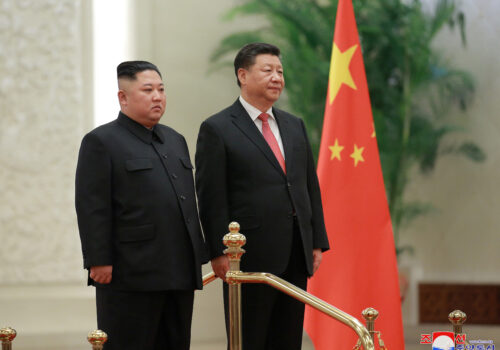
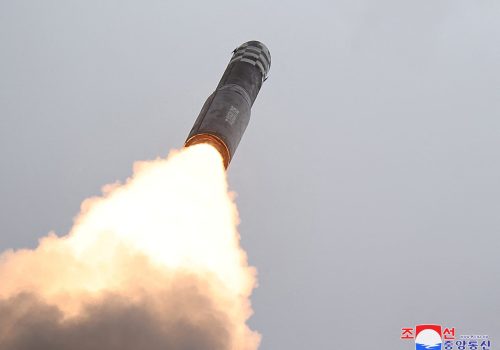
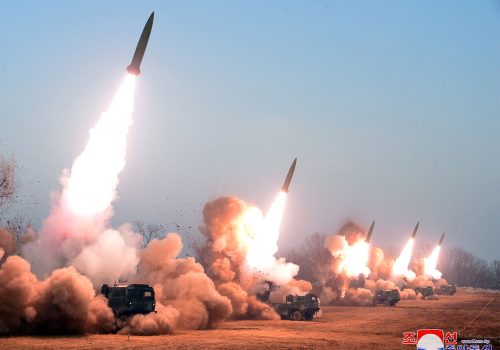
Explore the program

The Indo-Pacific Security Initiative (IPSI) informs and shapes the strategies, plans, and policies of the United States and its allies and partners to address the most important rising security challenges in the Indo-Pacific, including China’s growing threat to the international order and North Korea’s destabilizing nuclear weapons advancements. IPSI produces innovative analysis, conducts tabletop exercises, hosts public and private convenings, and engages with US, allied, and partner governments, militaries, media, other key private and public-sector stakeholders, and publics.
Image: North Korean leader Kim Jong-un visits the Institute of Nuclear Weapons in Pyongyang in this photo published by the North Korean Central News Agency (KCNA). Kim urged increasing nuclear production for military purposes and making more powerful weapons. Photo by KCNA via Latin America News Agency/Reuters Connect.