
Watch the event
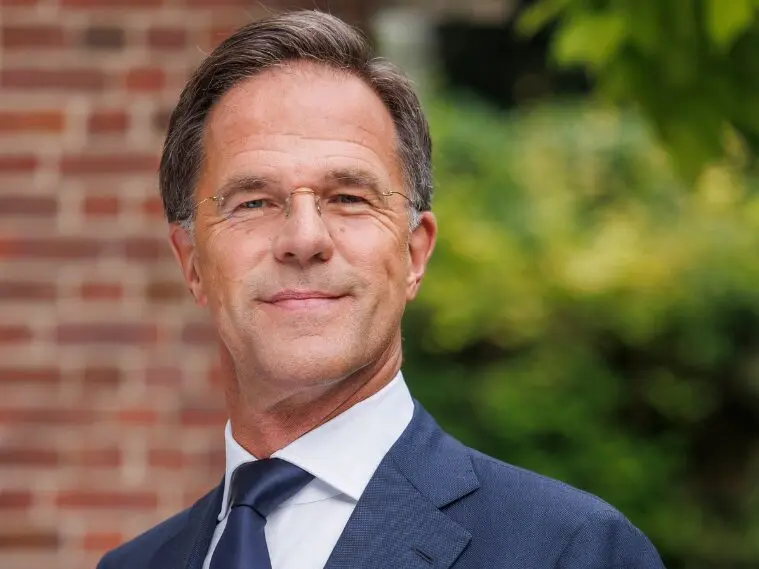
For NATO Secretary General Mark Rutte, the Ankara summit next month “is about delivery.”
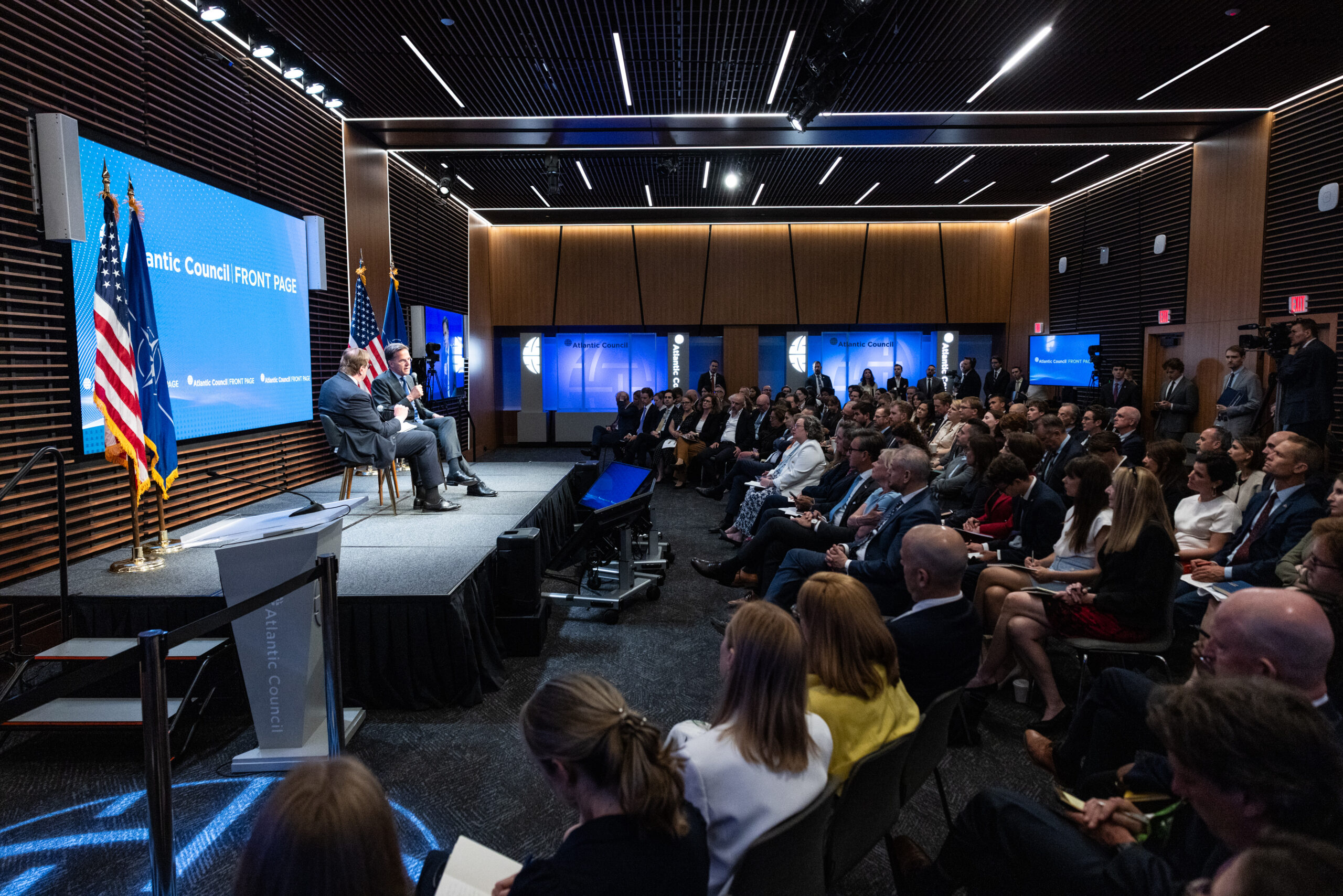
Rutte spoke at an Atlantic Council Front Page event on Thursday at the Council’s Washington headquarters, arguing that the Ankara summit could wind up “even more important” than last year’s in The Hague, where allies committed to spending 5 percent of their gross domestic product on defense.
“It’s great to have the commitments, and The Hague was a big success,” he explained, “but then to deliver on the commitments… is even more important.”
“In the end,” he said, Russian President Vladimir Putin “is not afraid of commitments. He is afraid of implementing those commitments.” And that, he added, “is exactly what we are doing, Vladimir.”
Ultimately, Rutte said, this summit would be a success if it sends Moscow a message that whenever it makes “a silly move” against the Alliance, that “we are ready to defend ourselves.” Ukrainian President Volodymyr Zelenskyy is slated to join the NATO leaders in Ankara, and Rutte said that he expects the allies will “show him and all Ukrainians that our support endures.”
Below are more highlights from the event, moderated by Atlantic Council President and CEO Frederick Kempe, in which the secretary general outlined what else he hopes allies will achieve when they come together in Ankara next month.
Unity—but also debate
- As the Alliance moves into a phase its leaders describe as NATO 3.0, “don’t be afraid of some discussions and sometimes some tensions,” Rutte said.
- Rutte spoke the day after a cordial Oval Office meeting with US President Donald Trump. There, he walked Trump through statistics that show Europeans “are really stepping up” as a Europe-led NATO 3.0 takes shape.
- “You will have some debates. You will have some discussions. You will have some tensions,” he explained at the Atlantic Council. “These are democracies working together.”
- The Alliance’s values, free media, and debate are “the strength of NATO,” he said. “We fight each other sometimes at the top of our lungs, and then in the end we always come together, for seventy-seven years now.”
More millions and billions
- Rutte said that he also expects “an incredible transformation in defense investment” to take place in Ankara.
- “Allies are stepping up,” he noted, pointing out that European allies and Canada have increased their defense spending over the past ten years by $1.2 trillion—a figure the secretary general called “The Trump Trillion” at the White House on Wednesday.
- He said that he is “convinced” that NATO “would not have made such an astounding leap without President Trump’s leadership.”
- On meeting the 5 percent target for defense and defense-related spending, Rutte said that allies overall “are in pretty good shape,” but if any prove to be lagging, he will give them “tough but discreet” encouragement.
- At the Ankara summit, he said, “allies will put forth concrete plans for increased investment,” including “tens of billions of dollars of new contracts” with major players in the defense industry at the NATO Summit Defence Industry Forum, to be held on the first day of the gathering in Ankara.





A defense industrial revolution
- Rutte added that he wants allies to foster “a real transatlantic defense industrial revolution” in Ankara.
- “The assets we need, the capabilities to deter and defend, simply aren’t available at the skill or speed that our security requires,” he warned. “And it is not only about inventory. It is also about innovation.”
- “You still need the big-ticket items like your fighter jets and tanks,” he said. “But you also need to make sure that you figure in the latest technologies, starting with AI.”
- He said that slow defense production in the United States and Europe is sending some allies shopping elsewhere, to partner countries such as South Korea. “But I’d rather see those dollars and euros spent within NATO territory,” he explained.
- Rutte argued that expanding defense spending by 20 percent, as European allies and Canada have in 2025, is the “max absorption capacity” in growth for a year, because the allies still need to hire people to produce the defense equipment and operate it.
- Rutte said he understands that Americans “feel sometimes that it’s not a fair deal that Europeans, being so rich, do not spend the same on defense as you are spending in the United States. Hey, guess what? We are going to, and we are on a trajectory.”
A bulletproof case to Washington
- Rutte said that he understands Trump “being disappointed” with what the US president says is a lack of European support for Operation Epic Fury in Iran. But he told the audience, which included senior European diplomats, that he showed Trump the “whole picture,” which includes European countries letting the US military use US bases within their borders for Iran missions.
- He said that “if NATO can be helpful” in the Strait of Hormuz, “we will be helpful.” He pointed to European allies who have positioned minesweepers close to the strait.
- The secretary general stressed the importance of NATO 3.0 for global defense and deterrence, because “the US has to take care of more than one theater,” he explained, pointing to the Indo-Pacific. That means, he added, that there is a risk of spreading US resources “too thinly.” Thus, “it’s only right that Europeans take over some of those responsibilities.”
- When it comes to NATO, “the deal is fair” for the United States, Rutte argued. “NATO is also there for the United States… to make sure that the US can play its role worldwide.”
Katherine Golden is an associate director of editorial at the Atlantic Council.
Watch the event
Further reading

Tue, Jun 23, 2026
How European NATO allies are stepping up, by the numbers
Dispatches By Kristen Taylor, Matt Trunkey
Expect NATO leadership to focus on three main issues: defense spending, defense industrial production, and aid to Ukraine.

Tue, Jun 9, 2026
NATO allies need a plan for addressing threats below the threshold of war
Dispatches By Elisabeth Braw
NATO can gather allies to share best practices and also coordinate responses, even if the Alliance does not respond to subthreshold attacks itself.

Mon, Apr 20, 2026
Five ideas to make the upcoming NATO Summit in Ankara a success
Dispatches By
While the upcoming summit is unlikely to produce anything as singularly significant as 2025’s “5 percent” pledge, there are important steps the Alliance should take.
Image: NATO Secretary General Mark Rutte speaks at the Atlantic Council on June 25, 2026. Photo via NATO.