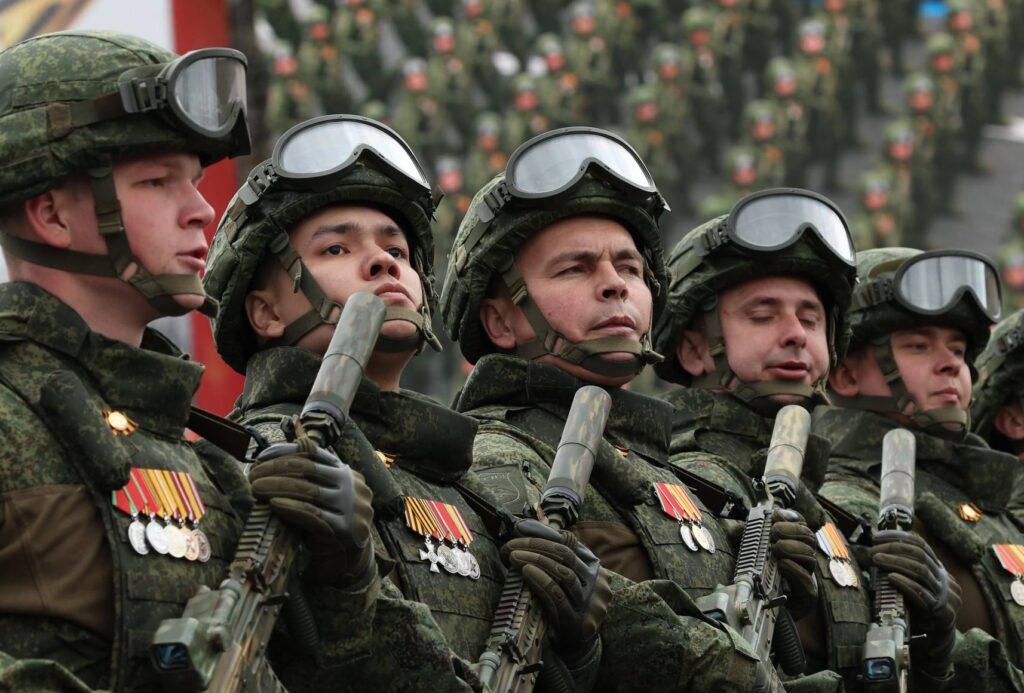
The EU is currently debating a visa ban on Russian military personnel as fears rise over Moscow’s escalating hybrid war against Europe. The measure was recently proposed by European Commission President Ursula von der Leyen as part of the bloc’s twenty-first sanctions package, but has yet to be adopted.
“For the first time, we propose to ban from entry into the EU anyone who has served in the Russian Armed Forces since the beginning of the war. Europe stays off limits for anyone who has participated in the invasion of Ukraine. As simple as that,” von der Leyen said on June 9.
The envisaged ban is far from a done deal and will require unanimous approval from all EU capitals. Recent reporting indicates that both Paris and Rome are resisting the move, citing legal and technical concerns. France and Italy currently receive the highest number of visa applications from Russia among EU countries.
The idea of imposing visa restrictions on Russian soldiers was first advanced by a group of eight EU member countries in spring 2026. Germany, Sweden, Finland, Estonia, Latvia, Lithuania, Romania, and Poland called on Brussels to address concerns posed by current and former Russian military personnel entering Europe, which they characterized as “one of the most serious risks to the EU’s internal security arising from the war in Ukraine.”
Their appeal highlighted fears that any Russian servicemen who gained access to the EU could become participants in the Kremlin’s hybrid war against Europe. It also noted the large number of convicted criminals who have reportedly been recruited into the Russian military since 2022 to join the invasion of Ukraine in exchange for reduced sentences.
Stay updated
As the world watches the Russian invasion of Ukraine unfold, UkraineAlert delivers the best Atlantic Council expert insight and analysis on Ukraine twice a week directly to your inbox.
The current proposals are part of a broader discussion over EU visa policy toward Russian nationals amid the largest European invasion since World War II. Calls for restrictions on tourist visas for Russians have emerged periodically since the onset of Russia’s full-scale invasion of Ukraine in February 2022, but measures have so far been limited to individual countries. This inconsistency has created numerous loopholes, with Russian passport holders in many cases able to travel throughout the EU via Schengen visas.
Opponents claim that limiting access to EU visas would represent a form of collective punishment that is legally questionable and contradicts European values. Some have also argued that visa bans will further isolate ordinary Russians at a time when it is in Europe’s own interests to facilitate greater engagement.
Supporters of the current proposal to ban Russian military personnel from the EU see it as a common sense security measure. It comes at a time when European governments increasingly recognize that Russia’s confrontation with the West extends far beyond Ukraine.
Recent details of Russian ties to arson attacks on properties linked to British Prime Minister Keir Starmer have underlined the scope of the Kremlin’s hybrid warfare operations across Europe. These activities include infrastructure sabotage, cyberattacks, disinformation campaigns, and other hostile acts designed to destabilize and disrupt European societies while remaining below the threshold that could potentially trigger a military response.
Additionally, evidence including over 800 testimonies collected since 2022 by The Reckoning Project, a global team of journalists and lawyers documenting, publicizing, and building cases of atrocity crimes, paint a picture of systematic criminal behavior by Russian military personnel on occupied Ukrainian territory outside of combat activities. Given the scale of the alleged violations and the limited resources available to investigators, it will take years to establish comprehensive records of individual responsibility.
Eurasia Center events

Advocates of a visa ban say that allowing unrestricted entry to Russian military personnel could create long-term security risks for the European Union, even if the current war in Ukraine comes to an end. “We have close to one million combatants in Russia right now,” Estonian Foreign Minister Margus Tsahkna commented in early 2026. “Russia and Putin are already using different people to commit attacks on our societies, but when there will be peace, we can imagine that we will have hundreds of thousands of ex-combatants coming to Europe.”
The rhetoric coming from Moscow underlines the scale of the potential security threat to the EU. Russian officials and regime propagandists routinely frame the invasion of Ukraine in civilizational terms as part of a broader struggle against Europe and the collective West. Meanwhile, Kremlin dictator Vladimir Putin has attempted to justify the attack on Ukraine by insisting he is reclaiming “historically Russian lands.” At its greatest extent, the Russian Empire also included the territory of five current EU member states that Putin may also wish to “reclaim.”
Any attempt to ban Russian military personnel from the EU would be technically difficult to implement and would not prevent Moscow from continuing to wage hybrid warfare across Europe. But failure to act would dramatically increase the scope for Moscow’s hybrid hostilities, while also sending a clear message that Europe is divided on security and lacks the political will to counter the Kremlin.
If Europe genuinely believes Russia poses a long-term security threat, EU visa policies must reflect this reality. It is absurd to be raising the alarm over escalating Russian aggression while at the same time granting Russian soldiers EU visas.
Elena Davlikanova is a senior fellow at the Sahaidachnyi Security Center in Kyiv and the Center for European Policy Analysis. Tatiana Vorozhko is a contributing editor at The Reckoning Project. This article reflects the personal views of the authors and does not represent the position of The Reckoning Project.
Further reading


The views expressed in UkraineAlert are solely those of the authors and do not necessarily reflect the views of the Atlantic Council, its staff, or its supporters.

The Eurasia Center’s mission is to enhance transatlantic cooperation in promoting stability, democratic values, and prosperity in Eurasia, from Eastern Europe and Turkey in the West to the Caucasus, Russia, and Central Asia in the East.
Follow us on social media
and support our work
Image: TheKremlinMoscow-SvenSimon via Reuters Connect