Over the past two decades, South Korea has transformed from a regional security partner into a global security provider. This evolution has significant implications for both the Indo-Pacific and the Euro-Atlantic, where challenges are increasingly interlinked. As Russia’s aggression against Ukraine continues—bolstered by material support from China and North Korea—the dividing lines between these theaters have disappeared. What happens in Europe now reverberates across the Indo-Pacific.
One positive outcome of this new security reality has been to underscore for South Koreans and Europeans what they have in common: They share many core values, including democracy, respect for human rights, free and fair trade, and the rule of law. They also share an interest in preserving sovereignty, territorial integrity, and the right of nations to determine their own foreign and security policies.
These shared values and interests form a strong foundation for security cooperation. But to build on this foundation, Seoul and its European partners should focus on three areas in particular: increasing intelligence sharing, building on existing programs for cooperation, and expanding defense industrial collaboration.
Increasing intelligence sharing
North Korea’s shipments of artillery shells and ballistic missiles to Russia, beginning in the fall of 2022, have sustained Moscow’s assault on Ukraine—including strikes on cities, hospitals, and preschools—with consequences that extend far beyond the battlefield. These actions underscore the need for deeper cooperation between European intelligence services and their counterparts in Seoul. Collaboratively tracking North Korea’s military transfers, proliferation networks, and technology supply chains will be critical to disrupting these flows and exposing the actors who enable them.
Intelligence sharing should also extend beyond illicit arms transfers. Both regions can benefit from exchanging lessons learned about battlefield performance, military innovation, and technology adaptation under combat conditions. Such cooperation can inform joint efforts in cyber defense, hybrid warfare, strategic communications, and resilience, strengthening preparedness in both Europe and Asia.
Building on existing programs for collaboration
In recent years, South Korea has made major strides to institutionalize mutually beneficial cooperation with NATO and European partners. Seoul’s Individually Tailored Partnership Program with NATO provides a structured framework for collaboration in cyber defense, emerging technologies, interoperability, and resilience.
Equally important, South Korea’s participation in NATO’s dialogue with the Indo-Pacific Four (IP4)—Australia, Japan, New Zealand, and South Korea—positions Seoul as a vital connector between the two regions. Having managed Alliance relationships for much of my career, I see this as a turning point. South Korea is no longer simply a regional security partner—it has become a global security provider.
A logical next step would be a US–South Korea–NATO ballistic missile defense command-and-control or tabletop exercise. Such an event could test interoperability between allied systems, improve shared situational awareness of North Korean missile threats, and lay the groundwork for expanding participation to partners such as Japan and Australia. This initiative would complement NATO’s ongoing IP4 flagship projects on cyber, emerging technologies, and supply-chain resilience—areas in which South Korea’s innovation ecosystem and advanced defense industrial base bring distinct added value to Euro-Atlantic security.
Expanding defense industrial cooperation
Perhaps the most visible—and encouraging—evidence of South Korea’s security engagement with Europe is the rapid expansion of Seoul’s defense industrial partnerships with NATO members.
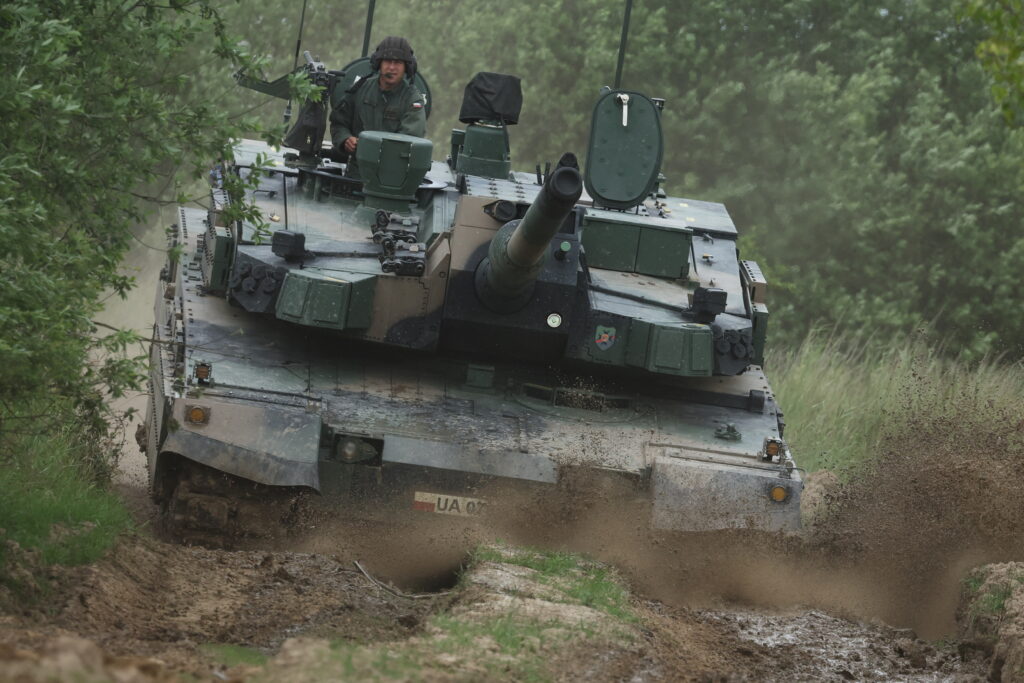
In Poland, major contracts—including for roughly 180 K2 main battle tanks, more than 200 K9 self-propelled howitzers, and 48 FA-50 fighter jets valued at over twelve billion dollars—have made South Korea one of Warsaw’s key defense suppliers, second only to the United States. The agreements include technology transfer and localized production, marking a shift from one-way export sales to genuine industrial cooperation.
In September 2025, Norway signed a contract for twenty-four additional K9 self-propelled howitzers and associated equipment, further strengthening South Korea–Nordic defense industrial ties.
These are not isolated transactions. They reflect a broader convergence between Europe’s urgent need to regenerate capabilities and South Korea’s proven ability to deliver modern, affordable, interoperable systems at speed and scale.
Looking ahead, further opportunities for cooperation include:
1. Munitions and artillery replenishment to rebuild NATO stockpiles and support Ukraine indirectly
Russia’s ongoing assault on Ukraine has placed extraordinary pressure on NATO members’ inventories of artillery, rockets, and air-defense munitions. Many allies are struggling to replenish stockpiles fast enough to meet both operational requirements and readiness standards. South Korea’s defense industry has demonstrated the ability to produce high-quality, NATO-interoperable munitions at scale and on accelerated timelines. Coordinated arrangements between South Korean producers and European governments—whether through direct procurement, licensed production, or joint ventures—could help meet near-term battlefield needs while laying the groundwork for longer-term industrial resilience across the Alliance.
2. Air and missile defense collaboration, especially as NATO member states invest in an integrated air and missile defense architecture across the Euro-Atlantic
As European nations strengthen integrated air and missile defense (IAMD) networks in response to Russian missile and drone attacks, there is growing interest in systems that are both effective and interoperable with NATO command-and-control frameworks. South Korea has relevant operational experience from defending against North Korean missile threats, as well as a mature, export-ready portfolio of layered air defense systems. Joint testing, shared training, command-and-control exercises, and eventual co-development could improve interoperability and accelerate the fielding of robust IAMD capabilities across Europe.
3. Co-development of advanced technologies in robotics, artificial intelligence (AI), and command-and-control systems
Both Europe and South Korea are investing in emerging defense technologies that leverage autonomy, AI-enabled decision support, and resilient command-and-control architectures. These technologies are rapidly shaping modern warfare, as demonstrated in Ukraine. Partnerships that bring together European research institutions, NATO centers of excellence, and Korean defense technology firms could accelerate innovation and focus efforts on systems that enhance allied operational advantage. Such collaboration also allows partners to share risk, scale production, and ensure interoperability from the outset rather than retrofitting it later.
4. Joint efforts to strengthen defense supply chains for semiconductors, propulsion, and energetics—the backbone of allied defense production
The past few years have demonstrated how vulnerable global supply chains are—especially in strategically critical sectors such as semiconductors and energetics. South Korea is a global leader in advanced chip manufacturing and materials engineering, while European nations possess high-end propulsion, composites, and specialty chemicals production. Structured cooperation across these sectors would reduce dependence on single-source suppliers—including adversarial or at-risk supply chains—while building a more resilient and distributed industrial base among trusted partners. This is not only about efficiency; it is about strategic endurance.
These initiatives can strengthen deterrence and promote strategic diversification, reducing dependence on single suppliers and reinforcing resilience across the Alliance network.
Importantly, this approach does not privilege foreign producers over US industry. There is ample demand across the allied system. No single defense industrial base—US or otherwise—can meet the scale of global rearmament now underway. Expanding cooperation among trusted partners accelerates production timelines, encourages innovation, and ensures interoperability across allied forces.
Turning momentum into structure
The emerging South Korean security partnership with NATO and Europe is one of the most promising developments in today’s alliance landscape. It reflects a shared understanding that deterrence in the twenty-first century is global—and that technology, information, and industrial capacity are as decisive as troop deployments or forward basing.
The task now is to convert this momentum into structure. This means:
- Institutionalizing practical cooperative activities and exercises, such as cyber and ballistic missile defense;
- Coordinating defense industrial planning across trusted partners; and
- Sustaining political and policy engagement to align objectives, harvest lessons learned, and strengthen interoperability.
By doing so, South Korea’s partnership with NATO and Europe can serve as a model for cross-regional alignment—demonstrating how like-minded democracies can combine their technological, industrial, and military strengths to preserve stability and deter aggression.
In the long run, connecting the Euro-Atlantic and Indo-Pacific security communities through shared intelligence, innovation, and industrial collaboration will be essential to maintaining global stability. South Korea’s growing role in Europe is not just an opportunity—it is a strategic necessity for both regions.
David F. Helvey is a nonresident senior fellow in the Indo-Pacific Security Initiative at the Atlantic Council’s Scowcroft Center for Strategy and Security. He previously served as a senior official in the US Department of Defense, with responsibilities for both Euro-Atlantic and Indo-Pacific security, alliance management, and defense policy.
The views expressed here are the author’s own and do not necessarily represent the views of the US Department of Defense.
Further reading
Wed, Aug 27, 2025
Navigating the new normal: Strategic simultaneity, US Forces Korea flexibility, and alliance imperatives
Issue Brief By Bee Yun Jo
The future of deterrence on the Korean Peninsula—and indeed, the wider Indo-Pacific region—will hinge on Seoul’s ability to reframe US force realignments not as unilateral disengagements but as catalysts for action.
Tue, Nov 4, 2025
A next-generation agenda: South Korea-US-Australia security cooperation
Issue Brief By
Growing collaboration and cooperation between the United States, South Korea, and Australia could be key to maintaining security and prosperity in the Indo-Pacific. The Atlantic Council and the Korea Foundation gathered rising experts from the United States, South Korea, and Australia to identify obstacles to that cooperation and opportunities to overcome them.
Thu, Oct 23, 2025
The CRINK: Inside the new bloc supporting Russia’s war against Ukraine
Russia Tomorrow By
The latest report in the Atlantic Council's Russia Tomorrow series details how Russia’s war against Ukraine has brought together a new set of partners--united not by shared values, but by shared grievances--on the international stage: China, Russia, Iran, and North Korea.
Image: Polish soldiers ride a South Korean-made K2 Black Panther tank during a training exercise at a military ground in Braniewo, Poland, June 24, 2025. REUTERS/Kacper Pempel