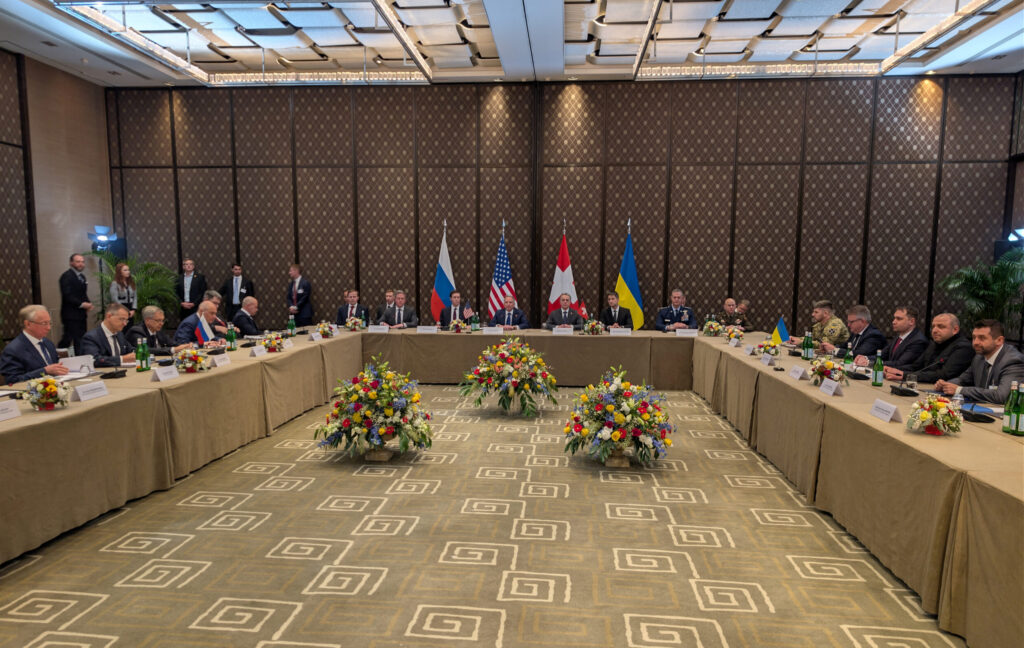
A fresh round of US-brokered peace talks between Russia and Ukraine is taking place this week as the Trump administration seeks to reach a deal by early summer. While pro-Ukrainian voices warn that any agreement lacking ironclad security guarantees for Kyiv could embolden Moscow to go further into Moldova or test NATO in the Baltics, the biggest threat may be to countries elsewhere in the former Soviet space.
There are already signs that Russia is turning its imperial appetite toward the South Caucasus and Central Asia, where the groundwork for destabilization appears to be well underway. Any negotiated settlement in Ukraine that ignores these regions will not end the current war; it will merely relocate it.
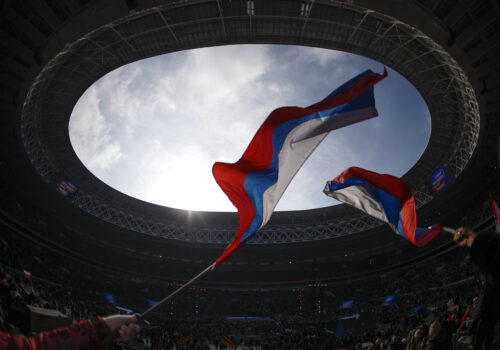
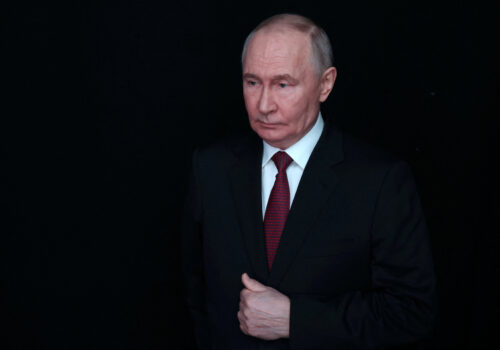
Russian nationalist ideologue Alexander Dugin, who is often called “Putin’s brain,” declared last month that no post-Soviet state should possess sovereignty. Instead, he argued, Moscow “has no choice but to restore the Russian Empire.” Days earlier, leading Kremlin propagandist Vladimir Solovyov called for Russia to conduct “special military operations” similar to the invasion of Ukraine in Central Asia and the Caucasus.
The Russian Foreign Ministry sought to distance itself from these comments by dismissing Solovyov as a “private journalist,” but few were convinced. In a country where the Kremlin controls news coverage and individuals can face prison for holding up blank signs, any talk of private journalism lacks credibility. Instead, this rhetoric is a further indication that even while bogged down in Ukraine, Russia is already waging shadow wars against other neighbors.
Stay updated
As the world watches the Russian invasion of Ukraine unfold, UkraineAlert delivers the best Atlantic Council expert insight and analysis on Ukraine twice a week directly to your inbox.
Evidence of Russia’s intentions goes beyond mere revisionist rhetoric. In early February, Azerbaijani security services released recordings of Ramiz Mehdiyev, the former head of the country’s presidential administration, allegedly coordinating coup plans with Russian FSB agents. This echoed events in Armenia last summer, when the authorities arrested Samuel Karapetyan, a Russian-Armenian oligarch on the US Treasury Department’s Kremlin List, for allegedly plotting to overthrow Prime Minister Nikol Pashinyan’s government in cooperation with Gazprom and Russian Railways.
Two alleged Russian-backed coup attempts in the South Caucasus in a single year should be enough to alarm every policymaker in Washington and across Europe. Meanwhile, in Central Asia, leaked Russian military intelligence documents claim to reveal plans for active operations to destabilize Kazakhstan. The initial focus was set to be the country’s northern regions, where Kazakhstan’s ethnic Russian population is concentrated. The plans included bribing elites, weaponizing accusations of “Russophobia,” and funneling propaganda through front organizations; tactics that echo earlier destabilization efforts in Ukraine.
The Kremlin has particular cause for concern due to the growing American presence in regions that Moscow regards as its own backyard. Over the past year, the United States has displaced Russia as the principal mediator between Armenia and Azerbaijan, and has brokered a peace deal including US oversight of a corridor that could become a key trade route connecting Europe to Asia while bypassing Russia entirely.
US Vice President JD Vance’s recent visit to Yerevan and Baku underlined the changing geopolitical balance in the South Caucasus. This was the highest level American engagement in the region for nearly two decades. It represented a statement of strategic intent that the Kremlin cannot ignore.
Eurasia Center events

US President Donald Trump has made ending wars a signature promise, but his team must know that some peace deals could end up accelerating hostilities elsewhere. If a settlement in Ukraine frees up Russian military resources without establishing credible deterrents against further Kremlin aggression, Moscow will have the means and the motive to reassert dominance elsewhere in its former empire.
History warns us to take this seriously. The tragedy of the war in Ukraine is not only the scale of the killing but its repetition. In his book “War and Punishment,” Russian journalist Mikhail Zygar chronicles how Russia systematically repressed Ukrainians for centuries to extinguish statehood aspirations. Zygar traced this process from the abolition of Cossack autonomy in the eighteenth century to the prohibition of Ukrainian language and literature in the nineteenth century, and on to the artificially engineered 1930s famine, known as the Holodomor, that killed around four million Ukrainians.
Strikingly similar templates exist throughout the former Soviet domains. “Perished Civilization,” a volume published under the nom de guerre “Kuzari” and drawing on leaked Russian archival files, has gained attention in the Kazakh, Kyrgyz, Uzbek, Tajik, and Ukrainian media since Dugin and Solovyov’s provocations. The book documents how Moscow justified its conquest of Muslim Central Asia as a sacred duty to defend Orthodoxy, a civilizational framing that lent permanence to what began as territorial opportunism. Following the Russian Revolution, the Bolsheviks retained every inch of this conquered land, swapping religious justification for ideological mandate.
The human cost was staggering. Kazakhstan experienced its own artificially engineered famine during the Soviet era, known in the country as the Asharshylyk. This mirrored Ukraine’s Holodomor and annihilated around 38 percent of the Kazakh population. Today’s concerns are not ancient grievances; they are unhealed wounds in societies that understand what Russian imperial restoration could mean.
With painful memories of Russian rule still widespread in Central Asia and the South Caucasus, few residents will accept the argument that Russia’s poor military performance in Ukraine makes further aggression unlikely. Instead, they will point to Moscow’s record of learning from its failures.
Russia’s 2008 invasion of Georgia was tactically successful but operationally embarrassing. The invasion was mired by aircraft losses, poor coordination, and drunk soldiers wandering through villages and reportedly wobbling at roll calls. Six years later, Russia seized Crimea with “little green men” in an operation that was both remarkably swift and highly professional. A hasty Ukraine peace could once again enable Russia to learn from its mistakes and implement key lessons against new targets.
A number of steps are required to prevent a settlement in Ukraine from serving as the spark for further Russian aggression in Central Asia or the South Caucasus. First, any security guarantees for Ukraine should also cover other at-risk post-Soviet states through bilateral defense pacts or a multilateral framework.
Second, the United States should seek to amplify its economic footprint throughout the region by committing to infrastructure and resource development projects. This will help counter Russian influence while creating incentives for stability. Third, sanctions relief should be dependent on concrete criteria such as halting Kremlin destabilization efforts in Azerbaijan, Armenia, Kazakhstan, and beyond.
By embedding regional safeguards into a Ukraine peace deal, President Trump can deliver on his promise to end wars without igniting new conflicts. The Kremlin’s propagandists are telling us exactly where they plan to go next. This time, we should listen.
Joseph Epstein is director of the Turan Research Center.
Further reading
The views expressed in UkraineAlert are solely those of the authors and do not necessarily reflect the views of the Atlantic Council, its staff, or its supporters.

The Eurasia Center’s mission is to enhance transatlantic cooperation in promoting stability, democratic values, and prosperity in Eurasia, from Eastern Europe and Turkey in the West to the Caucasus, Russia, and Central Asia in the East.
Follow us on social media
and support our work
Image: Delegations from Ukraine, Russia and the United States wait for the start of a meeting on the first day of the third round of trilateral talks, amid Russia's attack on Ukraine, in Geneva, Switzerland, February 17, 2026. (Press service of the National Security and Defence Council of Ukraine/Handout via REUTERS)