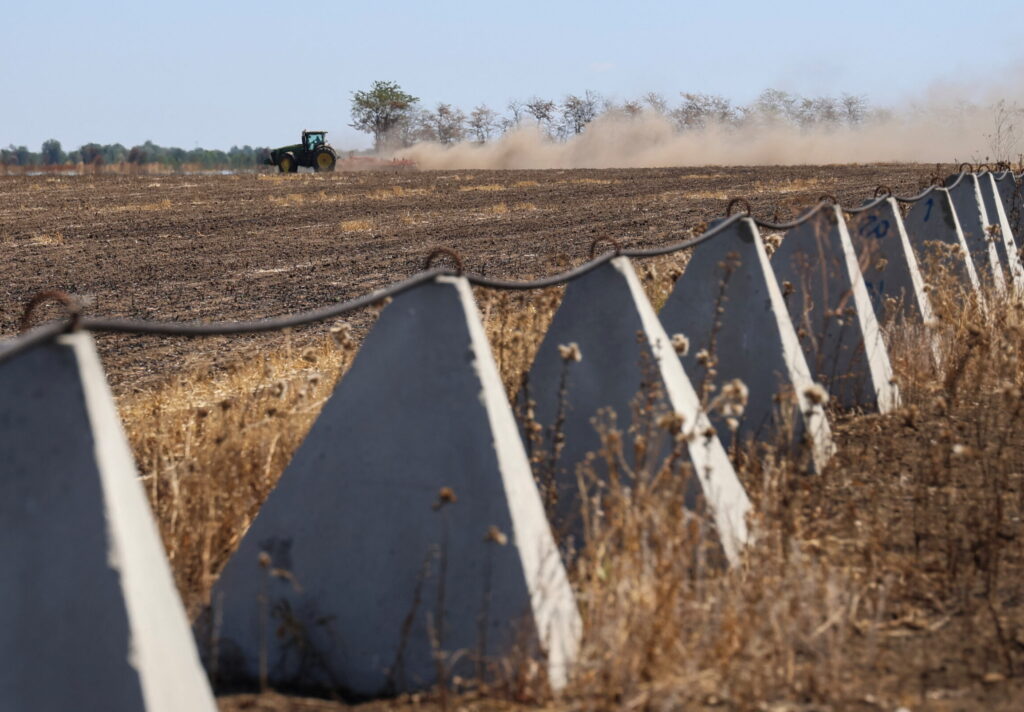
Ukrainian farmer Oleksandr Hordiienko was a well known figure in southern Ukraine’s Kherson region, where he was widely viewed as a symbol of the local agricultural community’s wartime resilience. During the first three-and-a-half years of Russia’s invasion, Hordiienko was credited with shooting down dozens of Russian drones and helping de-mine thousands of hectares of farmland. On September 5 last year, he was killed in a Russian drone strike.
Hordiienko’s death was part of a broader Kremlin campaign to methodically target and destroy Ukraine’s agricultural industry. Since the beginning of Russia’s full-scale invasion, at least fifteen farmers have been killed in the Kherson region alone.
Meanwhile, vast quantities of farmland remain inaccessible due to mining or have sustained damage as a result of fires caused by Russian military actions. Ukrainian agricultural workers face a daily threat of drone, artillery, or missile strikes. Some farmers have responded to the danger by taking measures to defend themselves, their land, and their livestock, such as investing in drone monitoring equipment and hiring military veterans.
Over the past year, Russian attacks on Ukraine’s agricultural sector have escalated alarmingly. According to research conducted by the University of Strasbourg, the University of Maryland, and NASA’s Harvest program, the number of farmland fires identified in Ukrainian-controlled areas of the Kherson region during 2025 rose by 87.5 percent.
Stay updated
As the world watches the Russian invasion of Ukraine unfold, UkraineAlert delivers the best Atlantic Council expert insight and analysis on Ukraine twice a week directly to your inbox.
The Kherson farming community’s wartime experience is mirrored throughout Ukraine, particularly in areas close to the front lines of the invasion. By attacking agricultural infrastructure, Russia seeks to undermine Ukraine’s food security, just as it targets the country’s energy infrastructure to deprive Ukraine’s civilian population of access to electricity and heating.
The implications of Russia’s war on Ukrainian farmers are international in scope. Known historically as the breadbasket of Europe, Ukraine is home to around one quarter of the world’s black soil, the most fertile farmland on the planet. This makes Ukraine a potential agricultural superpower and a key contributor to global food security. Ukrainian farmers are among the leading exporters of foodstuffs to the European Union, with Ukrainian produce also playing a prominent role in aid programs to counter hunger throughout the developing world.
Russia’s invasion has had a devastating impact on Ukrainian agricultural output. In addition to mined fields, burned crops, and bombed facilities, large numbers of Ukrainian farms are currently in Kremlin-controlled regions, leading to seized harvests.
Kherson region farmers received a further blow in summer 2023 when a suspected Russian sabotage operation destroyed the Kakhovka Dam in Russian-occupied southern Ukraine. This act of ecocide undermined one of Europe’s largest irrigation systems, leaving hundreds of thousands of hectares without access to water. The impact on the environment was catastrophic, leading to drought conditions, failed crops, and the loss of farmland.
Eurasia Center events
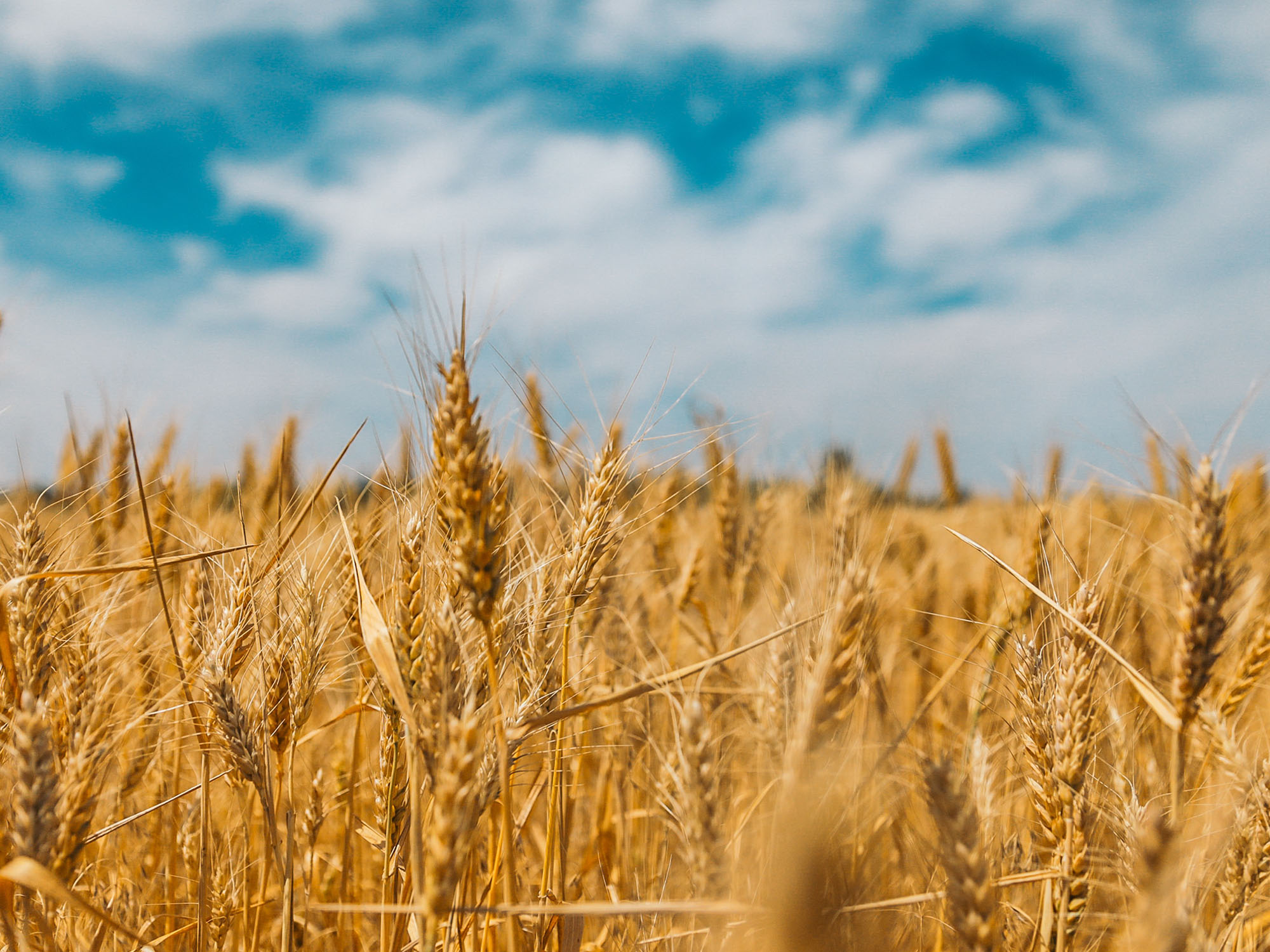
Despite the unprecedented challenges posed by Russia’s ongoing invasion, Kherson’s farmers continue to work. In 2025, they managed to harvest a remarkable quantity of the watermelons that serve as the region’s unofficial calling card. Other key Kherson crops include wheat and potatoes.
Since 2022, domestic and international support programs have proved instrumental in bolstering the resilience of the Kherson agricultural industry. Initiatives in recent years have included subsidies for farmers and technical assistance focused on areas such as irrigation, with the goal of helping farmers adapt to the new wartime realities.
Kherson agricultural businesses are also responding to the changing conditions. Due to water scarcity and rising temperatures, some farms have reduced planting areas and turned to cultivating crops that utilize soil moisture more efficiently. Research is also underway to develop additional drought-resistant crops better suited to the current environment.
Further international support for Ukrainian farmers will be critically important during 2026. Ukraine’s agricultural industry is one of the cornerstones of the national economy and a major exporter to global markets. By targeting farmers and their land, Russia aims to make Ukraine unlivable and break the country’s resistance. This strategy poses a significant threat to international food security and must be addressed.
Oleksandr Tolokonnikov is Deputy Head of the Kherson Regional Military Administration.
Further reading

The views expressed in UkraineAlert are solely those of the authors and do not necessarily reflect the views of the Atlantic Council, its staff, or its supporters.

The Eurasia Center’s mission is to enhance transatlantic cooperation in promoting stability, democratic values, and prosperity in Eurasia, from Eastern Europe and Turkey in the West to the Caucasus, Russia, and Central Asia in the East.
Follow us on social media
and support our work
Image: An agricultural worker operates a tractor near anti-tank fortifications, named 'dragon's teeth', amid Russia's attack on Ukraine, in the Kherson region, Ukraine. July 24, 2025. (REUTERS/Ivan Antypenko)