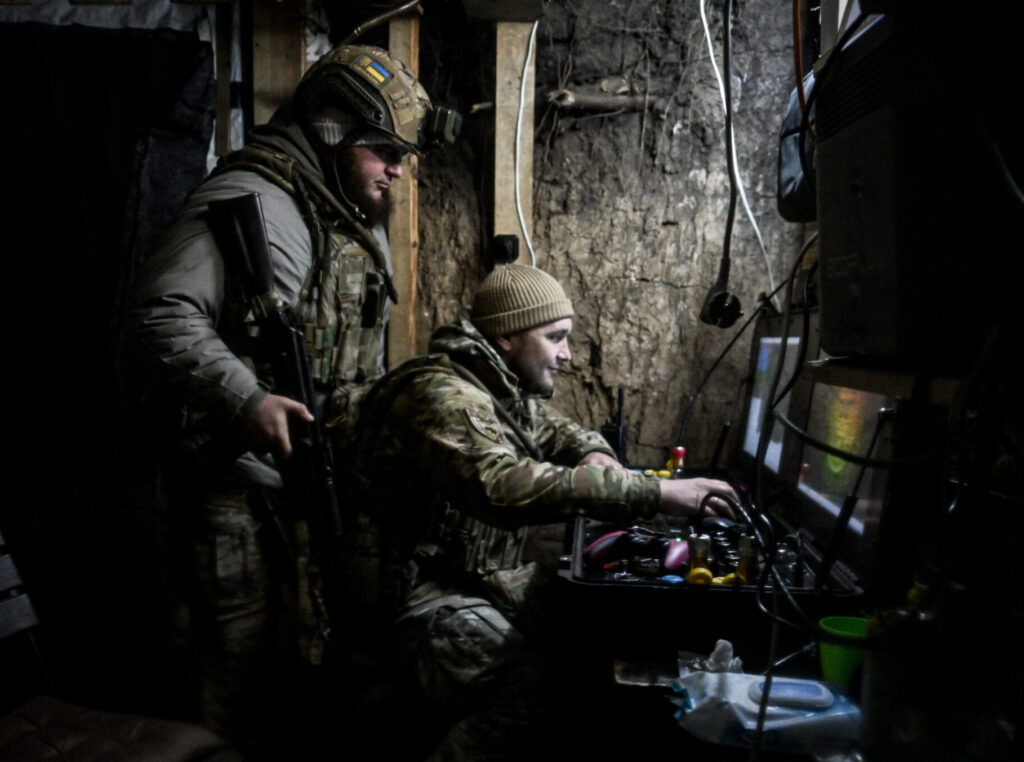
As US-led peace negotiations rumble on, both sides in Russia’s war against Ukraine are seeking to shape the narrative. The Kremlin points to incremental front line advances as proof that Russian victory remains inevitable, while Ukraine seeks to focus attention on escalating Russian battlefield losses.
Ukraine’s political and military leaders recognize that they currently lack the military strength for the kind of large-scale offensive operations necessary to liberate the entire country. Instead, the strategic priority for 2026 is to inflict maximum Russian casualties as part of efforts to make Putin’s invasion unsustainable. Newly appointed Ukrainian Defense Minister Mykhailo Fedorov stated recently that the goal is to eliminate up to 50,000 Russian troops per month.
Ukraine’s emphasis on increasing the cost of the invasion makes sense. Russia has held the battlefield initiative since late 2023 but has failed to achieve any significant breakthroughs during that time. Instead, the Russian military has paid a very high price for extremely limited gains. Most assessments indicate that Putin’s army has seized less than one percent of additional Ukrainian territory over the past two years, while suffering hundreds of thousands of casualties.
The battlefield itself has also changed, with the clearly defined front lines of the early years giving way to a shifting grey zone dominated by ubiquitous drone coverage. As a result, major offensives featuring armored units and massed infantry are now extremely difficult to conduct. Russia has refined its tactics in response to these changes, shifting away from a reliance on human wave assaults toward the use of small infiltration groups that probe Ukrainian defenses while seeking to establish footholds.
With Putin’s commanders under intense political pressure to capture more ground, the impetus is on Russia to continue offensive operations. As the defending force, this places Ukraine in a strong position. According to Ukrainian officials, Russian casualties have recently reached record highs of more than 30,000 per month. For the first time in the war, this means Russia’s losses are now higher than monthly recruitment levels.
The Russian army in Ukraine has recently experienced disruptions to Starlink connectivity, creating further challenges for the coordination of offensive operations. Without stable links between front line units and commanders, Russian forces are likely to become even more vulnerable and easier to eliminate. This has already led to a number of successful Ukrainian counteroffensives and could create the conditions for additional increases in Russian casualty rates.
Stay updated
As the world watches the Russian invasion of Ukraine unfold, UkraineAlert delivers the best Atlantic Council expert insight and analysis on Ukraine twice a week directly to your inbox.
Since the onset of the invasion, the Kremlin has been careful to reduce the risk of any backlash over heavy losses in Ukraine. Recruitment has concentrated on Russia’s ethnic minorities and the country’s poorest communities, with prisoners offered amnesties in exchange for military service. For the past few years, the emphasis has increasingly turned to attracting volunteers via large enlistment bonuses and generous salaries. Nevertheless, Russia’s ability to absorb casualties is not limitless. The longer the war drags on, the harder it will be for Moscow to maintain the current tempo, especially if Russian casualties continue to climb.
As part of efforts to maximize Russian losses, Ukraine has established a digital infrastructure to turn drone warfare into a systematic campaign of attrition. Through mechanisms such as the ePoints system, all Russian personnel and equipment losses are logged, verified, and analyzed. Ukrainian commanders can identify which units are most effective and adjust tactics as needed.
Ukraine’s strategy is producing striking results. In December 2025 alone, Ukrainian drone units claim to have hit over one hundred thousand Russian targets, a 31 percent increase compared to the previous month. Russian war blogger Dmitry Rogozin is one of many on the opposing side to acknowledge the effectiveness of this approach, noting that Ukraine is “building a model for the conflict as a long-term project designed to exhaust and exert systematic pressure.”
Eurasia Center events

The Russian army in Ukraine is already beginning to show signs of strain. According to UK Defense Secretary John Healey, Moscow is becoming increasingly dependent on foreign recruits as Russian commanders lose men faster than they can replace them. “Putin likes to give the impression that they’re making relentless and inevitable progress,” Healey noted recently. “But he’s weaker than he’s been and more reliant than he’s been on foreign fighters.”
Russia’s efforts to attract foreign mercenaries are a clear indication of the country’s mounting manpower challenges. Putin remains deeply reluctant to order a new mobilization due to concerns that this could destabilize the home front and spark a repeat of the exodus of fighting age Russian men that took place in 2022. However, with the Russian economy struggling, paying for new volunteers may become more challenging and lead to budget cuts elsewhere that could also fuel discontent.
If Russian losses continue to outpace recruitment, Putin may find himself with no good options. He could be forced to choose between mobilization, diverting state funds to sustain recruitment incentives, or scaling back offensive operations. All of these choices have the potential to fuel domestic instability. In recent days, there has been widespread speculation that Russian efforts to block the Telegram app may reflect growing Kremlin concerns over the possibility of unrest.
For much of the war, the Russian public has experienced the invasion of Ukraine as a distant conflict. Mounting casualties, particularly if paired with growing economic hardship, may gradually erode this sense of detachment and increase the pressure on the Kremlin. As the war enters a fifth year, Ukraine is hoping escalating Russian losses can finally force Putin to rethink his invasion and seek a meaningful settlement.
David Kirichenko is an associate research fellow at the Henry Jackson Society.
Further reading
The views expressed in UkraineAlert are solely those of the authors and do not necessarily reflect the views of the Atlantic Council, its staff, or its supporters.


The Eurasia Center’s mission is to enhance transatlantic cooperation in promoting stability, democratic values, and prosperity in Eurasia, from Eastern Europe and Turkey in the West to the Caucasus, Russia, and Central Asia in the East.
Follow us on social media
and support our work
Image: January 23, 2026, Donetsk Region, Ukraine: A soldier from a UAS crew of the Striletskyi special forces police battalion of the National Police in Zaporizhzhia region operates a Ukrainian GARA drone during a combat mission in the Pokrovsky direction, Donetsk region, Ukraine, January 23, 2026. (Credit Image: © Dmytro Smolienko/Ukrinform via ZUMA Press Wire)