Featured analysis

Latest analysis

Econographics

Dec 3, 2021

The RCEP ratification and its implications

By Niels Graham

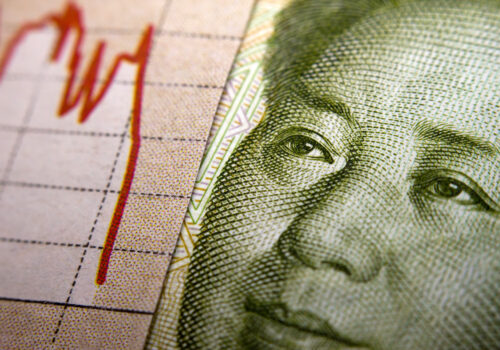
On January 1, 2022 the Regional Comprehensive Economic Partnership (RCEP) trade agreement will go into effect. When it enters into force, the partnership will be doubly historic: it will be both China’s first multilateral trade agreement and the world’s largest free trade agreement.

China
Economy & Business

Timely Commentary & Analysis

Nov 19, 2021

AC GeoEcon Explores the Sanctions Response to the Belarus-Poland Border Face-Off

By Daniel Fried, Hagar Hajjar Chemali

Distinguished Fellow and former State Dept. Sanctions Coordinator Ambassador Daniel Fried participated in a discussion with Hagar Chemali, Senior Fellow and host of Oh My World, about the state of sanctions from the US & EU toward Belarus in light of the migrant crisis on Poland’s border

Economic Sanctions
European Union

EconoGraphics

Nov 2, 2021

Goodbye for now, 232: Breaking down the G20 US-EU agreement on steel and aluminum

By Julia Friedlander, Clete R. Willems

During the G20 summit the US and EU announced an agreement over steel and aluminum tariffs. Julia Friedlander and Non-resident senior fellow Clete Williams react to its implications.

European Union
Eurozone

EconoGraphics

Oct 29, 2021

G20 Balance Sheet

By GeoEconomics team

Asset purchases by the Federal Reserve, European Central Bank, and the Bank of Japan, are driving most of the more than $17 trillion increase in the “G20 balance sheet”.

Inclusive Growth
International Financial Institutions

EconoGraphics

Oct 29, 2021

G20 risks becoming G7 + G13

By Mrugank Bhusari, Niels Graham

This year’s Summit priorities of people, planet, and prosperity seem to have forgotten another P — pandemic — that most of the world is still dealing with.

Economy & Business
G20

EconoGraphics

Oct 22, 2021

Global Sanctions Dashboard: Halloween edition

By Julia Friedlander, Michael Albanese and Castellum.AI

US’s evolving approach to cryptocurrencies, Pandora Papers; sanctions against Iran, Myanmar, and Russian authorities in Crimea.

Belarus
China

EconoGraphics

Sep 17, 2021

Global Sanctions Dashboard: Summer edition

By Julia Friedlander, Michael Albanese and Castellum.AI

Current state of sanctions against the Taliban, China’s use of its Anti-Foreign Sanctions Law, and combating corruption through sanctions.

Afghanistan
Belarus

EconoGraphics

Sep 7, 2021

ASEAN’s COVID spike

By Niels Graham

Since April, Asia has experienced a wave of COVID suppressing growth throughout the region. The key question to watch is: will supply chain contagion once again follow the virus west?

East Asia
Macroeconomics

EconoGraphics

Aug 23, 2021

IMF delivers fiscal firepower

By Niels Graham and William Howlett

On August 23 the IMF released a historic $650 billion allocation of Special Drawing Rights (SDRs)

Inclusive Growth
International Financial Institutions

EconoGraphics

Jun 29, 2021

Global Sanctions Dashboard: 5th edition

By Julia Friedlander, Michael Albanese and Castellum.AI

China’s anti-foreign sanctions bill, mapping Belarusian KGB sanctions, and building an anti-kleptocracy playbook.

Belarus
China

Content

EconoGraphics

Jun 20, 2017

Balancing Act

By Samuel Weitzman

On June 12, in US President Donald J. Trump’s first full cabinet meeting, the new US Trade Representative Robert Lighthizer briefly encapsulated the young administration’s philosophy on international trade: “Deficits do matter, and ours are coming down.” This is not a particularly partisan view; Trump’s opponent in the 2016 presidential election, former Secretary of State Hillary Clinton, spoke out against the Trans-Pacific Partnership (TPP) during her campaign despite supporting it previously.

Economy & Business
Trade and tariffs

EconoGraphics

Jun 9, 2017

A Vital Foreign Policy Tool

By Ole Moehr

This is the first EconoGraphic as part of our recently launched Economic Sanctions Initiative. The initiative aims to promote dialogue between the public and the private sector to investigate how to improve the design and implementation process of economic sanctions.

Economic Sanctions
Economy & Business

EconoGraphics

Apr 19, 2017

The European Stability Mechanism

By Lu Ding & Ole Moehr

The global economic and financial crisis, which originated in the United States in 2008, ultimately triggered a sovereign debt crisis in Europe in 2010. As a result of sky high debts, economies lacking in competitiveness, and over lenient banking regulations, the credit ratings of the Eurozone members Cyprus, Greece, Ireland, Portugal, and Spain plummeted. These countries began facing prohibitively high interest rates when they attempted to borrow from international credit markets.

Economy & Business
European Union

EconoGraphics

Mar 17, 2017

The United States Needs Europe And Vice Versa (Pt. 3)

By Lu Ding & Ole Moehr

This EconoGraphic is the final edition of a three-part series on why the United States and Europe need each other. The series highlights excerpts from the EuroGrowth Task Force’s inaugural report on European economic growth and why it matters for US prosperity.

Economy & Business
Europe & Eurasia

EconoGraphics

Mar 7, 2017

The United States Needs Europe And Vice Versa (Pt. 2)

By Lu Ding & Ole Moehr

US economic ties with the European Union (27) generate the largest global bilateral trade flows, worth an estimated $2.4 billion per day. The massive volume of US-EU (27) bilateral trade promotes prosperity on both sides of the Atlantic.

Economy & Business
Europe & Eurasia

EconoGraphics

Feb 22, 2017

The United States Needs Europe and Vice-Versa

By Lu Ding & Ole Moehr

The United States is the world’s largest recipient of global foreign direct investment (FDI). On a current-cost basis, the US FDI stock was more than three times larger than that of the second largest destination country in 2014, the most recent year from which statistics are available. Despite the current fragile global economy and great political uncertainty, foreign investment in the United States remains strong.

Economy & Business
European Union

EconoGraphics

Dec 12, 2016

Refer-Ending Renzi’s Government

By Filippos Letsas

On December 4, Italian voters rejected former Prime Minister Renzi’s constitutional reform referendum. The result of the referendum renewed concerns about the economic recovery in Italy, stability of the Euro, broader European economic integration, and rising populism across Europe. In the week following the referendum, global markets have focused their attention on the ailing Italian banking sector.

Economy & Business
Europe & Eurasia

EconoGraphics

Nov 29, 2016

The United States Needs China and Vice-Versa

By Filippos Letsas

Over the last decade, China’s large holdings of US debt have helped the Bank of China keep the value of the renminbi artificially low. This strengthened China’s competitive position in the global markets, allowing for cheaper Chinese exports and contributed significantly to China’s large trade surplus, which now accounts for about half of the total US trade deficit.

China
Economy & Business

EconoGraphics

Oct 25, 2016

CETA: Why “Comprehensive” Matters

By Filippos Letsas

On October 14th, the regional parliament of Wallonia, a French-speaking region of 3.6 million people in Belgium, voted to block the Comprehensive Economic and Trade Agreement (CETA), a proposed trade agreement between the European Union (EU) and Canada, which has been negotiated for over 7 years.

Economy & Business
European Union

EconoGraphics

Oct 7, 2016

Europe′s Fiscal Burden in Focus

By Filippos Letsas

The European Union’s (EU) Stability and Growth Pact requires Eurozone countries to annually lay out their fiscal plans for the following three years. The European Commission (EC) then compares the member states’ reports with its own projections and those produced by independent bodies, such as the International Monetary Fund (IMF), to evaluate whether the member states are on track to reach their Medium-Term Budgetary Objectives (MTOs).

Economy & Business
European Union