Content

Video

Mar 23, 2020

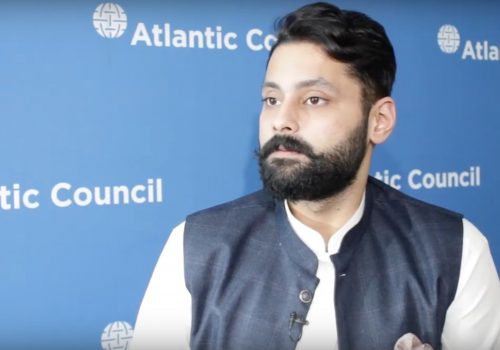
Social Justice and Activism in Pakistan with Jibran Nasir

By South Asia Center

With an exceedingly shrinking space for civil society and an emboldened right-wing, Pakistani Prime Minister Imran Khan’s Naya Pakistan is turning out to be the same-old Pakistan. Pakistani lawyer and civil rights activist Jibran Nasir helps us detangle some of Pakistan’s toughest contexts surrounding the country’s citizen empowerment, legal reforms, and social justice.

Civil Society Elections

Press and members call

Mar 19, 2020

Atlantic Council press call: Unity among allies in the fight against the coronavirus

As the global community ramps up efforts to counter the rapid spread of the coronavirus, the United States and its allies and partners are taking extraordinary steps to mitigate the impacts of the pandemic. As these measures are put into effect, widescale quarantines are disrupting life for millions, the economy is facing its greatest challenge in over a decade, and longstanding geopolitical relationships are in the spotlight. How can the United States and its closest allies work together most effectively to combat this growing crisis? What lessons can we learn from countries at the leading edge of this fight in order to reduce the toll among our citizens and those of our closest friends? Ambassador Armando Varricchio, Ambassador Ashok Kumar Mirpuri, Ambassador Stavros Lambrinidis, and Barry Pavel unpack these questions and discuss the latest on the ground in Europe and Singapore.

Europe & Eurasia European Union

EnergySource

Mar 12, 2020

Oil market meltdown?

By John Soughan

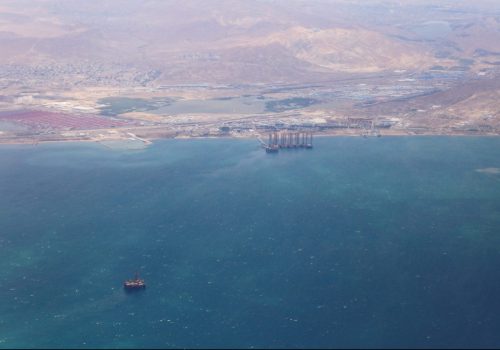
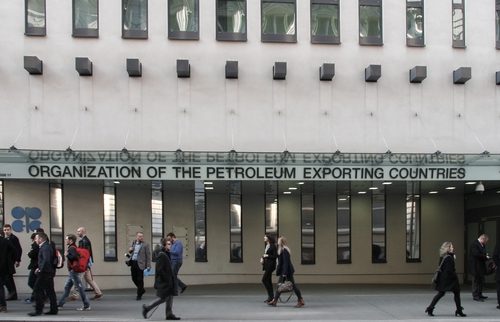
Over the weekend of March 7–8, the breakdown of the previous oil production agreement between Russia and Saudi Arabia led to the broader collapse of the arrangement between OPEC and OPEC+. What will the rift will mean for the global oil market?

Coronavirus Energy Markets & Governance

Press and members call

Mar 11, 2020

Atlantic Council press call: Oil market meltdown: Price wars, coronavirus, and energy geopolitics

Last week’s breakdown of OPEC+ meetings in Vienna has turned a demand side driven decline in oil prices caused by the impacts of Coronavirus into an oil price war between two oil producing giants, with US shale production the ostensible target. If the standoff continues, however, the price war might ultimately do more harm to the Saudi and Russian economies. With increasing uncertainty about the depth of Coronavirus’ impact on global growth, the price war might also contribute to a sharp decline in the global economy. Helima Croft, David L. Goldwyn, Jean-Francois Seznec, Anders Aslund, and Randolph Bell discuss ongoing market volatility, the origins of the crisis, what’s next for US shale, and the implications of it all for energy and geopolitics
Coronavirus Energy & Environment

Press and members call

Mar 4, 2020

Atlantic Council press call: The global, domestic, and local impacts of the coronavirus on economies, risk, and communities

As the coronavirus continues to infect patients at a rapid rate, global markets have been jolted and local communities are being forced to take extraordinary measures to limit the spread of the virus. What is the latest on the US response? How will China’s economy—the world’s second largest—be impacted in the short- and long-term? What do businesses need to be thinking about as they confront a possible pandemic? And how are local communities in the US preparing? Thomas Bossert, Leland Miller, Chris Snider, James Murley, and Kathy Baughman McLeod​​​​​​​ unpack the latest on the response to the coronavirus and its deepening impacts.

Coronavirus

Event Recap

Mar 4, 2020

United States Commission on International Religious Freedom Hearing: Citizenship Laws and Religious Freedom

By Atlantic Council

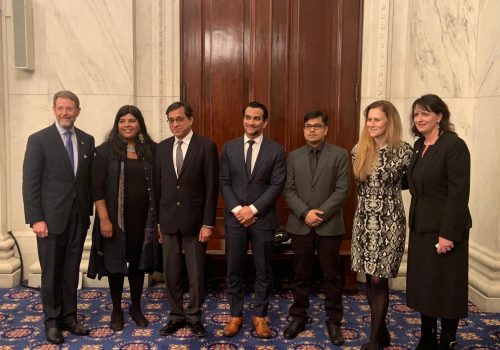
On March 4th, 2020, the United States Commission on International Religious Freedom (USCIRF) held a hearing to discuss how citizenship laws can be used to deny religious minorities rights guaranteed by their citizenship, making them disproportionately vulnerable to exploitation and mass atrocities.

Human Rights India

Feature

Mar 3, 2020

South Asia: The road ahead in 2020

By South Asia Center

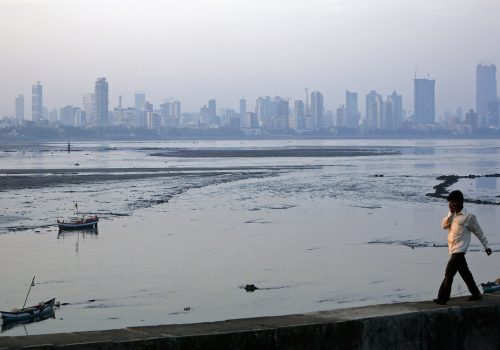
South Asia’s economies are powered by an energetic young population eager to embrace 21st century economic opportunities and conscious of their growing centrality to global geopolitical calculations. Whether the governments of South Asia’s countries are capable of delivering on this promise is another question. Each state faces serious policy and governance challenges that must be addressed in 2020

Afghanistan Bangladesh

Press and members call

Mar 2, 2020

Atlantic Council press call: Slovakia’s general election

Slovaks headed to the polls on Saturday, February 29, to vote in a general election that had important implications for the future of the country. In Saturday’s election, voters ousted the center-left Smer-SD party, which has dominated the political landscape for over a decade, and showed clear support for the anti-corruption opposition parties, the “democratic opposition.” Amb. Daniel Fried, Corina Rebegea, Amb. Rastislav Káčer, and Benjamin Haddad unpack the results and discuss the vote’s implications on Slovakia's future as well as the populist tide sweeping through Europe.

New Atlanticist

Feb 29, 2020

The Greater Caspian region: A new Silk Road, with or without a new belt

By Matthew Bryza

With the signing of a US-Taliban peace agreement, now might be a good time to look ahead to how Afghanistan might strengthen its economic connectivity with both its neighbors and more distant markets.

Afghanistan Central Asia

Press and members call

Feb 28, 2020

Atlantic Council press call: The coronavirus and its growing global consequences

As the coronavirus continues to spread globally at a rapid pace, the US and the international community are facing a potentially historic global public health crisis with vast potential geopolitical and economic implications. United States national security and health authorities are bracing for an impending outbreak, as sizable outbreaks continue to surface across several continents. What are the likely trajectories for the virus? What might be the most important geopolitical impacts? How can we strengthen our resilience against this set of threats?