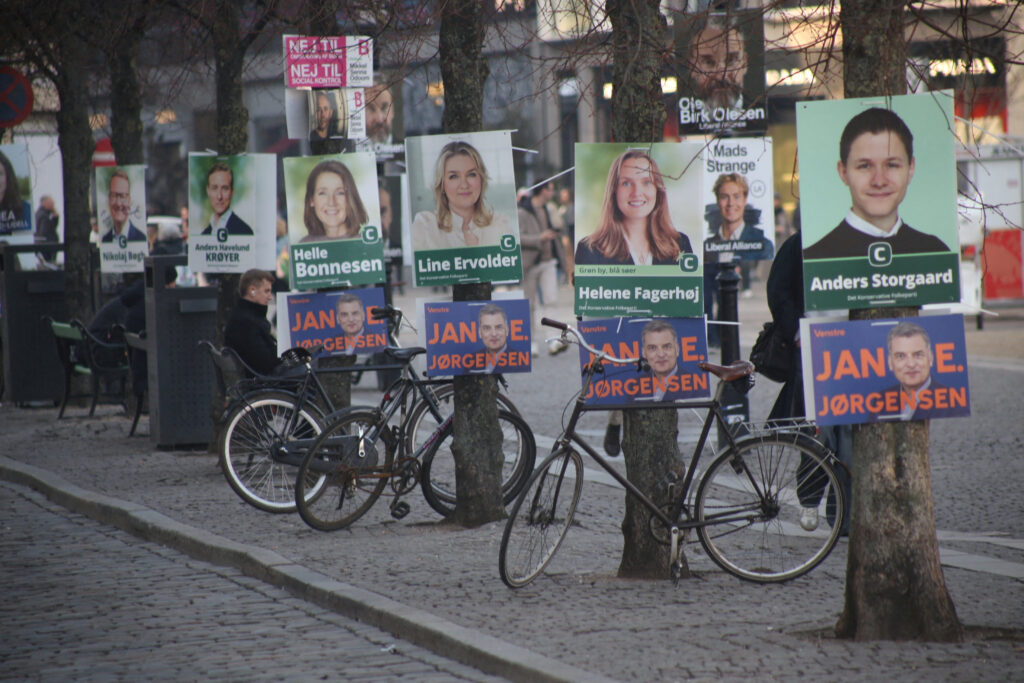
Danes will head to the polls on March 24 for snap parliamentary elections to choose 179 members of the Folketing, Denmark’s unicameral national parliament. After underperforming in local elections last November, Prime Minister Mette Frederiksen’s Social Democrats party seeks to regain national support over its handling of the dispute with the United States surrounding Greenland’s sovereignty.
Ahead of the election, experts from the Atlantic Council’s Europe Center answer the most pressing questions about what the results could mean for the country’s domestic and international priorities during a time of strained transatlantic relations.
How did we get here?
Why did Frederiksen call elections now?
In the months following historic losses for Social Democrats during local elections in November, Frederiksen strategically navigated heightened tensions with the Trump administration over Greenland’s sovereignty. In the aftermath of this confrontation, polls indicated that Frederiksen had boosted support for the Social Democrats across the country. With national polling indicating that the party could secure around 21 percent of the vote—a 3 percent increase from December—Frederiksen called the elections for March 24 to capitalize on this renewed political support and strengthen the Social Democrats’ coalition prospects.
—Jeremy Schaefer is a young global professional with the Atlantic Council’s Europe Center.
What challenges will the next Danish government face in managing strategic relations with the United States?
Denmark countered Trump’s latest effort to seize Greenland through a combination of steadfastness, determination, and calm that, remarkably, underscored its continued commitment to transatlanticism. Critical to that success was Copenhagen’s effectiveness in forging and sustaining a robust coalition of NATO allies that firmly and publicly stood by its side.
Going forward, however, Denmark should not assume that this issue has been settled. As my colleague Dan Fried has said, it is, at best, in a state of remission. To keep it that way, Denmark must continue delivering on its tradition as a committed NATO ally, rapidly fulfill its commitment to increase defense spending to meet the Alliance’s agreed standard of 5 percent of each country’s gross domestic product, and direct a robust portion of that defense spending to reinforcing the military capabilities necessary for Arctic operations. And it should continue advocating and facilitating increased NATO operational presence in the High North—including Greenland. Its presence is justified by the growing geopolitical importance of the High North and the challenges to that region posed by both Russia and China.
—Ian Brzezinksi is a senior fellow with the Atlantic Council’s Europe Center and Scowcroft Center for Strategy and Security, and a former deputy assistant secretary of defense for Europe and NATO Policy.
How will the crisis over Greenland impact voters’ attitude toward the government?
Frederiksen’s unwavering defense of the Denmark and Greenland’s territorial integrity generated a “rally ’round the flag” effect, boosting public support for the governing coalition and redirecting the political conversation away from other domestic concerns, including the rising cost of housing. Danish voters were reminded of the importance of steady leadership, especially when Denmark must simultaneously manage relations with a major ally and protect its national interests. Looking ahead, it appears that Frederiksen’s recent spotlight on the international stage may win her party additional seats in the Folketing. However, if voters’ support has weakened as the crisis has cooled in recent weeks, the Danes may find themselves in a similar position to the one they are in now: led by a centrist government with leaders from across the ideological spectrum.
—Jeremy Schaefer is a young global professional with the Atlantic Council’s Europe Center.
How has public sentiment in Denmark toward the United States evolved, and how is this impacting Danish policy toward Washington?
Danes generally were appalled and angered by the Trump administration’s threats to seize Greenland through intimidation or force. Rather than submit, as tensions reached a peak in January, the Danish government sent troops to Greenland and prepared to fight against a US invasion. Danish officials I spoke with explained in private that they did not expect they could withstand a determined US assault but would nevertheless fight rather than submit. That determination, political backing from Europe, and opposition within the United States to the prospect of US aggression against a long-standing ally seemed to have convinced Trump to back down.
The damage to US-Danish relations was severe. Sixty percent of Danes consider the United States to be an adversary while only 17 percent consider it to be an ally, an unfortunate but understandable reaction.
Nevertheless, the Danish government has kept its head. On March 17, as the United States was putting pressure on allies to contribute to efforts to open the Strait of Hormuz, which Iran has closed in response to US and Israeli attacks, Danish Foreign Minister Lars Løkke Rasmussen urged Europe to consider such efforts. He made his case in terms of European interests rather than rejecting US demands out of hand. This response serves as a model of cool-headed thinking rather than playing to understandable emotions, and sets a good example that many leaders, including those in the United States, could learn from.
—Daniel Fried is the Weiser family distinguished fellow at the Atlantic Council and a former US ambassador to Poland.

The Europe Center promotes leadership, strategies, and analysis to ensure a strong, ambitious, and forward-looking transatlantic relationship.
Further reading
Image: Posters for candidates in the upcoming election are seen in central Copenhagen, Denmark, March 10, 2026. (REUTERS/Tom Little)