
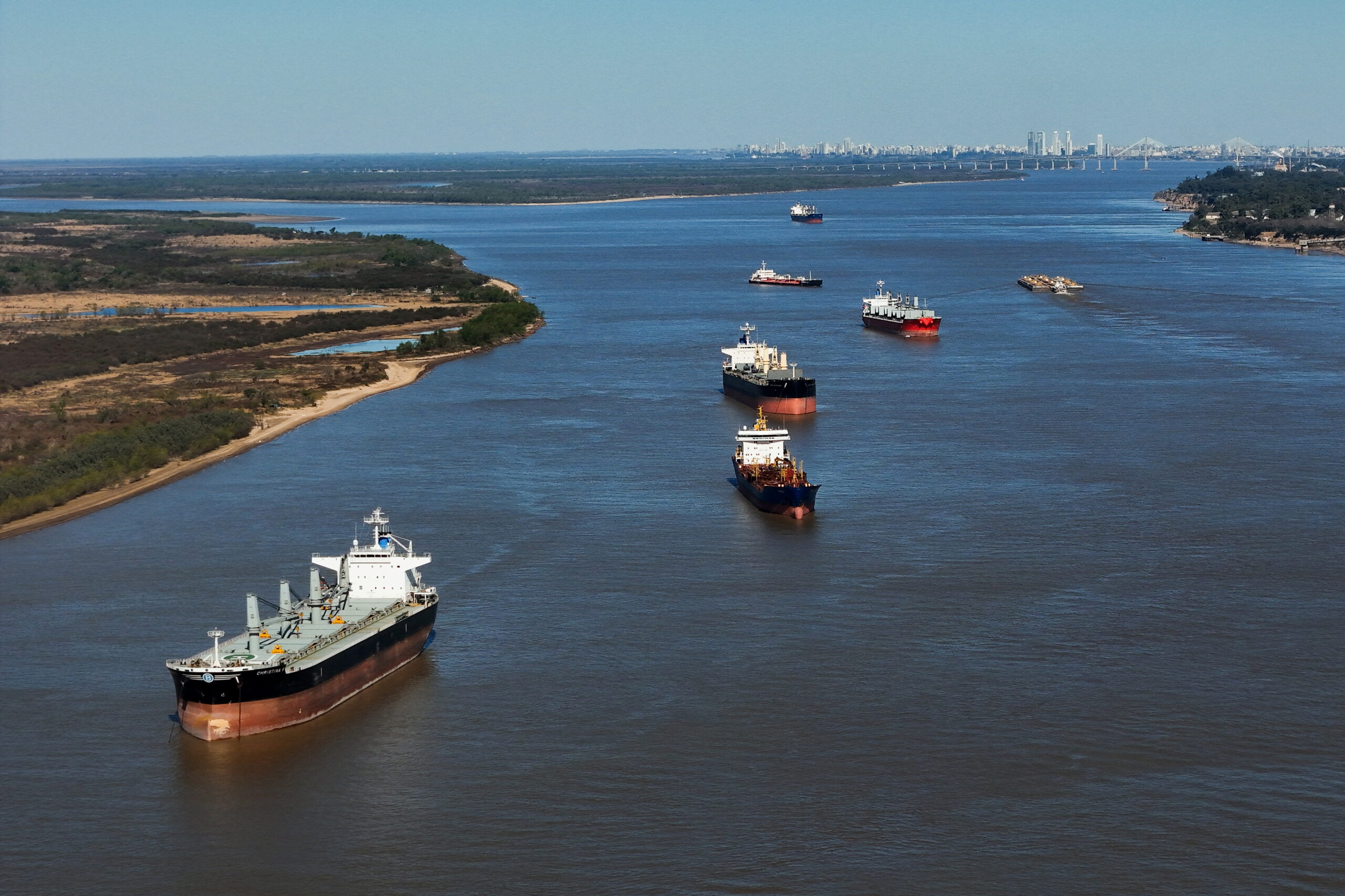
The midterm victory for Argentine President Javier Milei’s ruling party in October expanded its legislative authority and provided a renewed mandate from voters to continue the country’s transformative economic reforms. Since the election, headlines have largely focused on how the Milei administration will approach much-needed fiscal and labor reforms. But Argentina should also focus on further liberalizing its foreign trade. As part of the Milei administration’s efforts to optimize efficiency and broaden the domestic tax base while lowering tax pressure on the economy, Argentina should reduce its unusually burdensome taxes on exports, known as the retenciones.
Over the past few months, the Milei administration has taken some steps on the right track. On December 9, for instance, the administration lowered the export tax on soybeans from 26 percent to 24 percent. This and other recent steps are welcome, but further reforms of the export tax are needed. Failing to reduce these taxes further could cost Argentina a sizable share of its export potential in key sectors, trapping the economy in a disequilibrium.
The history of distortive fiscal dependence
Argentina’s current system of taxes on exports is the result of a tumultuous history of measures imposed to fill fiscal shortfalls. The problem is that these export taxes uniquely punish the country’s most efficient, globally competitive industries by forcing capital and labor away from competitive sectors—a problem economists around the world have long recognized. These taxes have been imposed, adjusted, rescinded, and reintroduced time and again, particularly targeting Argentina’s highly competitive agribusiness products in a recurrent dynamic that has discouraged production and overseas sales. The loss of overseas sales creates further problems: it limits the inflow of foreign currency, primarily US dollars, into the economy, making it more difficult for Argentina to meet its foreign currency debt obligations.
Tellingly, several Argentine administrations have altered or canceled these taxes altogether to boost languishing production and sales. Argentina has also been an outlier in charging these export tariffs, with almost none of its regional peers charging these except for very limited and targeted exemptions.
The distortive effects that these taxes have had on Argentina’s exports are clear: Comparing export volumes (rather than export values, which are subject to price fluctuations in commodities) shows that Argentina’s exports have stagnated in recent years. At the same time, its peers in the Mercosur trade agreement (Brazil, Paraguay, and Uruguay) saw their export volumes grow considerably in the same period while charging only limited duties on certain exports. This loss of potential exports costs Argentina economic growth and stifles its agricultural sector.
Although the problem is clear, solving it is not as simple as it sounds. Argentina’s duties on agricultural exports, which had been mostly eliminated in 1992, were reintroduced in 2002 as an emergency fiscal stopgap measure following the country’s historic 2001 debt crisis and subsequent default. No government since then has been able to remove all of these taxes because of how important they have become for the country’s often overstretched finances.
Famously, Argentina has run budget deficits through most of the past two decades, as well as the better part of the twentieth century. Once these duties are imposed, they then experience fiscal inertia—the fiscal cost of removing them prevents governments from doing so. Argentina relies on taxes on international trade (both imports and exports) for over 10 percent—and sometimes as much as 20 percent—of its federal government revenue. As our research shows, this makes it an outlier among its peers. The 2022 average for Latin America, for example, was slightly under 4 percent, while the upper-middle income country average stood at around 3.5 percent.
Since coming into office in December 2023, the Milei administration has made great strides to bring government spending back under control. In its first year in office, it achieved and sustained a consolidated fiscal surplus for the first time in almost two decades. The government achieved this by implementing spending cuts and freezes, as well as eliminating several subsidies, all measures that were politically costly. At the same time, the government has eliminated other distorting taxes, including the PAIS tax on foreign currency purchases.
There has been some progress on export taxes. In 2025, the administration reduced and eliminated export duties on certain agricultural products, as well as several import duties. In September, the government approved a temporary suspension of duties on grain exports as part of a drive to accrue much-needed foreign currency reserves. In October, it temporarily suspended export duties on aluminum and steel to assist the sector following the United States’ imposition of universal tariffs on these products earlier in the year.
Nevertheless, the latest available data show that Argentina still relies on taxes on taxes on international trade (6 percent of total federal government income comes from export taxes, while at least 4 percent comes from duties on imports). Any major reduction of taxes on international trade could have serious implications for the government’s goal of keeping its deficit under control. According to the latest International Monetary Fund projections, which are largely based on Argentina’s current tax system, the government is expected effectively to break even fiscally in 2026, with little, if any, surplus space left after accounting for upcoming debt repayments.
The case for accelerating the reduction of export taxes
Reducing these taxes should be a priority for Argentina because of two well-known challenges. First, Argentina’s export tariffs are so high that they have discouraged production and exports, in turn reducing the size of the taxable export base, which reduces the tax’s efficacy. That is why an export duty reduction is likely to yield a greater increase in exports. However, to do this responsibly the government would need to work in stages, steadily replacing taxes from exports with other fiscal income sources, even as it continues to rein in overall spending. Some of the replacement tax revenue could come, for example, by increasing tax collection efficiency and broadening the tax base by including larger shares of the informal economy into the mainstream.
Second, Argentina operates on a tight currency band and has debt obligations denominated in US dollars that are due early this year and next year. This means that to maintain economic stability, the country needs dollar reserves, which have become increasingly scarce. Indeed, the lack of dollar reserves necessitated the US-Argentina swap line that the Trump administration instituted in October.
Argentina generates reserves through a conversion system that requires exporters to repatriate and sell dollar earnings to the central bank at the official rate. However, this mechanism, which would otherwise mechanically generate reserves, is undermined by the high export duties’ stifling effect on overseas sales.
Additional reforms are needed
As the Milei administration goes into the second half of its term, it should double down on its reform agenda, accelerating the pace of the country’s incremental liberalization. This means committing unambiguously to a liberal program that anchors expectations for, and delivers on, gradual export and import duty reductions that give room for the economy to grow—but also to adjust—in the process. The reduction of export duties should be gradual to account for the country’s tightly kept and necessary budget surplus. Import duties, which also generate revenues, should be reduced in a gradual process that eases the purchase of goods, especially those that are needed for Argentina’s own productive sectors. However, Argentina’s import duties are governed in part by Mercosur, so this will need to be done in close coordination with the country’s partners in the bloc.
To further boost exports as an engine of growth, Argentina needs to move toward a more orthodox economic and fiscal model that does not punish exports and does not rely on export duties for an inordinately large share of its total tax revenues.
The moment to move in that direction is now. The next general election will take place in October 2027. Any signal that the Milei administration’s fiscal consolidation agenda is stalling, that currency reserve issues persist, or that productivity is static may reignite capital flight once again. For its economic reform agenda to succeed, the Milei government must achieve what previous administrations could not: fiscal discipline with a sustainable export-driven growth model.