
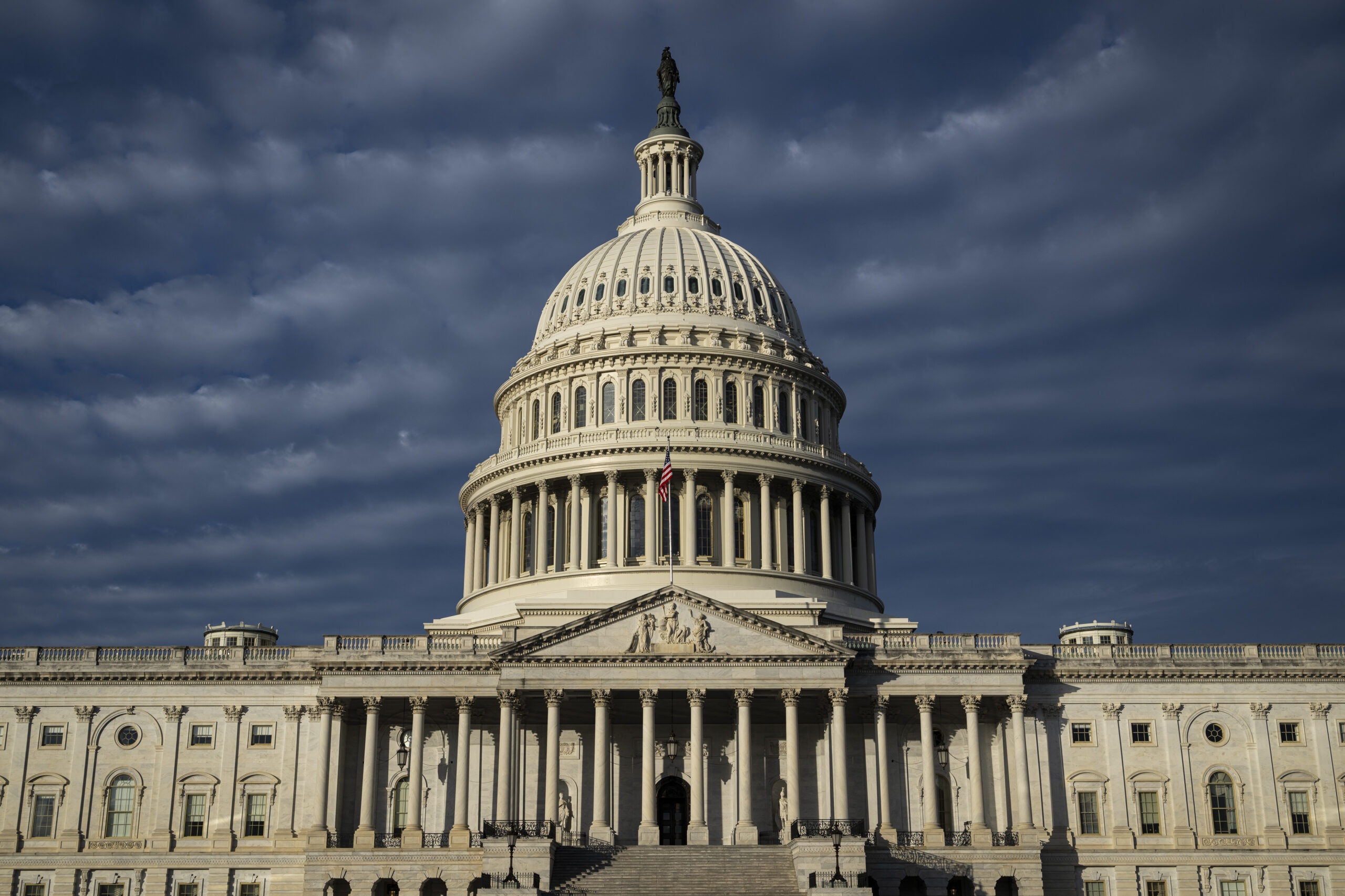
They made a list and checked it twice. On Wednesday, the US Senate passed the National Defense Authorization Act (NDAA) for fiscal year 2026, sending the Pentagon’s annual policy bill to President Donald Trump’s desk. The bill—running to more than three thousand pages and authorizing more than $900 billion in spending—covers all corners of the defense policy landscape. Below, our experts, many of whom worked on Capitol Hill and in the Pentagon, delve into the text to dig out the most important elements for a range of US policy priorities.
Europe: Roadblocks to slow US disengagement
The NDAA stands in stark contrast to the recently released National Security Strategy (NSS) by pumping the brakes on efforts in Washington to shift resources away from the Euro-Atlantic theater. The bill establishes guardrails by prohibiting the use of funds to reduce US force structure in Europe below 76,000 troops, remove major equipment, or relinquish the role of an American Supreme Allied Commander Europe (SACEUR)—unless the Pentagon can provide a detailed impact report certifying that such decisions were made in consultation with allies and are consistent with US national security interests.
The legally binding NDAA also authorizes $175 million for the Baltic Security Initiative—just three months after the Pentagon proposed cutting the program—which aims to deepen cooperation with Estonia, Latvia, and Lithuania by supporting their procurement of key US defense systems.
Unlike the NSS, which seeks to restore “strategic stability” with Russia, the NDAA clearly defines Moscow as an adversary, requiring the Pentagon to submit annual assessments on Russian strategic objectives and NATO’s ability to maintain a comparative military advantage.
As NATO allies ramp up military spending, Europeans should also welcome the creation of an assistant secretary of defense for international armaments cooperation, a new position intended to help improve the Pentagon’s understanding of allied industrial bases and facilitate “win-win” defense industrial integration.
—Torrey Taussig is the director of and a senior fellow at the Transatlantic Security Initiative in the Atlantic Council’s Scowcroft Center for Strategy and Security.
—Karlis Kuskevics is a young global professional in the Transatlantic Security Initiative.
Syria: The lifting of sanctions is a pivotal moment
The bill includes a repeal of the 2019 Caesar Act sanctions, marking a pivotal shift for Syria and signaling a move away from prolonged political and economic isolation. Over the past decade, sanctions have coincided with the collapse of Syria’s economy, with nearly 90 percent of the population estimated to be living below the poverty line. While the fall of the Assad regime created an opening for recovery, continued sanctions have constrained Syria’s ability to transition from active conflict to early recovery and to begin the long process of reconstruction.
Sanctions relief has the potential to catalyze economic recovery and contribute to political stabilization in ways that would be felt in everyday life across Syria. The World Bank estimates reconstruction and infrastructure needs at $216 billion, and renewed investment could help restore livelihoods for millions of Syrians who lost their homes and businesses during the conflict. Relief would also support the voluntary return of displaced Syrians who have been reluctant to return to a country where access to basic services—including water, healthcare, and education—remains unreliable, and where most urban areas receive only two to four hours of electricity per day.
In the health sector, sanctions relief would reduce longstanding constraints by facilitating the importation of essential medicines, medical equipment, and supplies needed to stabilize service delivery. More than 40 percent of Syria’s hospitals are not functioning at full capacity, and more than four hundred health facilities have been affected by funding cuts, forcing many to scale down or suspend services, which places additional strain on those that remain functional. At the household level, prolonged economic collapse has rendered healthcare increasingly unaffordable, compounding existing access gaps and health inequities. More broadly, reopening Syria’s banking and commercial sectors would reconnect the country to the global economy and lower barriers to diaspora engagement, long deterred by legal and financial risk.
Sanctions relief alone will not resolve Syria’s deep structural challenges, but it is a necessary condition for making life in Syria viable for most families and ensuring political stability. In this critical moment, the United States should deepen its engagement in Syria’s economic recovery and reassess recent decisions to scale back State Department and United States Agency for International Development programs that underpin humanitarian assistance and early recovery efforts at a time when Syrians need them most.
—Diana Rayes is a nonresident senior fellow for the Syria Project in the Atlantic Council’s Middle East Programs.
Ukraine: A demonstration of how much US support has changed in 2025
This NDAA is the first—and likely only—legislation passed by Congress in 2025 to support Ukraine. It also underscores just how dramatically US support for Ukraine has changed in the past year.
When it comes to military assistance, it’s unlikely the NDAA will lead to any new arms for Ukraine to defend itself—it includes $400 million in funding for the Ukraine Security Assistance Initiative, down from the nearly $14 billion passed by Congress in 2024. The Trump administration requested no new funding for the program, as it instead shifts to selling weapons to Europe for Ukraine.
Congress is using oversight requirements in the NDAA to put up obstacles to what it saw as efforts by the Trump administration to undermine remaining support for Ukraine this year. New reporting requirements are designed to dissuade the administration from ending intelligence support for Kyiv—something it has often used as leverage over Ukraine in negotiations with Moscow. There are also reporting requirements to stop the Pentagon from seizing weapons built for Ukraine by redirecting them to US stocks, as the Pentagon did in June. The NDAA also passes bipartisan legislation to resume US efforts to locate, return, and rehabilitate Ukrainian children abducted by Russia.
While lacking significant new material assistance, the NDAA’s provisions are a clear indication that bipartisan support for Ukraine remains strong in Congress. It’s an important signal as the White House pledges that it will send security guarantees for Ukraine to the Senate for ratification as part of a potential peace deal.
—Doug Klain is a nonresident fellow at the Atlantic Council’s Eurasia Center.
Korea: A hard floor for US forces on the peninsula
While the Trump administration achieved many of its core priorities, it also received several direct rebukes in the final bill. Few are as overt as Section 1268. This provision, originating from the Senate NDAA, prohibits the use of funds by the administration to reduce the quantity of forces stationed or deployed to US Forces Korea (USFK) below 28,500 without independent and extensive reporting requirements. The provision was “strongly opposed” by the administration in its Senate NDAA statement of administrative policy because it would limit the president’s commander-in-chief authority. The provision will also reduce the ability of USFK and United States Indo-Pacific Command to adapt their force posture to the rapidly changing environment, holding on to a nonsensical requirement of troop-count instead of requirements-based language, which would enable the rightsizing and modernization of forces stationed on the peninsula.
The passage of the Senate language, despite the nonrestrictive language included in the House NDAA and the administration’s opposition, signals the Senate’s strong concern, perhaps rightly, that the administration may go too far in its reductions in USFK. This Section 1268, therefore, aims to reassure Washington’s commitment to the US-South Korea alliance; however, this quantity-based reassurance comes at the cost of regional readiness and effectiveness.
—Adam Kozloski is a nonresident senior fellow at the Indo-Pacific Security Initiative at the Atlantic Council’s Scowcroft Center for Strategy and Security.
The Arctic: A potential bureaucratic divide between the State Department and the Pentagon
Noticeably absent from the NSS, the Arctic makes several appearances in the NDAA, with the most consequential provisions affecting the State Department rather than the Pentagon.
The law authorizes an ambassador-at-large for Arctic affairs, a position first established by the Biden administration. With the position codified, the Arctic ambassador is more empowered to execute their duties engaging with Arctic nations and other stakeholders.
The NDAA also expands State’s “Arctic Watcher” program. Building on the success of the American Presence Post in Tromsø, Norway, an expanded Arctic watcher cohort will provide valuable US influence in Arctic communities far from capitals.
Another provision potentially sets up a bureaucratic divide between State and the Pentagon by designating the Bureau of European and Eurasian Affairs as the lead for Arctic security within State. In contrast, Arctic policy within the Pentagon was reorganized this year to fall within the Americas Security Affairs office, which aligns with the US military’s increased focus on homeland defense, where the Arctic region plays a vital role. Staff working Arctic security in the Pentagon and at State will continue to work together, but these shifts could portend incongruity in the US approach to the region, as the teams adopt different priorities based on their bureaucratic homes.
—Connor McPartland is an assistant director with the Atlantic Council’s Transatlantic Security Initiative.
The Western Balkans: A new report to track Russian and Chinese malign influence
The Western Balkans Democracy and Prosperity Act’s inclusion in the annual defense authorization bill marks a notable US policy priority for the Western Balkans.
This act directs several important US positions, including for the United States to call for Serbia and Kosovo to return to the normalization dialogue and to sanction those who would destabilize the region. It also includes a statement of policy that the United States shall not pursue redrawn borders as a way to effectuate regional stability.
The act also provides emphasis on economic growth and US business opportunities. Included is a five-year Economic Development Strategy, reauthorization of the Young Balkan Leaders Initiative, and direction for inclusion into the European Democratic Resilience Initiative. This direction will bolster vital projects, such as Bosnia’s southern energy interconnector, which can help remove Bosnian reliance on Russian gas and strengthen the cohesion of Bosnia as a whole.
Among the act’s most notable provisions, however, is a biannual malign influence report. Russian and Chinese malign activity have long been a concern in this vulnerable portion of Europe. This classified security review on this activity will positively instruct US actions and strengthen regional defense for years to come.
The Western Balkans Democracy and Prosperity Act begins on page 2,784 of this mammoth bill. It is worth a close read and an expeditious implementation.
—Amanda Thorpe is a nonresident senior fellow at the Atlantic Council’s Europe Center. She previously worked as national security advisor for US Senator Peter F. Welch (D-VT).
Biodefense: Important progress to build upon
As with previous years, this NDAA represents incremental steps by Congress to address the biological threat, while also acknowledging the military’s biodefense responsibilities. Section 1207 of the act requires the Pentagon to enter into memoranda of understanding with other federal departments and agencies with international biodefense responsibilities to clarify roles and responsibilities for building biodefense capabilities internationally. This provision, which addresses a recommendation from our Commission’s report Battle Rattle: Fast Movers for Military Biodefense, should serve as a first step to enhance coordination and identification of capability gaps in global biological surveillance and detection activities, in alignment with the goals of the National Biodefense Strategy and the Trump administration’s America First Global Health Strategy. Future iterations of the NDAA should further build out the role of the military in identifying and addressing biological threats abroad, before they arrive here at home.
Mention must also be made of the NDAA provisions addressing biotechnology, clear recognition of the important work of the National Security Commission on Emerging Biotechnology. Among other provisions, the act requires the creation of a Biotechnology Management Office to coordinate military biotechnology development, acquisition, and sustainment activities, including through the development of a biotechnology strategy. Reinvigoration of and advancements in US biotechnology dominance should rightfully begin with the military, which is the federal leader in this space. While biotechnology is but one element of national biodefense, it is a critical area that requires additional investment and attention by political leadership.
The nation remains at critical risk of a biological event, whether naturally occurring, intentionally caused, or accidentally released. The next NDAA would benefit from even bolder action to address larger elements of the military biodefense enterprise.
—Asha M. George is the director of the Bipartisan Commission on Biodefense at the Atlantic Council, part of the Council’s Scowcroft Center for Strategy and Security.
—Robert Bradley is the associate director for government relations and policy in the Bipartisan Commission on Biodefense at the Atlantic Council.
US adversaries: A focus on the connective tissue between China, Russia, Iran, and North Korea
While the Trump administration’s 2025 NSS did not explicitly reference the so-called “axis of aggressors”—China, Russia, Iran, and North Korea—the NDAA reflects a sharper understanding of how these actors operate in concert to undermine US security. The Comprehensive Outbound Investment National Security Act, enacted as Title LXXXV of the NDAA, addresses this challenge by restricting US outbound investments that “benefit a foreign adversary’s military modernization efforts” and threaten US national security interests to designated countries of concern including China, Russia, Iran, and North Korea, as well as Venezuela and Cuba.
Targeting the entire axis is essential as US adversaries increasingly act in coordination with one another. Iranian technology has been identified in drones used by Russia in Ukraine, while North Korean artillery continues to sustain Moscow’s war effort. These examples underscore that allowing US capital or technical expertise to flow to any country of concern risks empowering the entire malign network.
Congress is right to focus on this connective tissue. By constraining outbound investment to countries of concern, the NDAA seeks to inhibit adversarial coordination and limit access to resources that fuel military competition with the United States and its allies. Success, however, will depend on close coordination with partners facing the same shared threat.
—Bailey Galicia is a program assistant with the Scowcroft Center for Strategy and Security.
The defense industrial base: A bridge over the ‘Valley of Death’
The fiscal 2026 National Defense Authorization Act is more than a budget; it is a desperate but necessary signal flare to the industrial base. For years, I have argued that the Pentagon’s acquisition culture is the single greatest threat to US national security, stifling the very innovation the United States need to compete. This bill finally attempts to bridge that “Valley of Death.”
By prioritizing multi-year procurement for critical munitions and mandating faster, flexible acquisition pathways, Congress is acknowledging that the “Arsenal of Democracy” cannot be rebuilt with twentieth-century bureaucracy. The emphasis on reindustrialization and the integration of advanced manufacturing is a win for the investor community, validating the dual-use thesis that software-defined warfare will define the future battlefield.
However, authorization is not appropriation, and policy is not execution. While the cuts to bureaucratic bloat and the $900 billion topline are promising, the Department of Defense must now prove it can actually deploy this capital to non-traditional entrants at speed. The legislation is in place; now it will take cultural courage to break the status quo. If the United States fails in this mission, it will lose the next war.
—Stephen Rodriguez is the commission director with the Forward Defense program within the Scowcroft Center for Strategy and Security.
Latin America: Congress and the White House agree on prioritizing the Western Hemisphere
This NDAA drives home some of the key points made in the NSS: stability in the Western Hemisphere is a top priority for US security interests.
A few particular sections highlight that point. For example, in the security realm, Section 504 requires the National Intelligence Council to conduct an assessment of the potential effect of expanding partnerships on combating the illicit drug trade, human trafficking networks, and corruption in Latin America. Findings here can potentially provide an opening for the region to cooperate with the United States on mutually beneficial issues like tackling transnational criminal networks.
The new NDAA also pays special attention to one of the most critical passageways for global trade: the Panama Canal. Section 1206 announces a new cybersecurity integration framework, including enhanced US-Panama cooperation on deterrence of ransomware attacks on the canal’s critical infrastructure. The provision incorporates these cybersecurity measures into the regular PANAMAX training exercises carried out by US Southern Command and security forces from Latin American countries that are focused on the security of the Panama Canal.
Critically, Section 8701 of the NDAA triggers the re-authorization of the Development Finance Corporation (DFC) with new provisions that allow for further US investment in Latin America’s economic development. The 2026 NDAA has elevated the income threshold of countries that may receive DFC funding to include “advancing income countries,” meaning that upper-middle income countries such as Mexico, Argentina, Colombia, and Brazil can now receive funding for infrastructure projects. This expansion can bring about opportunities for new US investment in Latin America in areas critical to US economic security interests.
The 2026 NDAA exemplifies the renewed political push in the United States for stability and security in the region.
—Jason Marczak is the vice president and senior director of the Atlantic Council’s Adrienne Arsht Latin America Center.
—Ilona Barrero is a project assistant at the Adrienne Arsht Latin America Center.