Is extending the New START limits in the US national security interest?
Bottom lines up front
- Before the last remaining quantitative limit on US and Russian nuclear forces expires in February 2026, the United States must decide how to respond to Moscow’s proposal to extend the limits by one year.
- Russia has violated at least nine arms control agreements since Putin assumed the presidency, and the global environment has changed dramatically since New START was negotiated in 2009.
- Agreeing to extend New START does not make sense when the United States now faces the likelihood of two nuclear peers—especially when Washington can’t verify whether Moscow is abiding by the limits.
Table of contents
- Introduction
- The history of New START
- The nature of the two-peer nuclear strategy challenge
- The history of Russian Federation arms control violations
- Benefits and risks of accepting the Russian proposal
- A path forward
- Conclusion
Introduction
The Treaty between the United States of America and the Russian Federation on Measures for the Further Reduction and Limitation of Strategic Offensive Arms (also known as the New START treaty) expires on February 5, 2026. In September, Russian President Vladimir Putin proposed that Russia and the United States agree to continue complying with the “central quantitative limits” of the treaty for one additional year.1The treaty limits each nation’s strategic nuclear forces to seven hundred deployed strategic delivery vehicles, eight hundred deployed and non-deployed strategic nuclear delivery vehicles, and fifteen hundred deployed strategic nuclear warheads. For the purposes of the treaty limits, deployed heavy bombers count as one deployed strategic nuclear warhead each, regardless of their actual weapons carriage capacity. “Putin Offers to Extend Last Nuclear Arms Pact with US,” Radio Free Europe/Radio Liberty, September, 22, 2025, https://www.rferl.org/a/russia-nuclear-us-new-start-treaty/33537093.html. He added, “We believe this measure will only be viable if the United States acts in a similar manner and does not take steps that undermine or disrupt the existing balance of deterrence potentials.”2“Putin Offers to Extend Last Nuclear Arms Pact with US.”
The United States must therefore decide whether to accept Putin’s proposal, reject it, or insist modifications be made. Given that New START is the last agreed-upon quantitative limit on the strategic nuclear forces of Russia and the United States, this is a consequential decision. Yet the choice is ultimately downstream of a more fundamental question: In order to assess the appropriate path forward, the United States must determine its strategy for managing the two-nuclear-peer threat environment that China’s rapid, unexplained nuclear buildup will create. Only then can Washington identify what nuclear forces will be required to implement that strategy with high confidence—an essential prerequisite for assessing whether an extension of New START aligns with US interests.
This issue brief will ask and answer the question of whether extending the New START limits is in the US national security interest. It will do so by analyzing the history of the New START treaty (including the circumstances under which it was negotiated); the nature of the two-peer nuclear problem and the strategic challenges it poses; the history of Russian arms control compliance; and the potential benefits and risks of accepting Putin’s proposal for a one-year extension of the New START central limits. The issue brief concludes with a recommendation for US action going forward.
The history of New START
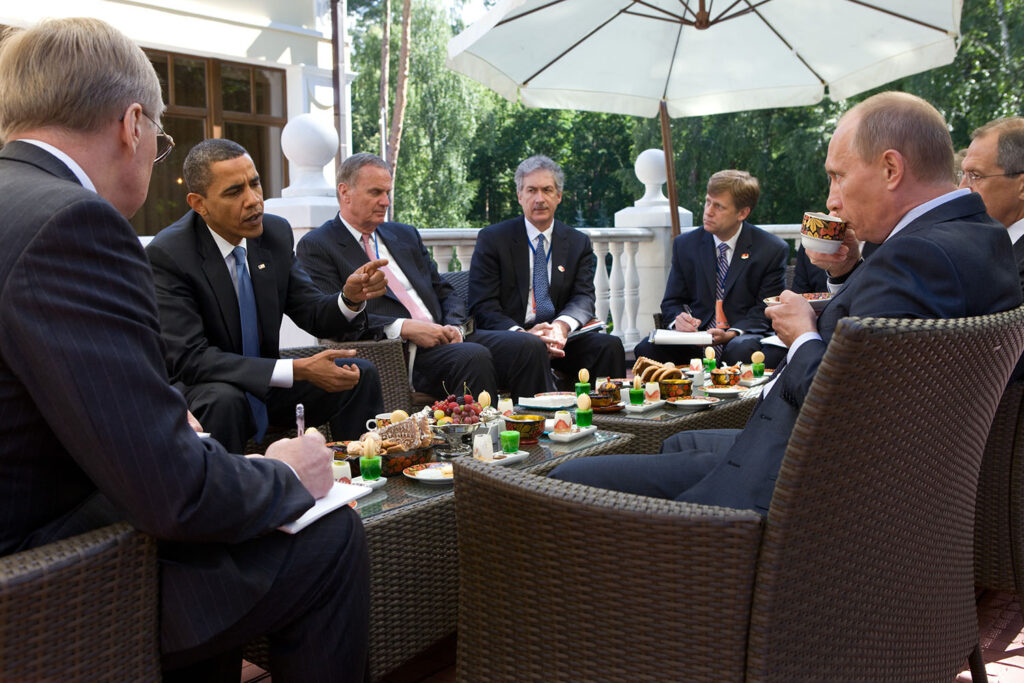
When the Obama administration took office in January 2009, it faced an immediate nuclear arms control challenge. Two strategic nuclear arms control treaties were in effect: the Strategic Arms Reduction Treaty (START I) and the Strategic Offensive Reductions Treaty (SORT). The dilemma was that, while SORT reduced both sides’ operationally deployed strategic nuclear warheads to between 2,200 and 1,700 (far below START I’s limit of six thousand warheads), it contained no verification provisions. START I, which had significant verification provisions, was scheduled to expire in December 2009. The incoming administration rapidly sought to negotiate a follow-on agreement to SORT that would further reduce strategic nuclear forces and secure significant verification provisions before the expiration of START I. That new agreement would be dubbed New START.
At the time that the New START treaty was negotiated and signed, the United States did not view Russia as an adversary, and the prospect of large-scale war in Europe was deemed negligible. The 2010 Nuclear Posture Review (NPR) declared that “the most immediate and extreme threat today is nuclear terrorism,” a sentiment that reflected a strategic environment in which neither Russia nor China was assessed as a major or imminent strategic threat.3“Nuclear Posture Review Report,” US Department of Defense, April 2010, 3, https://csps.aerospace.org/sites/default/files/2021-08/Nuke%20Posture%20Review%20Apr10.pdf. Regarding the nuclear threat posed by Russia, the 2010 NPR stated, “While policy differences continue to arise between the two countries and Russia continues to modernize its still-formidable nuclear forces, Russia and the United States are no longer adversaries, and prospects for military confrontation have declined dramatically.”4Ibid., IV. Similarly, at the time of New START negotiations, the nuclear threat posed by China was appropriately treated in US strategy as a “lesser included case” of the Russian nuclear threat, meaning that a force sufficient to implement US nuclear strategy vis-à-vis Russia with high confidence was sufficient to address the significantly smaller nuclear threat posed by China. That strategic assumption, however, no longer holds.
The Obama administration’s perception of the threat environment—combined with the substantial conventional military superiority then held by the United States and its allies over any potential adversary—shaped its decision to further reduce and deemphasize the role of nuclear weapons in US national security strategy. This approach was, in part, motivated by the hope that other nuclear-armed states would follow the US lead. In this context, the United States was comfortable agreeing to the New START strategic nuclear force limits with Russia without securing parallel limits on theater nuclear forces aside from those already imposed by the Intermediate-Range Nuclear Forces Treaty (INF Treaty), which banned land-based intermediate-range ballistic and cruise missiles. After the ratification of New START, Russia rejected subsequent US efforts to negotiate further nuclear force reductions—including proposals to address Russia’s roughly ten-to-one advantage in theater nuclear forces.
A second consideration is central when assessing whether to accept Putin’s proposal: Russia’s circumvention of the New START central limits through the development of strategic nuclear weapons systems not covered by the treaty. Although developing and fielding these Russian systems are not violations of the New START treaty, they nonetheless circumvent its central limits and, more importantly, undermine its intended purpose. If the treaty’s limits were extended without addressing these new systems, they would pose an unconstrained threat to the United States.
The Russian Federation is developing two new strategic nuclear weapon systems that clearly circumvent New START: the Burevestnik intercontinental-range, nuclear-armed ground-launched cruise missile, and the Poseidon intercontinental-range, nuclear-armed torpedo (and the unique submarines from which it can be launched). The United States is within the range of both of these systems—and neither is covered by the treaty’s current provisions.
Article 5, Paragraph 2 of the treaty gives each party the right to “raise the question” of whether a “new type” of strategic offensive arm developed by the other should be subject to the treaty’s limits. The United States raised this question regarding these systems, and Russia (as is its right under the treaty) refused to discuss including them under the New START limits.
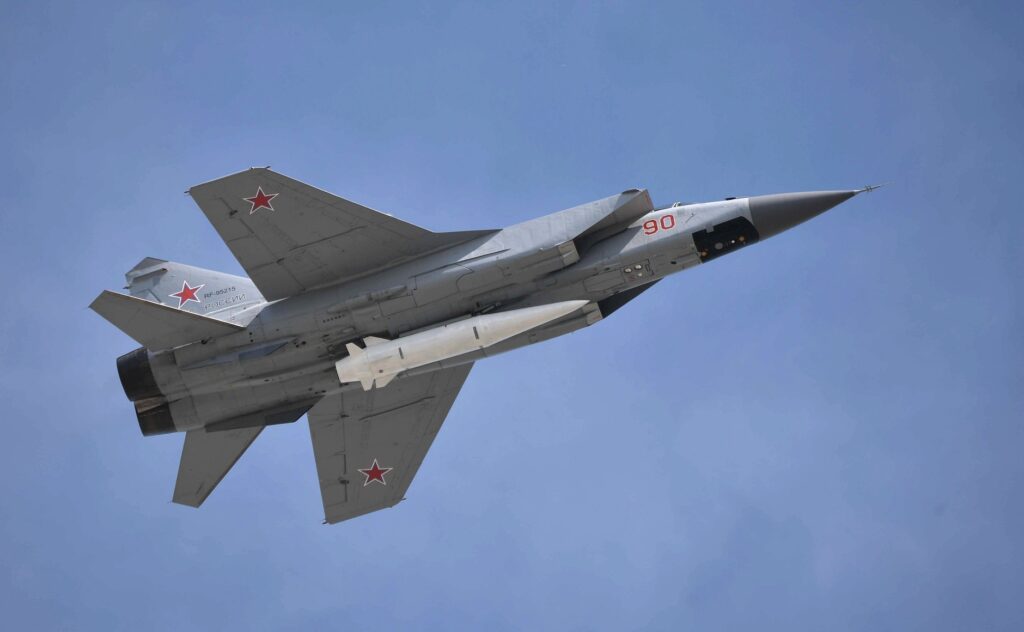
Two other Russian systems raise significant questions about the impact and advisability of agreeing to Putin’s proposal to extend the New START limits for a year.
The first is the bomber-launched Kinzhal, a nuclear-capable air-launched ballistic missile. The treaty limits “heavy bombers” capable of launching “long-range nuclear air-launched cruise missiles” with a range over 600 kilometers. When air launched, the Kinzhal has a range much greater than 600 kilometers. Russia has demonstrated this capability by employing the conventionally armed variant from the Tu-22M3 bomber in the war in Ukraine. While the Tu-22M3 does not meet the 8,000-kilometer range criterion to be a “heavy bomber” under New START, it would be limited by New START if it were capable of launching a nuclear-armed cruise missile with a range of more than 600 kilometers. Because the Kinzhal is a nuclear-capable ballistic missile, not a cruise missile, it does not make the Tu-22M3 subject to the New START central limits. This raises a salient question: Should it be? The system effectively circumvents the treaty’s constraints.
The second Russian system is the nuclear-capable RS-26 Rubezh intercontinental ballistic missile (ICBM) and the related Oreshnik intermediate-range ballistic missile (IRBM). In 2012, the RS-26 Rubezh was flight tested to a range of more than 5,500 kilometers, making it a New START treaty-limited ICBM if deployed.5“RS-26 Rubezh,” Missile Threat, Center for Strategic and International Studies Missile Defense Project, last updated April 23, 2024, https://missilethreat.csis.org/missile/ss-x-31-rs-26-rubezh/. It was subsequently tested at least three times at ranges well below 5,500 kilometers, raising the question of whether the missile’s true military purpose was as an intermediate-range system banned by the INF Treaty.6Ibid. However, after the United States withdrew from the INF Treaty due to Russia’s material breach of that agreement, Russia claimed that it had developed a new IRBM, the Oreshnik. Russian subsequently used it in combat in Ukraine (meaning that it might now be deployed). Russia claims this Oreshnik is not the RS-26 ICBM. But in a November 2024 briefing, Defense Department Deputy Press Secretary Sabrina Singh confirmed “that Russia did launch an experimental intermediate-range ballistic missile.” Singh added, “This IRBM was based on Russia’s RS-26 Rubezh intercontinental ballistic missile model.”7“Deputy Pentagon Press Secretary Sabrina Singh Holds a Press Briefing,” US Department of Defense, November 21, 2024, https://www.war.gov/News/Transcripts/Transcript/Article/3975265/deputy-pentagon-press-secretary-sabrina-singh-holds-a-press-briefing/. The relevant question regarding New START limits extension is whether any deployed Oreshnik missiles should be counted as deployed ICBMs under the New START central limits. The answer depends on how similar the Oreshnik is to the RS-26 Rubezh, a determination that the US intelligence community must make. At a minimum, the RS-26 and the Oreshnik should serve as a cautionary tale for US decision-makers regarding Russia’s demonstrated willingness to circumvent arms control limits.
What does the history of the New START treaty tell us regarding the advisability of agreeing to Putin’s proposal to extend the treaty’s central limits for another year? The bottom line is that New START was negotiated in—and for—a very different threat environment than the one the United States faces today and will likely face in the near future. Given what the United States knew then about the threats it was likely to face, the New START limits made sense. They provided a US nuclear force sufficient to support the US nuclear and national defense strategies with high confidence. But the nuclear threat environment has changed dramatically since 2010.
The nature of the two-peer nuclear strategy challenge
The report of the Congressional Commission on the Strategic Posture of the United States opens its executive summary as follows.
“The United States faces a strategic challenge requiring urgent action. Given current threat trajectories, our nation will soon encounter a fundamentally different global setting than it has ever experienced: we will face a world where two nations possess nuclear arsenals on par with our own. In addition, the risk of conflict with these two nuclear peers is increasing. It is an existential challenge for which the United States is ill-prepared, unless its leaders make decisions now to adjust the U.S. strategic posture.”8“America’s Strategic Posture: The Final Report of the Congressional Commission on the Strategic Posture of the United States,” Congressional Commission on the Strategic Posture of the United States, October, 2023, https://www.ida.org/-/media/feature/publications/a/am/americas-strategic-posture/strategic-posture-commission-report.ashx.
When New START was negotiated, there was no perceived prospect of the United States facing two peer nuclear adversaries. But that threat now is expected to become reality within a decade. The Defense Department’s 2022 China military power report to Congress concluded, “If China continues the pace of its nuclear expansion, it will likely field a stockpile of about 1,500 warheads by its 2035 timeline.”9“Military and Security Developments Regarding the People’s Republic of China,” US Department of Defense, 2022, https://media.defense.gov/2022/Nov/29/2003122279/-1/-1/1/2022-MILITARY-AND-SECURITY-DEVELOPMENTS-INVOLVING-THE-PEOPLES-REPUBLIC-OF-CHINA.PDF. Analysts have not yet determined whether China intends to curtail its nuclear buildup once it reaches rough strategic parity or to continue it in pursuit of a usable strategic advantage, but both possibilities are realistic.
This emerging two-nuclear-peer environment raises two fundamental questions that US national security decision-makers must address in the near term. First, what nuclear strategy will the United States adopt to manage this unprecedented challenge? Second, what nuclear forces will be required to credibly execute that strategy?
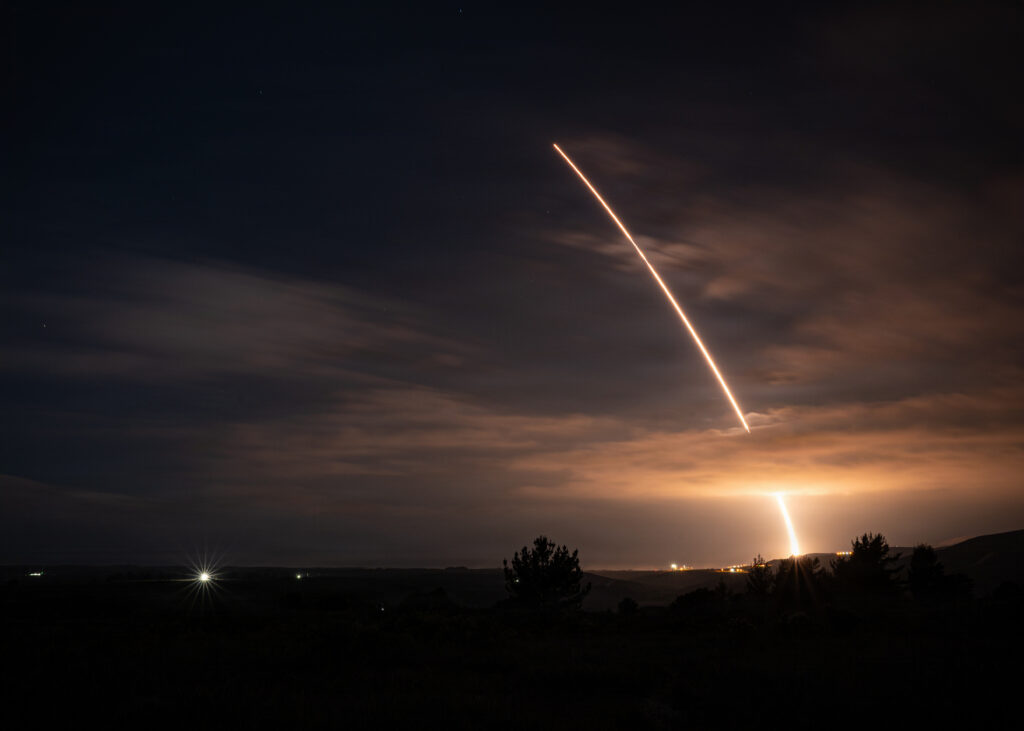
Because extending the New START limits could impede the United States’ ability to implement its strategy to address this impending threat, answering these two questions is a prerequisite for making a responsible decision on such an extension.
What nuclear strategy will the United States adopt in the future, and what forces will be necessary to implement that strategy with high confidence? The answer is still uncertain; the US government has not announced which strategic path it will choose. However, there has been a notable continuity in US nuclear strategy since the Cuban Missile Crisis. For decades, US nuclear strategy has primarily focused on three core objectives, or “ends,” including
- deter war and nuclear escalation in war;
- assure allies regarding US extended nuclear deterrence commitments; and
- achieve US objectives if nuclear deterrence fails.
As noted earlier, when New START was signed, it was possible to achieve these objectives against both Russia and China simultaneously with a force compliant with the New START central limits. Due to the increase in China’s nuclear forces, this will no longer be the case. If the US strategy for addressing two nuclear peers calls for achieving these same objectives against two peer adversaries simultaneously, US strategic nuclear forces will eventually need to grow significantly beyond the New START central limits. To avoid this required force growth, the United States would need to make a significant change in long-standing US deterrence and targeting strategies that have arguably prevented not just nuclear war, but also large-scale conventional conflict between nuclear-armed adversaries. Correlation does not necessarily indicate causation, but the least that can be said for these legacy strategies is that they have not failed in more than six decades. Is it likely that the United States will profoundly change a strategy with this track record to avoid needing to grow US nuclear forces in a relatively modest way?
If one accepts the need to increase US nuclear forces beyond the New START limits to address the two-nuclear-peer threat, the next question is when this increase must be implemented. The precise timing of the required force growth is a complex question that can be answered only with access to classified information about the threat’s growth, related targeting requirements, and US capacity to expand its forces over time. What is clear, however, is that it will take time for the United States to increase its strategic forces enough to address the two-nuclear-peer threat. Given the state of the extant US nuclear force, the nuclear modernization program, and the industrial base that supports both, the decisions needed to increase the force must be made in the near term.
The history of Russian Federation arms control violations
Russia’s track record of violating both legally binding and unilaterally declared arms control obligations is directly relevant to the advisability of accepting Putin’s proposal. Since Putin’s rise to the Russian presidency, the United States has formally found Russia in violation of nine separate arms control agreements or commitments.10 “Adherence to and Compliance with Arms Control, Nonproliferation, and Disarmament Agreements and Commitments,” US Department of State, 2025, https://www.state.gov/adherence-to-and-compliance-with-arms-control-nonproliferation-and-disarmament-agreements-and-commitments/. In no particular order, they are
- the INF treaty;
- the Chemical Weapons Convention (CWC);
- the Biological Weapons Convention (BWC);
- the Conventional Forces in Europe (CFE) treaty;
- the Open Skies Treaty;
- the Vienna Document;
- Russia’s Presidential Nuclear Initiative;
- Russia’s nuclear testing moratorium (and the unratified Comprehensive Test Ban Treaty); and
- the New START treaty itself.
Russia seems to be on the verge of violating the Outer Space Treaty—if it has not already—by deploying a nuclear weapon in low-Earth orbit.
Under Putin, Russia’s track record across all these agreements and commitments is astoundingly poor. But, as the issue at hand is the proposed extension of the New START central limits, Russian violation of the New START treaty itself should be the first consideration.
Following Russia’s invasion of Ukraine, Putin suspended Russia’s compliance with the data notification and onsite inspection provisions of New START. This action is unambiguously a treaty violation. Russia’s suspension of compliance with these provisions directly undermines the United States’ ability to determine whether Russia remains in compliance with the central numerical limits that Moscow now proposes to extend. Notably, the Russian extension proposal does not include reactivation of the treaty’s data notification and onsite inspection provisions.
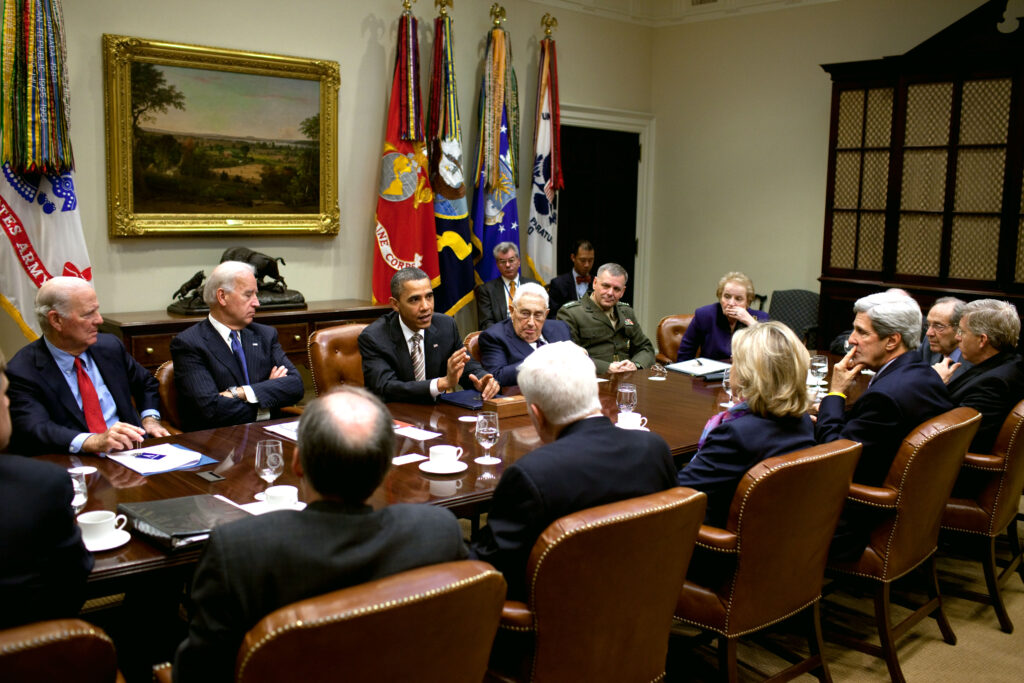
During Senate deliberations on ratification of New START, proponents of the treaty emphasized the importance of those provisions and the consequences for the United States if Washington lost access to them. Rose Gottemoeller, then the assistant secretary of state for arms control, verification, and compliance and Washington’s chief New START negotiator, said in remarks at the US Institute for Peace on July 26, 2010:
“The New START Treaty contains the mechanisms that will enable us to monitor and inspect Russia’s strategic nuclear forces. Our knowledge of Russian nuclear forces would substantially erode over time without ratification of the Treaty, increasing the risks of misunderstandings, mistrust, and worst-case analysis and policymaking.”11Rose Gotemoeller, “Remarks at the United States Institute for Peace,” US Department of State, July 26, 2010, https://2009-2017.state.gov/t/avc/rls/145126.htm.
Similarly, in an online issue brief, the Arms Control Association noted regarding the New START verification provisions: “Absent the new treaty’s extensive verification provisions . . . the United States will steadily lose clarity on the current status of the most lethal potential threat it faces: Russia’s strategic nuclear arsenal.”12“The Value of New START Verification,” Arms Control Association, July 21, 2010, https://www.armscontrol.org/issue-briefs/2010-07/value-new-start-verification.
Assuming these New START advocates were right, the United States has been suffering these consequences since 2022.
Benefits and risks of accepting the Russian proposal
An assessment of the Russian proposal to extend the New START central limits for one year must weigh both the potential benefits and the significant strategic risks.
On the benefit side, an extension could forestall a near-term Russian upload of strategic nuclear delivery vehicles above 1,550 accountable warheads, if the Russians complied with their treaty commitments. This would prevent the Russians from increasing the number of New START accountable weapons with which they could target the United States.
Additionally, some US allies might be reassured that the last remaining quantitative limit on US and Russian nuclear forces would remain in place for another year. For those allies concerned about eroding arms control structures, even a temporary extension could serve as a political signal that Washington and Moscow are not allowing the last vestige of existing arms control to collapse unchallenged.
Delaying the start of any US upload or expansion of US strategic nuclear forces for another year could save resources in the near term and might avoid incentivizing China to accelerate its already significant nuclear buildup.
Finally, both Washington and Moscow could arrive at the spring 2026 Nuclear Nonproliferation Treaty (NPT) Review Conference and claim to have preserved the New START central limits for another year. This might allow them to demonstrate a degree of commitment to the NPT’s Article VI and potentially blunt criticism from non-nuclear states.
However, there are risks to accepting Putin’s proposal—and those risks are substantial. If the United States maintains continuity in its nuclear strategy in a two-nuclear-peer environment, accepting a one-year extension of the New START central limits would delay the necessary increase in US strategic nuclear forces that the strategy will require. Such a delay will make future force-sizing adjustments more difficult to implement at scale.
Furthermore, an extension of the treaty’s central limits alone—without restoring the treaty’s verification protocol—would reward Russia for its violation of the treaty. It might also signal that the United States has diminished concerns about strict compliance, which implicitly incentivizes future Russian cheating.
Moreover, unless the central limits extension is modified to cover Russian strategic nuclear systems not currently covered by New START—such as Burevestnik, Poseidon, Kinzhal, and possibly Oreshnik—the proposal would allow Russia to continue expanding its strategic nuclear force. This possibility is especially troublesome, as the United States would remain constrained from doing so by New START limits. A one-year extension could also create a political dynamic in which recurring renewals become expected, narrowing future US options and complicating any eventual decision to cease extending the limits.
More broadly, an extension of the central limits would favor the Russian Federation, as it enables Moscow to focus its resources on the war in Ukraine and continuing its strategic programs that circumvent those limits, while the United States remains constrained. These US disadvantages would all come while China continues racing to numerical parity or beyond. Without a reinstatement of the treaty’s full complement of verification provisions, the US ability to verify continued Russian compliance will be constrained, and US insight into Russian behavior would degrade. These factors all increase the risk of further violations. The historical record under the Putin regime demonstrates that if Russia believes it can cheat without being detected (e.g., its violations of the CWC, BWC, INF, and the nuclear testing moratorium), it will.
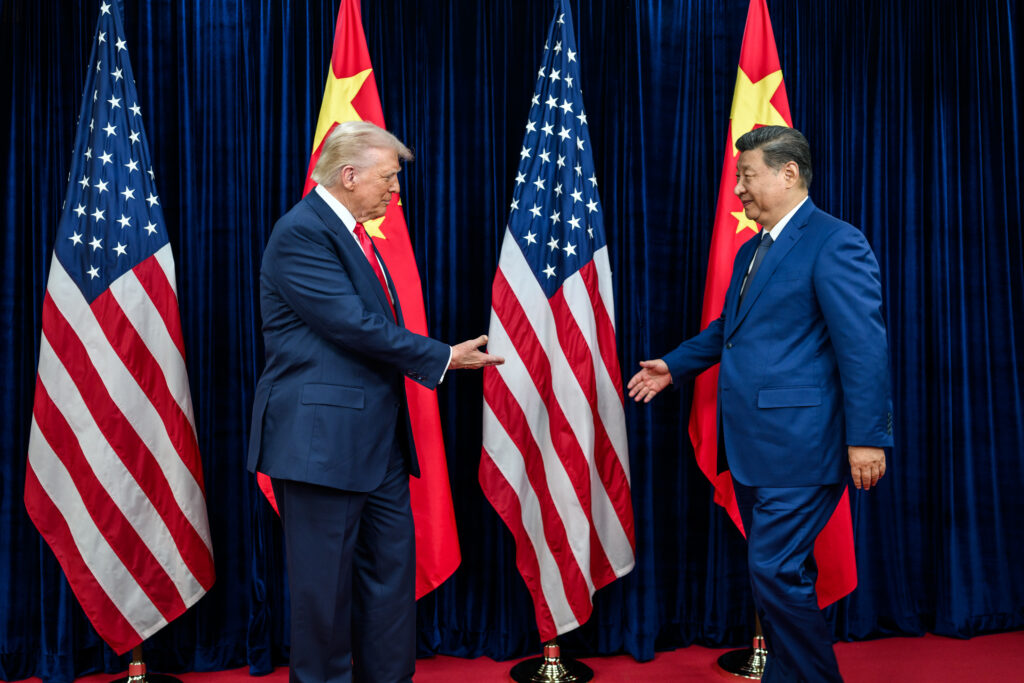
Extending the New START central limits would send a troubling message to China regarding US capability and will to respond to Beijing’s large-scale nuclear buildup. This signal would likely undermine the prospects for bringing China to the arms control negotiating table, indicating to China that US forces will remain limited regardless of what China does. Key US allies will be profoundly unassured by the apparent US willingness to ignore Russia’s New START violation and circumvention, as well as China’s large-scale buildup. This risks strengthening the calls for nuclear proliferation in South Korea and Japan.
Finally, repeated annual extensions of the central limits will result in the number of effective prompt counterforce-capable missiles in the US strategic force dropping over the course of the planned modernization program. For example, while constrained by New START limits, the number of submarine-launched ballistic missiles (SLBMs) in the US strategic force will be reduced by four with the deployment of each new Columbia-class ballistic missile submarine (SSBN).13Northrop Grumman, a sponsor of the Scowcroft Center’s work on nuclear forces, and Lockheed Martin, a sponsor of other Scowcroft Center work, produce SLBMs for the US Navy. Relief from the New START limits would allow the United States to increase the number of survivable SLBMs through 2035 despite the introduction of the Columbia class.14This would be accomplished by unconverting four SLBM launchers on each Ohio-class SSBN. Without such conversions, the size of the SLBM force will drop from 240 to 216 by 2036. Repeated extensions would also limit the expansion of the US strategic bomber force. Without those limits, the United States could unconvert thirty B-52 bombers, increasing the size of the force available to carry the new Long Range Stand Off (LRSO) cruise missile in the early 2030s. Such extensions would have the same effect on the US ability to upload the ICBM force to alleviate increasing target coverage issues in the two-peer environment. The New START central limits would prevent the United States from roughly doubling the number of warheads deployed on the ICBM force, something it could do if not constrained by the treaty.
A path forward
After reviewing the pros and cons above, it is clearly in the US national interest to reject Putin’s proposal to extend New START limits. Instead, once New START expires, the United States should promptly begin implementing a measured expansion of its strategic nuclear forces to address the growing threat from Russia and China, while developing a new approach to US nuclear arms control policy that fully reflects the dramatic worsening of the international security environment since New START went into force.
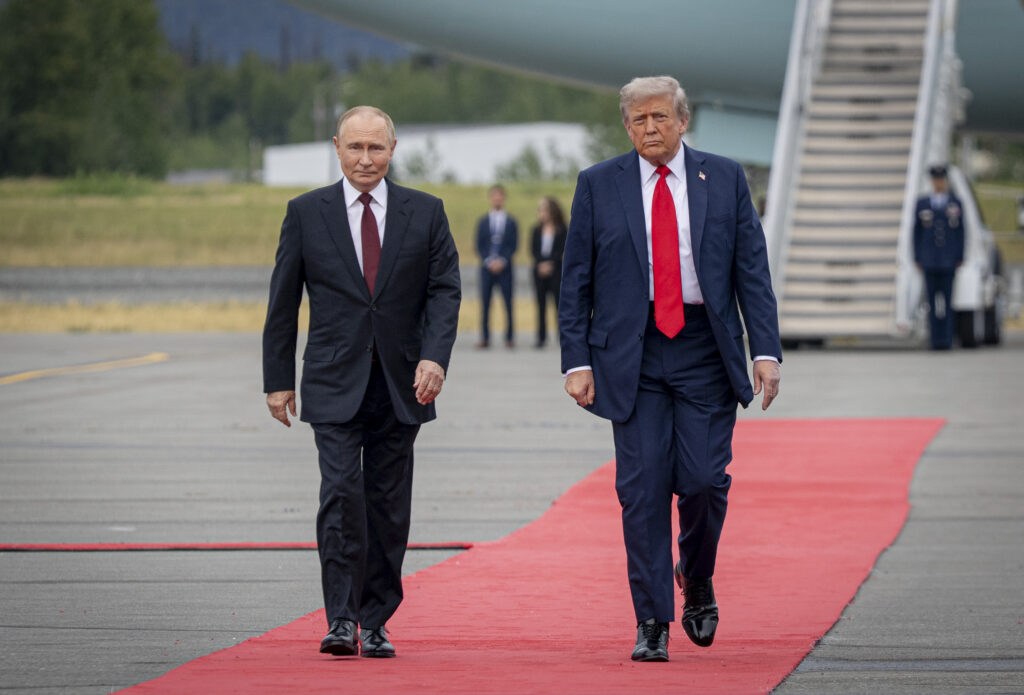
The increase in US strategic nuclear forces should have near- and medium-term components. In the near term, the United States should unconvert SLBM launchers on Ohio-class SSBNs, increase the SLBM force, and prepare additional SLBM warheads for deployment. The United States should also begin uploading Minuteman III ICBMs. In the medium term, the United States should convert B-52 bombers and increase the planned number of next-generation air-launched cruise missiles it intends to field. It should also consider commensurate increases in future acquisitions of the SSBN force and planned number of future stealth bombers. These deployed force increases need to be accompanied by an increase in the production capacity of the US nuclear weapons complex and defense industrial base.
An appropriate new US arms control approach would require an agreement or agreements with both Russia and China. The United States should not agree to limit its nuclear forces with Russia alone in the context of China’s rapid and large-scale nuclear buildup. Rather, the US should put forward a new proposal for a trilateral agreement that enhances deterrence while managing the scope and scale of competition, placing the burden of rejecting a credible US proposal squarely on Moscow and Beijing.
The strategic force increase outlined above would not only enable the continuation of long-standing US nuclear strategy in the two-nuclear-peer environment but also generate meaningful negotiating leverage for the arms control strategy described above. The current US modernization program provides no such leverage. It is simply a rough replacement of the US New START force structure with more modern equipment. Unless the United States credibly demonstrates that it will create new dilemmas for—and additional strategic pressure on— Russian and Chinese strategy if those countries do not come to the negotiating table, neither will have an incentive to do so.
There is, of course, a less attractive alternative. It is possible that, despite the case made above, the president decides that a one-year extension is politically advantageous and does not pose insurmountable barriers to US force expansion downstream.
Should the president want to say yes, any acceptance should be conditioned—publicly and explicitly—on substantial safeguards, including two non-negotiable conditions and a publicly announced caveat.
First, Russia should agree to reinstate the full panoply of New START verification provisions as of February 6, 2026. Second, Russia should agree that the Burevestnik ground-launched cruise missile, the Poseidon intercontinental range torpedo (and its submarine launcher), and the Tu-23M3 bombers capable of launching the Kinzhal air-launched ballistic missile are, in fact, accountable under the New START central limits once deployed, and subject to data notification and onsite inspections. Moscow should also agree to discuss the applicability of New START limits to the Oreshnik IRBM.
The public caveat should be equally clear: during the one-year extension, the United States will prepare to increase its strategic nuclear forces to address the threat posed by China’s nuclear buildup. If China and Russia do not engage the United States in meaningful arms control negotiations during that period, the United States will not agree to any further extension of the New START limits.
Anything short of these conditions should be rejected.
Conclusion
The United States should not agree to extend the New START central limits for one year. Doing so rewards Russia’s violation of the treaty, constrains needed US strategic nuclear force modifications, and indicates to China that it can proceed with its large-scale nuclear buildup and its rejection of serious arms control discussions without consequence. New START extension would also, perhaps somewhat counterintuitively to some, significantly reduce the likelihood that the United States can negotiate an arms control agreement in the future that enhances US and allied security while constraining strategic competition.
It is time for the United States to make a definitive decision regarding its future nuclear strategy for the impending two-nuclear-peer threat environment and the forces required to implement that strategy with high confidence. Extending the New START limits for a year will only delay a decision that should have been made already.
About the author
Greg Weaver is the principal of Strategy to Plans LLC. Previously, he served as deputy director for strategic stability in the Joint Chiefs of Staff Directorate for Strategic Plans and Policy (J5), where he was the principal policy and strategy adviser to the chairman of the Joint Chiefs of Staff on nuclear, space, cyber, missile defense, and arms control issues. Prior to joining the Joint Staff, Weaver was principal director for nuclear and missile defense policy in the Office of the Under Secretary of Defense for Policy, and the deputy director for policy and plans at US Strategic Command. (Strategy to Plans LLC has a contractual relationship with Lawrence Livermore National Laboratory and Los Alamos National Laboratory, which design and manufacture nuclear warheads.)
Acknowledgements
The Scowcroft Center for Strategy and Security’s work on nuclear and strategic forces has been made possible by support from its partners, including Los Alamos National Laboratory, Northrop Grumman Corporation (the prime contractor on the B-21 Raider bomber), the Norwegian Ministry of Defense, the Swedish Ministry for Foreign Affairs, the US Department of Defense, the US Department of Energy, and the US Department of State, as well as general support to the Scowcroft Center. The partners are not responsible for the content of this report, and the Scowcroft Center maintains a strict intellectual independence policy.
Explore the programs
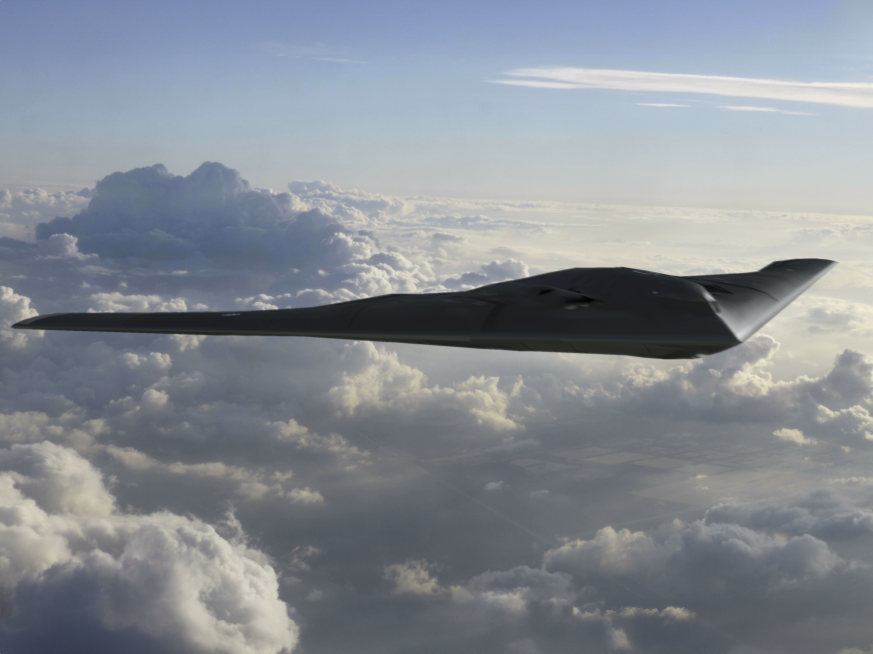
Forward Defense leads the Atlantic Council’s US and global defense programming, developing actionable recommendations for the United States and its allies and partners to compete, innovate, and navigate the rapidly evolving character of warfare. Through its work on US defense policy and force design, the military applications of advanced technology, space security, strategic deterrence, and defense industrial revitalization, it informs the strategies, policies, and capabilities that the United States will need to deter, and, if necessary, prevail in major-power conflict.
The Scowcroft Center for Strategy and Security works to develop sustainable, nonpartisan strategies to address the most important security challenges facing the United States and the world.
Image: The Ohio-class ballistic missile submarine USS Kentucky (SSBN 737) sails alongside a submarine support vessel during a routine armed air escort (AAE) exercise, April 24, 2025. (US Navy photo by Mass Communication Specialist 1st Class Ryan Riley)