
Powering data centers in emerging markets
The rise of artificial intelligence and global demand for cloud computing is rapidly redrawing the geography of digital infrastructure. The International Energy Agency projects that global data center electricity consumption will more than double by 2030 to 945 terawatt hours, with AI-optimized servers driving the bulk of that growth. As mature digital hubs in the United States, Europe, and East Asia run up against the limits of grid capacity, permitting cycles, and land availability, investment is shifting toward emerging markets. Large parts of Southeast Asia, the Middle East, Latin America, Africa, and the Black Sea region feature available land, high renewables potential, stranded energy, and accelerating digital demand.
This report examines the conditions under which emerging economies can convert that interest into durable, smart, digital infrastructure. It argues that emerging markets are not merely overflow capacity for saturated hubs but increasingly demand centers in their own right; India for example hosts 20 percent of the world’s data yet accounts for less than 6 percent of global capacity. The same markets, however, present structural risks: limited grid redundancy, volatile electricity pricing, uneven regulation, equipment bottlenecks, and shallow workforce pipelines. Drawing on case studies from Malaysia’s Johor corridor, South Africa, Brazil, Turkey, and India, the report shows how hybrid energy strategies, coordinated permitting, and workforce investment can convert latent advantages into bankable infrastructure.
Key insights
- Flexibility is the decisive factor. The next generation of AI data centers will succeed where energy supply can adapt — through hybrid microgrids, storage, modular expansion, and regulatory regimes that reward demand responsiveness.
- Siting choices will shape regional economies. The most successful strategies combine high-density interconnection near cities with low-cost compute capacity sited near abundant or stranded renewable power.
- Workforce and ecosystem readiness are as vital as megawatts. Power and permitting can be solved with capital, but trained technicians and experienced operators take years to develop and must be built locally.
- The energy and digital transitions must evolve together. Treated as separate silos, both underperform; integrated, they reinforce one another and create infrastructure that powers cleaner, more resilient economies.
Recommendations
- Align national AI and cloud strategies with power-system plans, publishing corridor-level maps of generation, transmission, and substation capacity.
- Replace sequential permitting with single-window processes that run environmental, building, and grid-impact reviews in parallel.
- Enable flexible procurement — corporate power-purchase agreements, hybrid renewables-plus-storage contracts, and participation in balancing and capacity markets.
- Update grid codes to remunerate batteries and hybrid plants for capacity and ancillary services, following models such as Chile’s storage framework.
- Adopt climate-specific efficiency standards (e.g., Singapore’s Tropical Data Centre methodology) rather than transposing temperate-zone metrics.
- Build workforce pipelines through vocational training, apprenticeships, accredited certifications, and partnerships with global operators including pathways for technicians transitioning from power, telecoms, and industrial sectors.
view the full report
About the author

related reading

Explore the programs

Within the Atlantic Council’s longstanding commitment to strengthening the transatlantic relationship, the Atlantic Council Turkey Program conducts research, provides thought leadership, and offers a platform for strategic dialogue between the US, Turkey, and NATO allies to address the region’s toughest challenges and explore opportunities, including in the fields of energy, business & trade, technology, defense, and security.

The Global Energy Center develops and promotes pragmatic and nonpartisan policy solutions designed to advance global energy security, drive economic opportunity, and foster a sustainable energy future.
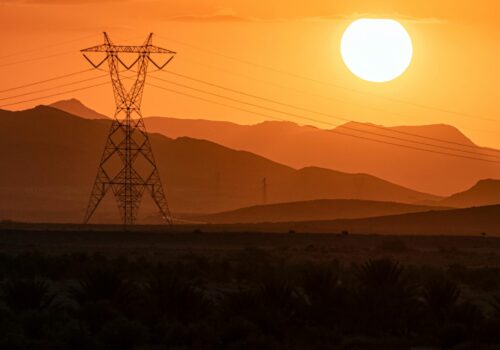
Image: Photo by İsmail Enes Ayhan on Unsplash.