Weakening democratic checks and regional insecurity put Benin’s future at risk
Bottom lines up front
- Benin’s National Conference of February 1990 laid the foundations of a constitutional democracy regarded as a reference point in West Africa and beyond—but did not reduce poverty.
- President Patrice Talon, who came to power in 2016, has radically strengthened the executive branch and reduced political competition.
- The real danger for Benin is that recent erosion of political freedoms may ultimately weaken development outcomes and the legitimacy of the state.
This is the eighth chapter in the Freedom and Prosperity Center’s 2026 Atlas, which analyzes the state of freedom and prosperity in ten countries. Drawing on our thirty-year dataset covering political, economic, and legal developments, this year’s Atlas is the evidence-based guide to better policy in 2026.
Evolution of freedom
The trajectory of freedom in Benin since the mid-1990s is inseparable from the political rupture of February 1990, when the National Conference laid the foundations of a constitutional democracy that would soon be regarded as a reference point in West Africa and beyond. The period covered by the Freedom Index begins a few years later, when it already captures the effects of that foundational moment: competitive elections, peaceful alternation of power, and the gradual construction of institutions meant to restrain executive authority and embed the rule of law. For roughly two decades, Benin stood out in a region marked by recurrent political instability, authoritarian reversals, and military interventions. While the country faced persistent economic and social challenges, its institutional framework was widely seen as relatively robust.
This overall picture is reflected in the early evolution of the Freedom Index. From the mid-1990s through the first half of the 2010s, Benin maintained a comparatively high level of aggregate freedom, well above the sub-Saharan African average. Political freedom was the main driver of this performance. Elections were generally considered free and competitive, civil and political rights were largely respected, and legislative constraints on the executive, though imperfect, functioned in practice. The legal subindex, while weaker, also benefited from a degree of institutional continuity and predictability uncommon in the region. Economic freedom evolved more unevenly, reflecting structural constraints and the limits of reform, but it did not fundamentally undermine the broader institutional equilibrium.
This trajectory changed markedly after 2016, with the election of Patrice Talon to the presidency—followed by his reelection in 2021. The decline in Benin’s aggregate Freedom Index over the past decade is driven overwhelmingly by a sharp deterioration in the political subindex, and to a lesser extent by changes in the legal framework that weakened checks and balances. The data captures not a sudden collapse, but a deliberate and cumulative transformation of the political system—a shift rooted in a particular diagnosis of Benin’s post-1990 democratic experience as one in need of major restructuring.
Talon came to power on the basis of a critique that resonated with part of the population. In his view, the democratic system that emerged from the National Conference had succeeded in guaranteeing political freedoms but had failed to deliver economic development and effective public policy. He frequently pointed to what he described as a “corrupt democracy,” in which elections were held regularly but governance was undermined by clientelism, fragmented political parties, and pervasive rent-seeking. He often used the example of the National Assembly, where even members of the parliamentary majority were allegedly susceptible to financial inducements in exchange for supporting government legislation. According to this narrative, democracy had become an obstacle to decisive action rather than a framework for collective progress.
This diagnosis was not entirely unfounded. Benin’s political system prior to 2016 was indeed characterized by weakly institutionalized parties, fluid parliamentary alliances, and a high degree of personalization of power. Corruption was widely perceived as endemic, and successive governments struggled to implement ambitious reforms. Talon’s response to these shortcomings, however, involved a profound rebalancing of power in favor of the executive, with lasting consequences for political freedom.
The most visible changes occurred in the realm of elections and political competition. Reforms of the electoral code progressively narrowed the political field by introducing new requirements for party registration and participation. Their effects became fully apparent in the 2019 legislative elections, when opposition parties were excluded from the ballot, resulting in a parliament composed exclusively of parties supporting the president—an unprecedented outcome in post-1990 Benin. These elections triggered widespread protests, followed by a severe crackdown by security forces, leaving four people dead according to Amnesty International. Subsequent electoral reforms reinforced this dynamic by increasing national thresholds for representation that effectively prevented opposition forces from securing parliamentary seats. Although elections continued to be held on schedule, these changes significantly reduced the level of political competition and weakened the role of elections as mechanisms of accountability.
Civil liberties and political rights have evolved along clearly divergent paths. The civil liberties component remains relatively stable, reflecting the absence of generalized repression or a collapse of basic freedoms such as freedom of movement or physical integrity. By contrast, political rights have declined sharply, driven by the progressive restriction of the space for political organization, competition, and expression. This contraction has also affected freedom of the press and media, not through overt censorship or systematic bans, but through legal and judicial mechanisms. New laws regulating online activity and digital expression have introduced strict provisions on defamation and related offenses, which have been actively enforced, including against journalists and civil society activists, often by special courts initially designed to deal with economic crimes and terrorism. The result has been a more constrained and cautious media environment, marked by self-censorship rather than blanket repression, consistent with a pattern in which political freedoms are curtailed primarily through changes in the law and their application rather than through widespread violations of civil liberties.
The legal subindex reflects a more complex and increasingly fragile trajectory. Historically, Benin’s legal framework benefited from the constitutional architecture established in the early 1990s, in which the Constitutional Court played a central role as a guarantor of the rule of law and a key counterweight to executive power. For many years, the court acted as one of the strongest institutional legacies of the National Conference, arbitrating political disputes and enforcing constitutional limits in a way that helped stabilize the democratic system.
Fundamental legal guarantees are increasingly [perceived to be] contingent on political considerations rather than constitutional principles.
Over the past decade, however, this equilibrium has been progressively undermined. Legal uncertainty has increased as successive reforms reshaped the institutional landscape without broad consultation or consensus. The Constitutional Court has gradually lost its capacity to act as an independent check on executive authority, evolving instead into an institution perceived by many citizens as aligned with the governing majority. This shift has weakened confidence in the judiciary more broadly and contributed to a sense that fundamental legal guarantees are increasingly contingent on political considerations rather than constitutional principles.
At the same time, the security component of legal freedom has deteriorated significantly. Benin now faces threats that were largely absent from its territory until recently, particularly in the northern regions bordering Burkina Faso and Niger, where armed groups linked to the Sahelian insurgencies have carried out deadly attacks. These incursions have placed sustained pressure on the state’s security apparatus and introduced new legal and institutional tensions, as the government has sought to respond to an evolving threat environment while operating within a framework already strained by political and judicial centralization. Rising insecurity has combined with declining legal certainty to produce a marked weakening of the rule of law as captured by the legal subindex.
Overall, the evolution of freedom in Benin since 1995 can be divided into two distinct phases. The first, spanning roughly two decades, corresponds to the consolidation of a pluralistic constitutional democracy that, despite its flaws, preserved a relatively high level of political freedom. The second, beginning in 2016, is characterized by a deliberate reconfiguration of the political system that reduced democratic constraints in the name of efficiency and development. The Freedom Index captures this inflection point clearly, highlighting the central role of political institutions in shaping the country’s institutional trajectory.
From freedom to prosperity
The evolution of prosperity in Benin over the past three decades reflects both the achievements and the limits of its development model. Unlike the sharp movements observed in the Freedom Index, changes in the Prosperity Index have been more gradual, shaped by long-term structural factors rather than abrupt political shifts. While Benin has made measurable progress in several dimensions of human development, it continues to rank among the least prosperous countries globally, underscoring the persistence of deep socioeconomic constraints.
Income levels remain low, despite steady growth over extended periods. Real GDP per capita increased gradually from the mid-1990s onward, supported by macroeconomic stability, regional trade, and modest diversification. However, growth rates were insufficient to generate a decisive break with poverty. The country’s economic structure, heavily reliant on agriculture, informal services, and transit trade linked to neighboring economies, limited productivity gains, while income improvements translated only slowly into broader prosperity. This pattern of modest but unspectacular economic progress fed a growing frustration with the democratic system established after 1990 and became a central element in the critique advanced by Talon and his supporters.
Education and health outcomes improved over time, but at a noticeably slower pace than in much of sub-Saharan Africa. Mean and expected years of schooling increased gradually, and life expectancy at birth rose, reflecting expanded access to basic education and healthcare services. However, these gains consistently lagged behind regional averages, pointing to persistent weaknesses in the effectiveness of public provision rather than to a lack of formal progress. Schools and health facilities expanded, but quality, coverage, and outcomes improved unevenly, limiting their impact on human capital formation and overall well-being. The result was a pattern of incremental but comparatively underwhelming advances in education and health, which informed a broader sense that social progress was not keeping pace with expectations or with trajectories observed elsewhere in the region.
Inequality presents a more nuanced picture. Income inequality in Benin has historically been moderate by regional standards, partly reflecting the overall low level of income and the predominance of informal livelihoods. The inequality component of the Prosperity Index does not show dramatic deterioration, but this relative stability should not be interpreted as social equity. Widespread poverty and limited opportunities mean that low inequality often coexists with generalized deprivation rather than shared prosperity.
The minorities component, which assesses equal access to public services and opportunities, remained relatively stable. Benin has not experienced the kind of entrenched ethnic or sectarian exclusion seen in some neighboring countries. However, regional disparities, particularly between the coastal south and the northern regions, have widened in recent years. These disparities are increasingly relevant in the context of rising insecurity in the north, placing additional strain on already fragile social and economic structures.
The relationship between freedom and prosperity in Benin cannot be reduced to a simple causal chain in either direction. The democratic system established after 1990 undeniably expanded political freedoms and opened civic space, but it also generated high expectations regarding the state’s capacity to deliver economic transformation and effective public services. Over time, the gap between these expectations and the modest pace of socioeconomic progress became increasingly visible. It was this discrepancy, more than poverty itself, that began to shape perceptions of failure and fed skepticism toward democratic governance as it had been practiced.
The central issue is not democracy as such, but the weakness of the state that accompanied democratization. Political liberalization advanced without a parallel effort to build strong public institutions, professional administrations, and accountable political parties. Democratic competition therefore often revolved around access to state resources rather than policy performance, while the provision of education, health, and infrastructure remained inefficient and uneven. In this context, economic and social outcomes improved only gradually, reinforcing the perception that political pluralism had not translated into effective public policies or shared prosperity.
[The Prosperity Index] shows no clear acceleration of income growth or human development since the curtailment of political freedoms, and certainly no break with the long-standing structural constraints facing the country.
This diagnosis helps explain why the promise of a more centralized and decisive model of governance gained traction. The argument advanced under Talon was that political freedom had come to impede state capacity, coherence, and results, and that tighter control was therefore necessary to move the country forward. Yet the prosperity data does not bear out this argument. At least not yet. It shows no clear acceleration of income growth or human development since the curtailment of political freedoms, and certainly no break with the long-standing structural constraints facing the country.
Undeniable progress has been made in the area of infrastructure and in promoting new economic sectors such as tourism, textiles, and the industrial processing of agricultural products, including soybeans, pineapples, cashews, and shea nuts, through a new special industrial zone in the south of the country. However, the concentration of economic power in the hands of a very limited number of entrepreneurs close to the political establishment raises doubts about the sustainability of the public-private partnerships established under Talon and the lasting transformative effect of these initiatives.
The concentration of power and the weakening of democratic checks have introduced new risks—political, institutional, and social—without delivering the promised economic transformation. On November 15, 2025, Beninese citizens woke up to discover that the National Assembly had revised the constitution overnight, introducing major changes to the country’s political and institutional architecture. The terms for the president, members of Parliament, mayors, and municipal councilors were extended from five to seven years. The Senate, a new institution with very significant powers, was created, composed primarily of figures who had held high political office, including former presidents and former speakers of the Parliament but no elected representatives. The Senate will play both a legislative role alongside the National Assembly and a regulatory role to discipline political actors—including possible sanctions such as the deprivation of political rights in the event certain constitutional provisions are violated. Until then, the role of regulator of institutions had been played exclusively by the Constitutional Court in Benin.
The amended constitution also introduced a clause calling for a six-year “grace period” during which the opposition party cannot take initiatives likely to impede the actions of the government in power. Criticism of the ruling government would only be permitted one year before general elections. These constitutional reforms were justified as necessary for the country to avoid being in a permanent election campaign and to allow the government to govern. Details for how the measures, which are unprecedented in Benin and quite disturbing in a democratic country, will be enforced remain vague, which can only raise serious concerns about the implications for the rule of law and the preservation of civil liberties and civic space in Benin after Talon’s departure.
The extremely restrictive provisions of the electoral law for political parties to obtain even a single seat in Parliament produced the predictable result of the legislative elections in January 2026: a return to a National Assembly composed exclusively of MPs from the two parties that support Talon and back Minister of Economy and Finance Romuald Wadagni, Talon’s candidate for the presidential election scheduled in April 2026. The election will include only two candidates, and Wadagni is widely expected to win, extending the power of the ruling bloc.
The path forward
Benin narrowly escaped a sudden descent into institutional chaos on December 7, when soldiers led by a lieutenant colonel commanding the special forces attached to the National Guard launched an attack on Talon’s private residence and announced on public television that they had taken power. The coup attempt failed, but the sequence of events was unprecedented in the country’s recent history and deeply shocking for a society long accustomed to political stability and the strict subordination of the military to civilian authority. The attempted takeover triggered a decisive regional response, with the intervention of the Nigerian Air Force in support of Beninese loyalist units, the rapid mobilization of Nigerian troops on the ground, and the activation of the ECOWAS Standby Force. France, a long-standing security partner of Benin, also provided operational support and intelligence assistance. That such a scenario could unfold in what had widely been perceived as one of the most stable political systems in West Africa revealed vulnerabilities that had long been underestimated or deliberately ignored.
Beyond the immediate shock of the coup attempt, the episode points to a far more uncertain security horizon for Benin. The country is now entering a phase in which insecurity can no longer be viewed as a peripheral or temporary phenomenon confined to its northern borders. Armed groups operating in the central Sahel are likely to continue probing the resilience of state authority, exploiting geographic, social, and institutional vulnerabilities over time rather than through large-scale confrontations alone. The central challenge ahead will be one of endurance: whether the state can sustain effective security responses without exhausting its forces, undermining civil–military cohesion, or eroding public trust as the threat becomes more diffuse and persistent.
Security challenges cannot be dissociated from political choices, as each has the potential to amplify the other over time.
Benin’s rapidly evolving security environment coincides with a deteriorating political and regional context. Relations with several neighboring countries have become increasingly strained, against a backdrop of diverging political trajectories and growing mistrust within West Africa. The risk is not only that regional cooperation will weaken but that Benin will find itself more isolated at a moment when cross-border coordination is essential. Domestically, prolonged insecurity is likely to interact with political exclusion and institutional centralization, further testing social cohesion and the legitimacy of state authority. In such a scenario, security challenges cannot be dissociated from political choices, as each has the potential to amplify the other over time.
The assessment of Talon’s two terms in office is highly divisive in Benin and will likely continue to be so for a long time to come. The country’s political and security developments over the next few years will be a determining factor in assessing a decade of political, institutional, economic, administrative, and judicial reforms, which have been implemented with determination, consistency, efficiency, and coldness by an atypical president who came directly from the private sector. On the one hand, there are those who believe that the end justifies the means and it took a strong-willed, self-assured man like Talon to lay the foundations for economic, social and human development that will eventually come to fruition.
On the other hand, there are those who believe that nothing justifies undermining the principles of democracy; protection of rights and freedoms; and political, economic, and social inclusion, which form the basis of a nation’s cohesion, security, stability, and sustainable and shared prosperity. If we consider that development and prosperity include the continuous extension of people’s freedoms to choose their own paths in life, as argued by Indian economist and Nobel Prize winner Amartya Sen, we then must question the appropriateness of both the end goal and the means employed over the last decade in Benin.
Political openness and efficient development are not incompatible; they tend to reinforce one another when institutions function properly.
Looking ahead, the country faces a choice that is often framed in misleading terms. The years prior to Talon’s arrival fostered the perception that political freedom and effective development are inherently at odds, as if pluralism necessarily implies inefficiency and institutional paralysis. Yet this conclusion rests less on an “excess” of freedom than on the failure to consolidate capable public institutions, accountable political parties, and a professional state able to translate democratic competition into policy performance. Political openness and efficient development are not incompatible; they tend to reinforce one another when institutions function properly. The real danger for Benin is not that democracy might fail to deliver prosperity, but that the erosion of political freedoms, justified by Talon in the name of stability and efficiency, may ultimately weaken both development outcomes and the legitimacy of the state, leaving the country more fragile rather than more resilient.
about the author
Gilles Olakounlé Yabi is the founder and CEO of WATHI, a participative and multidisciplinary citizen-focused think tank on West African issues. He worked as senior political analyst and later as West Africa project director of the International Crisis Group and as a journalist for the weekly magazine Jeune Afrique in Paris. He holds a PhD in development economics from the University of Clermont-Ferrand in France.
Explore the data
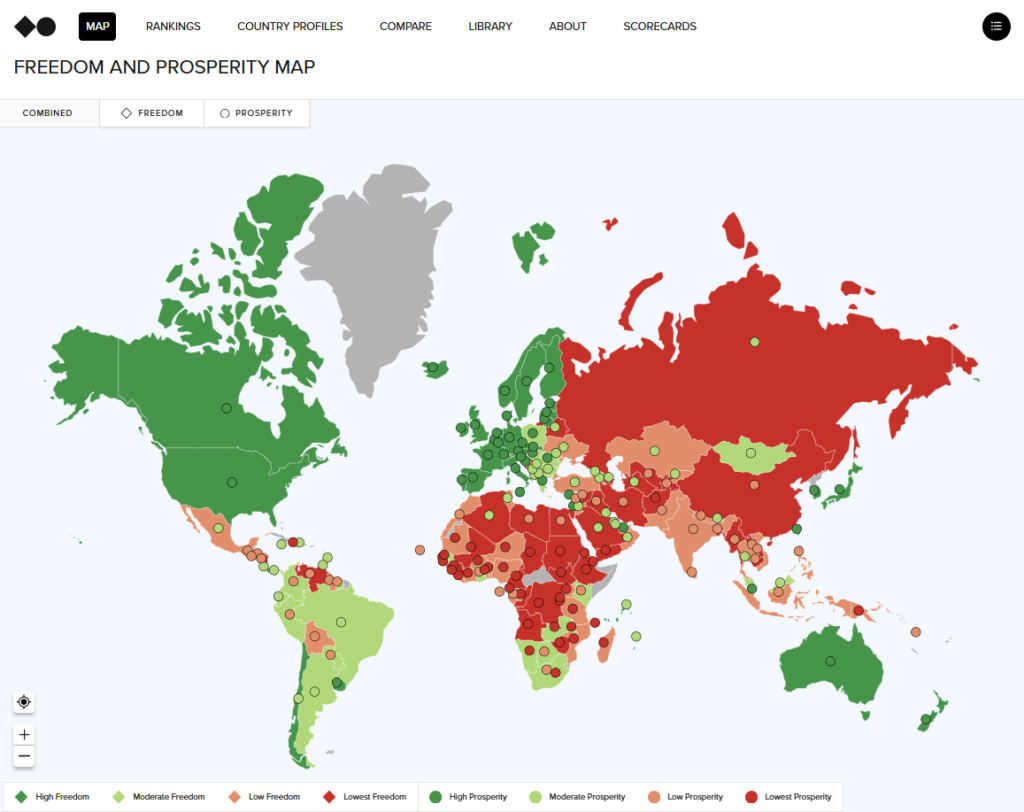
The Indexes rank 164 countries around the world. Use our site to explore thirty years of data, compare countries and regions, and examine the subindexes and indicators that comprise our Indexes.
Stay Updated
Get the Freedom and Prosperity Center’s latest reports, research, and events.
Stay connected
Read all editions
2026 Atlas: Freedom and Prosperity Around the World
Against a global backdrop of uncertainty, fragmentation, and shifting priorities, we invited leading economists and scholars to dive deep into the state of freedom and prosperity in ten countries around the world. Drawing on our thirty-year dataset covering political, economic, and legal developments, this year’s Atlas is the evidence-based guide to better policy in 2026.
2025 Atlas: Freedom and Prosperity Around the World
Twenty leading economists, scholars, and diplomats analyze the state of freedom and prosperity in eighteen countries around the world, looking back not only on a consequential year but across twenty-nine years of data on markets, rights, and the rule of law.
2024 Atlas: Freedom and Prosperity Around the World
Twenty leading economists and government officials from eighteen countries contributed to this comprehensive volume, which serves as a roadmap for navigating the complexities of contemporary governance.
Explore the program
The Freedom and Prosperity Center aims to increase the prosperity of the poor and marginalized in developing countries and to explore the nature of the relationship between freedom and prosperity in both developing and developed nations.
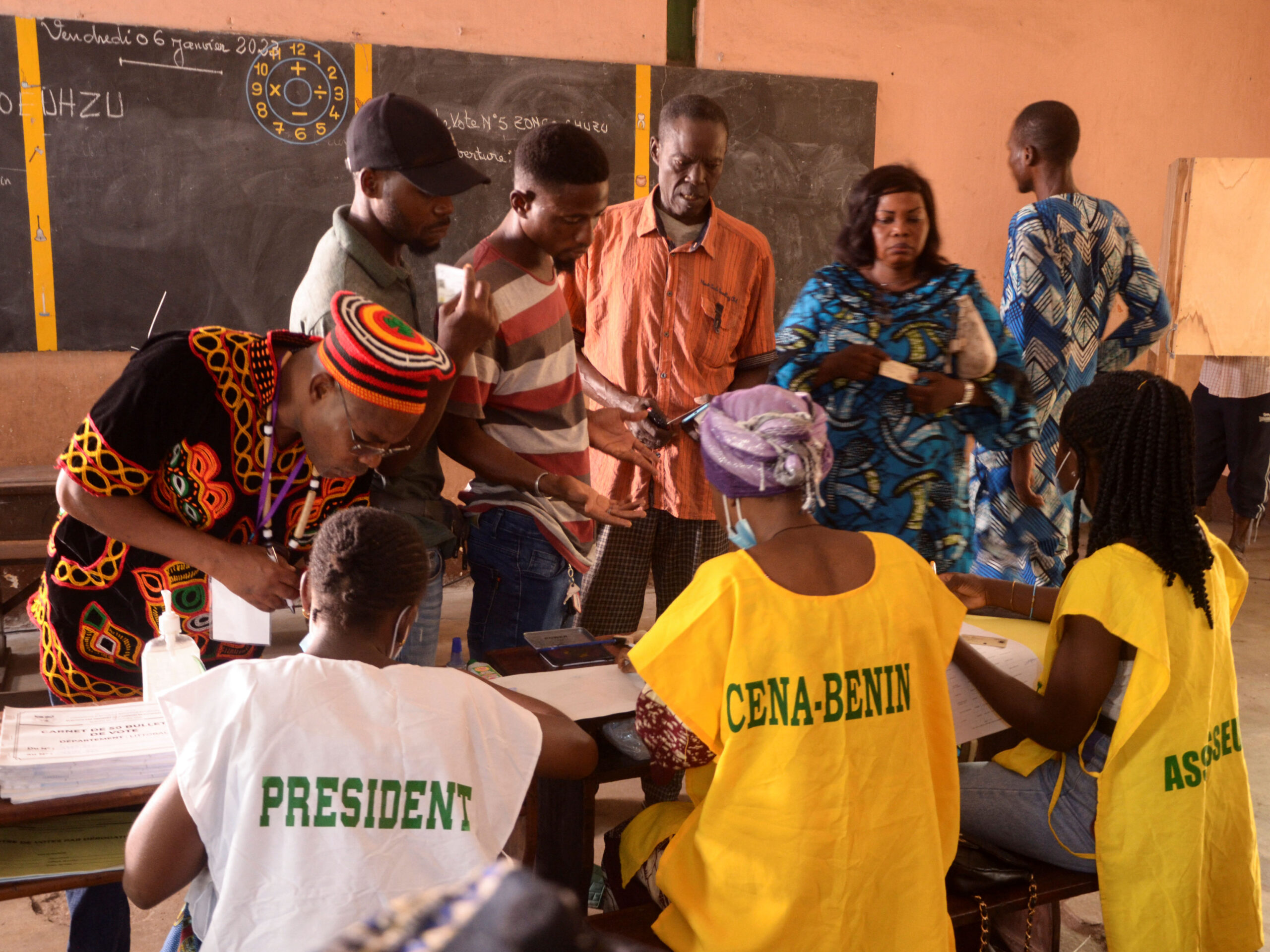
Image: People check their names as they prepare to cast their ballots during the parliamentary election at a polling station in Cotonou, Benin, January 8, 2023. REUTERS/Charles Placide Tossou
Keep up with the Freedom and Prosperity Center’s work on social media