
Content

UkraineAlert

Feb 19, 2026

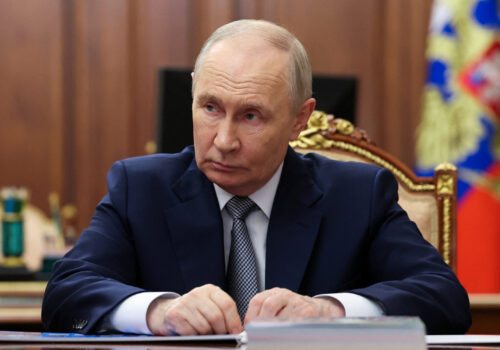
Ukraine hopes escalating Russian losses will push Putin toward peace

By David Kirichenko

As the Russian invasion enters a fifth year, Ukraine is hoping escalating Russian losses can finally force Putin to seek a meaningful settlement, writes David Kirichenko.

Conflict Defense Policy

Report

Feb 18, 2026

A strategic asset: Leveraging special security agreements for defense innovation

By Rob Murray

In a world where technological dominance defines military superiority, the United States must use every available tool to stay ahead. Special security agreements are one such tool. Here are the best ways to leverage these agreements and the pathfinder projects Washington should pursue to tackle critical defense challenges.

Defense Industry Defense Policy

Report

Feb 12, 2026

Putin’s next move? Five Russian attack scenarios Europe must prepare for

By Richard D. Hooker, Jr.

Whether emboldened by victory in Ukraine or motivated by a loss to pursue success elsewhere, Russian president Vladimir Putin is likely to continue his campaign of aggression. The Nordic and Baltic region, already subject to a campaign of intimidation, is in the Kremlin’s crosshairs—with these five places at greatest risk.

Defense Policy Eastern Europe

Issue Brief

Feb 4, 2026

A new Arctic strategy for Sweden

By David Auerswald

Sweden has the largest Nordic economy, a defense budget double what it was in 2022 and set to grow more, and cross-party consensus behind the foreign policy shifts that led Stockholm to join NATO in 2024. The government can and should shift its approach in the High North to a singular focus on deterring Russia.

Defense Policy Europe & Eurasia

Issue Brief

Feb 4, 2026

Sweden’s role in countering hybrid threats in the Baltic Sea region

By Justina Budginaite-Froehly

The accession of Sweden to NATO brought the majority of the Baltic Sea under alliance control. Despite NATO's conventional superiority in the region, Russia continues to probe the Alliance's resolve with actions below the threshold of armed conflict. What advantages can NATO’s newest members offer the Alliance as it faces this aggression?

Defense Policy Eastern Europe

Dispatches

Feb 3, 2026

The Marine Corps presence in Okinawa is critical to deterring China and North Korea

By Caleb Eames, Amy Cowley

Shifting US forces away from Okinawa would undermine deterrence in the Indo-Pacific by pulling critical rapid-response forces from the First Island Chain.

Conflict Defense Policy

Dispatches

Feb 3, 2026

Seven things to know about the potential for resumed Iran nuclear negotiations

By Nate Swanson

The tentatively planned resumption of US-Iran nuclear talks this week does not mean US military action is off the table.

Conflict Defense Policy

Dispatches

Feb 2, 2026

To repair US-Colombia ties, Trump and Petro should focus on counternarcotics and Venezuela

By Kevin Whitaker

By focusing on shared interests on counternarcotics and Venezuela, Tuesday's Oval Office meeting between the US and Colombian presidents can put the two nations’ bilateral relations on a better path.

Colombia Crisis Management

UkraineAlert

Feb 1, 2026

Ukraine is leading a military revolution but needs more Western support

By Marc De Vore

The military revolution Ukraine is leading has already succeeded in democratizing the production of long-range strike systems. With more support from Kyiv’s partners, this revolution offers a viable pathway to Russia’s battlefield defeat and can set the stage for an acceptable peace, writes Dr Marc De Vore.

Conflict Defense Industry

Dispatches

Jan 29, 2026

What the Indo-Pacific thinks of the new US National Defense Strategy

By Atlantic Council experts

Our Indo-Pacific experts share how US allies and partners in the region are reacting to the United States’ latest National Defense Strategy, which calls for them to take on a more active role in their own security.

Conflict Defense Policy

Experts

Events