Financial Sanctions and Economic Coercion

Financial sanctions and other forms of economic coercion have become policy tools of choice for the US government to deter illegal activity by international actors or to pressure governments into reversing actions that harm US interests. Yet these instruments and their potential pitfalls are often misunderstood. Restrictive economic measures such as financial sanctions, export controls, tariffs, and investment screening can play an important role in advancing certain policy objectives, but they risk being ineffective if misapplied or poorly implemented. Policymakers must also recognize the impact of economic statecraft on the private sector, which bears many of the compliance burdens and operational costs associated with these measures.

Energy Sanctions Dashboard

This dashboard focuses on US sanctions and restrictive measures placed on crude oil from Russia, Iran, and Venezuela—including the unintended consequences and the lessons learned.

Econographics

Apr 17, 2025

Russia Sanctions Database

By Kimberly Donovan, Maia Nikoladze, Lize de Kruijf

The Atlantic Council’s Russia Sanctions Database tracks the level of coordination among Western allies in sanctioning Russian entities, individuals, vessels, and aircraft, and shows where gaps still remain.

Eastern Europe Economy & Business

Recent analysis

Programs

At the intersection of economics, finance, and foreign policy, the GeoEconomics Center is a translation hub with the goal of helping shape a better global economic future.

Content

In the News

Jun 9, 2023

Global Sanctions Dashboard cited by Transparency International Georgia

Read the full article here.

Economy & Business Financial Sanctions and Economic Coercion

In the News

Jun 9, 2023

Bhusari and Nikoladze cited in State Street report on dedollarization

Read the full report here.

China Economy & Business

MENASource

Jun 9, 2023

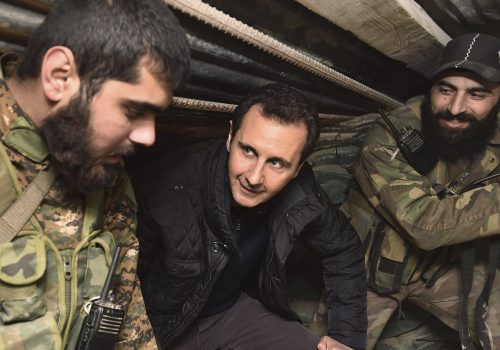
Assad is appointing new military officials to escape sanctions on Syria

By Muhsen AlMustafa

Of the thirty Syrian army and security officers in new leadership positions, only two are blacklisted. This indicates a significant gap.

Financial Sanctions and Economic Coercion Middle East

In the News

Jun 9, 2023

Graham and Lipsky cited by the New Delhi Times on Russian sanctions

Read the full piece here.

Economy & Business Financial Sanctions and Economic Coercion

Testimony

Jun 8, 2023

Dollar dominance: Preserving the US dollar’s status as the global reserve currency

By Dr. Carla Norrlöf

Dr. Carla Norrlöf, a nonresident senior fellow at the Atlantic Council’s GeoEconomics Center, testified to the US House Committee on Financial Services Subcommittee on Financial Institutions and Monetary Policy. Below are her prepared remarks for the committee on preserving the US dollar’s status as a global reserve currency.

China Economy & Business

In the News

Jun 8, 2023

Mohseni-Cheraghlou and Aladekoba cited in The Atlantic on China growth post-derisking

Read the full piece here.

China Economy & Business

In the News

Jun 8, 2023

Mark cited in Business Insider on institutional investors’ derisking from China

Read the full article here.

China Economy & Business

In the News

Jun 8, 2023

Lipsky and Graham quoted in VOA on Turkey-Russia trade

Read the full article here.

Economy & Business Financial Sanctions and Economic Coercion

In the News

Jun 7, 2023

Tran cited in Marshall Billingslea’s House Committee on Financial Services written testimony on dollar dominance

Read the full written testimony here.

China Economy & Business

IranSource

Jun 7, 2023

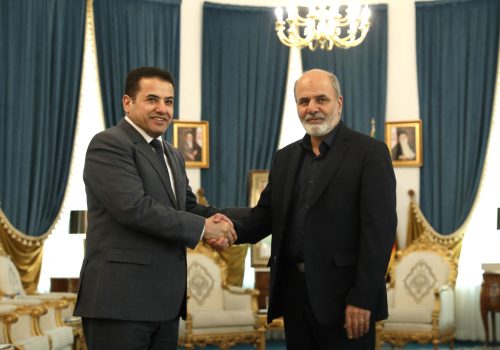
Iran is playing musical chairs with leadership positions. None of these individuals have been sanctioned.

By Behnam Ben Taleblu

Playing musical chairs with leadership positions provides opportunities to recalibrate and update coercive economic measures on Iran.

Financial Sanctions and Economic Coercion Iran

Experts