Political Reform

As societies around the world look to transition toward more democratic systems of governance, political reforms are often needed to improve decision-making processes, ensure fair representation of social groups, and increase transparency and accountability of government functions. Effective reforms can help make governments more effective, foster stability within societies, and unlock economic potential. Whether initiated by electorates or through the process of accession to multilateral political or economic pacts, political reform measures can be important stepping stones on the road to healthy democratic rule.

Content

MENASource

Nov 2, 2017

Saudi’s ‘reforms’: Interview with Dr. H.A. Hellyer

By MENASource

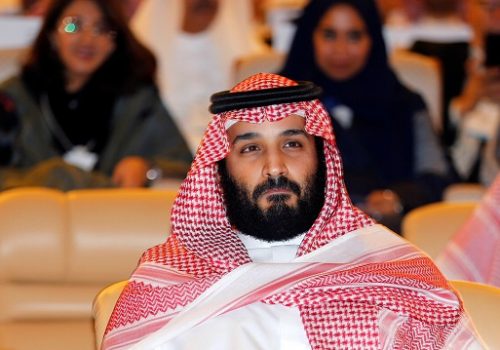
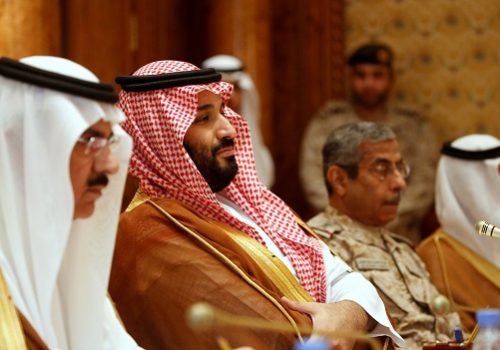
The Saudi Arabian Crown prince, Mohammed bin Salman, recently declared that the kingdom sought a ‘return’ to the ‘moderate Islam’ of pre-1979. The international media understandably paid a great deal of attention—but how significant is this? Martin Chulov, the Guardian’s Middle East Correspondent, asked our non-resident senior fellow, Dr HA Hellyer, some questions about it—the […]

Human Rights Political Reform

MENASource

Oct 31, 2017

Tunisia, the West, and the ‘Arab Spring’

By Oussama Romdhani

Although Tunisia is still seen favorably in Washington, the US is unlikely to be its savior. No matter how much Washington reflects on Tunisia as a successful democratic transition, the mood in the US capital will not lead to large amounts of aid to magically fix Tunisia’s security and economic woes. Only by looking to […]

Democratic Transitions Libya

MENASource

Oct 11, 2017

The limits of democratization in Morocco

By Dr. Nabeel Khoury

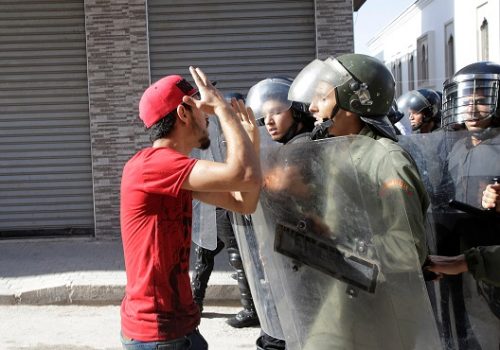
The demonstrations, police repression, and continued violence in al-Hoceima in the northern Rif region of Morocco bring back not only the rebellious past of that region, but also memories among Moroccans of Hassan II’s repression—the so-called years of lead. The events also bring the country full circle back to the beginning of the Arab uprising […]

Democratic Transitions Morocco

UkraineAlert

Oct 10, 2017

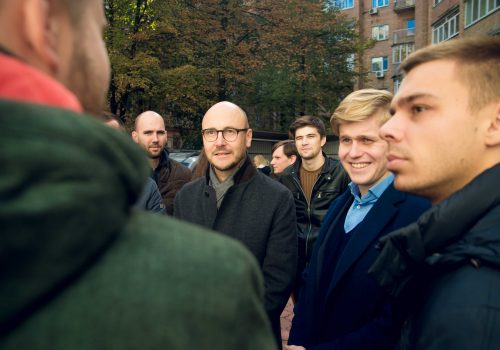
Ukraine’s got talent: Engineer turned restaurateur turned politician breaking the old system

By Melinda Haring

Few would ever dream of challenging Vitali Klitschko, the three-time world heavyweight champion and mayor of Kyiv, in any kind of competition. But Sergiy Gusovsky isn’t like most people. Nearly a foot shorter and a political novice, Gusovsky went after Klitschko in the 2015 local elections. Even though the boxing champion was reelected mayor, Gusovsky grabbed […]

Democratic Transitions Political Reform

MENASource

Oct 4, 2017

A way forward for devolving local power in Libya?

By Elissa Miller and Andrea Taylor

Despite the signing of the Libyan Political Agreement (LPA) in Skhirat in 2015, the political situation in Libya appears no closer to being resolved. Indeed, there is now a widening consensus within Libya and among concerned states that the LPA must be amended. Over the last two years, cleavages within Libya deepened amid exacerbating interference […]

Democratic Transitions Libya

Issue Brief

Oct 3, 2017

Ukraine’s internally displaced persons hold a key to peace

By Lauren Van Metre, Steven E. Steiner, and Melinda Haring

“Ukraine’s displaced persons can and should play a role in a sustained peace process, and many are already building bridges and fostering local reconciliation,” write authors Lauren Van Metre, Steven E. Steiner, and Melinda Haring, in “Ukraine’s Internally Displaced Persons Hold a Key to Peace,” a new issue brief by the Atlantic Council’s Dinu Patriciu […]

Conflict Democratic Transitions

Issue Brief

Oct 3, 2017

Ukraine’s internally displaced persons hold a key to peace

By Lauren Van Metre, Steven E. Steiner, and Melinda Haring

This paper examines Ukraine’s IDP policies in the context of the largercrisis between Moscow and Kyiv, and is based in part on extensive fieldwork with displaced persons who have settled in Kyiv and Vinnytsia.

Conflict Democratic Transitions

Defense Industrialist

Oct 3, 2017

The military implications of Catalonian secession—an update

By James Hasik

assuming that Catalonia was admitted to NATO, what would the newly independent country contribute? At the 2014 Strategic Foresight Forum at the Atlantic Council, Anne Marie Slaughter of the New America Foundation opined that an independent Catalonia would do a fine job of defending itself. After all, Catalonia is a country of over 7 million people, with more than $300 billion in GDP. Spending just 1.6% of that—well below the widely-ignored NATO threshold, of course—provides over $4.5 billion annually. y de-emphasizing the military forces that any landlocked country will have, and instead steering investments towards those it is comparatively positioned to provide, Catalonia could punch above its weight in European political affairs.

Defense Policy Eastern Europe

Report

Sep 26, 2017

The MADCOM future

By Matt Chessen

Emerging artificial intelligence (AI) tools will provide propagandists radically enhanced capabilities to manipulate human minds. Human cognition is a complex system, and AI tools are very good at decoding complex systems. Interactions on social media, browsing the Internet, and even grocery shopping provide thousands of data points from which technologists can build psychological profiles on nearly […]

Americas Civil Society

MENASource

May 18, 2017

Governing Egypt: Cohesion and Consolidation

By Dr. H.A. Hellyer

A little over a year ago, it was still possible to speak of the ‘regimen’ of Egyptian president Sisi’s ‘non-regime.’ Power was dispersed, disparate, and given to erratic bursts of energy, that had far more to do with localised and internal disputes, than to an overarching directive from a cohesive chief governor.

North Africa Political Reform

Experts