Positive Economic Statecraft

The Atlantic Council’s Economic Statecraft Initiative coined the term “positive economic statecraft” (PES) to describe how governments use economic inducements to influence the behavior of another government. Common instruments of PES include official international development assistance or humanitarian aid (e.g., grants, capacity building, technical assistance, budget support), development finance (e.g., loans, credits or guarantees, public-private partnerships), access to currency, and preferential trade and investment agreements.
Content

Dispatches

Feb 26, 2026

Lessons from Sudan for US economic engagement with Venezuela

By Lesley Chavkin

Sudan offers important lessons for the United States as it looks to stabilize Venezuela and rebuild its economy following the capture of Nicolás Maduro.

Economy & Business Financial Sanctions and Economic Coercion

MENASource

Jan 21, 2026

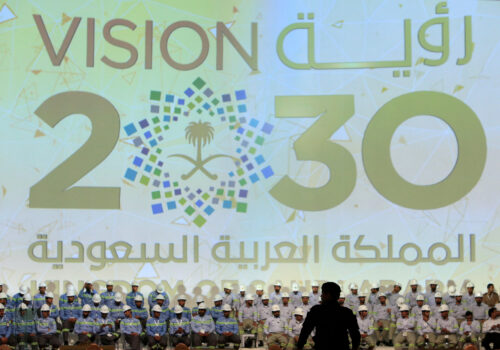
Why US markets are betting on Saudi Arabia 

By Khalid Azim

Saudi Arabia’s long-term strategy is coherent, ambitious, and increasingly credible. US debt capital markets, for now, appear to agree.

Economy & Business Energy Markets & Governance

Issue Brief

Sep 22, 2025

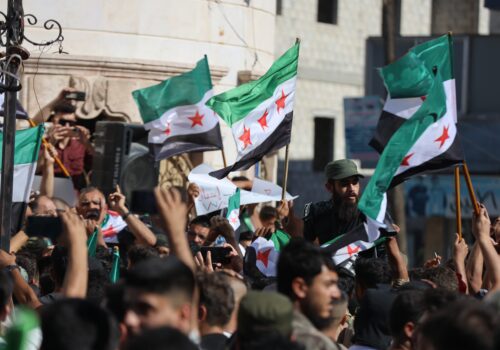
Expanding Syria’s multilateral development bank engagement

By Basil Kiwan

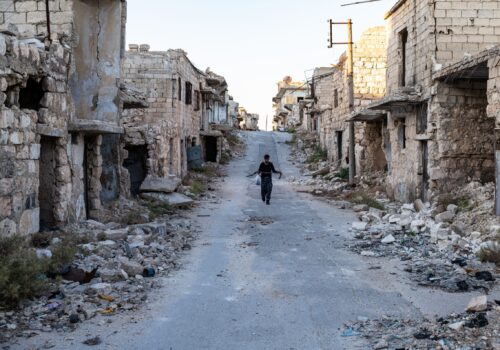
Estimates of Syria’s post-civil war cost of rebuilding range from $250 billion to $400 billion. To help finance reconstruction and development, Syria’s transitional government should expand its partnerships with international financial institutions (IFIs) and multilateral development banks (MDBs), as these institutions can play a key role in mobilizing global capital.

Economy & Business Financial Sanctions and Economic Coercion

Issue Brief

Sep 2, 2025

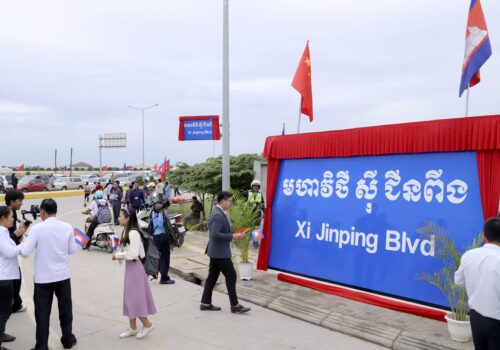
Leveraging Beijing’s playbook to fortify DFC for global competition

By Caroline Costello

A close look at Chinese development lending practices reveals lessons for the United States on why Chinese deals succeed—and fail—and how the United States should reform its own institutions.

Africa China

Econographics

Jul 17, 2025

Charting a strategic path for Syria’s postwar reconstruction

By Kimberly Donovan, Jonathan Panikoff, Lize de Kruijf, Manal Fatima

As Syria emerges from over a decade of conflict, easing sanctions by the United States, the European Union (EU), and other European partners is an important step toward reintegrating Syria into the global economy. Yet, for a country that has been economically isolated for over fourteen years, lifting sanctions is only the beginning.

Economy & Business Financial Sanctions and Economic Coercion

New Atlanticist

Jun 30, 2025

Less investment, less influence: Why the US risks losing ground in the Indo-Pacific

By Lize de Kruijf and Nazima Tursun

The US withdrawal of foreign aid to Indo-Pacific countries creates space for China to expand its influence in the region.

Defense Policy Economy & Business
Cranes atop a building. Dabust Soh/Unsplash

Issue Brief

Jun 9, 2025

Why Congress must reauthorize the US Development Finance Corporation

By Enrique Millán-Mejía, Martin Cassinelli

Congress has an opportunity to give the United States tools to create jobs at home and strengthen ties overseas. Updating the Development Finance Corporation and reauthorizing it before the October deadline are the first steps.

Americas Economy & Business

New Atlanticist

Jun 14, 2024

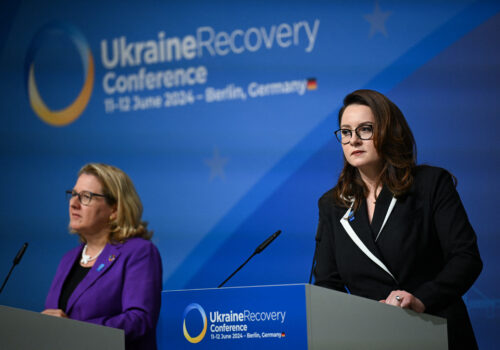
Women should play a central role in rebuilding Ukraine’s economy

By Melanne Verveer and Kimberly Donovan

Ukraine can only rebuild its economy if women and civil society are fully involved in its reconstruction efforts.

Civil Society Corruption

New Atlanticist

Feb 22, 2024

Forging a positive vision of economic statecraft

By Daleep Singh

The United States must institutionalize how it uses economic tools in the context of today's great power competition.

China Economy & Business
Grain market in Africa with sellers

Econographics

Feb 1, 2024

Why 2024 will be a big year for positive economic statecraft

By Nicole Goldin

As geopolitics cast a shadow on the global economy, leaders are looking to build resilience, advance inclusive growth, and promote stability and security. Three January events already showcase that these positive economic statecraft (PES) approaches are clearly in effect this year.

Fiscal and Structural Reform Inclusive Growth