Terrorism

The use of indiscriminate violence against civilians and soft targets causes immense human suffering, sows fear within societies, damages public trust in authorities, and can produce extremist responses. Whether motivated by political, religious, economic, or social grievances, the use of terror by state-aligned and non-state actors poses an elevated threat for societies around the world as it can be perpetuated by both sophisticated international networks and single “lone-wolf” assailants. To prevent terrorism and limit its effects, governments need to adopt an array of solutions from dismantling terrorist networks to addressing the root grievances which fuel terrorist ideology.

Content
In the News

Jun 14, 2021

Grieco in International Politics: Can drones coerce?

By Atlantic Council

On June 14, Grieco was featured in International Politics, in which she coauthored an article with J. Wesley Hutto analyzing the coercive effect of remote warfare. “While drone technologies can effectively degrade organizational capabilities and impose significant costs, they complicate the tasks of signaling clear and credible threats and assurances of restraint. Persistent surveillance combined […]

Drones English

In the News

Jun 14, 2021

Sales quoted in Le Point on Hezbollah and France

By Atlantic Council

Defense Policy Extremism

In the News

Jun 10, 2021

Sales quoted in Wall Street Journal on ISIS families

By Atlantic Council

Europe & Eurasia Extremism

In the News

Jun 7, 2021

Sakhi to join Tillotoma Foundation to discuss violence in Afghanistan and the regional impact of US withdrawal

By Atlantic Council

Afghanistan Conflict

In the News

May 27, 2021

Samad joins Ankara Centre for Crisis and Policy Research to discuss the rise of Asian geopolitics and terrorism

By Atlantic Council

Afghanistan Europe & Eurasia

In the News

May 27, 2021

Ashford in Cato Unbound: On Afghanistan, the retrospective approach is the right one

By Atlantic Council

On May 27, Emma Ashford published a response essay in this month’s Cato Unbound, which focused on the implications of the US withdrawal from Afghanistan. “I hope that Joe Biden’s decision to finally withdraw troops from Afghanistan will thus also serve to improve the quality of Washington’s debates on the war, as we finally start […]

Afghanistan Security & Defense

MENASource

May 26, 2021

Event Recap: After the Insurrection: Domestic Violent Extremism and the Intelligence Challenge

By Hezha Barzani

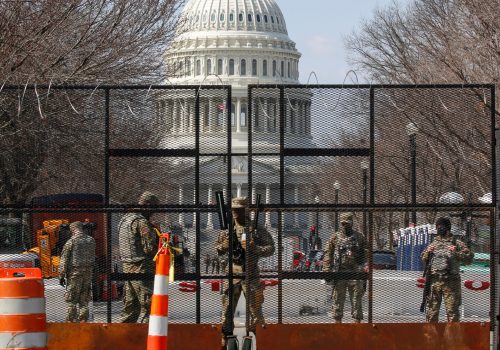
The Atlantic Council hosted an event examining domestic violent extremism and the failures in intelligence analysis and warnings that allowed the storming of the Capitol building on January 6. Read the key takeaways.

Defense Policy Democratic Transitions

Issue briefs and reports

May 18, 2021

Domestic violent extremism and the intelligence challenge

By Mitchell D. Silber

Mitchell Silber presents recommendations to improve the effectiveness of the post-9/11 intelligence architecture against the domestic violent-extremist threat, including a more robust collection of social media content.

Americas Intelligence

In the News

May 18, 2021

Silber’s Atlantic Council report mentioned in NPR discussing suggested intelligence improvements

Crisis Management Extremism

In the News

May 18, 2021

Handler, Schroeder, and Herr in War on the Rocks: Cyber security as counter-terrorism: Seeking a better debate

By Atlantic Council

To improve US cybersecurity, policymakers should draw on relevant strategic lessons from the study of terrorism and counterterrorism.

Cybersecurity Terrorism

Experts