Projects

Close up of tiger

The Tiger Project: War and deterrence in the Indo-Pacific

Explore the Atlantic Council’s work on current and enduring defense and deterrence issues in the Indo-Pacific, featuring expert commentary, multimedia content, and in-depth analysis.

Explore the programs

The Indo-Pacific Security Initiative (IPSI) informs and shapes the strategies, plans, and policies of the United States and its allies and partners to address the most important rising security challenges in the Indo-Pacific, including China’s growing threat to the international order and North Korea’s destabilizing nuclear weapons advancements. IPSI produces innovative analysis, conducts tabletop exercises, hosts public and private convenings, and engages with US, allied, and partner governments, militaries, media, other key private and public-sector stakeholders, and publics.


Content

Global Energy Agenda

May 19, 2026

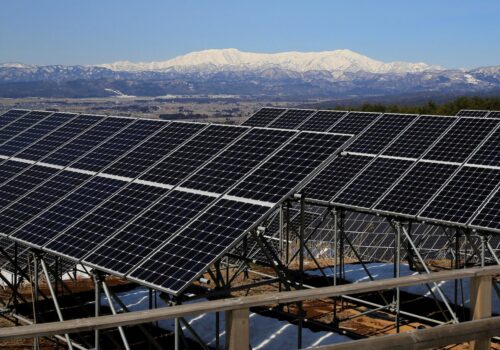
The impacts of the Iranian crisis on Japan’s energy strategy

By Tatsuya Terazawa

Strategic planning has enabled Japan to manage the Hormuz energy crisis relatively well. But the shock also exposed policy weaknesses that needs to be addressed to improve the country's energy resilience.

Energy & Environment Geopolitics & Energy Security

Dispatches

May 1, 2026

Everything, everywhere, all at once: Japan’s geoeconomic reckoning

By Charles Lichfield

The Japanese government has some experience with market interventions, but the current cocktail of issues is taking its toll on borrowing conditions.

Economy & Business Japan

In the News

Jan 30, 2026

Amato in RealClearDefense on the 2025 National Security Strategy

By Atlantic Council

On January 29, Forward Defense Nonresident Senior Fellow Paul Amato published an article in RealClearDefense on the Trump administration’s ambiguity on nuclear deterrence in the Korean peninsula. In the article, Amato argues that silence on the regime ending policy risks emboldening North Korea and unsettling South Korea and Japan.

Japan Korea

New Atlanticist

Oct 31, 2025

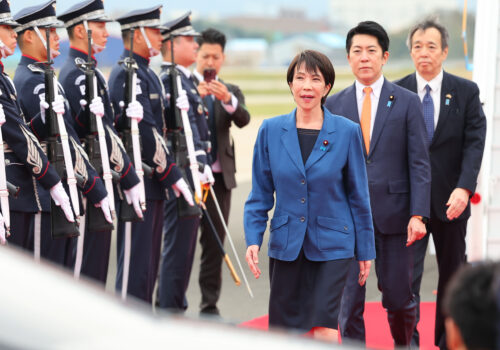
How will Japan’s ‘Iron Lady’ approach foreign policy?

By Kyoko Imai

While new Japanese Prime Minister Sanae Takaichi is a protégé of the late former Prime Minister Shinzo Abe, she will need to chart her own course for Tokyo in a changed world.

East Asia Indo-Pacific

TURKEYSource

Oct 28, 2025

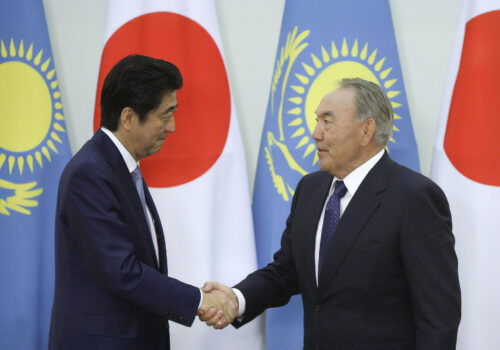
Working within a ‘Central Asia Quartet’ can strengthen US ties in the region. The foundations for it have already been laid.

By Kiran Baez

To strengthen their ties to Central Asia, the United States, Turkey, Japan, and South Korea should work together on their engagement with the region.

Central Asia Geopolitics & Energy Security

New Atlanticist

Sep 22, 2025

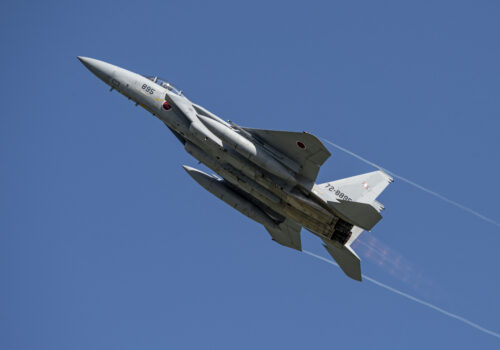
Why has Japan deployed fighter jets to NATO bases in the US, Canada, and Europe?

By Atlantic Council experts

As part of Operation Atlantic Eagles, Tokyo has sent four F-15 fighter jets and four additional military aircraft to the United States, Canada, the United Kingdom, and Germany.

Germany Japan

Issue Brief

Sep 12, 2025

Trustworthy digital identities can set the standards for secure benefits provision in the US

By Ananya Kumar

The proliferation of online services necessitates verifiable digital IDs globally. While they can improve convenience and reduce fraud in benefits provision, they raise privacy concerns and surveillance risks. This paper examines US digital identity challenges, analyzes EU and Japan implementations, and provides policy recommendations for responsible digital ID development in the US.

Cybersecurity Digital Currencies

In the News

Aug 18, 2025

Bauerle-Danzman cited in the Journal of International Economic Law on the US investment regulation

Read the full article here

Japan United States and Canada

Issue Brief

Aug 15, 2025

The future of US and Japanese engagement with Central Asia

By Kyoko Imai

Situated between China and Russia, and with an abundance of vital natural resources, Central Asia is an area of strategic interest for Tokyo and Washington. Beijing and Moscow currently enjoy overwhelming political, economic, and cultural influence, which limits other countries’ ability to constructively shape the region. Some friction has emerged between the two authoritarian powers as post-Soviet dominance over Central Asia erodes and Chinese economic influence takes its place.

Central Asia China

In the News

Jul 21, 2025

Lichfield cohosts China Talk podcast episode with Jordan Schneider and guest Dr. Tomohiko Taniguchi

Listen to the episode here

China Economy & Business

Experts

Events