Featured commentary & analysis

Programs


Perspectives on North Africa

The North Africa Initiative at the Atlantic Council’s Rafik Hariri Center for the Middle East analyzes the strategic, political, and economic importance of the region for the United States and its allies. Since the 2011 Arab Spring uprisings, North Africa has undergone political and economic transformations that have impacted stability and security in the region. With its geographic crossroad between Europe, Africa, and the Middle East, North Africa continues to be an integral partner in addressing shared interests and concerns.

Learn more about the Middle East programs

Middle East Programs

Working with our allies and partners in Europe and the wider Middle East to protect US interests, build peace and security, and unlock the human potential of the region.

Content
New Atlanticist

Mar 2, 2011

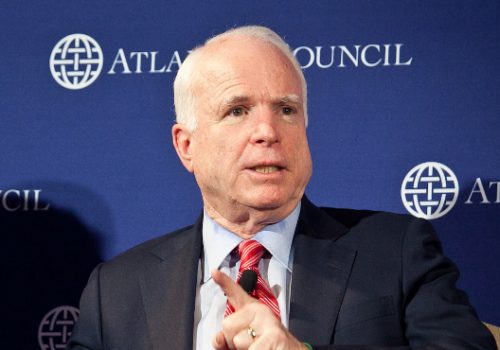
McCain: Libya No-Fly Zones? Of Course!

By James Joyner

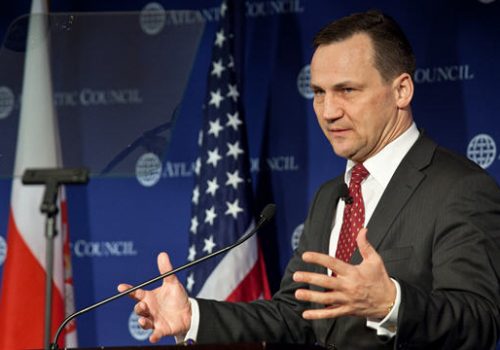
Senator John McCain declared tonight that the United States and its democratic partners have a duty to stand with those fighting against tyranny in North Africa, the Middle East, and Central Europe. That support must go beyond words to deeds, including an immediate no-fly zone over Libya to prevent further atrocities.

Libya Poland

New Atlanticist

Feb 28, 2011

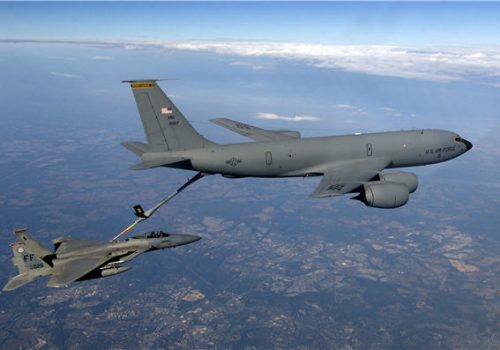
Libya No-Fly Zone: An Idea That Won’t Fly

By Magnus Nordenman

With the crisis in Libya moving at a breakneck speed, some have begun to call for the U.S. and NATO to do more to assist the opposition and halt human rights abuses perpetrated by the Gaddafi regime. The measures being proposed include a no-fly zone, which would prevent the regime from using airpower to suppress […]

Libya

Issue Brief

Mar 17, 2006

Libya and the United States: The Next Steps

Over the past several years, the Atlantic Council’s International Security Program has taken a position that, in due course, the United States’ adversarial relationships with countries, such as Libya, Iran, Syria, Cuba, and North Korea will eventually be restructured both in recognition of changes in the nature or policies of these difficult regimes, and in […]

Libya United States and Canada

Report

Feb 1, 2004

Do Economic Sanctions Work?: Lessons from ILSA and Other US Sanctions Regimes

By Stuart E. Eizenstat

Economic sanctions have been a frequently used tool of U.S. foreign policy in recent years. One of the most controversial applications of sanctions has been through the Iran-Libya Sanctions Act (ILSA), which was originally passed into law in 1996 and renewed in 2001. Events since the Act’s passage have, however, raised questions about the effectiveness […]

Economy & Business Iran

Report

Aug 1, 2003

U.S.-Libyan Relations: An Analytic Compendium of U.S. Policies, Laws, and Regulations

This compendium presents the texts of the U.S. policy statements, laws, and regulations (or relevant parts thereof) that govern U.S. relations with Libya, on both the bilateral and multilateral levels. Before each document or group of documents is an analytic summary which highlights the context, major provisions, and significance of the policy, law, or regulation […]

Libya United States and Canada

Report

Apr 1, 2003

U.S.-Libyan Relations: Toward Cautious Reengagement

This report discusses the future of US-Libyan relations. It states that the set of laws and regulations that govern US relations with Libya are outdated and recommends the countering of international terrorism as a principal objective for a new strategy. The authors suggest pursuing secondary objectives, such as energy security, containment of Libya’s regional ambitions, […]

Libya United States and Canada

Experts