Content

Report

Sep 6, 2007

Independent Commision on the Security Forces of Iraq

Retired Marine General James Jones, Chairman of the Atlantic Council, chaired the Committee that produced this report assessing Iraq’s national police force. The report’s overall assessment said “the Iraqi armed forces – Army, Special Forces, Navy, and Air Force – are increasingly effective and are capable of assuming greater responsibility for the internal security of […]

Iraq
Iraq

New Atlanticist

Sep 5, 2007

Iraq War Squabbling Squanders an Opportunity

By Frederick Kempe

September offers a unique opportunity for a turning point on Iraq. OK, before you roll your eyes and stop reading, we aren’t talking about a turning point IN Iraq — that will take more than President George W. Bush’s Labor Day outing in Anbar Province or the rat-a-tat of expert reports and congressional testimony over […]

Iraq
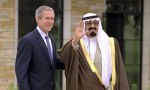
President Bush and Crown Prince of Saudi Arabia

Issue Brief

Jan 8, 2007

U.S. Challenges and Choices in the Gulf: Saudi Arabia

The September 11th terrorist attacks and their aftermath have not altered Saudi Arabia’s fundamental importance in the international arena nor its importance to the United States. Saudi Arabia remains the source of much of the world’s oil reserves, the site of the holiest places in Islam, and the crossroad of strategic lines of communication between […]

Saudi Arabia United States and Canada

Issue Brief

Mar 17, 2006

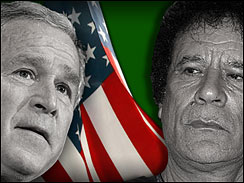
Libya and the United States: The Next Steps

Over the past several years, the Atlantic Council’s International Security Program has taken a position that, in due course, the United States’ adversarial relationships with countries, such as Libya, Iran, Syria, Cuba, and North Korea will eventually be restructured both in recognition of changes in the nature or policies of these difficult regimes, and in […]

Libya United States and Canada

Report

Feb 1, 2004

Do Economic Sanctions Work?: Lessons from ILSA and Other US Sanctions Regimes

By Stuart E. Eizenstat

Economic sanctions have been a frequently used tool of U.S. foreign policy in recent years. One of the most controversial applications of sanctions has been through the Iran-Libya Sanctions Act (ILSA), which was originally passed into law in 1996 and renewed in 2001. Events since the Act’s passage have, however, raised questions about the effectiveness […]

Economy & Business Iran

Report

Aug 1, 2003

U.S.-Libyan Relations: An Analytic Compendium of U.S. Policies, Laws, and Regulations

This compendium presents the texts of the U.S. policy statements, laws, and regulations (or relevant parts thereof) that govern U.S. relations with Libya, on both the bilateral and multilateral levels. Before each document or group of documents is an analytic summary which highlights the context, major provisions, and significance of the policy, law, or regulation […]

Libya United States and Canada

Report

Apr 1, 2003

U.S.-Libyan Relations: Toward Cautious Reengagement

This report discusses the future of US-Libyan relations. It states that the set of laws and regulations that govern US relations with Libya are outdated and recommends the countering of international terrorism as a principal objective for a new strategy. The authors suggest pursuing secondary objectives, such as energy security, containment of Libya’s regional ambitions, […]

Libya United States and Canada

Report

Sep 1, 2002

Elusive Partnership: US and European Policies in the Near East and the Gulf

This report presents the US-Middle East delegation’s assessment of European attitudes and its conclusions and recommendations for the policies of the US government. The authors analyze the history of US–European relations on the topic of the Middle East and discuss the European attitudes toward the problem as well as the directions and dynamics of the […]

European Union International Organizations

Report

Jan 1, 2002

Managing Proliferation Issues With Iran

Any government in Tehran will be inclined to seek weapons of mass destruction (WMD) and missile delivery options given the realities of its strategic environment. These weapons might help Iran to deter potential external threats, to achieve equality with other major regional powers armed with WMD, and to attain self-reliance in national security, given the […]

Iran Missile Defense

Report

Jul 1, 2001

Thinking Beyond the Stalemate in U.S.-Iranian Relations: Volume II

By Elaine L. Morton

This report examines the full range of US interests in the US-Iran stalemate and suggests measures that could become part of a new strategic approach. It identifies the major issues that will need to be addressed if US-Iranian relations are to improve. In doing so it identifies areas in which cooperative endeavors might serve the […]

Energy & Environment Energy Markets & Governance

Experts

Events