The participation of veterans in public and political life has the potential to transform Ukrainian democracy. If managed inclusively and responsibly, it can strengthen legitimacy and trust. However, this trend could also carry real risks if veterans are used by traditional political actors or inadequately prepared for their role in public life.
Ukrainian legislation does not allow for elections under the current martial law conditions. Beyond legal constraints, the practical obstacles to wartime elections are also overwhelming. Fair campaigning conditions and safety during voting cannot be guaranteed. Meanwhile, over ten million Ukrainians have been displaced by Russia’s invasion, with millions more currently serving in the military or trapped in Russian-occupied regions.
The impracticality of elections is broadly accepted by Ukrainian society and among the country’s European partners. They recognise that any premature vote would risk undermining the legitimacy of Ukraine’s institutions and eroding public trust at a moment when democratic resilience is essential. Tellingly, the idea of wartime elections is mainly promoted by Russia as part of Kremlin efforts to weaken Ukraine from within.
When conditions allow for free and fair Ukrainian elections to take place, a key issue will be the inclusion of those who are currently defending the country. According to a preliminary forecast by the Ministry of Veterans Affairs, after the war ends, the number of war veterans and their family members will reach five to six million people, or one in six Ukrainians.
Opinion polls indicate strong public trust in the Ukrainian military along with widespread support for the participation of veterans in Ukrainian politics. In contrast, Ukraine’s existing democratic and political institutions are among the least trusted entities in society. It therefore seems reasonable to assume that veteran involvement in politics could help counter this trust deficit and strengthen Ukrainian democracy.
Stay updated
As the world watches the Russian invasion of Ukraine unfold, UkraineAlert delivers the best Atlantic Council expert insight and analysis on Ukraine twice a week directly to your inbox.
It is important to note that most Ukrainian veterans are not career military personnel. The vast majority of today’s Ukrainian soldiers joined the military voluntarily or were mobilized and expect to return to civilian life in peacetime. Veterans are also not a homogeneous group and do not represent a specific political agenda. They differ in views, values, and priorities, and should be understood as individuals seeking meaningful participation within legitimate democratic institutions.
Electing military personnel to public office is not without risk. Military experience does not automatically translate into political skill. Veterans transitioning from the battlefield to politics may face challenges in terms of essential political know-how such as policy coherence, negotiation tactics, coalition-building, and working within institutions. Without targeted support and a clear civilian framework, veterans risk being marginalized within political parties or exploited as symbolic figures without real influence.
Ukraine has previous practical experience of veterans entering politics, notably during the country’s 2014 parliamentary elections. One of the former military personnel elected on that occasion was Oksana Korchynska, who recalled at a recent Kyiv event how she “came from the front line, from Mariupol, two days before taking the oath of MP.”
Korchynska noted that in 2014, veterans were frequently included on electoral lists without being integrated into decision-making structures. While veterans enjoyed high public trust, their actual influence within parties and parliament has so far often been limited. This experience underscores a critical lesson: Political inclusion must be substantive, not symbolic. Veterans need pathways to real influence within parties and institutions, not mere visibility.
Eurasia Center events
Members of Ukraine’s veteran community do not need to wait for elections to take up a role in public life. Many are already serving in local government or building civic organizations and veteran associations. Kateryna Yamshchykova is a veteran who became acting mayor of Poltava in 2023. “Opportunities already exist for everyone,” she reflected. “Did I really want the position of acting mayor? It was the last thing I wanted in my life, but I understood that this responsibility had to be taken on in order to build the country we are fighting for.”
This kind of local engagement can help veterans develop the skills they need to run as candidates in national elections after the war ends. Democratic participation, civic habits, and political responsibility cannot be developed overnight. Instead, early engagement can help bring about a stable postwar transition.
For established Ukrainian political parties, engagement with the country’s veteran community is already becoming increasingly necessary to maintain public support. This will likely lead to intensified internal competition as veterans seek leadership roles alongside longstanding party members.
Valery Zaluzhny, Ukraine’s ambassador to the UK and former commander of the Ukrainian army, has warned that established political elites might see veterans as a threat to their position. If this happens, everyone in Ukraine stands to lose. Public trust in politicians would erode further, undermining the legitimacy of decisions that will be essential for European integration and postwar recovery.
A critical step toward the meaningful political participation of veterans is the development of a clear legal framework for Ukraine’s first postwar elections. This should ensure inclusive participation, clarify registration requirements for new political parties, and potentially impose stricter campaigning rules to protect electoral integrity.
Ukraine’s democracy is not on pause; it is being reshaped under fire. The emergence of veterans as political actors represents a profound structural change in Ukrainian society. In and of itself, this change is neither a threat to democracy nor a guarantee of positive change. Instead, it requires a deliberate and inclusive approach. If Ukraine succeeds in integrating veterans into civilian political life while preserving pluralism, accountability, and fair competition, it may emerge from the war with a more resilient democracy capable of sustaining inclusive recovery, reforms, and European integration.
Vasyl Sehin is the WFD Country Director in Ukraine.
Further reading
The views expressed in UkraineAlert are solely those of the authors and do not necessarily reflect the views of the Atlantic Council, its staff, or its supporters.

The Eurasia Center’s mission is to enhance transatlantic cooperation in promoting stability, democratic values, and prosperity in Eurasia, from Eastern Europe and Turkey in the West to the Caucasus, Russia, and Central Asia in the East.
Follow us on social media
and support our work
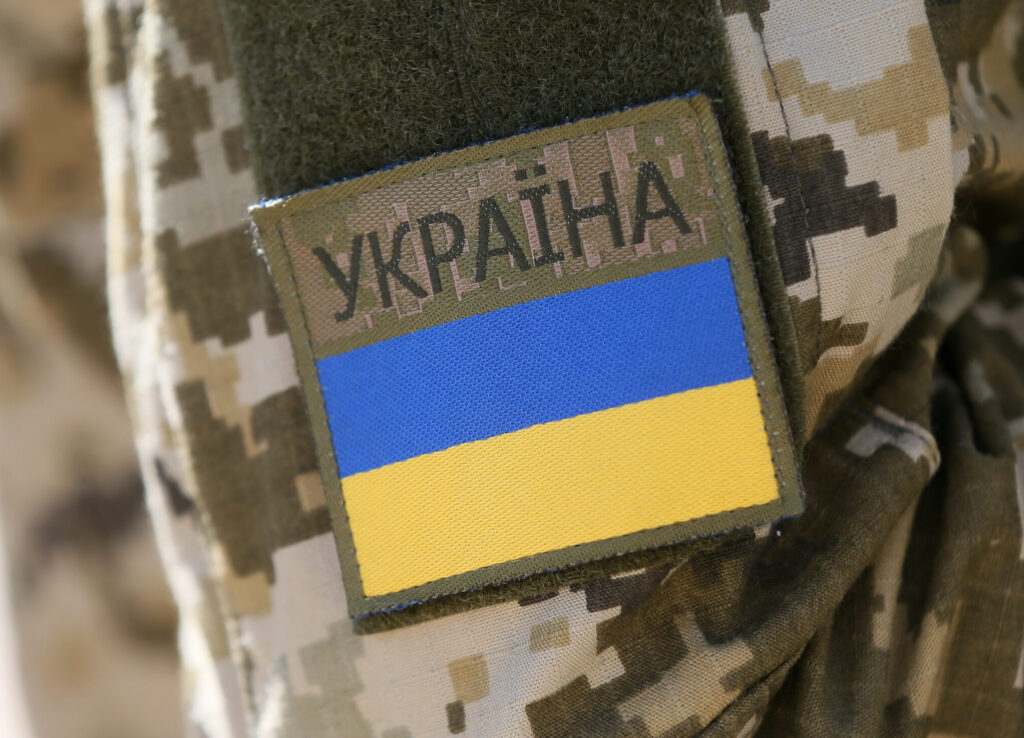
Image: A chevron reading Ukraine is seen on a serviceman uniform during a celebration ceremony of the Independence Day at St. Sophia Square in Kyiv, Ukraine on 24 August 2023, amid Russian invasion of Ukraine. Ukrainians mark the 32nd anniversary of the state independence. (Photo by STR/NurPhoto)