Voices from Iran: As rejection of government reaches all-time high, Iranians also wary of foreign intervention
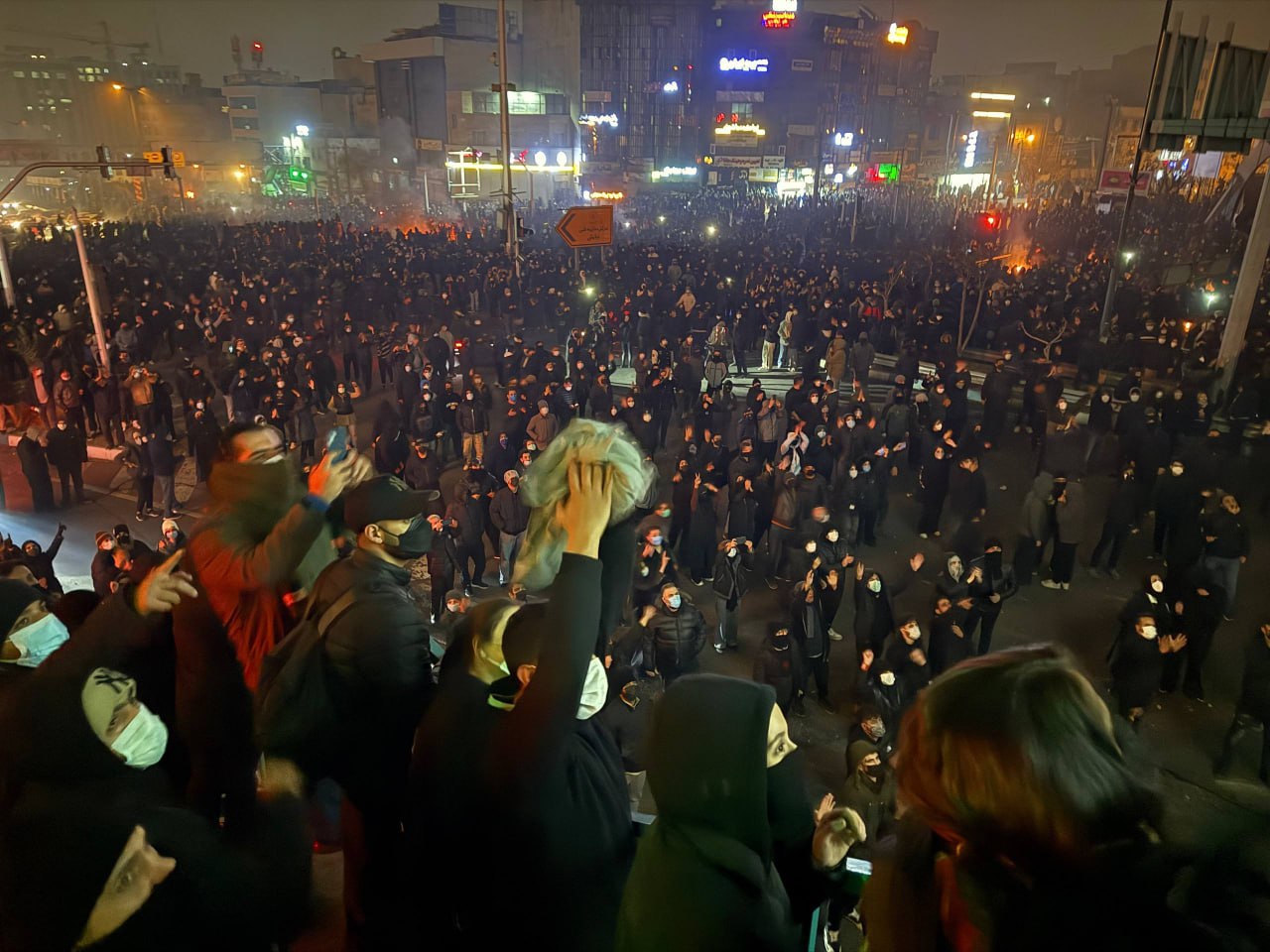
Unlike any other time in modern history, a US president is encouraging protestors in a foreign country to “take over the institutions” in Iran, saying that “help is on its way”—potentially with the backing and support of Israel—while offering no clear policy toward either the fate of the country’s theocratic dictatorship or that of its ninety million people.
As of January 13, the Human Rights News Agency, a US-based human rights group, estimated that the death toll has climbed above two thousand since the start of the protests on December 28 last year. This is while the Iranian government, as it has done previously, enacted a complete internet blackout, where the entire nation continues to remain under the world’s largest digital prison.
“I saw snipers in our neighborhood—in all these years I’ve never seen such scenes,” said Sahar, a doctoral student in the Saadat Abad neighborhood in Tehran, in a brief phone conversation via Starlink satellite connection.
Her voice was more distraught than in our previous conversations earlier in the week. She also explained how, since Saturday, fewer people have been going on the streets. “At first, there were families, old, young, but now everyone’s terrified, given the bloodbath.”
So far, Tehran’s crackdown on the demonstrations appears to have turned into a bloodbath, in which the only victims appear to be ordinary Iranian people—those who for long have been paying the price of the brutality of the Islamic regime, topped with the global isolation resulting from decades of sanctions and pressure imposed by the United States and its allies.
Against this backdrop, US President Donald Trump may have a real opportunity to be an effective dealmaker with Iran. However, if he is serious about a durable, win-win outcome for both the United States and Iranians, there is only one asset worth betting on: the Iranian people.
Today, Iranian society is more unified against the Islamic Republic than at any point since 1979. Nearly three weeks into the latest nationwide protests, this time ignited not by a single spark but by the country’s wider economic freefall, Iranians have taken to the streets in extraordinary numbers.
Speaking shortly before the regime’s blackout began, Sepideh, an Iranian journalist who has been arrested multiple times and isn’t using her last name for security concerns, explained how she believes Iran is at one of the “most dangerous junctures” in its modern history.
“There is zero possibility of reform within this regime,” she told me. “But history also shows that the [United States], the UK, and Israel don’t prioritize the Iranian people either—only their own interests. This is what makes me afraid of what’s coming.”
Asked about Reza Pahlavi, the exiled son of Iran’s last monarch, she says with a deep sigh that “he has some supporters because there is no strong domestic opposition, as those voices have been crushed domestically over the years. But I struggle to believe in someone backed by foreign powers, tied to monarchy, and unable to form a coalition.”
Some others express a more fatalistic openness, including Sahar, who—prior to the internet blackout—told me how many Iranians “believe anything after this regime will be better. We want a complete separation of religion and state. This deck of cards needs to be reshuffled.”
These voices capture the nuances within the Iranian society today—united in its rejection of the Islamic Republic, deeply wary of foreign agendas, and desperate to reclaim agency over their own future.
For the United States, meaningful support for the Iranian people requires resisting the impulse to frame their uprising through the language of takeover or intervention, and instead prioritizing concrete protections for civilians in light of the brutal repression inside Iran. This means keeping Iran connected to the world, shielding protesters and journalists from digital isolation, and ensuring that accountability efforts target perpetrators of violence rather than a population already trapped between domestic repression and coercion from abroad.
Furthermore, it means treating internet access as humanitarian aid—funding circumvention support, satellite connectivity where feasible, and protection for independent journalists. This can help to ensure that the regime cannot repeatedly convert blackouts into a weapon of mass impunity.
An open, empowered Iranian civil society would not be a liability to US interests; it would be one of Washington’s greatest assets.
If the goal is to empower Iranians rather than freeze them into permanent victimhood, economic engagement must run alongside pressure on the state. This does not mean enriching the regime or reopening a flood-gate of funds to Islamic Revolutionary Guard Corps (IRGC)-backed entities. Rather, it means expanding lawful, carefully assessed, people-to-people commerce that bypasses state hijacking and manipulation.
This includes enabling small and medium-sized Iranian businesses, freelancers, and entrepreneurs to access global markets; lifting travel bans for Iranian students, artists, medics, scientists and civil society members while banning entry to government-affiliated individuals; widening licenses that allow US and European firms to provide cloud services, payment rails, logistics support, and professional tools directly to Iranian users; and supporting diaspora-led investment vehicles that fund Iranian startups, cooperatives, and cultural industries without routing capital through regime-controlled entities. Such engagement gives Iranians income, skills, and stake—converting isolation into leverage and dignity rather than dependency.
Despite decades of sanctions, Iran has cultivated one of the most educated populations in the region and a resilient tech ecosystem that mirrors Silicon Valley’s platforms under far harsher conditions. Iranian youth have built local equivalents of Amazon, Uber, YouTube, and DoorDash with little capital and almost no global access. With the right engagement, Iran could generate trillions in long-term value—benefiting not only Iranians but also US businesses and consumers. A reintegrated Iran, charged by its people, would open a new frontier in trade, education, technology, and culture.
Meanwhile, none of this negates Iran’s military capacity. After more than four decades of isolation, Iran recently went head-to-head with the world’s most powerful militaries. Even Israeli defense analysts were surprised by some of its capabilities—proof that such sophistication does not emerge from a broken society. Beneath the Islamic regime’s aggression lies decades of scientific and technological investment made by the Iranian people themselves, who—if empowered and allowed self-determination—could become Washington’s strongest allies in the region.
Trump’s rhetoric amplifies the contradictions Iranians already live with. His warnings to Tehran and expressions of solidarity have landed with equal parts validation and fear. For some protesters, his words signal that their struggle is finally seen as entwined with an uncertainty of what’s to come. For others, Washington’s bombast risks giving the regime a pretext to paint the Iranian people’s unified dissent as foreign-engineered. Supreme Leader Ayatollah Ali Khamenei’s accusations that protesters act “to please Trump” reveal just how threatening even rhetorical pressure can be to a regime terrified of losing control—one that’s now at its weakest point than ever before.
Iranians understand the stakes. They have watched Russia and China extract economic leverage from their isolation, and they fear becoming yet another bargaining chip. As Behzad, an Iranian journalist who is going by his first name for security purposes, told me, “everyone wants a piece of Iran. Sometimes I wish we lived in a poorer, smaller country; so at least we could live freely—far from domestic corruption and foreign interference.”
Still, across class, gender, and belief, Iranians remain united in one demand: the dismantling of the current regime. They do not ask the United States for bombs or saviors. They ask for surgical, effective, and thought-through support that enables them to reclaim their own agency in the absence of the current regime.
If Trump is serious about peace, stability, and a lasting legacy, the path forward does not run through air strikes or transactional deals with a failing theocracy. It runs through the Iranian people who, if given the chance, could build one of the world’s most dynamic democracies and one of Washington’s most valuable partners.
Tara Kangarlou is an award-winning global affairs journalist, author, and humanitarian who has worked with news outlets such as NBC, CNN, CNN International, and Al Jazeera America. She is also the author of the bestselling book The Heartbeat of Iran, the founder of nonprofit Art of Hope, and an adjunct professor at Georgetown’s School of Foreign Service, teaching on humanized storytelling and journalism.
Further reading
Thu, Jan 8, 2026
As Iran protests continue, policymakers should apply these key lessons
MENASource By
The Iranian people are bravely leading the current protests. It is essential to keep the focus on them.
Mon, Jan 12, 2026
The Venezuela-Iran connection and what Maduro’s capture means for Tehran, explained
MENASource By Joze Pelayo, Kirsten Fontenrose
Our experts break down Iran’s ties to Venezuela and the impact Maduro’s capture could have on Tehran’s interests in and outside of its own borders.
Wed, Jan 7, 2026
What to watch as anti-regime protests engulf Iran
Dispatches By Nate Swanson
Recent protests expose the Iranian government’s inability to meet the economic, social, and political demands of its people.
Image: Iranian protesters demonstrate in Tehran, Iran, on January 10, 2026. (Social Media via ZUMA Press Wire)