What will 2026 bring for the Middle East and North Africa?
This year was a seismic one for the Middle East and North Africa. A new Syria emerged after the fall of Bashar al-Assad’s Iran and Russia-backed regime. The Twelve Day War between Israel, Iran, and the United States erupted, threatening critical nuclear negotiations. Iraq completed landmark national elections, as Baghdad continues to build an enduring national stability.
All of this unfolded against the backdrop of a new administration in Washington that has been unafraid to shake up decades of US diplomatic conventions.
As 2025 comes to a close, our senior analysts at the Atlantic Council’s Middle East Programs unpack the most prominent trends and topics they are tracking for the new year.
Click to jump to an expert analysis:
Khalid Azim: Three trends shaping the economic landscape
Gissou Nia: Demands for justice—and protests driven by the thirsty
Karim Mezran: North Africa is a rising priority for US policy
Ahmed Fouad Alkhatib: Key questions remain for Palestinians
Victoria J. Taylor: Iraq must maintain unprecedented stability
Daniel B. Shapiro: A political transition in Iran approaches
Nathanael Swanson: Will the Israel-Iran cease-fire hold?
Jonathan Panikoff: A duality of possible trajectories
Three trends shaping the economic landscape
Three major macro trends will shape the Middle East and North Africa in 2026, each carrying profound implications for the region’s economic trajectory.
1. The pressure of lower energy prices
As energy revenues soften, governments across the region will be forced to make more disciplined, risk-adjusted investment decisions. The era of abundant fiscal cushions is shifting toward one that requires sharper prioritization, operational efficiency, and a clearer sense of expected returns. This will test policymakers’ ability to allocate capital effectively and to reduce long-standing subsidies and support for entrenched constituencies. These choices become even more consequential as a growing cohort of young people demand economic opportunity, purpose, and social mobility.
2. Rising debt and the cost of ambition
Fiscal tightening will coincide with an accelerating need for investment. Across the Gulf, governments are committing billions to data centers, artificial intelligence ecosystems, new power generation, and other foundational infrastructure. These projects will increasingly be financed through borrowing, especially as the current account deficit grows. The result will be higher debt levels and rising debt-servicing costs. Countries that clearly articulate their economic value proposition and demonstrate credible reform will have a competitive advantage in the capital markets. Those that do not may face steeper financing costs and slower momentum in their diversification strategies.
3. Vision 2030 ten year anniversary: A regional bellwether
Saudi Arabia’s Vision 2030 has already reshaped the kingdom’s economic and social landscape through diversification, investment in future industries, and the creation of a more open and optimistic society. The plan’s tenth anniversary in 2026 marks a critical milestone, not only for the kingdom but for the region. The next decade will be defined not by the wealth beneath the ground, but by the wealth of human talent above it. How effectively the kingdom transitions from resource-driven growth to human capital-driven growth will influence the MENA region’s competitiveness for a generation.
Khalid Azim is the director of the MENA Futures Lab at the Atlantic Council’s Rafik Hariri Center for the Middle East.
Related reading
Demands for justice—and protests driven by the thirsty
In 2026, expect to see more widespread protest movements for change across the Middle East and North Africa fueled by climate change and authoritarian mismanagement. Analysis of global protest movements in 2025 focused heavily on the young age of the protesters. While youth demographics have gained relevance as new communication tools have emerged over the last decades (in 2011, it was Twitter organizing the youth in the “Arab Spring”; in 2025, it’s the gaming app Discord organizing Morocco’s “Gen Z” protests), the evergreen undercurrent is frustration with corruption and elites. Resources have become scarcer due to global warming and authoritarian mismanagement, and the globe has become increasingly and overtly transactional as it shuns diplomacy in favor of kinetic means and “might is right” politics. The Middle East and North Africa are profoundly impacted by both these negative trends. With water running out in Tehran and water instability around the Nile Basin and the Tigris and Euphrates River, expect the next wave of regional protests to be driven not just by the youth, but by the thirsty.
Regional victim and survivor-centric demands for justice will also continue to grow in 2026 in countries that are emerging from conflict, experiencing government transitions, or where restive populations wish to usher in a change of rule. There is no clearer example than in Syria, where Assad’s exit one year ago opened the space for a new Syria and where a previously exiled network of Syrian lawyers, researchers, and advocates now work on transitional justice processes from inside their own country. In Iran, where the population is publicly demanding regime change, victims of protest violence, executions, and custodial deaths have organized powerful advocacy groups to demand that international processes deliver justice where domestic courts are unable and unwilling to do the job. And across the region, while many governments have been complicit in the violence in Gaza, the Arab street stands at odds with those governments and instead has demanded—alongside much of the world—that the perpetrators of the violence in Gaza be held to account.
Gissou Nia is the director of the Strategic Litigation Project at the Atlantic Council.
Related reading
North Africa is a rising priority for US policy
North Africa is poised to move closer to the center of US regional policy for 2026. The past year of quiet US engagement, including the work of US President Donald Trump’s Senior Advisor Massad Boulos, is beginning to reduce tensions and open political space. Algeria and Morocco are edging towards some degree of a detente, creating space for practical steps on the Western Sahara file.
Additionally, Libya may see modest but meaningful progress. Headway on an agreement between the divided governments on a unified development funding mechanism may reduce parallel spending and put less pressure on the dinar, as well as release the funds for long-awaited reconstruction and modernization projects. The decision to include Libyan units from both east and west in AFRICOM’s Flintlock 2026 special operations forces exercise suggests an incremental movement on military unification in Libya, an area where US diplomacy with key partners has grown more active.
Egypt will remain an integral partner as Washington tries to deal with situations in Gaza, states located on the Red Sea, and Sudan. At the same time, renewed attention to commercial diplomacy signals a shift toward advancing US business interests across North Africa.
Taken together, these dynamics make the region harder to overlook and suggest that 2026 may be the year North Africa becomes a sustained policy priority in Washington.
Karim Mezran is the director of the North Africa Initiative and resident senior fellow with the Rafik Hariri Center and Middle East Programs at the Atlantic Council.
Related reading
Key questions remain for Palestinians
This was a tectonic year of realignments for the Palestinian people, as well as their heavily divided and largely powerless leadership. Next year is likely to be equally important and trend-setting—and four major threads have emerged that could shape its trajectory.
For Palestinians and what’s next for Gaza, the top four trends to look for in 2026 are the following:
- The Trump administration’s commitment to the Palestinian issue and its willingness to engage the Palestinian Authority, which remains subject to US sanctions and restrictions. Will elements of a comprehensive peace deal between Palestinians and Israelis, like the one that Trump proposed during his first term, return?
- What becomes of the Gaza cease-fire that the United States and international players are hoping to cement into a lasting peace deal that transforms the coastal enclave? The year 2026 is either going to be one in which Hamas is disarmed and fundamentally changed—or it will be one in which the Palestinian terror group continues to dominate Gaza’s affairs and prevent substantive change to revitalize the decimated Strip after two years of devastating warfare.
- The prospect of Saudi-Israeli normalization—which could unlock immense potential for the kingdom, the Palestinians, Israel’s regional integration, and a regional anti-Iran coalition—is enormous. The year 2026 will set the tone for whether Saudi Arabia proceeds with integration based on its often-stated requirement for Palestinian statehood, or if this ends up in further stalemate and stagnation.
- The fourth critically significant trend to watch is the impact the Gaza war and Israel will have on influencing voters in the upcoming midterm elections. As with the Trump election, this issue increasingly played a role in rallying US voters to the ballot box, including the high-profile race to elect New York City Mayor-Elect Zohran Mamdani. The year 2026 will reveal whether this trend persists or if it is a fad that passes once the Gaza war comes to a more permanent end.
Ultimately, 2026 will either mark the end of the Gaza war and the initiation of reconstruction and hope in the Strip—or it will perpetuate a state of stagnation and stalemate, risking a return to fighting, devastation, and more tragic deaths.
Ahmed Fouad Alkhatib is the director of Realign For Palestine at the Atlantic Council.
Related reading
Iraq must maintain unprecedented stability
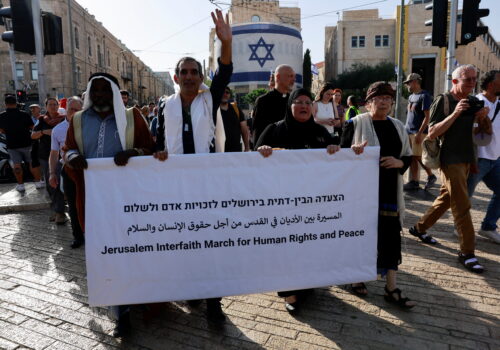
Amid continued regional turmoil, Iraq ended 2025 in a period of relative stability and security, avoiding being drawn into the Twelve Day War between Israel, Iran, and the United States—and holding successful parliamentary elections. The challenge for Iraqi political leaders in 2026 will not only be to maintain this unprecedented stability, but also to navigate Trump administration pressure to rein in Iran-aligned militias and avoid being pulled into the broader US maximum pressure campaign against Iran. Iraq is also likely to continue its efforts to appeal to the Trump administration through investment, pitching new energy deals to US companies, but it is not yet clear whether these efforts will be successful.
With Iranian influence in the region at an all-time low, Iraqi leaders have an opportunity to forge a more independent foreign policy that prioritizes continued partnership with the United States and differentiates Iraqi from Iranian interests. Core to this effort will be progress toward Iraq’s regional integration and strengthened political and economic ties to the Gulf and other regional partners such as Jordan and Egypt. In the face of Iraqi efforts to challenge the militias and strengthen partnerships with the United States and the Gulf, 2026 may bring attempts by Iran and Iran-aligned militias to act as spoilers who obstruct Iraq’s progress and imperil Iraq’s stability. Iraq’s next prime minister has an opportunity to transform the country.
The next year will be critical in determining whether the Iraqi government can seize the opportunity and whether the United States and other regional partners will support it in doing so.
Victoria J. Taylor is the director of the Iraq Initiative in the Atlantic Council’s Middle East program.
Related reading
A political transition in Iran approaches
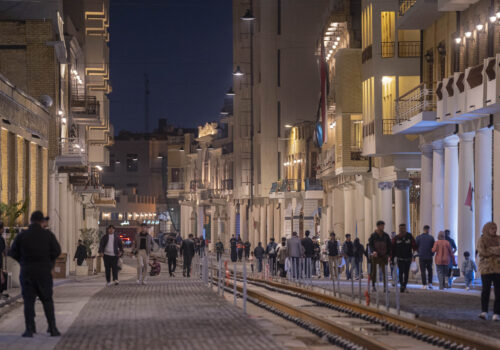
Political transitions are hard to predict, but there is no doubt Iran is approaching one. With a frail, unpopular, eighty-six-year-old Supreme Leader Ayatollah Ali Khamenei nearing his actuarial and conceivably political limits, 2026 could be the year.
Any transition has the potential to unleash dramatic changes in Iran, across the region, and in relations with the United States. The potential positive implications of new Iranian leadership and a change of approach are massive: relief from brutal suppression for the Iranian people, new possibilities in nuclear diplomacy and toward normalization with the United States, broadened detente with Iran’s Arab neighbors, and an end to the arming of violent terrorist proxies across the region that have squandered hundreds of billions of dollars of Iranian resources—driven by an ideological crusade to destroy Israel—while the Iranian people endure manmade water and electricity shortages. The beneficial effects would be felt from Iran to Lebanon to Gaza to Yemen and beyond.
None of this is preordained or automatic. A transition could cement a new generation of the Islamic Republic’s clerical leadership, bring to power an even more hardline Islamic Revolutionary Guard Corps, or devolve into chaos and civil war with massively destabilizing effects. What Washington should engage in through 2026 is transition planning—not in order to cause a regime change, which must be left to the Iranian people, but to be prepared to provide support for the Iranian people, resources and expertise, potential sanctions relief, and coordination with international partners to assist in steering a transition when it comes toward one of the better possible outcomes. The United States has moved smartly in 2025 to support a stable Syrian transition, and while the jury is still out on long-term stability there, there has been significant progress. An even more consequential transition awaits in Iran. Washington must not be caught flat-footed.
Daniel B. Shapiro is a distinguished fellow with the Atlantic Council’s Scowcroft Middle East Security Initiative.
Will the Israel-Iran cease-fire hold?
Following the Twelve Day War in June, Iran retains large quantities of highly enriched uranium and advanced centrifuges, without oversight by the International Atomic Energy Agency. At the same time, while Iran’s missile program and support for nonstate proxies were diminished, Iran is rebuilding its capabilities and still threatens US, Israeli, and regional security.
After initially declaring Iran’s nuclear program obliterated, Trump has also repeatedly called for resumed negotiations and a new nuclear deal with Tehran. Although still nominally implementing the US “maximum pressure” campaign, Trump also made a high-profile gesture by inviting Iranian President Masoud Pezeshkian to the Gaza Peace Summit in October.
For its part, Iran appears to remain in a largely reactionary posture. It is attempting to rebuild its missile and defense capabilities but is not currently enriching uranium or advancing its nuclear program (that we know of). Foreign Minister Abbas Araghchi says Iran is open to talks at the United Nations, but also foolishly rejected the Cairo invitation. Israeli Prime Minister Benjamin Netanyahu has responded by reminding the world of the Iranian missile threat and increasingly targeting Iranian proxies. There is no written cease-fire in place, and continued peace is partially reliant on Trump holding Netanyahu back. As Israeli elections approach, will Trump’s “complete and total ceasefire” hold? Will Iran do something that gives the Israeli’s an excuse or opportunity to re-engage Iran militarily? Or will Iran give negotiations another chance? Either way, 2026 should make for a pivotal year for Iran.
Nathanael Swanson is a resident senior fellow and director of the Iran Strategy Project at the Atlantic Council’s Scowcroft Middle East Security Initiative.
Related reading
A duality of possible trajectories
2026 is a year of potential opportunity—and potential peril—for the Middle East.
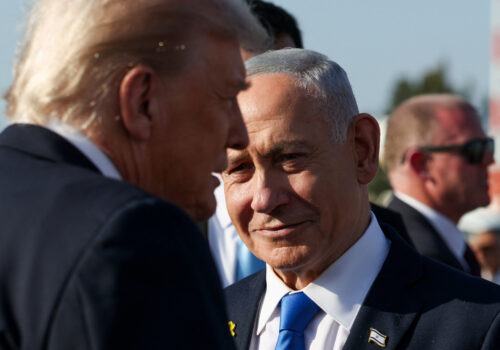
Gulf states are determined to advance their political, economic, and security autonomy. Syria and Lebanon could either emerge as models of forward movement from instability or revert to sectarian strife and conflict. Pockets of normalcy could continue to advance in Iraq as exists today in parts of Baghdad and other cities, or it could descend back into political stasis and conflict. Israel could find itself more secure in the region by continuing to undertake kinetic strikes, or it could choose the path of less violence by completing meaningful security and cease-fire agreements with its neighbors. Choose the wrong option, however, and Israel could find itself more vulnerable to threats on its borders, not less. Palestinians could find space to grieve and begin to rebuild after two years of devastation—or face continued violence from West Bank settlers and a renewed war in Gaza, as well as some intra-Palestinian conflict. Jordan and Egypt will continue to muddle through their economic challenges and associated domestic social and political pressures, or this will be the year that they face collapse, and the world will look back and say the warning signs were there, we just missed them.
Most of the region has an opportunity at this moment in which it can seize and advance its desire for greater autonomy, global influence, and further integration. The Middle East can envision a calmer, more prosperous region driven by technological opportunity across sectors, including by leveraging artificial intelligence and US-exported advanced chips, while taking advantage of the economic integration pathways that are being developed, such as IMEC.
But the duality of possible trajectories laid out above reflects that in the Middle East, more often than not, positive opportunities are interrupted by internal or exogenous factors that regional capitals have to manage in a manner they did not expect. How the region grapples with the enduring and emerging risks of 2026 will determine whether it can prosper as a whole or whether only some will thrive while many continue to struggle. But if those regional countries that are advancing economically, politically, socially, and in their security only look inwards and do not seek to stabilize their neighbors facing social and physical insecurity, they will risk the latter impeding their development, as well. And then 2026 will once again be a year of missed regional opportunities instead of progress.
Jonathan Panikoff is the director of the Scowcroft Middle East Security Initiative at the Atlantic Council’s Middle East programs.
Related Reading
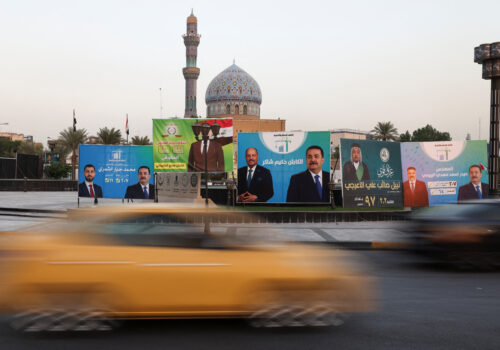

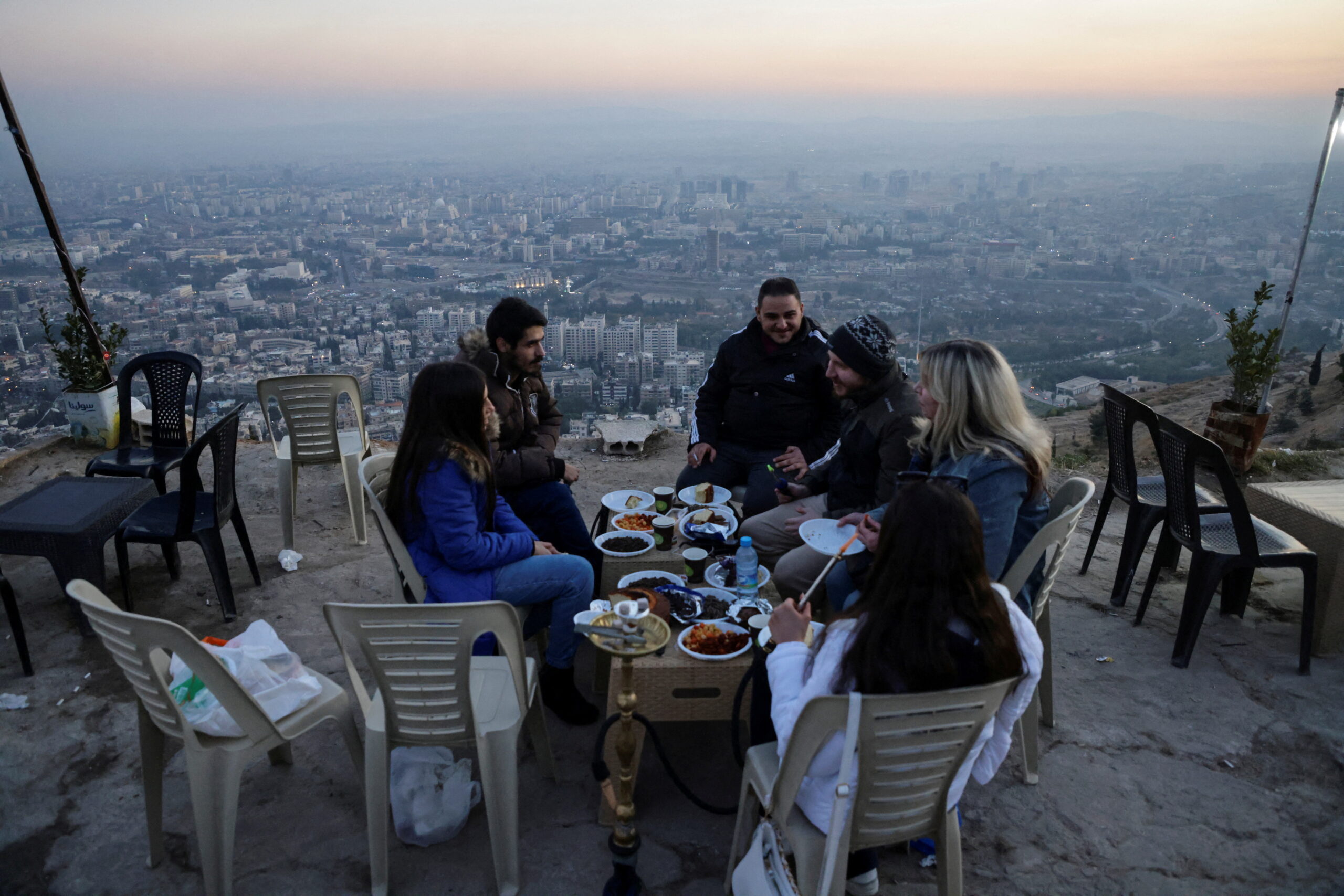
Image: People visit Mount Qasioun, overlooking the Syrian capital, which had been closed to visitors for almost fourteen years under the rule of ousted President Bashar al-Assad, and has since become crowded with visitors following the fall of his regime, in Damascus, Syria, January 7, 2025. REUTERS/Khalil Ashawi