Ukrainian President Volodymyr Zelenskyy is once again facing pressure to hold wartime elections after US President Donald Trump accused the Ukrainian leader of using Russia’s invasion to postpone a vote and suggested it was now time for the country to go to the polls. Zelenskyy has responded to Trump’s recent comments by expressing his readiness to organize elections in the next two to three months, while calling on Ukraine’s Western partners to play a role in preparations. “I’m asking now, and I’m stating this openly, for the US to help me, perhaps together with our European colleagues, to ensure security for the elections,” he said on December 10.
Zelenskyy’s commitment to democratic principles is commendable, but he should nevertheless resist international pressure to rush into wartime elections. Attempting to hold a national vote at a time when the country is under relentless Russian bombardment and while millions of Ukrainians remain displaced by the war would not be a demonstration of democracy; it would be a strategic blunder that could hand a propaganda victory to Moscow.
Stay updated
As the world watches the Russian invasion of Ukraine unfold, UkraineAlert delivers the best Atlantic Council expert insight and analysis on Ukraine twice a week directly to your inbox.
The issue of potential wartime elections in Ukraine has been raised on numerous occasions since spring 2024 when Zelenskyy’s presidential term officially ended, with Russia frequently referencing the absence of elections in Ukraine as part of efforts to undermine the legitimacy of the current Ukrainian authorities. These Kremlin claims of illegitimacy are inaccurate. The Ukrainian Constitution specifically forbids elections while martial law is in place, which has been the case in Ukraine since the start of Russia’s full-scale invasion in February 2022.
This constitutional barrier to wartime elections is not a mere legal loophole or a convenient excuse. It is a foundational safeguard designed to ensure the continuity of governance during times of national crisis. Of course, it is possible to argue that the relevant legislation could be revised. But any attempt to change the Ukrainian Constitution would risk a constitutional crisis in the middle of a major war. It would divert the attention of Ukraine’s parliament, the country’s judicial system, and the public away from the war effort, with obvious potential for political infighting and domestic instability.
The constitutional arguments against a wartime election are convincing, but the main reason why Ukraine cannot go to the polls while the Russian invasion continues is because any such vote would fall far short of recognized democratic standards in terms of freedom, fairness, and representation. A truly democratic election requires a level playing field, security for participants, and the ability for all eligible citizens to cast their ballots. None of these conditions can be met in today’s Ukraine.
Eurasia Center events
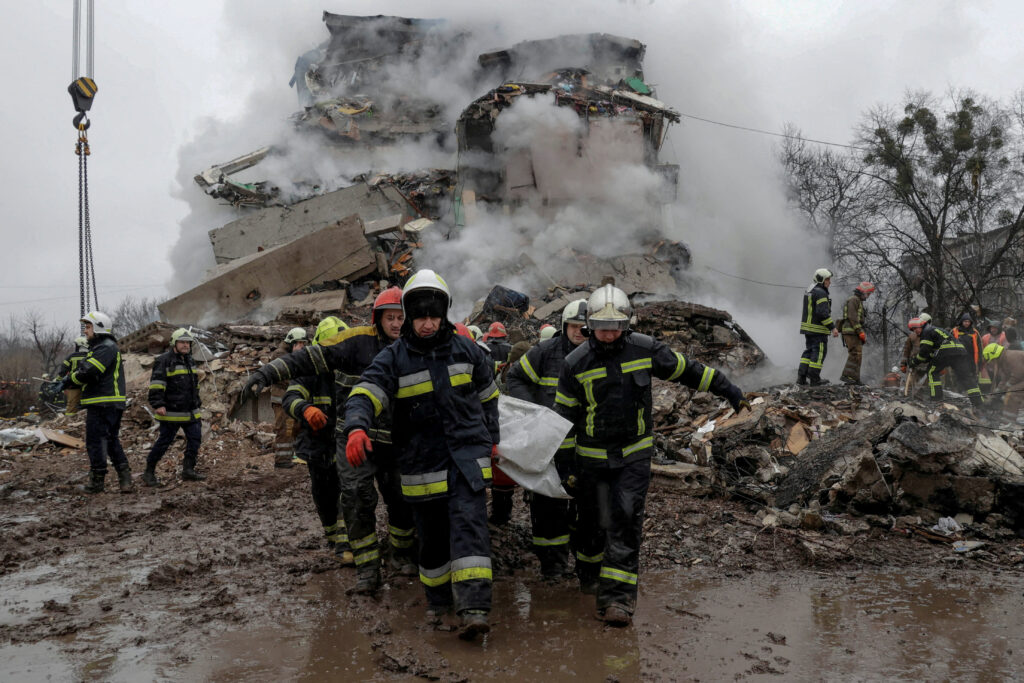
Security problems alone should be enough to rule out the idea of a wartime ballot. With Russia bombing civilian targets across Ukraine on a daily basis, candidates would be unable to stage any public campaign gatherings in safety. Likewise, polling stations would become high-value targets for Russian drones and missiles, creating unacceptable risks for thousands of election workers and millions of voters.
The logistical challenges of a wartime vote would be similarly overwhelming. Millions of Ukrainians are currently located abroad as refugees in the European Union and elsewhere. Millions more are internally displaced inside Ukraine. This creates huge issues for voter registries, which would need to be completely revised and updated. Furthermore, the voices of Ukrainian citizens living under Russian occupation would be silenced entirely, disenfranchising a large portion of the overall electorate and further undermining the credibility of any vote.
If Zelenskyy chooses to proceed with a wartime election, the potential for domestic political destabilization would be huge. An election held under wartime conditions would inevitably be a flawed process, with millions unable to vote and security restrictions placing limits on meaningful campaigning opportunities. Regardless of the outcome, Russia would seize on these flaws in order to declare the results illegitimate, sow internal discord, and undermine the credibility of the Ukrainian government in the eyes of the international community. The resulting instability could prove a far greater threat to Ukraine’s survival than any perceived democratic deficit.
According to his country’s constitution, Zelenskyy is the legally elected leader of Ukraine and will remain so until conditions in the country allow for the relaxation of martial law restrictions and the organization of genuinely free and fair elections. This will only become possible once a comprehensive and verifiable ceasefire is in place. Until the bombs stop falling, the Ukrainian government’s priority must remain the defense of the nation.
Ukrainians are fighting to defend their democracy against Russian authoritarianism, but they are also in no rush to hold a wartime vote. Instead, opinion polls consistently demonstrate that most Ukrainians oppose the idea of any elections while active hostilities continue. When the right moment arrives, Ukrainians will be the first to demand their democratic rights and will insist on new elections. However, they understand that the right moment has not yet arrived.
Yuriy Boyechko is CEO of Hope For Ukraine.
Further reading

The views expressed in UkraineAlert are solely those of the authors and do not necessarily reflect the views of the Atlantic Council, its staff, or its supporters.

The Eurasia Center’s mission is to enhance transatlantic cooperation in promoting stability, democratic values, and prosperity in Eurasia, from Eastern Europe and Turkey in the West to the Caucasus, Russia, and Central Asia in the East.
Follow us on social media
and support our work
Image: Rescuers carry the body of a person found under debris at the site of an apartment building hit by a Russian missile strike, amid Russia's attack on Ukraine, in Poltava, Ukraine. February 1, 2025. (REUTERS/Sofiia Gatilova)