

Featured analysis

Latest analysis

Econographics

Nov 8, 2022

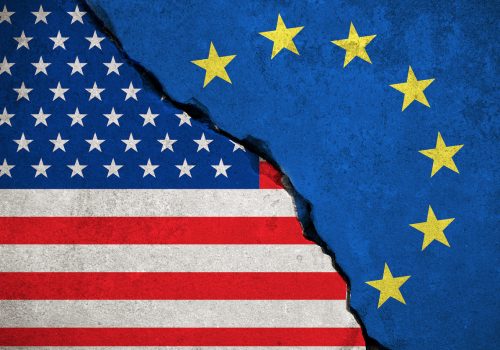
What US outbound investment screening means for Transatlantic relations

By Elmar Hellendoorn

Whether the EU follows through with new outbound investment controls and what those might look like will also depend on the evolution of American national security policy and transatlantic diplomacy.

China
Economy & Business

Econographics

Oct 31, 2022

The global infrastructure financing gap: Where sovereign wealth funds and pension funds can play a role

By Amin Mohseni-Cheraghlou and Naomi Aladekoba

Having more than $65 trillion in assets, institutional investors such as SWFs and pension funds are uniquely positioned to bridge low-income economies’ infrastructure financing gap in the coming decades. The Bretton Woods Institutions (BWI) can encourage investment in developing countries’ infrastructure through providing various guarantee and insurance mechanisms, thereby reducing risk for private investors.

Economy & Business
Inclusive Growth

EconoGraphics

Oct 28, 2022

How the US compares to the world on unionization

By Jeff Goldstein

Explore how US unionization rates compare to other economies and what that means for US labor markets going forward.

Economy & Business
Future of Work

EconoGraphics

Oct 24, 2022

Dual circulation in China: A progress report

By Hung Tran

Faced with a challenging international environment and hostile efforts by the United States to restrict China’s access to high technology and its products, China has adopted a dual circulation strategy to make its economy more balanced and resilient. Dual circulation means reducing the role of foreign trade in driving the Chinese economy while improving the quality of trade.

China
Economy & Business

Econographics

Oct 12, 2022

Companies on the front line: Trends in overseas Chinese listings

By Maia Nikoladze

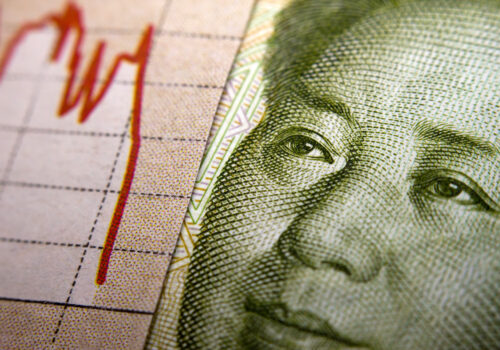
Delisting more than 150 Chinese companies is a bigger hit than Chinese private sector can take at this time. However, we don’t yet know whether Beijing will follow through on its side of the audit-sharing deal. 

China
Economy & Business

Econographics

Sep 8, 2022

Global Sanctions Dashboard: Sanctioning soars across the board

By Charles Lichfield, Maia Nikoladze, and Castellum.AI

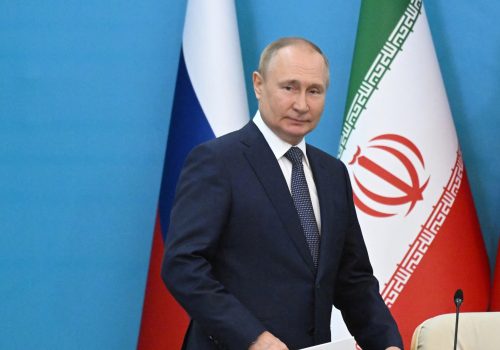
Iran nuclear deal negotiations; Russia’s domestic sanctions against terrorism and extremism; Latin America drug trafficking sanctions.

Economic Sanctions
Europe & Eurasia

Econographics

Sep 8, 2022

Zambia: A template for debt restructuring?

By Hung Tran

Zambia shows that progress can be made to render the Common Framework more workable. However, more needs to be done to refine a comprehensive, efficient, and effective sovereign debt restructuring procedure.

Africa
China
Dollar Currency Exchange rate

Econographics

Sep 7, 2022

Don’t expect a Plaza Accord 2.0 to reverse the dollar’s surge

By Mrugank Bhusari

Neither China, nor the original participants of the Plaza Accord, are willing to engage in such market intervention to return a soaring dollar to normal levels.

China
Economy & Business

Econographics

Aug 25, 2022

Delisting Chinese companies from the New York Stock Exchange: Signs of decoupling

By Hung Tran

China’s decision to delist five companies from the NYSE is motivated by its unwillingness to comply with US regulations.

China
Economy & Business

Econographics

Aug 24, 2022

Delayed but not defeated: The road ahead for a global minimum corporate tax

By Jeff Goldstein

Although the implementation process has been rocky and delayed, the incentives and motivation to move forward do exist, and the global minimum corporate tax is likely to advance.

Economy & Business
European Union

Content

EconoGraphics

Jun 20, 2017

Balancing Act

By Samuel Weitzman

On June 12, in US President Donald J. Trump’s first full cabinet meeting, the new US Trade Representative Robert Lighthizer briefly encapsulated the young administration’s philosophy on international trade: “Deficits do matter, and ours are coming down.” This is not a particularly partisan view; Trump’s opponent in the 2016 presidential election, former Secretary of State Hillary Clinton, spoke out against the Trans-Pacific Partnership (TPP) during her campaign despite supporting it previously.

Economy & Business
Trade and tariffs

EconoGraphics

Jun 9, 2017

A Vital Foreign Policy Tool

By Ole Moehr

This is the first EconoGraphic as part of our recently launched Economic Sanctions Initiative. The initiative aims to promote dialogue between the public and the private sector to investigate how to improve the design and implementation process of economic sanctions.

Economic Sanctions
Economy & Business

EconoGraphics

Apr 19, 2017

The European Stability Mechanism

By Lu Ding & Ole Moehr

The global economic and financial crisis, which originated in the United States in 2008, ultimately triggered a sovereign debt crisis in Europe in 2010. As a result of sky high debts, economies lacking in competitiveness, and over lenient banking regulations, the credit ratings of the Eurozone members Cyprus, Greece, Ireland, Portugal, and Spain plummeted. These countries began facing prohibitively high interest rates when they attempted to borrow from international credit markets.

Economy & Business
European Union

EconoGraphics

Mar 17, 2017

The United States Needs Europe And Vice Versa (Pt. 3)

By Lu Ding & Ole Moehr

This EconoGraphic is the final edition of a three-part series on why the United States and Europe need each other. The series highlights excerpts from the EuroGrowth Task Force’s inaugural report on European economic growth and why it matters for US prosperity.

Economy & Business
Europe & Eurasia

EconoGraphics

Mar 7, 2017

The United States Needs Europe And Vice Versa (Pt. 2)

By Lu Ding & Ole Moehr

US economic ties with the European Union (27) generate the largest global bilateral trade flows, worth an estimated $2.4 billion per day. The massive volume of US-EU (27) bilateral trade promotes prosperity on both sides of the Atlantic.

Economy & Business
Europe & Eurasia

EconoGraphics

Feb 22, 2017

The United States Needs Europe and Vice-Versa

By Lu Ding & Ole Moehr

The United States is the world’s largest recipient of global foreign direct investment (FDI). On a current-cost basis, the US FDI stock was more than three times larger than that of the second largest destination country in 2014, the most recent year from which statistics are available. Despite the current fragile global economy and great political uncertainty, foreign investment in the United States remains strong.

Economy & Business
European Union

EconoGraphics

Dec 12, 2016

Refer-Ending Renzi’s Government

By Filippos Letsas

On December 4, Italian voters rejected former Prime Minister Renzi’s constitutional reform referendum. The result of the referendum renewed concerns about the economic recovery in Italy, stability of the Euro, broader European economic integration, and rising populism across Europe. In the week following the referendum, global markets have focused their attention on the ailing Italian banking sector.

Economy & Business
Europe & Eurasia

EconoGraphics

Nov 29, 2016

The United States Needs China and Vice-Versa

By Filippos Letsas

Over the last decade, China’s large holdings of US debt have helped the Bank of China keep the value of the renminbi artificially low. This strengthened China’s competitive position in the global markets, allowing for cheaper Chinese exports and contributed significantly to China’s large trade surplus, which now accounts for about half of the total US trade deficit.

China
Economy & Business

EconoGraphics

Oct 25, 2016

CETA: Why “Comprehensive” Matters

By Filippos Letsas

On October 14th, the regional parliament of Wallonia, a French-speaking region of 3.6 million people in Belgium, voted to block the Comprehensive Economic and Trade Agreement (CETA), a proposed trade agreement between the European Union (EU) and Canada, which has been negotiated for over 7 years.

Economy & Business
European Union

EconoGraphics

Oct 7, 2016

Europe′s Fiscal Burden in Focus

By Filippos Letsas

The European Union’s (EU) Stability and Growth Pact requires Eurozone countries to annually lay out their fiscal plans for the following three years. The European Commission (EC) then compares the member states’ reports with its own projections and those produced by independent bodies, such as the International Monetary Fund (IMF), to evaluate whether the member states are on track to reach their Medium-Term Budgetary Objectives (MTOs).

Economy & Business
European Union