Featured analysis

Latest analysis

EconoGraphics

Apr 21, 2015

Exit, or Voice?

By Global Business & Economics

In March, the UK, Germany, Italy, and France decided to join the China-led Asian Infrastructure Investment Bank (AIIB), shocking the Obama administration.

Brazil China

EconoGraphics

Apr 14, 2015

Who is Investing Abroad?

By Global Business & Economics

While the US still leads the world in outflowing Foreign Direct Investment (FDI), the emerging markets are catching up quickly. Chinese outflowing FDI, in particular has grown tremendously: since 2005, it increased more than 30-fold in 8 years from $5 billion to $166 billion. While initial Chinese foreign investments focused on natural resource industries, over time the investments have spread to diverse industries like agriculture, manufacturing, and professional services. BRIC FDIs are emerging as key growth drivers for low income countries, improving their business environment, building infrastructure, creating jobs, and adding much-needed revenue to government coffers.

China Russia

EconoGraphics

Apr 7, 2015

Is Europe still vulnerable to a Greek default?

By Global Business & Economics Program

Private banks throughout Europe have significantly reduced their exposure to Greek debt (bank, public, and non-bank private sector debt) over the last five years. After Greece came under market pressure and eventually obtained ECB and IMF financial assistance in 2010, most European banks started to rapidly reduce their exposure to Greece. For instance, between 2010 and 2014 French banks' holdings decreased from $63 billion to $2 billion.

Economy & Business Eurozone

EconoGraphics

Mar 31, 2015

The IMF’s Changing Role in Europe

By Global Business & Economics

The International Monetary Fund's purpose and scope of work have changed since its founding after World War II. Whereas at first the Fund aimed to maintain monetary and exchange-rate stability among its members who were primarily advanced economies, today it faces its first credible challenge to its status as the world's lender of last resort.

Economy & Business Financial Regulation

EconoGraphics

Mar 24, 2015

How Much Does it Cost for Cubans to Access Information?

By Global Business & Economics

When President Obama announced his landmark policy shift towards Cuba, easing the 54-year-old embargo, one of the first companies to announce they would begin operating in Cuba was Netflix. The online video company's decision was surprising, if only because Cuba's internet is one of the slowest in the world.

Americas Cuba

EconoGraphics

Mar 17, 2015

Who Will Finance Public Debt?

By Global Business & Economics Program

Today, the cap on US government spending (or the "debt ceiling") is officially reinstated, and with it, the threat of another clash over the national debt. Policymakers will have a runway of just months before they must decide to lift the cap on borrowing or temporarily allow it to be raised

Brazil China

EconoGraphics

Mar 11, 2015

The Benefits of a Strong Dollar: Where Should You Go on Your Next Vacation?

By Global Business & Economics

There’s never been a better time to be a tourist—as long as you’re paying in dollars. Major currencies worldwide have plunged in value, meaning each US dollar buys more euros and renminbi today than it did one year ago.

Americas Economy & Business

EconoGraphics

Mar 3, 2015

Who Will Collapse First?

By Global Business & Economics

Both the Ukrainian and Russian economies are suffering from recent events. While weak domestic institutions and a fight with insurgents in the country's East plague Ukraine, sanctions and low prices for oil and gas are hurting the Russian economy.

Economy & Business Europe & Eurasia

EconoGraphics

Feb 24, 2015

Is the US Still Leading in Global Trade?

By Global Business & Economics Program

In the last two decades, the Asia Pacific region has signed sixty-five free trade agreements. South America, Eurasia, and Europe combined have signed over one-hundred and fifty agreements. Over the same period, the US has signed twelve agreements.

Americas East Asia

EconoGraphics

Feb 17, 2015

EconoGraphics – EU Energy Dependency

By Global Business & Economics Program

A great part of Europe is highly dependent on Russian energy, which helps to explain many of the concerns Europeans have over the developments in Ukraine.

Economy & Business Energy & Environment

Content

Econographics

Jul 10, 2026

Inside the power struggle over Venezuela’s debt restructuring

By Bart Piasecki

As Venezuela prepares to restructure $240 billion in debt, a high-stakes contest over oil revenues is unfolding—one that could reshape creditor recoveries, US-China competition, and the country’s economic future.

Economy & Business Fiscal and Structural Reform

Econographics

Jul 7, 2026

A weak yen spells trouble for Japan—at home and abroad

By Hung Tran

Japan’s weak yen is not a market anomaly. Structural capital outflows, shifting investment patterns, and dollar strength are keeping pressure on the currency—and creating potential new tensions with Washington.

Economy & Business Japan

EnergySource

Jul 2, 2026

With US sanctions temporarily lifted, is Iranian crude back on the menu?

By Lize de Kruijf, Chloe O’Connor

The US-Iran deal waives sanctions on Iranian oil sales, but Washington will need further steps to meaningfully shift global crude trade and ensure clearer visibility into Iranian oil transactions.

Dollar Dominance Energy & Environment
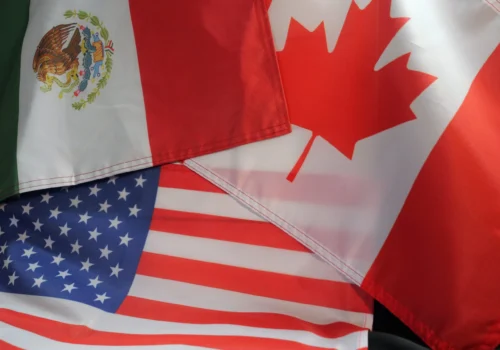
The flags of Canada, the United States, and Mexico

EconoGraphics

Jun 30, 2026

The five stages of a USMCA shakeup

By Madeline Chalecki

While the agreement may survive at the end of negotiations, years of uncertainty, tariffs, and prolonged talks could reshape North American trade.

Americas Economy & Business

Econographics

Jun 24, 2026

As democracies grow old, it becomes harder to adopt sound economic policies

By Martin Mühleisen

By slowing growth and tightening fiscal space, aging in democracies may contribute to an increase in political polarization.

Economy & Business Fiscal and Structural Reform

Econographics

Jun 19, 2026

Central banks can’t afford to keep missing their inflation targets

By Jack Muldoon

While the Iran war explains the sudden rise in inflation, relying on this excuse obscures that there is potentially a long-term problem central banks will need to confront as they manage the long tail of this crisis.

Economy & Business Macroeconomics

Econographics

Jun 18, 2026

For warning signs of the next global financial crisis, watch the activities of both banks and nonbanks

By Hung Tran

The activities that trigger financial crises can be undertaken by any financial institution, including both banks and nonbanks.

Economy & Business

Econographics

Jun 12, 2026

As the US targets Brazil’s payment system, Europe should pay close attention 

By Alisha Chhangani

In its determination on Brazil’s trade practices, the USTR has zeroed in on the instant payment system Pix—raising alarms not only in Brasília but also in Brussels.

Brazil Digital Currencies

Econographics

Jun 11, 2026

What the US can learn from Europe on prediction markets—and vice versa

By Todd Phillips

Prediction markets like Kalshi and Polymarket have surged to billions in trading volume, prompting US investigations into insider trading and manipulation. As Congress weighs new rules, Europe’s crackdown on retail binary options offers a possible—if imperfect—regulatory template.

Economy & Business European Union

Econographics

Jun 4, 2026

The promise and limits of the new G20 template for debt restructuring

By Hung Tran

A new G20 roadmap aims to streamline sovereign debt restructurings. Yet by reducing flexibility for creditors and debtors alike, it could make future debt crises harder to resolve.

Economy & Business International Financial Institutions