Stay updated

Subscribe to our daily newsletter to receive the best expert intelligence on world-changing events


Explore our unique analysis

Content

New Atlanticist

Nov 25, 2013

Agreement a Step Forward

By Jofi Joseph

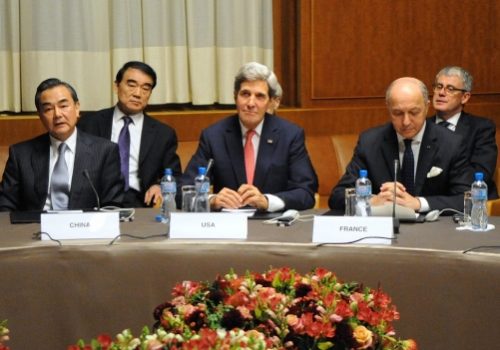
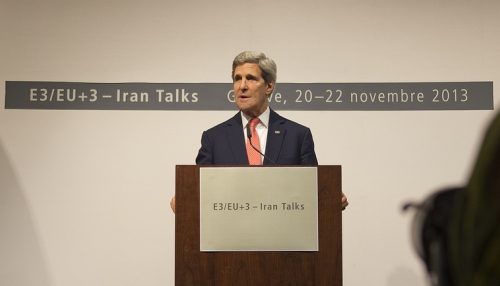
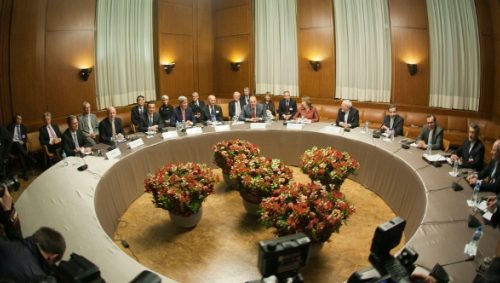
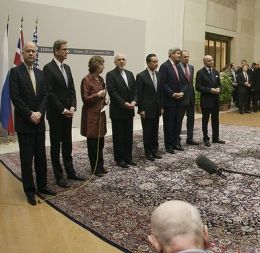
But Still Only a First Step The announcement early Sunday morning in Geneva of an initial agreement between the P5+1 world powers and Iran represents a significant achievement in long-standing efforts to halt the latter’s nuclear program. Much ink has already been spilled debating the merits of this package of confidence-building measures (CBMs), but there […]

Iran

New Atlanticist

Nov 25, 2013

Nuclear Deal is a Win-Win for US, Iran, and Even Israel

By Barbara Slavin

The ink was not dry on the historic Geneva nuclear accord with Iran before Israeli Prime Minister Benjamin Netanyahu denounced it as a “historic mistake” that would allow Iran to cheat and get closer to nuclear weapons. Netanyahu may have been doing Iran a favor. By criticizing the deal so harshly, he will make it easier for […]

Iran

New Atlanticist

Nov 25, 2013

What’s In the Iran Deal?

By US Dept of State

Fact Sheet: First Step Understandings Regarding the Islamic Republic of Iran’s Nuclear Program

Iran

New Atlanticist

Nov 25, 2013

Now for the hard part

By Matthew Kroenig

Early Sunday morning in Geneva, the P5+1 and Iran announced that they had reached an interim deal on Iran’s nuclear program. Many are heralding the agreement as an historic breakthrough, and the deal does indeed buy us time, but it is much too early to declare victory. Indeed, the Iranian nuclear crisis might still very […]

Iran Nuclear Nonproliferation

New Atlanticist

Nov 24, 2013

Iran Nuclear Deal: Three Questions with Ambassador Nick Burns

By Nicholas Burns

Iran agreed to curb its nuclear program on Sunday in exchange for initial sanctions relief. Sounds like good news to many, who say the detente between Tehran and the West could help avoid war in the Middle East. But of course nothing is that easy, and already Israel has called the step a “historic mistake.” Which […]

Iran

New Atlanticist

Nov 23, 2013

Statement By The President On First Step Agreement On Iran’s Nuclear Program

THE PRESIDENT:  Good evening.  Today, the United States — together with our close allies and partners — took an important first step toward a comprehensive solution that addresses our concerns with the Islamic Republic of Iran’s nuclear program. Since I took office, I’ve made clear my determination to prevent Iran from obtaining a nuclear weapon.  […]

Iran

New Atlanticist

Nov 21, 2013

EU Needs to Rethink its Eastern Partnership Policy

By Taras Kuzio

The EU’s Eastern Partnership (EaP), unveiled four years ago to build better neighbourly relations with six former Soviet republics, is in crisis. The EaP was launched by EU members such as Sweden and Poland (with the backing of Britain) keen to promote enlargement into the former USSR. Although with this not possible due to widespread […]

Eastern Europe European Union

New Atlanticist

Nov 21, 2013

Anxiety in the House of Saud

By Rajan Menon

You’d think that Saudi Arabia‘s ruling monarchy would have a lot to be happy about — and you’d be right, in part. The Saudi Kingdom has, barring some exceptions, been remarkably stable. It was left unscathed by the revolutionary wave that demolished longstanding authoritarian regimes from Tunisia to Egypt. The Saudi political system — being consensus-based and […]

Saudi Arabia

New Atlanticist

Nov 20, 2013

US Maritime Power and Disaster Relief

By Derek S. Reveron

As post-typhoon operations in the Philippines illustrate, militaries do more than fight wars. Alongside the horrific photos from Tacloban, there are images of US cargo aircraft, helicopters, and service members delivering relief supplies and rescuing civilians.

Indo-Pacific United States and Canada

New Atlanticist

Nov 20, 2013

Desperately Needed: A New Security Mindset for the Twenty-First Century

By Harlan Ullman

Since George Washington was America’s first commander-in-chief, successive administrations have often been accused of either lacking a strategy or having one that did not work. The major exceptions perhaps were the bipartisan policies of containment and deterrence that ultimately prevailed over the Soviet Union. The debate then focused more on means than on ends.