Content

The future is here

Feb 12, 2021

The post-COVID world this week: The WHO’s vaccine reassurance, a surge in US-China bickering, and the inequity of school closures

By Atlantic Council

What can we expect from a post-COVID world after a pandemic that has reshaped international affairs? A rough education for the world’s young generations.

Coronavirus Politics & Diplomacy

New Atlanticist

Feb 12, 2021

How the US should respond to the coup in Myanmar

By Andrea R. Mihailescu

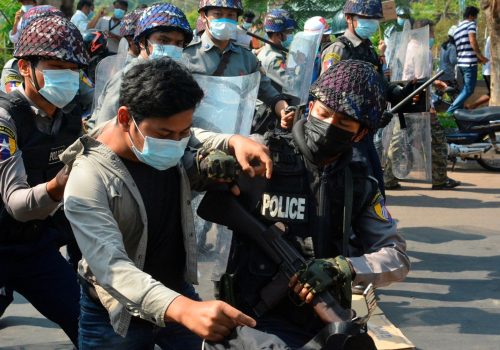
The Biden administration’s announcement that it will freeze one billion dollars of Myanmar government funds held in US banks will squeeze military leaders. But sanctions cannot be the only tool that the United States deploys.

Elections Financial Sanctions and Economic Coercion

EconoGraphics

Feb 12, 2021

Time for transatlantic trade to take off

By Ole Moehr

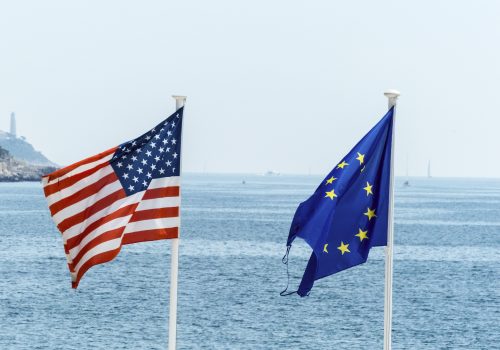
Trade tariffs continue to pose a threat to a transatlantic economy weakened by COVID-19, but there may now be some light at the end of the tunnel. Keen to rebuild transatlantic ties, Washington and Brussels must walk the talk to reach an agreement on aircraft subsidies and move the US-EU trade agenda forward.

European Union Trade and tariffs

EconoGraphics

Feb 12, 2021

Global Sanctions Dashboard: January

By Michael Albanese and Castellum.AI

Growing use of sanctions in foreign policy, Chinese sanctions against US senators, multilateral coordination on the sanctions policy.

China European Union

EnergySource

Feb 12, 2021

As the United States develops advanced reactors, a new fuel supply chain is critical to national security

By Ambassador Thomas Graham, Jr. and Admiral Richard Mies

Over the past five years, the United States has made meaningful progress in the development of advanced nuclear reactor designs critical to keeping the country on the cutting edge of nuclear technology. These positive trends signal a growing need for the Department of Energy to address a key challenge that many reactor developers face as they move toward deployment: the lack of a reliable source of high-assay low-enriched uranium fuel.

Energy & Environment Nuclear Energy

New Atlanticist

Feb 12, 2021

The rebirth of the State Department’s Office of Sanctions Coordination: Guidelines for success

By Daniel Fried, Edward Fishman

While sanctions are increasingly a tool of first resort in US foreign policy, the State Department has lacked a disciplined process for coordinating sanctions policy. But the new Office of Sanctions Coordination is an opportunity to fix this problem.

Economy & Business Financial Sanctions and Economic Coercion

New Atlanticist

Feb 12, 2021

Reboot or repeat? US-Pakistan relations after the Daniel Pearl ruling

By Safiya Ghori-Ahmad

Pakistan was likely hoping for a reset with the new Biden administration, one that could refocus relations on the country’s most pressing issues. But those hopes have been dashed by The Supreme Court of Pakistan's recent decision on the Daniel Pearl case.

International Norms Media

MENASource

Feb 12, 2021

A historic opportunity for peace in Yemen

By Nabeel Khoury

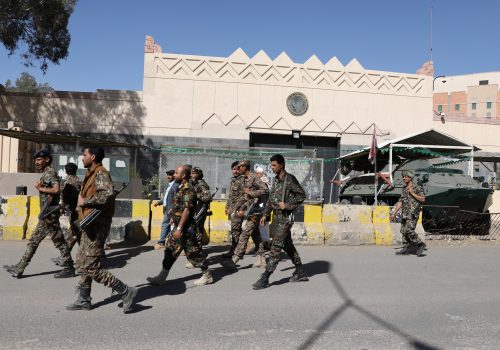
There is a hard and complex road ahead, but the Biden administration has taken a major first step in the right direction.

Politics & Diplomacy Yemen

New Atlanticist

Feb 11, 2021

The 5×5—Looking ahead for the Biden administration after a busy year in cybersecurity

By Simon Handler

It’s been a wild twelve months in the world of cybersecurity since the Atlantic Council’s Cyber Statecraft Initiative launched the 5×5 series. In celebration of the series' one-year anniversary, experts plotted the year ahead.

Cybersecurity Technology & Innovation

UkraineAlert

Feb 11, 2021

Rising EU-Russia tensions are good news for Ukraine

By Oleksiy Goncharenko

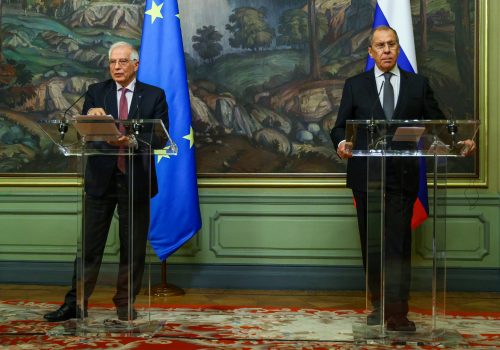
European foreign policy chief Josep Borrell's disastrous recent visit to Moscow has sparked a crisis in Russia-EU relations that could end up being to Ukraine's advantage.

Conflict European Union