Our programs and centers deliver in-depth, highly relevant issue briefs and reports that break new ground, shift opinions, and set agendas on public policy, with a focus on advancing debates by integrating foundational research and analysis with concrete policy solutions.
When major global news breaks, the Atlantic Council’s experts have you covered—delivering their sharpest rapid insight and forward-looking analysis direct to your inbox.
Reports from the front lines of global policy—by the experts shaping it.
A weekly column by Atlantic Council President and CEO Frederick Kempe, Inflection Points focuses on the global challenges facing the United States and how to best address them.
UkraineAlert is a comprehensive online publication that provides regular news and analysis on developments in Ukraine’s politics, economy, civil society, and culture. UkraineAlert sources analysis and commentary from a wide-array of thought-leaders, politicians, experts, and activists from Ukraine and the global community.
MENASource offers the latest news from across the Middle East, combined with commentary by contributors, interviews with emerging players, multi-media content, and independent analysis from fellows and staff.
Econographics provides an in-depth look at trends in the global economy utilizing state-of-the-art data visualization tools.
SouthAsiaSource is the Atlantic Council’s premier publication for South Asian affairs, covering areas such as economics and trade, governance, education, climate and environmental issues, politics and diplomacy, migration, security, and other areas.
SouthAsiaSource Mar 31, 2023
By Shuja Nawaz and other experts
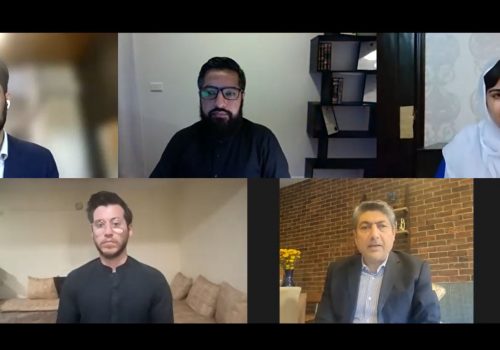
Terrorism is reemerging in Pakistan. To understand how it should respond to this heightened threat, Distinguished Fellow Shuja Nawaz moderated a series of conversations with experts about fighting terrorism and militancy.
SouthAsiaSource Nov 16, 2022
By South Asia Center experts
With Chief of Army Staff General Qamar Javed Bajwa set to retire on November 29, 2022, the appointment of a new army chief prompts a new set of challenges. South Asia Center experts provide their analyses of the situation.
SouthAsiaSource Nov 7, 2022
By Ali Hasanain
As the China-Pakistan Economic Corridor enters its second phase, each side needs to review how they can improve the program’s effectiveness for mutual benefit.
SouthAsiaSource
By Ali Riaz
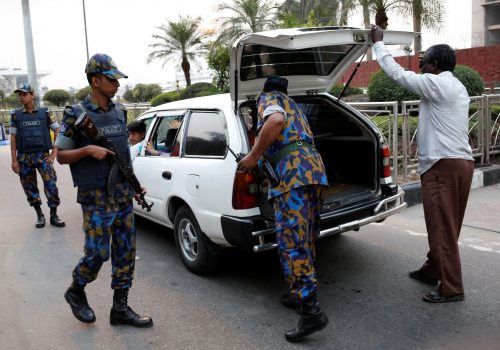
On December 10, the US Treasury Department imposed sanctions on Bangladesh’s elite paramilitary force, the Rapid Action Battalion (RAB), as well as seven of its current and former officers due to serious human rights violations. This has created a stir in Bangladesh.
By Javid Ahmad
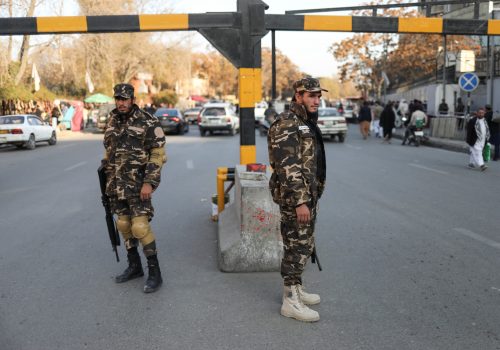
With no regional consensus on the way forward, the mixed dangers of Afghanistan morphing into another Somalia, or breaking into a loose confederacy of statelets like the former Yugoslavia, or becoming the next drug-replete Medellin is not a distant possibility.
By Uzair Younus
On Wednesday, December 8, journalist Kamran Yousaf broke the news that Pakistan was going to “skip the US summit on democracy.” There are three key reasons for why this decision is a mistake.
By Syed Ali Zia Jaffery
Pakistan’s foreign policy is a subject that has long enchanted scholars and practitioners alike, not least because of the country’s pivotal strategic location. Islamabad’s nuclear weapons, its complicated relations with New Delhi, and its growing strategic engagements with Beijing mean that it will continue to garner global attention.
By Atlantic Council
On Monday, November 22, 2021 the International Monetary Fund (IMF) and Pakistan reached a staff-level agreement to complete the sixth review under the $6 billion Extended Fund Facility, funding that has been stalled since April due to issues over the required reforms. Considering Pakistan’s historical struggles with currency devaluation, high inflation, dwindling foreign reserves, and more, completion of the review would make available 750 million in IMF special drawing rights, equivalent to $1 billion that would come as welcome relief. Below, South Asia Center experts share their analysis.
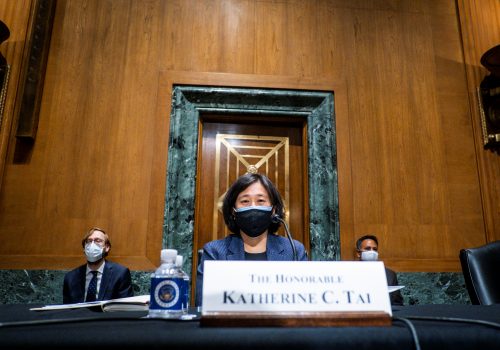
USTR Katherine Tai is set to visit India on a two-day visit from November 22 for talks with Commerce Minister Piyush Goyal, particularly to reconvene the Trade Policy Forum dialogues after a four year gap. The US-India trade talks are the Biden administration’s first serious stab at remedying trade tensions.
By Nazir Ahmad Mir
The August 2021 withdrawal of the United States from Afghanistan has yet again exposed the fragility of Pakistan-US relations. Over the growing—and allegedly dubious—role of Pakistan in its commitment to the War on Terror, increasing concerns are being expressed in the United States about the nature of its relations with Islamabad.
By Megan Goyette and Emily Carll
Governments must re-examine their climate finance policies to ensure that funds are directed to and advised by those who know the on-the-ground truth, rather than others who will be drawn to invest in climate buzzwords such as renewables and technological saviors.
Interview
By Fariba Pajooh
Barna Karimi, former Ambassador of Afghanistan to Canada, joins Fariba Pajooh for an interview to discuss the fall of Kabul, the former Afghan government, the Afghan National Security and Defense Forces, and more.
By Omar Samad
Ambassador Omar Samad speaks with four Afghans, two of whom are still in Afghanistan, to discuss events leading to the fall of Kabul, the transition that is underway, and how each speaker is coping with new realities as Afghans facing grave humanitarian challenges are now in survival mode.
If refreshing the page doesn't resolve the issue you could try clearing the sites browser cache.