Content

Report

Jul 14, 2016

Oil & gas in Brazil: A new silver lining?

By Décio Oddone

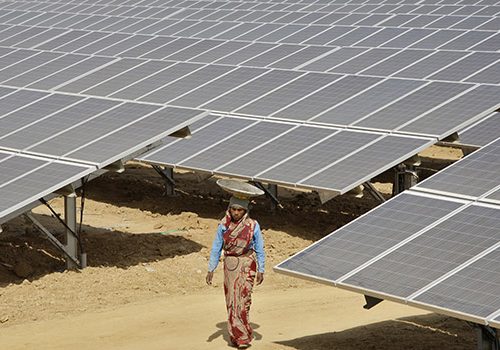
Transformations in Brazil's energy sector could be critical to rebooting the broader economy. Today, with state-owned Petrobras still reeling from political scandal, one development welcomed by investors is a bill gaining steam in Congress to open offshore oil discoveries to greater private investment. Is this the beginning of more changes to come?

Americas Brazil

Report

Jun 27, 2016

Frozen Conflicts: A Tool Kit for US Policymakers

By Agnia Grigas

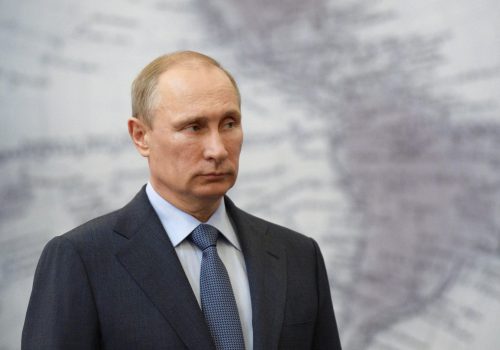
“Since the 1990s, a number of separatist movements and conflicts have challenged the borders of the states of the former Soviet Union and created quasi-independent territories under Russian influence and control,” states Agnia Grigas, a senior nonresident fellow at the Atlantic Council’s Dinu Patriciu Eurasia Center, in the opening of her new report, Frozen Conflicts: A […]

Conflict Crisis Management

Report

Jun 23, 2016

A foundational proposal for the next administration

By Chester A. Crocker, Daniel Levin, David C. Miller, Jr. and Thomas R. Pickering with Foreword by Brent Scowcroft and Jason T. Kirby, Chief of Staff

This foundational report serves as a point of departure for the next administration. It contains the essential elements for building the most effective national security structure in the small window between today and the first hundred days of the next administration.

Security & Defense United States and Canada

Atlantic Council Strategy Paper Series

Jun 17, 2016

Toward a new national security space strategy: time for a strategic rebalancing

By Theresa Hitchens and Joan Johnson-Freese

There are growing risks and threats to US satellites, civilian and military alike, and challenges to stated US goals in space. The question for the new administration, however, is whether hegemonic means to address those challenges are likely to achieve US goals.

Space Space Security

Report

Jun 16, 2016

Restoring the power and purpose of the NATO alliance

By Ambassador (Ret.) R. Nicholas Burns and General James L. Jones, Jr., USMC (Ret.)

As NATO leaders prepare to meet in Warsaw this July, the Alliance faces the greatest threats to peace and security in Europe since the end of the Cold War. The most pressing, fundamental challenges include a revanchist Russia, eroding stability in the greater Middle East, a weakened European Union, and uncertain American and European leadership. […]

Report

Jun 14, 2016

The economic decline of Egypt after the 2011 uprising

By Mohsin Khan and Elissa Miller

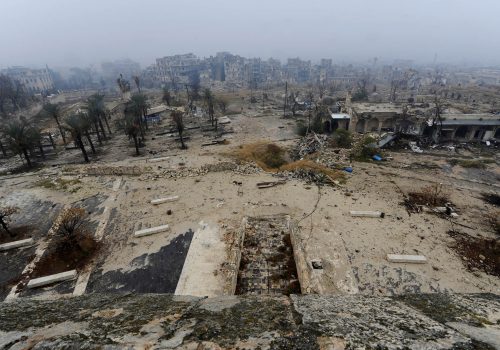
Five years after the 2011 revolution, Egypt’s economy is floundering and remains far from recovery. Successive Egyptian governments have struggled to develop a vision for a new economic model for Egypt, while simultaneously implementing populist policies to appease the immediate demand of the public. In “The Economic Decline of Egypt after the 2011 Uprising,” authors […]

Economy & Business North Africa

Report

Jun 10, 2016

Spotlight Peru: Pedro Pablo Kuczynski’s First One Hundred Days

By Carmen Muñoz

After a historic neck and neck race, the final results are now in: Peruvians have elected 77-year-old economist Pedro Pablo Kuczynski (PPK) as president. In office, PPK will have to cope with the fact that Fuerza Popular, his opponent Keiko Fujimori’s party, won an absolute majority in Congress, putting into question his ability to easily […]

Bremain vs Brexit

Jun 6, 2016

To Brexit or to Bremain? That is the Question

By Nauro Ferreira Campos and Fabrizio Coricelli

With the impending Brexit referendum on June 23, economists must anticipate the ramifications of the United Kingdom (UK) leaving the European Union (EU). This is the first time the voluntary integration of the EU has been threatened, and creates a distressing existential question: is EU membership valuable enough? In the brief, “To Brexit or Bremain? […]

Economy & Business Elections

Atlantic Council Strategy Paper Series

Jun 2, 2016

Shape, steer, and sustain: a US strategy for the new global economic order

By Robert D. Hormats

Ten years ago, most observers predicted a period of smooth sailing for the world economy. Today, the world looks very different. To better deal with this new global economic environment, the United States requires a new strategy for the twenty-first century. That strategy should enable the country to shape, steer, and sustain a new global economic order that accomplishes several key objectives underpinning prosperity and stability for greater numbers of Americans.

China Economy & Business

Report

Jun 1, 2016

A transatlantic strategy for a democratic Tunisia

By Frances G. Burwell, Amy Hawthorne, Karim Mezran, and Elissa Miller

Five years after Tunisia’s revolution, which ousted longtime authoritarian ruler Zine El Abidine Ben Ali and put the country on the path towards nascent democracy, democratic and economic reforms have stalled. Following the revolution, the United States, the European Union (EU), and EU member states—namely France, Germany, and the United Kingdom—substantially boosted assistance to Tunisia. […]

Democratic Transitions North Africa