In-depth research and reports

Our programs and centers deliver relevant, policy-focused research that matters to inform debate and action. Our focus is always on moving debate forward, integrating analysis with active, relevant conclusions throughout our published work.

Report

Dec 7, 2016

Eritrea’s economy: Ideology and opportunity

By Seth Kaplan

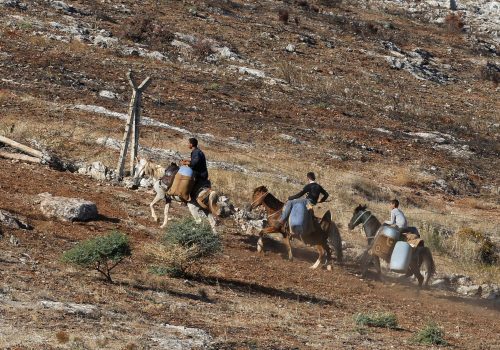
Eritrea is often in the news for all the wrong reasons: its high rates of migration to Europe (it has sent more refugees to Europe in recent years than any other African nation), its conflicts with neighboring Ethiopia and Djibouti, and controversy over its mandatory and indefinite national service conscription program. Human rights activists, in […]

Africa East Africa

Report

Dec 6, 2016

Evaluating Western Sanctions on Russia

By Sergey Aleksashenko

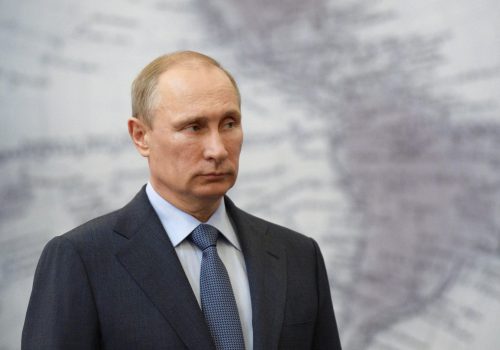
It has been more than two years since the European Union (EU) and the United States imposed economic sanctions on Russia for its aggression in Ukraine. For some of the measures that is time enough to evaluate effectiveness. “The sanctions’ greatest achievement is that they have been an important demonstration of transatlantic unity. Still, there […]

Conflict Defense Policy

Atlantic Council Strategy Paper Series

Dec 6, 2016

A measured US strategy for the new Africa

By Dr. J. Peter Pham

Africa’s story is increasingly one of economic dynamism that is driven, in part, by political reform and improvements in governance. But, there are also very real security, humanitarian, and developmental challenges that remain to be confronted. The United States has a stake in helping to tackle these challenges, not least because it is in its own national interest to do so.

Africa East Africa

Report

Dec 1, 2016

Latin America and the Caribbean 2030: future scenarios

By Jason Marczak and Peter Engelke

A new Atlantic Council–Inter-American Development Bank (IDB) report lays out six scenarios for Latin America and the Caribbean in 2030, underscoring how greater integration and better governance hold the key to greater prosperity.

Democratic Transitions Economy & Business
Demographic Dividends - Img

Report

Nov 30, 2016

Middle East Strategy Task Force: Final report of the co-chairs

By Madeleine K. Albright and Stephen J. Hadley

The final report of Middle East Strategy Task Force Co-Chairs Madeleine K. Albright and Stephen J. Hadley proposes nothing short of a paradigm shift in how the international community and the Middle East interact.

Middle East Resilience & Society

Report

Nov 21, 2016

Middle East Strategy Task Force: Politics, governance, and state-society relations

By Tamara Cofman Wittes

Investing in sustainable governance is important for the world and for the rising generation of young Arabs, who can either become a force for tremendous progress or a generation lost to violence and despair.

Civil Society Political Reform

Issue Brief

Nov 21, 2016

Broken embraces: is Central Europe falling out of love with the West?

By Jeffrey Gedmin, Simona Kordosova

Throughout much of the 1990s, progress was the order of the day. NATO enlargement under the Clinton administration was part of a broader global strategy, presenting democratic and entrepreneurial opportunity. This process was coupled with the prospect of new cooperation with Russia to create an undivided, free, and prosperous Europe. A decade and a half […]

Central Europe

Issue Brief

Nov 21, 2016

Broken embraces: is Central Europe falling out of love with the West?

By Jeffrey Gedmin and Simona Kordosova Lightfoot

Throughout much of the 1990s, progress was the order of the day. NATO enlargement under the Clinton administration was part of a broader global strategy, presenting democratic and entrepreneurial opportunity. This process was coupled with the prospect of new cooperation with Russia to create an undivided, free, and prosperous Europe. A decade and a half […]

Central Europe

Report

Nov 17, 2016

A path to US leadership in the Asia-Pacific

By Olin Wethington and Robert A. Manning


Australia China

Report

Nov 15, 2016

The Kremlin’s Trojan Horses

By Alina Polyakova, Marlene Laruelle, Stefan Meister, and Neil Barnett

“Since Putin’s return to power in 2012, the Kremlin has accelerated its efforts to resurrect the arsenal of ‘active measures’…” writes Dr. Alina Polyakova in The Kremlin’s Trojan Horses: Russian Influence in France, Germany, and the United Kingdom, a new report from the Atlantic Council’s Dinu Patriciu’s Eurasia Center. Western European democracies are not immune to the […]

Issue Brief

Nov 15, 2016

Toward a more flexible NATO nuclear posture

By Matthew Kroenig

Over the past decade and a half, Russia has placed an increased emphasis on nuclear weapons in its military strategy and doctrine. Moscow’s assertive “escalate-to-de-escalate” nuclear strategy poses a distinguishable threat to NATO nations, and requires greater strategic thinking about NATO’s nuclear posture.

Europe & Eurasia NATO

Issue Brief

Nov 15, 2016

Toward a more flexible NATO nuclear posture

By Matthew Kroenig

Over the past decade and a half, Russia has placed an increased emphasis on nuclear weapons in its military strategy and doctrine. Moscow’s assertive “escalate-to-de-escalate” nuclear strategy poses a distinguishable threat to NATO nations, and requires greater strategic thinking about NATO’s nuclear posture. After a quarter century of reducing its reliance on nuclear weapons, NATO […]

Europe & Eurasia NATO

Report

Nov 2, 2016

The EU’s Capital Markets Union

By Zdenek Kudrna

The European Union (EU) is facing numerous crises, including massive migration flows, the UK’s vote to leave the EU (Brexit), and rising support for anti-EU and populist parties. In “The EU’s Capital Markets Union—Unlocking Investment Through Gradual Integration,” author Zdenek Kudrna, a post-doctoral researcher at the University of Salzburg, argues that these crises all share […]

Economy & Business European Union

Issue Brief

Nov 2, 2016

NATO’s new frontlines

By Elisabeth Braw

Security and deterrence in the Baltic Sea region.

NATO Northern Europe

Issue Brief

Nov 2, 2016

NATO’s new frontlines

By Elisabeth Braw

Security and deterrence in the Baltic Sea region.

NATO Northern Europe

Issue Brief

Oct 31, 2016

Aftermath of the Arab spring in North Africa

By Mohsin Khan and Karim Mezran

At the outset of the political uprisings that began in North Africa in 2010, the four countries of Algeria, Libya, Morocco, and Tunisia faced similar economic and political challenges. Over the past almost six years, the countries have adopted different approaches to address these problems, however the overall economic picture today is grim amid varied […]

Economy & Business Libya

Issue Brief

Oct 26, 2016

Enhancing the US-Swedish defense relationship

By Magnus Nordenman

Security and deterrence in the Baltic Sea region.

NATO Partnerships Northern Europe

Report

Oct 21, 2016

Transforming the power sector in developing countries: A strategic framework for post-Paris action

By Robert F. Ichord, Jr.

As the Paris Agreement on Climate Change enters into force, signatories will face the challenges of transforming their energy sectors into more efficient, lower-carbon systems. This report provides a strategic framework to understand and address the challenges and hard choices developing countries face in moving to a cleaner energy mix while expanding access to those without electricity.

Energy & Environment Energy Transitions

Atlantic Council Strategy Paper Series

Oct 19, 2016

A new strategy for US-Iran relations in transition

By Ellen Laipson

Framing a sustainable and achievable strategy toward Iran will be a high priority for the next administration. In the sixth Atlantic Council Strategy Paper, A New Strategy for US-Iran Relations in Transition, Ellen Laipson presents a new strategy to reduce prospects for a military confrontation with Iran; improve the regional security environment by working with trusted partners and with Iran; and, eventually, enable Iran and the United States to build cooperation in diverse areas of shared concern.

Iran Politics & Diplomacy

Issue Brief

Oct 14, 2016

History’s lessons for resolving today’s Middle East conflicts

By Mathew J. Burrows

In the spirit of the adage that “those who don’t know history are destined to repeat it,” History’s Lessons for Resolving Today’s Middle East Conflicts, by Mathew J. Burrows, examines past precedents for resolving highly complex conflicts, by delving into seven historic examples of peacemaking.

Conflict Middle East