Disinformation

The rise of the internet and online social networks has altered the scope and scale at which people access, consume, and communicate information. But the same technologies that have democratized access to information have also enabled malicious actors who seek to undermine our democratic values and processes. Disinformation is false or misleading information spread with the intention to deceive. It’s distinct from misinformation, which is the unintentional spread of false information. When left unchecked, disinformation has the potential to sow confusion in public dialogue, exacerbate political polarization, and promote distrust in our political systems and democratic institutions.

Content

AC Selects

Jun 27, 2021

AC Selects: Obstacles home and abroad

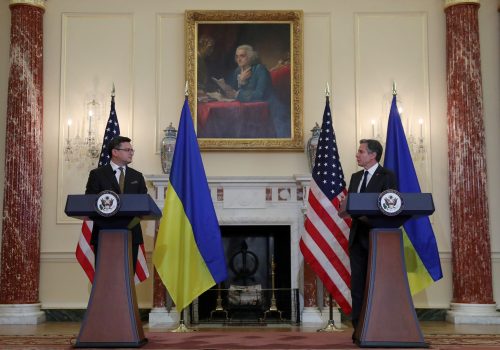
Week of June 27, 2021 This week, Front Page event highlights featuring US Secretary of State Antony J. Blinken, Director of the National Economic Council, Brian Deese, and Former CEO of Wikimedia, Katherine Maher. Related events

Disinformation Economy & Business

Transcript

Jun 25, 2021

US Rep. Tom Malinowski: The evolution of big tech and social media places strain on democracies worldwide

By Atlantic Council

"If the United States is going to do its part to win this contest [between democracy and authoritarianism], we’ve got to be aligned with others around the world who share our values. One country alone, even as powerful as America, can’t do this by ourselves," Malinowski told the DFRLab's 360/Open Summit.

China Disinformation

New Atlanticist

Jun 25, 2021

How to spot the latest trends in digital disinformation

By Nick Fouriezos

Top tech journalists joined the 360/Open Summit, hosted by the Atlantic Council’s Digital Forensic Research Lab, to discuss how tech platforms can enhance accountability and transparency

Disinformation India

Transcript

Jun 24, 2021

Ashish Jha: Doctors must train for the new battlefield of information—social media

By Atlantic Council

This fireside chat between Dr. Ashish Jha, dean of Brown University’s School of Public Health, and Renee DiResta, research manager of the Stanford Internet Observatory, explored the long-lasting effects of the COVID-19 “infodemic” and how the misinformation research community can work with health professionals to restore and protect public trust.

Civil Society Coronavirus

UkraineAlert

Jun 24, 2021

Putin blames anyone but himself for loss of Ukraine

By Peter Dickinson

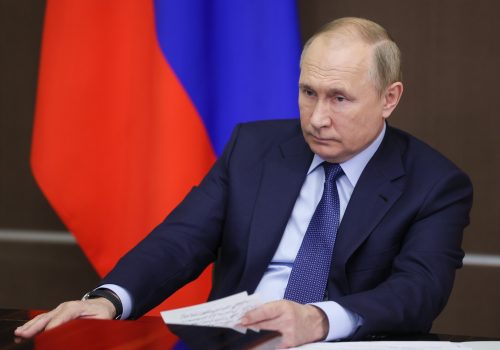
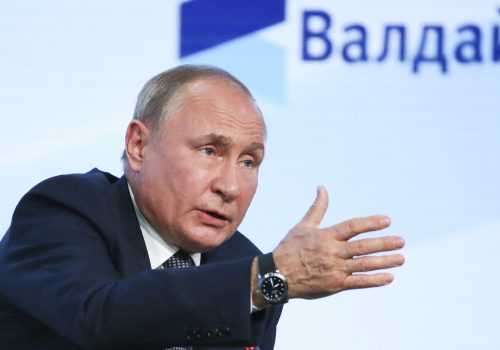
Russian President Vladimir Putin recently published an op-ed accusing the US of staging an anti-Russian coup in Ukraine, but in reality nobody has done more to erode Russian influence in Ukraine than Putin himself.

Conflict Disinformation

New Atlanticist

Jun 24, 2021

Fighting online extremism in ‘the Klan den of the twenty-first century’

By Nick Fouriezos

How can civil society groups, law enforcement, and policymakers assess and combat the threat of online extremism? Experts at the Digital Forensic Research Lab's 360/Open Summit dive in.

Disinformation Extremism

New Atlanticist

Jun 22, 2021

Former Wikipedia chief on fighting censorship and potentially paying contributors to address diversity gaps

By Nick Fouriezos

Katherine Maher appeared at the 360/Open Summit, hosted by the Atlantic Council’s Digital Forensic Research Lab, to discuss how tech can earn the public's trust.

Civil Society Disinformation

Transcript

Jun 22, 2021

Katherine Maher on how big tech can be as trusted as Wikipedia

By Atlantic Council

The former Wikimedia CEO joined 360/Open Summit, hosted by the Atlantic Council's Digital Forensics Research Lab. Here's a transcript of the discussion.

Civil Society Disinformation

UkraineAlert

Jun 19, 2021

The dangers of echoing Russian disinformation on Ukraine

By Andreas Umland

Disinformation has been central to Russia's seven-year hybrid war against Ukraine. By echoing Kremlin narratives, Western commentators risk enabling Russian aggression and undermining international security.

Conflict Disinformation

In-Depth Research & Reports

Jun 11, 2021

The case for a Comprehensive Approach 2.0: How NATO can combat Chinese and Russian political warfare

By Kathleen J. McInnis, Clementine G. Starling-Daniels

Kathleen J. McInnis and Clementine G. Starling outline how NATO’s Comprehensive Approach program can serve as a model to counter political warfare at the strategic level.

Cybersecurity Disinformation

Experts