Disinformation

The rise of the internet and online social networks has altered the scope and scale at which people access, consume, and communicate information. But the same technologies that have democratized access to information have also enabled malicious actors who seek to undermine our democratic values and processes. Disinformation is false or misleading information spread with the intention to deceive. It’s distinct from misinformation, which is the unintentional spread of false information. When left unchecked, disinformation has the potential to sow confusion in public dialogue, exacerbate political polarization, and promote distrust in our political systems and democratic institutions.

Content

AlertaVenezuela email banner

#AlertaVenezuela

Jun 24, 2020

#AlertaVenezuela: June 24, 2020

By Atlantic Council's DFRLab

On Facebook, false claims that Nicolás Maduro would be ousted from power gained momentum after U.S. President Donald Trump announced that he would consider meeting with Nicolás Maduro to discuss “a peaceful exit [of Maduro] from power.”

Disinformation Venezuela

New Atlanticist

Jun 23, 2020

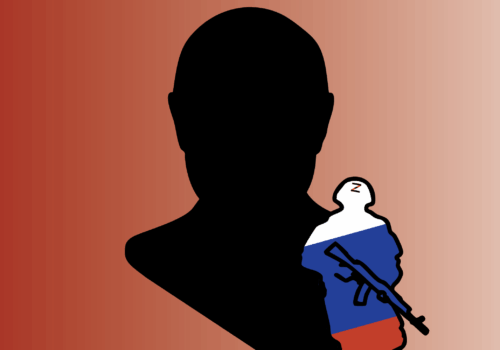
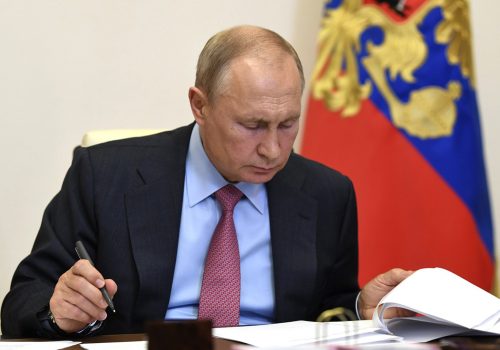
Putin and the ‘real lessons’ of World War II

By Mark N. Katz

Putin pins the blame for Moscow’s most notorious foreign-policy action—signing a 1939 Nazi-Soviet pact—on the West and distorts the historical record. Even if some of Putin’s criticisms of Western behavior are justified, his failure to acknowledge the USSR’s World War II-era misbehavior makes it impossible to trust him.

Disinformation Russia
AlertaVenezuela email banner

#AlertaVenezuela

Jun 17, 2020

#AlertaVenezuela: June 17, 2020

By Atlantic Council's DFRLab

With South America as a growing epicenter of the COVID-19 pandemic, the Maduro regime has doubled down on his politization of the disease, accusing the governments of Colombia and Brazil of intentionally infecting Venezuelans who are returning from those countries to their home country.

Disinformation Venezuela

New Atlanticist

Jun 15, 2020

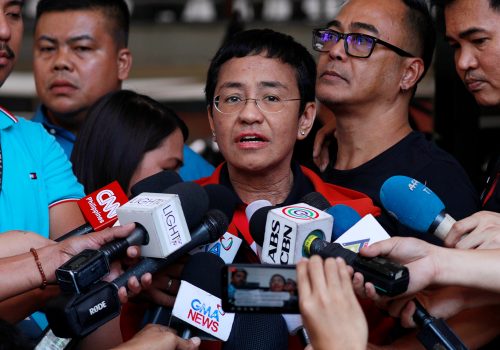
How Maria Ressa described her fight for press freedom before her conviction

By David A. Wemer

During the Digital Forensic Research Lab’s 360/OS event in June 2018, Ressa described The Philippines, which has some of the highest rates of social-media usage in the world, as “patient zero in the fight [over] fake news.”

Disinformation East Asia
AlertaVenezuela email banner

#AlertaVenezuela

Jun 9, 2020

#AlertaVenezuela: June 9, 2020

By Atlantic Council's DFRLab

After the U.S. Embassy in Colombia announced on May 27 that specialized U.S. Army personnel – the Security Force Assistance Brigade (SFAB) – would be supporting Colombian security forces with counter-narcotics operations, pro-Maduro media exaggerated the number of U.S. military personnel deployed to the country.

Disinformation Venezuela

Issue briefs and reports

Jun 5, 2020

Operation Carthage: How a Tunisian company conducted influence operations in African presidential elections

By Andy Carvin, Luiza Bandeira, Graham Brookie, Iain Robertson, Nika Aleksejeva, Alyssa Kann, Kanishk Karan, Ayushman Kaul, Tessa Knight, Jean le Roux, Roman Osadchik, Esteban Ponce de Leon

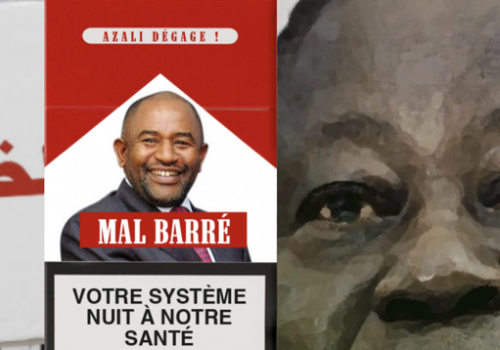
A Tunisia-based company operated a sophisticated digital campaign involving multiple social media platforms and websites in an attempt to influence the country’s 2019 presidential election, as well as other recent elections in Africa. In an exclusive investigation that began in September 2019, the DFRLab uncovered dozens of online assets with connections to Tunisian digital communications firm UReputation. On June 5, 2020, after conducting its own investigation, Facebook announced it had taken down more than 900 assets affiliated with the UReputation operation, including 182 user accounts, 446 pages, and 96 groups, as well as 209 Instagram accounts. The operation also involved the publication of multiple Francophone websites, some going back more than five years.
Africa Disinformation

UkraineAlert

Jun 4, 2020

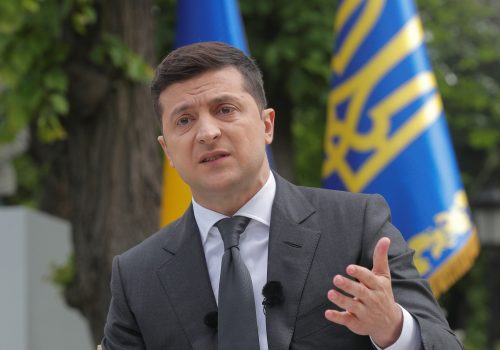
Moderate Zelenskyy makes a mockery of the Kremlin’s anti-Ukraine propaganda

By Vitaliy Syzov

Ukraine's President Zelenskyy has distanced himself from the national identity politics of his predecessor Petro Poroshenko. This has significantly complicated Russian efforts to demonize "nationalistic" Ukraine.

Conflict Disinformation
AlertaVenezuela email banner

#AlertaVenezuela

Jun 2, 2020

#AlertaVenezuela: June 2, 2020

By Atlantic Council's DFRLab

In May, the Maduro regime restricted access to specific websites, including YouTube and Instagram, during a virtual session of the country’s National Assembly. According to nongovernmental organizations, journalists and medical personnel have also been detained since the COVID-19 pandemic first began spreading in the country.

Disinformation Venezuela

In the News

May 28, 2020

Francis in the Financial Post: Time to rein in social media — and Donald Trump

By Atlantic Council

Digital Policy Disinformation
AlertaVenezuela email banner

#AlertaVenezuela

May 27, 2020

#AlertaVenezuela: May 27, 2020

By Atlantic Council's DFRLab

The hashtag #OperacionGedeon, in reference to the name of the failed attempt to oust Nicolás Maduro from power, trended on Twitter in Venezuela from May 3, 2020, when the first armed clashes and detentions were reported by the Maduro regime, until May 6.

Disinformation Venezuela

Experts